


Many veterans receive compensation for direct service injuries but miss out on additional benefits because they do not realize how one diagnosis affects another. A secondary condition develops as a direct result of an already established service-connected condition, often manifesting years after the initial injury. Failing to file for these VA Secondary Conditions Veterans Often Overlook means leaving earned compensation behind and struggling with health issues without proper support. This va disability claim process is essential for ensuring your va disability benefits reflect your total health status and the reality of your daily life. By understanding how one injury leads to another, you can secure a more accurate disability rating that provides the financial security you deserve.
Understanding how a secondary condition connects to your primary condition helps you maximize your va disability benefits and access necessary medical care. A comprehensive benefits package should reflect your complete medical reality, acknowledging that the human body is an interconnected system where one failure often leads to others. You must document every secondary condition that impacts your daily life to ensure your disability claim is successful and comprehensive. When you file a va disability claim, you are asking the government to recognize the full scope of your service-related health issues, including those that appeared long after your discharge date. This proactive approach is the only way to ensure your va disability rating remains current as your health evolves over time.
A secondary condition often causes more impairment and lifestyle disruption than the original injury itself, leading to a significant decrease in quality of life. Recognizing these secondary conditions requires careful attention to your evolving health status and regular consultations with medical professionals who understand veteran health. An overlooked va disability issue can cost you thousands of dollars in lost compensation and medical expenses over your lifetime. Proper medical evidence is the key to proving that a new health condition is actually a secondary condition linked to your service. Without a clear strategy for your secondary claim, you may find yourself fighting an uphill battle against a bureaucracy that requires specific, documented proof of causation.
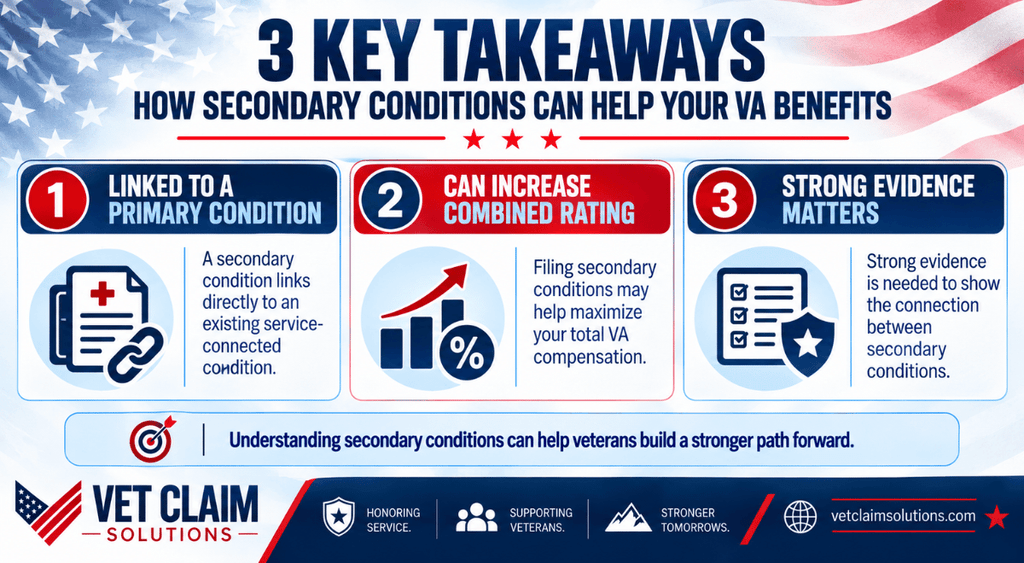
A secondary condition is an illness or injury caused or aggravated by a service-connected disability that is already on your record. The Department of Veterans Affairs recognizes that health conditions rarely exist in isolation and often trigger systemic failures. One primary condition often triggers a cascade of other secondary conditions over time, such as a back injury leading to depression or nerve damage. This legal framework, found in 38 CFR § 3.310, allows veterans to claim a secondary condition even if it appeared years after discharge. Understanding this regulation is the first step toward building a successful secondary claim that accurately reflects your physical and mental health challenges.
For example, severe knee pain might lead to weight gain due to limited mobility, which then contributes to a new secondary condition like sleep apnea or hypertension. By filing a secondary condition claim, you connect this new health condition to your existing service record through a logical medical progression. Establishing this service connection is vital for your VA disability benefits and ensures you receive the highest possible priority for treatment. Every disability claim you submit should consider the “ripple effect” of your primary injuries on your overall mental health and physical well-being. The VA is legally obligated to compensate you for any condition that is “proximately due to or the result of” a service-connected disease or injury.
A valid secondary condition requires a clear medical link to your primary service-connected issue, often referred to as a medical nexus. This link forms the foundation of all successful secondary condition claims and must be supported by contemporary medical literature and personal records. Without this medical bridge, the VA will likely deny your va disability claim for the new ailment, citing a lack of evidence. You must demonstrate that the condition caused by the primary injury is a distinct health conditions issue requiring its own va disability evaluation. This often involves showing how the primary condition either caused the new issue or made an existing non-service-connected issue significantly worse.
Highly Overlooked VA Secondary Conditions Veterans Often Overlook
Many veterans are unaware that sleep apnea is one of the most common secondary conditions linked to post-traumatic stress disorder (PTSD) and other respiratory issues. If you suffer from a stress disorder, the physiological changes in your body, including weight gain from medication or chronic arousal, can lead to obstructed airways. This secondary condition can significantly increase your va disability rating if properly documented with a sleep study and a medical nexus. Proving sleep apnea as a secondary condition often requires a strong medical opinion from a specialist who can link your sleep disturbances to your service-connected mental health. Do not ignore snoring or daytime fatigue, as these are often symptoms of a ratable secondary condition.
Another frequently missed secondary condition is high blood pressure, also known as hypertension, which can stem from chronic pain or kidney issues. Chronic pain from a back injury or joint issue can lead to high blood pressure over time due to constant physical stress and elevated cortisol levels. If you have chronic pain, you should monitor your blood pressure regularly and discuss these readings with your primary care physician. This va claim for blood pressure issues can be a vital part of your disability claims strategy, especially as you age. Hypertension is often a “silent” secondary condition that veterans fail to link to their physical service-connected injuries.
Mental health issues like depression or anxiety are also common secondary conditions that arise from living with chronic physical limitations. A veteran dealing with a debilitating physical health condition often experiences a decline in mental health due to loss of mobility or chronic pain. This mental health condition is just as valid for a disability claim as a physical wound sustained in combat. When mental health conditions arise from service-connected pain, they should be filed as secondary condition claims to ensure separate ratings are considered. The psychological toll of a physical disability is a recognized path to increasing your overall va disability compensation.
Furthermore, migraines secondary to neck injuries, traumatic brain injuries (TBI), or even intense service-connected stress are often overlooked by claimants. Many veterans assume headaches are just a part of life or a minor annoyance, but they can be a highly ratable secondary condition. If your post-traumatic stress or physical injuries trigger frequent migraines secondary to those issues, you deserve va disability compensation for the prostrating attacks. Documenting the frequency, duration, and severity of these headaches in your medical records is crucial for your va claim. Migraines can be particularly debilitating, often leading to missed work and social isolation, which further justifies a secondary claim.
Lastly, erectile dysfunction is a secondary condition that many veterans feel uncomfortable discussing with their doctors or the VA. However, it is frequently caused by medications for mental health or by physical nerve damage from a service-connected condition like a spinal injury. Including erectile dysfunction in your va disability claims can provide additional special monthly compensation (SMC) beyond your standard rating. Do not let embarrassment prevent you from filing a legitimate disability claim for this secondary condition, as it is a common medical reality for many. The VA provides specific diagnostic codes for these issues, acknowledging their impact on a veteran’s life and relationships.
Gastroesophageal Reflux Disease (GERD) is another secondary condition frequently linked to the use of NSAIDs for chronic service-connected pain. When a veteran takes high doses of ibuprofen or other pain relievers for a back or knee injury, the stomach lining can suffer. This leads to chronic acid reflux, which is a valid secondary condition that can be rated based on the severity of symptoms. Similarly, radiculopathy—nerve pain that radiates down the arms or legs—is often secondary to spinal secondary conditions like degenerative disc disease. If you feel numbness or tingling in your extremities, it is likely a secondary condition that should be added to your va disability claim.
Building Medical Evidence for a VA secondary claim

The success of your secondary condition claims hinges on the quality and consistency of your medical record over a long period. You must provide a clear “nexus,” or link, between your primary condition and the new secondary condition you are claiming. A nexus letter from a qualified healthcare provider is often the most persuasive piece of medical evidence you can submit to the VA. This letter should state that it is “at least as likely as not” that the secondary condition was caused or aggravated by the primary one. Without this specific terminology, the VA rater may find the evidence insufficient to grant service connection for the secondary claim.
Your medical records should show a consistent history of treatment for both the primary and secondary conditions to demonstrate a clear timeline. If you are claiming sleep apnea, ensure your medical records include the results of a diagnostic sleep study and a prescription for a CPAP machine. For mental health claims, consistent therapy notes can demonstrate how your physical health condition has impacted your psychological state and daily functioning. The VA relies heavily on this medical evidence and the Schedule for Rating Disabilities to determine the validity of your disability claims. Detailed doctor’s notes that specifically mention the relationship between your ailments are invaluable during the review process.
In addition to official medical records, lay statements from family, friends, or fellow service members can support your va disability claim. These statements describe how the secondary condition affects your daily functioning, social interactions, and overall quality of life in ways clinical notes might miss. While they don’t replace a professional medical opinion, they provide essential context that medical evidence alone might miss during a brief C&P exam. Every piece of documentation, from pharmacy records to personal journals, helps build a stronger case for your secondary condition. A well-organized secondary claim package reduces the likelihood of a denial and speeds up the decision-making process.
How to File Successful Secondary Condition Claims
Filing for a secondary condition follows a similar process to filing an original va disability claim, but requires more focus on causation. You will use VA Form 21-526EZ to initiate your disability claim for the new secondary conditions you have identified. It is vital to clearly label the condition claims as “secondary” to an existing service-connected condition on the application form. This helps the VA rater immediately understand the relationship between your health conditions and look for the appropriate nexus evidence. Clearly identifying the primary condition ensures the rater reviews the correct portion of your existing file.
When you submit your va disability claims, include all relevant medical evidence, private treatment records, and your professional nexus letter. If the VA schedules a Compensation and Pension (C&P) exam, be prepared to explain exactly how the secondary condition is linked to your primary injury. For example, if you are claiming sleep apnea secondary to weight gain from a back injury, explain that chronic pain prevented exercise and led to obesity. This logical flow and “but-for” causation is essential for a successful va claim in the eyes of the examiner. Be honest about your “worst days” rather than your “best days” to ensure the examiner understands the true severity of your secondary conditions.
Consistency is key throughout the disability claims process, from your initial application to your final interview with a VA physician. Ensure that what you tell the C&P examiner matches what is in your medical records and your disability claim application perfectly. Discrepancies in your story or symptoms can lead to a denial of your secondary condition and cast doubt on your entire file. If your va disability claim is denied, you have the right to appeal through a Higher-Level Review or a Supplemental Claim with new medical evidence. Persistence is often required when dealing with secondary condition claims, as the VA may initially overlook the complex medical links you have presented.
The Impact on Your VA Disability Rating
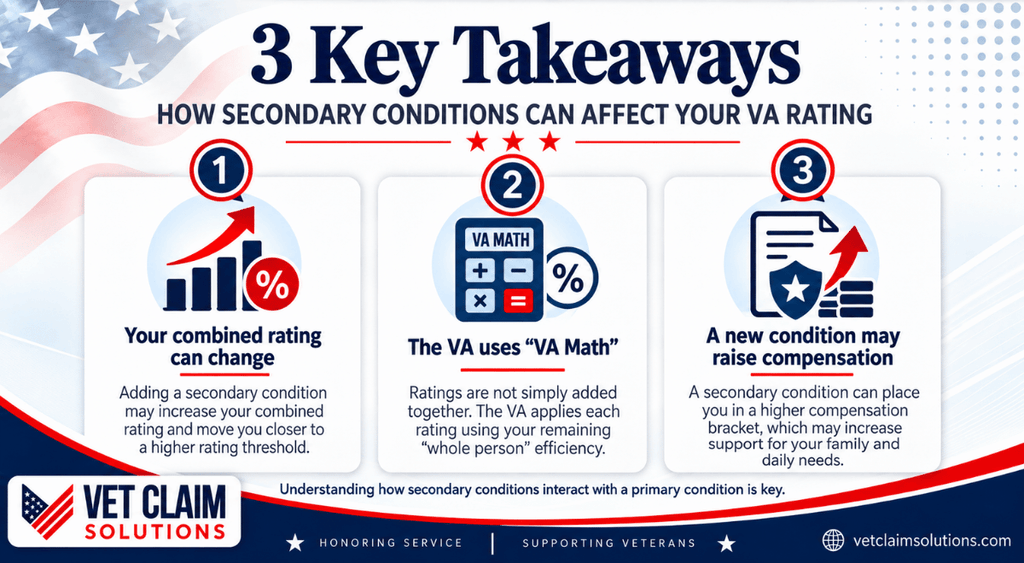
For instance, if you have a 50% rating for post-traumatic stress disorder and add a 50% rating for sleep apnea, your combined rating won’t be 100%. According to the VA Rating Table, this would likely result in a 75% rating, which the VA rounds up to 80%. Understanding this disability rating logic is crucial for managing expectations regarding your va disability benefits and long-term financial planning. Each secondary condition contributes to this total, potentially leading to individual unemployability (TDIU) benefits if you can no longer maintain gainful employment. TDIU can provide 100% level compensation even if your combined rating is lower, provided your secondary conditions prevent work.
In some cases, a secondary condition might qualify you for separate ratings if it affects a different body system or organ group. This is why it is so important to file for every secondary condition you experience, no matter how minor it may seem at first. Even a 10% rating for a secondary condition like high blood pressure or tinnitus can make a difference in your final va disability outcome. Your goal should be a disability rating that accurately reflects the total impact of your military service on your current life. By systematically identifying secondary conditions, you ensure that no aspect of your service-related health struggle goes uncompensated by the government.
Common Mistakes with a VA Secondary Condition
One of the most common mistakes veterans make is waiting too long to file for secondary conditions after they first notice symptoms. As soon as you notice a new health condition developing, you should begin gathering medical evidence and speaking with your doctors. Delaying your va disability claim can make it harder to prove the temporal and medical link between the primary and secondary condition. Furthermore, you lose out on potential back pay for your disability claim by waiting, as the VA generally pays from the date of the application. Filing an “Intent to File” can help preserve your effective date while you gather the necessary medical evidence for your secondary claim.
Another mistake is failing to provide a strong nexus letter that uses the specific legal language required by the VA. Many secondary condition claims are denied because the medical opinion provided was too vague or failed to explain the “how” and “why.” The doctor must clearly state the rationale for why the secondary condition is related to the service-connected condition based on medical science. Simply stating that a connection “might” exist or is “possible” is usually not enough for the VA to grant va disability benefits. Ensure your doctor reviews your C-File (Claims File) before writing the letter to ensure their opinion is based on a full review of your history.
Veterans also often overlook the importance of mental health in their disability claims, focusing only on physical scars and broken bones. They may focus only on physical injuries and ignore the mental health conditions like depression or chronic sleep loss that stem from them. A secondary condition like depression is just as compensable as a physical secondary condition and can have a massive impact on your rating. Ensure your va disability claim covers both the physical and psychological aspects of your health to get the best disability rating possible. Ignoring the mental toll of a primary condition is one of the most frequent ways veterans undersell the severity of their disabilities.
Final Thoughts on VA Benefits and Secondary Conditions

Navigating the world of VA Secondary Conditions Veterans Often Overlook can be complex, but it is a necessary effort for your long-term well-being. By identifying every secondary condition and linking it to your service-connected condition, you ensure you receive the full va disability benefits you earned through your service. Whether it is sleep apnea, high blood pressure, or a mental health condition, every issue matters to your final rating. Your disability claim is your path to a better quality of life, better medical access, and long-term financial security for your family. Do not leave these benefits on the table simply because the connection between your injuries isn’t immediately obvious.
Remember that medical evidence is your strongest ally in any va claim, and you should be diligent in collecting it. Keep detailed medical records, seek a professional medical opinion from specialists, and don’t be afraid to file for secondary condition claims as new issues arise. The va disability system is designed to support you, but you must be proactive and organized in presenting your case to the raters. A higher disability rating is not just about the monthly check; it is about acknowledging the true, holistic cost of your service to the nation. Your health is dynamic, and your va disability status should be dynamic enough to change along with it.
If you are struggling with the va disability claim process, consider seeking help from a Veterans Service Officer (VSO) or a qualified accredited attorney. They can help you identify secondary conditions you might have missed and assist in gathering the necessary medical evidence to prove your case. Your journey to a fair va disability rating doesn’t have to be done alone, and professional guidance can prevent common filing errors. Take the first step today by reviewing your health conditions and considering if a secondary condition is currently impacting your life. You earned these benefits through your sacrifice, and ensuring your secondary claim is filed correctly is the best way to honor that service.