

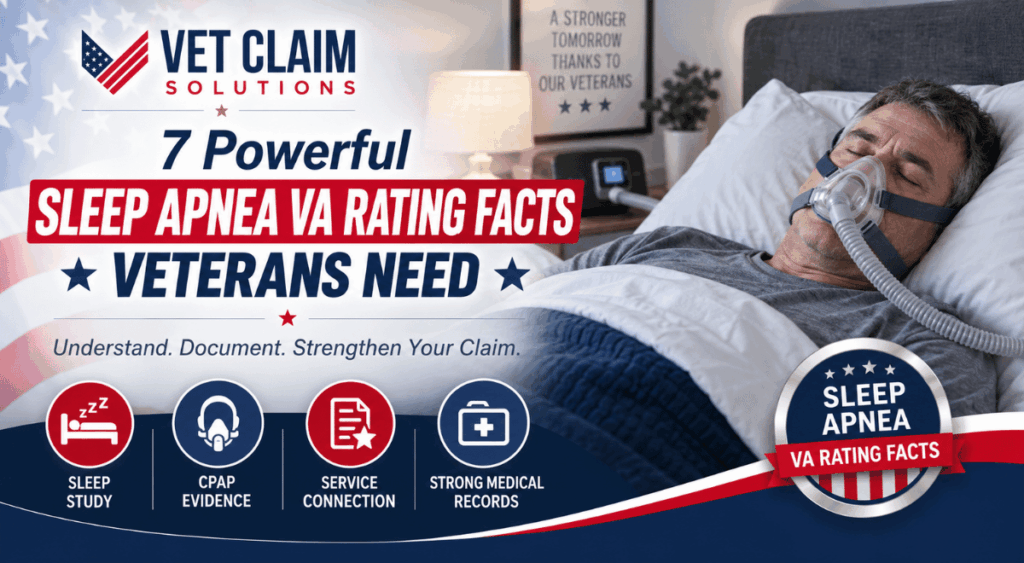
Thousands of veterans wake up exhausted every single morning after struggling to breathe all night, often unaware that Sleep Apnea VA Rating Facts Every Veteran Should Know could change their lives. This chronic exhaustion often points directly to obstructive sleep apnea, a condition that plagues many who served in the armed forces. Today, sleep apnea represents one of the most frequently claimed health problems for veterans seeking a VA disability rating. Medical researchers strongly link sleep apnea to the severe physical and psychological toll of active military service, including exposure to environmental hazards. Understanding how the VA evaluates this condition is the first step toward securing the va disability benefits you deserve for your service-connected condition. Many veterans suffer in silence for decades, attributing their fatigue to aging or stress, when in reality, their military service caused a physiological shift in their respiratory health. By identifying the symptoms early and understanding the apnea va rating system, you can take control of your health and financial future simultaneously.
Understanding your eligibility for disability compensation, the correct disability rating, and available VA disability benefits can help you make informed decisions about your sleep apnea claim. A successful outcome depends on more than simply having a diagnosis. Veterans generally need clear medical evidence, an appropriate sleep apnea diagnosis, and evidence showing how the condition relates to military service or an existing service-connected disability. Knowing the current apnea rating criteria can also help you understand how VA evaluates the severity of your condition and determines the appropriate sleep apnea rating.
Establishing service connection is one of the most important parts of a VA sleep apnea claim. Some veterans may have evidence showing that sleep apnea began during active duty service, while others may pursue benefits when sleep apnea developed or worsened as a secondary condition to an already service-connected condition. Supporting documentation may include military and medical records, a diagnostic sleep study, treatment records, lay statements, and, when appropriate, a qualified medical opinion explaining the relationship between the condition and military service. In the sections below, we explain the Sleep Apnea VA Rating Facts Every Veteran Should Know, including current rating criteria, direct and secondary service connection, CPAP requirements, medical evidence, and other factors that may affect how VA evaluates sleep apnea claims.
Veterans can experience several forms of sleep-disordered breathing, including obstructive sleep apnea, central sleep apnea, and mixed sleep apnea. VA evaluates sleep apnea under Diagnostic Code 6847, which provides the current rating criteria used to determine an appropriate disability rating. Obstructive sleep apnea is the most common form and occurs when the airway repeatedly narrows or closes during sleep. Common signs of sleep apnea include loud snoring, gasping or choking during sleep, waking with a dry mouth, morning headaches, difficulty concentrating, and persistent daytime sleepiness or daytime drowsiness. Recognizing these symptoms can help veterans understand when further evaluation may be appropriate.
Obstructive sleep apnea develops when muscles and soft tissues in the throat relax enough to restrict airflow during sleep. Central sleep apnea, by comparison, occurs when the brain does not consistently send the signals needed to control breathing while asleep. Mixed or complex sleep apnea may involve characteristics of both conditions. A qualified medical professional can determine the type of sleep apnea through clinical evaluation and diagnostic testing. Although untreated sleep apnea can affect sleep quality and daily functioning, it may also be associated with an increased risk of health problems such as high blood pressure and heart disease.
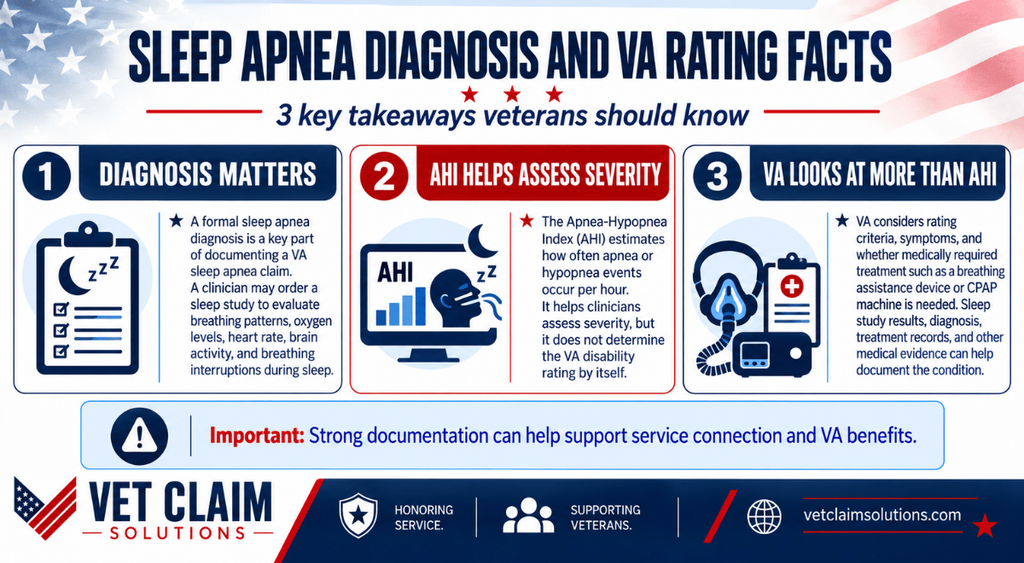
This initial sleep apnea diagnosis forms the critical foundation of your entire case and your future va disability rating. The VA assigns a specific disability rating based on the severity of your breathing interruptions and the treatment required. We see many veterans struggle because they lack this required clinical documentation or fail to provide comprehensive medical records. Without a confirmed sleep study, the VA is likely to deny your sleep apnea claim regardless of your symptoms. It is vital to ensure that your medical records clearly state the diagnosis of obstructive sleep apnea or central sleep apnea. Any ambiguity in the apnea diagnosis can lead to delays or denials in the va claim process.
An accurate apnea rating diagnosis provides the clinical proof you need to move forward with your va disability application. Your overall va disability rating depends entirely on these medical findings and establishing a clear service connection. Treating sleep apnea effectively requires understanding these baseline definitions for your va rating and long-term health management. Remember that sleep apnea is a serious service-connected condition that impacts your heart, brain, and daily energy levels significantly. Chronic daytime sleepiness can lead to workplace accidents and a decreased quality of life, making disability compensation even more important. By focusing on the Sleep Apnea VA Rating Facts Every Veteran Should Know, you can better advocate for your own health and benefits.
Establishing Direct Service Connection for Your Sleep Apnea VA Claim
Establishing a direct service connection for sleep apnea can be challenging if the condition was not diagnosed during active duty. You must prove that your sleep apnea began during your time in the military or was caused by an event in service. This often requires digging through old medical records to find complaints of snoring, exhaustion, or witnessed breathing pauses. A strong va claim for sleep apnea relies on a clear “nexus” or link between your current diagnosis and your service. Many veterans find that their military service records contain clues, such as visits to the clinic for fatigue, that they previously overlooked. These small details can be the key to proving a service-connected condition years after discharge.
Many veterans were exposed to environmental hazards like a burn pit or multiple burn pits during deployments in Southwest Asia. These toxic exposures are now being recognized as potential causes for respiratory issues, including obstructive sleep apnea. If you served in areas with burn pit exposure, this medical evidence can be vital for your service connection. The PACT Act has expanded the list of service-connected conditions related to these toxic exposures. Under this new legislation, the VA is more likely to acknowledge the link between burn pits and chronic respiratory issues. This shift in policy has opened the door for many who previously had their sleep apnea claims denied by the regional office.
To win a direct service connection, you should provide a medical opinion from a specialist linking your sleep apnea to your service. This medical opinion should state that it is “at least as likely as not” that your sleep apnea was caused by your military duties. Consistent medical records showing a progression of symptoms from your time in uniform to the present day are incredibly helpful. Without this medical evidence, the VA may conclude your sleep apnea is a post-service development unrelated to your time in the military. It is also helpful to provide “buddy statements” from fellow service members who witnessed your snoring or gasping during deployment. These personal accounts serve as powerful medical evidence when official medical records from the field are incomplete or missing.
Filing for a Secondary Service Connection and Secondary Condition
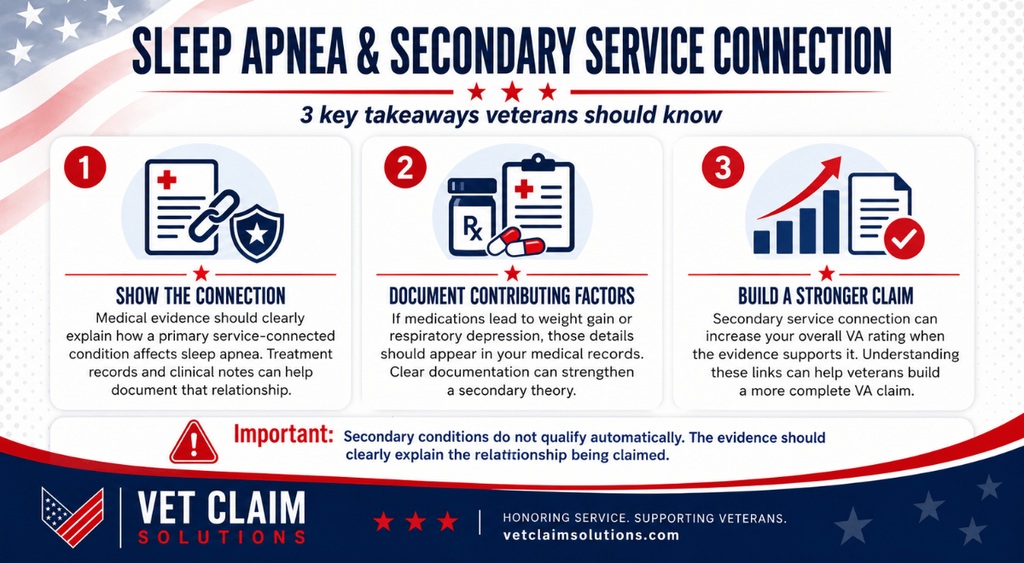
If you cannot prove a direct link, you may qualify for a secondary service connection for your sleep apnea. A secondary condition is one that is caused or aggravated by an already service-connected condition. For example, many veterans find that their mental health struggles, such as PTSD, contribute to or worsen their sleep apnea. Filing for sleep apnea as a secondary service connection is a common and often successful strategy for many veterans. The physiological link between mental health disorders and sleep disturbances is well-documented in modern medical literature. When your mind cannot rest due to service-related trauma, your body often follows suit with disordered breathing patterns.
Common secondary conditions that can lead to a sleep apnea rating include allergic rhinitis, sinusitis, or even orthopedic injuries that lead to weight gain. If a service-connected back injury prevents you from exercising, the resulting weight gain could cause or worsen obstructive sleep apnea. In this case, the sleep apnea is a secondary condition to the back injury, allowing for a secondary service connection. You will need a strong medical opinion to explain this physiological link to the VA raters. The medical opinion must clearly articulate how the primary service-connected condition “proximately caused” or “aggravated” the sleep apnea. This “nexus” is the most critical component of a successful secondary service connection claim.
The Current Sleep Apnea Rating and Disability Ratings Explained
The VA uses a specific schedule for disability ratings when evaluating the severity of sleep apnea. Currently, a 0% sleep apnea rating is assigned if you are asymptomatic but have a documented sleep study diagnosis. A 30% apnea rating is given if you experience persistent daytime sleepiness despite treatment or have other mild symptoms. However, the most common va disability rating for this condition is 50%, which has specific requirements regarding breathing assistance. This 50% tier is often the goal for many veterans because it provides a significant boost to their monthly disability compensation. Understanding the jump from 30% to 50% is one of the most important Sleep Apnea VA Rating Facts Every Veteran Should Know.
To receive a 50% sleep apnea rating, you must be required to use a breathing assistance device, most commonly a cpap machine. The cpap machine (Continuous Positive Airway Pressure) is considered a necessary assistance device for managing the risks of sleep apnea. If your medical records show that a doctor prescribed a cpap machine or a similar breathing assistance device, you meet this threshold. This 50% disability rating recognizes the significant life impact and medical necessity of using a breathing assistance device every night. Other devices, such as BiPAP machines or certain oral appliances, may also qualify as a breathing assistance device under current rating criteria. The key is that the device must be medically necessary to maintain an open airway during sleep.
“A 100% sleep apnea rating is rare and reserved for the most severe cases involving chronic respiratory failure or carbon dioxide retention. This level of VA disability usually requires extensive medical evidence and often involves hospitalization or the need for a tracheostomy. Most veterans will fall into the 30% or 50% disability ratings categories based on their cpap machine usage and symptoms. Understanding these Sleep Apnea VA Rating Facts Every Veteran Should Know helps you set realistic expectations for your VA claim. It is also important to note that the VA may combine your sleep apnea rating with other respiratory ratings, though they often follow the “higher of two” rule to avoid pyramiding. Always consult your medical records to see which diagnostic code provides the most favorable VA disability rating for your situation.
The Proposed Change to the Apnea VA Rating
It is important to stay informed about Sleep Apnea VA Rating Facts Every Veteran Should Know regarding potential policy shifts. The VA has proposed changes to how they evaluate sleep apnea claims, which could make it harder to get a 50% disability rating. Under the proposed change, the mere use of a CPAP machine might not automatically guarantee a 50% apnea rating. Instead, the VA may focus more on whether the sleep apnea is “manageable” with the assistance device. This proposed change has caused significant concern within the veteran community, as it could lead to lower disability ratings for many. Staying ahead of these changes is vital for anyone planning to file your va claim in the near future.
If these changes take effect, apnea claims might be rated based on the level of residual impairment after using a cpap machine. This means if the cpap machine successfully treats your sleep apnea, your va disability rating could be lower than under current rules. However, veterans who already have a service-connected condition rating for sleep apnea are typically “grandfathered” in. This makes it even more critical to file your va claim sooner rather than later to lock in the current disability ratings. The proposed change aims to align the va rating system more closely with modern medical outcomes, but it may overlook the ongoing burden of using a breathing assistance device. Veterans should keep a close eye on the Federal Register for updates on when these proposed change rules might be finalized.
The proposed changes highlight the importance of comprehensive medical evidence and a strong medical opinion in your va claim. You should document not just the use of the cpap machine, but also any remaining symptoms like fatigue or cognitive fog. Even with breathing assistance, many veterans still suffer from the long-term effects of sleep apnea. Keeping detailed medical records of your ongoing struggles will be essential if the sleep apnea rating criteria become more stringent in the future. A medical opinion that emphasizes the “residual symptoms” despite cpap machine use will be more valuable than ever. By preparing for the proposed change now, you can ensure your apnea claim remains strong regardless of shifting VA disability policies.
Gathering Medical Evidence and Filing Your VA Sleep Apnea Paperwork

The success of your va claim for sleep apnea hinges on the quality of the medical evidence you submit. Start by ensuring your medical records include a formal sleep study report (polysomnography) showing your Apnea-Hypopnea Index (AHI). This objective medical evidence is the “gold standard” for proving the existence and severity of your sleep apnea. Additionally, include the prescription for your cpap machine or any other breathing assistance device you use daily. The VA raters are looking for clear, undeniable proof that your sleep apnea diagnosis is accurate and that the treatment is medically required. Without a high-quality sleep study, your apnea rating will likely be 0% or denied entirely.
A “Nexus Letter” or formal medical opinion from a sleep specialist is perhaps the most powerful piece of medical evidence you can provide. This letter should explicitly link your sleep apnea to your military service or a secondary condition like mental health issues. The doctor should review your military service history and medical records to provide a well-reasoned conclusion. A strong medical opinion can often be the deciding factor in a contested sleep apnea rating decision. Ensure the physician uses the specific VA language, such as “more likely than not,” to describe the service connection. This terminology is essential for the VA to accept the medical opinion as valid evidence for your va disability rating.
Don’t forget to include “Lay Evidence” or buddy statements from people who have witnessed your sleep apnea symptoms. Statements from a spouse or roommate describing your snoring, gasping for air, or daytime fatigue can supplement your medical records. This personal medical evidence helps paint a full picture of how sleep apnea affects your life beyond just the numbers in a sleep study. When all these pieces come together, your va claim becomes much harder for the VA to deny. Lay evidence is particularly useful for establishing the “onset” of the condition during military service when official medical records are silent. Combining clinical medical evidence with personal testimony creates a compelling narrative for your sleep apnea va rating.
Maximizing Your Sleep Apnea Claims Success
To strengthen a sleep apnea claim, stay organized and make sure the evidence clearly reflects your diagnosis, treatment, symptoms, and the basis for service connection. Review whether sleep apnea may be directly related to military service or claimed as a secondary condition to an existing service-connected disability. In some cases, veterans may also have conditions such as high blood pressure, orthopedic limitations, or post-traumatic stress disorder that are relevant to their overall medical history. However, having multiple conditions does not automatically establish secondary service connection. The evidence should explain the specific relationship being claimed.
Keep your medical records current, including your sleep study, treatment history, and documentation showing whether a CPAP machine or another breathing assistance device is medically required. Under the current sleep apnea rating criteria, the requirement for a breathing assistance device such as a CPAP is relevant to the 50% rating level. Rather than focusing only on CPAP compliance, make sure your records accurately document the prescribed treatment, any continuing symptoms, and discussions with your healthcare provider. Consistent documentation can provide VA with a clearer picture of the severity and treatment of your condition when evaluating your VA disability rating.
If VA denies the claim or assigns an apnea rating that you believe does not reflect the applicable evidence and rating criteria, review the decision letter carefully before deciding what to do next. Depending on the circumstances, veterans may consider a Supplemental Claim, Higher-Level Review, or Board Appeal. A Veterans Service Officer, VA-accredited representative, or accredited attorney can also help explain available options. Ultimately, understanding the Sleep Apnea VA Rating Facts Every Veteran Should Know, maintaining strong medical evidence, and obtaining an appropriate medical opinion when necessary can help you submit a more complete and well-supported claim for VA disability benefits.