


Depression ranks among the most common service-connected conditions affecting veterans today, yet many miss out on benefits because they do not fully understand how the system works. If you plan to file for a depression VA rating, knowing the current pay rates and rating criteria can help you make informed decisions about your benefits. This guide breaks down VA disability rates for depression in 2025, explains how the U.S. Department of Veterans Affairs (VA) assigns each disability rating, and shows you how to build a stronger claim. You can also learn more about major depressive disorder to better understand this mental health condition. Your mental health matters, and the compensation you earned through service can help support the care you deserve.

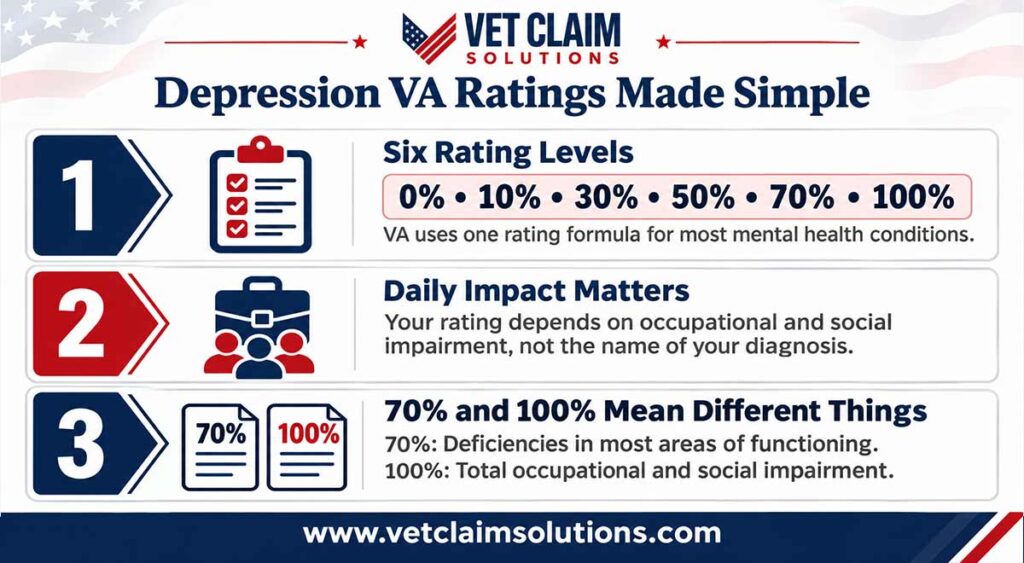
The VA rates depression under the General Rating Formula for Mental Disorders, found in 38 CFR § 4.130. This single schedule covers most mental disorders, including PTSD, anxiety, and major depressive disorder. The VA assigns disability ratings of 0%, 10%, 30%, 50%, 70%, or 100% based on how severely symptoms disrupt your ability to work and maintain relationships.
Two factors drive your VA disability rating: occupational impairment and social impairment. Occupational impairment measures how symptoms affect your ability to hold a job, follow instructions, and finish tasks on time. Social impairment tracks how symptoms affect your relationships with family members, friends, and coworkers. You can learn more about eligibility through the VA’s official mental health disability benefits page.
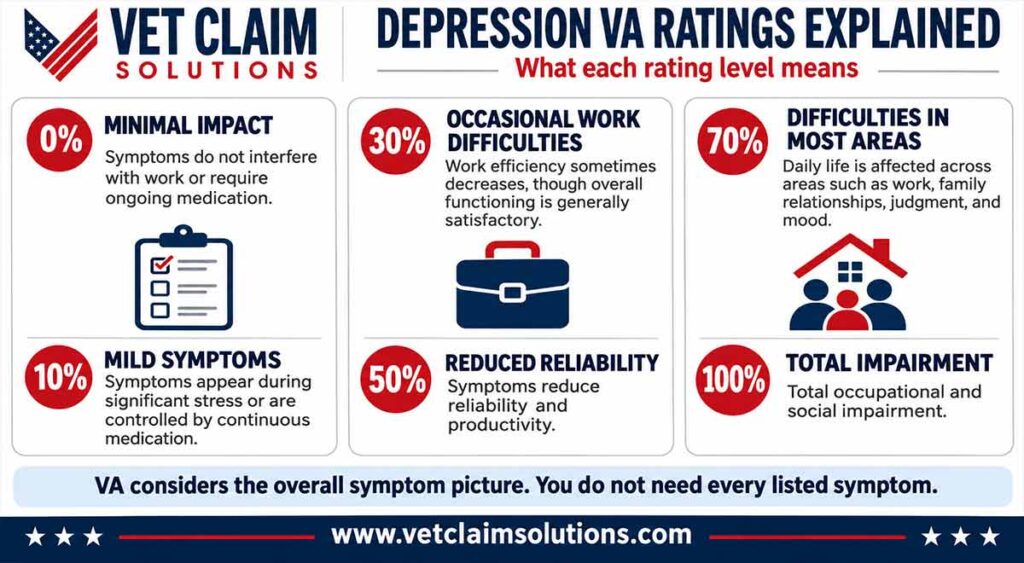
A 70% or 100% disability rating generally reflects severe occupational and social impairment. Symptoms such as suicidal thoughts, obsessional rituals, or serious relationship difficulties may be relevant, but no single symptom automatically determines the rating. Raters weigh the frequency, severity, and duration of your mental health condition rather than any single bad day. You can review the full criteria on the official eCFR page for 38 CFR § 4.130.
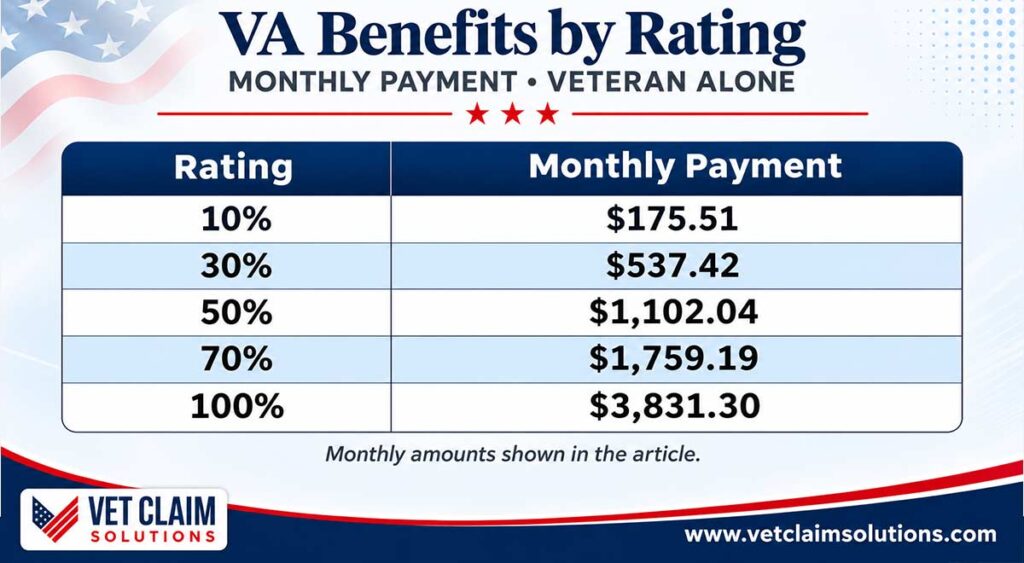
Veterans rated at 30% or higher qualify for extra compensation for a spouse, children, or dependent parents. A veteran rated at 100% with a spouse receives $4,044.91 per month in 2025. Because all VA disability benefits are tax-free, their real value exceeds an equivalent taxable paycheck.
Check the official VA disability compensation rates page for exact amounts based on your household. Small differences in dependent status can mean hundreds of dollars each month.
Note: If you or someone you love is in crisis, help is available right now. Reach the Veterans Crisis Line by dialing 988 and pressing 1, or text 838255. This free, confidential support operates 24 hours a day, 7 days a week.
Proving Service Connection for Depression
Before the VA assigns any rating, you must establish service connection for a diagnosed mental health disorder. Every successful direct service connection claim generally rests on three elements, and missing even one can result in a denial.
- A current diagnosis of a mental health condition, such as major depressive disorder, from a qualified professional.
- An in-service event, injury, or illness that caused or aggravated your condition.
- A medical nexus, meaning evidence linking your diagnosis to your military service.
Strong medical evidence plays an important role in this step. Service treatment records, private physician notes, and VA health care records can all help support your claim. A nexus letter from a qualified provider explaining the connection between your depression and military service may strengthen your supporting evidence.
Depression as a Secondary Condition
Many veterans develop depression secondary to another service-connected condition. Living with chronic pain from a back injury can affect mental health over time. Depression may also develop alongside conditions such as tinnitus, sleep apnea, and traumatic brain injury.
To establish secondary service connection, you generally need a current diagnosis and evidence showing that an existing service-connected condition caused or aggravated your depression. A qualified medical professional can help explain this relationship through a medical opinion.
Military Sexual Trauma and Depression
The VA recognizes that military sexual trauma (MST) can contribute to depression, PTSD, and other mental health conditions. If you experienced sexual trauma during service, alternative evidence may help support your claim because these incidents frequently go unreported. Behavioral changes, requests for transfer, and statements from loved ones can all provide relevant supporting information. You can also review the VA’s official information about disability compensation related to MST to better understand available benefits and evidence requirements.
️ Warning: Never downplay your symptoms during a Compensation and Pension exam. Many veterans put on a brave face out of habit, and the examiner records only what they see and hear that day. Describe your worst days honestly, not your best ones.

Steps to File Your VA Disability Claim for Depression
1. Gather Your Medical and Service Records
Preparing a strong depression VA rating claim begins with collecting relevant medical evidence and military service records. Organized documentation helps the VA evaluate your condition and determine service connection.
2. Collect Your Service Treatment Records
Request relevant military medical records through the National Archives or the VA. You may need to submit Standard Form 180 (SF-180), depending on where your records are maintained. Processing times vary, so start early.
3. Include Private and VA Medical Documentation
Gather records from civilian doctors, mental health professionals, hospitals, and VA health care providers. These documents can help establish your diagnosis, treatment history, and symptom severity. Learn how to access your records through VA.gov.
4. Secure Supporting Witness Statements
Ask fellow service members, supervisors, friends, or family members to provide detailed accounts of relevant events and observed symptoms. Statements should include specific examples, dates when possible, and the witness’s relationship to you.
5. Leverage Buddy Statements
Buddy statements can help support your claim when official records are incomplete. Witnesses can document behavioral changes, in-service events, and the effects of depression on daily functioning. Use VA Form 21-10210 to submit lay or witness statements.
6. Organize Your Supporting Evidence
Create a digital or physical folder containing your service treatment records, medical documentation, personal statements, and supporting evidence. Label each document clearly and use a checklist to identify missing information.
By assembling a comprehensive evidence package, you can help the VA review your disability claim more efficiently. Complete and accurate documentation supports a clearer evaluation of your condition and its connection to military service.
Take the Next Step Toward Your VA Depression Rating
Understanding your depression VA rating is an important step toward receiving the VA disability benefits you may qualify for. Whether you are filing for the first time or seeking an increased rating, knowing how the VA evaluates depression under 38 CFR § 4.130, reviews medical evidence, and determines compensation can help you prepare a stronger claim.
A successful claim starts with accurate medical records, clear documentation of your symptoms, and evidence connecting your depression to military service or an existing service-connected condition. Remember that your rating depends on how your condition affects your daily life, relationships, and ability to work. You can also review the VA’s disability eligibility requirements to better understand the evidence needed to support your claim.