


That burning feeling in your chest after a meal and the constant acid taste are more than just heartburn. For many veterans, it’s Gastroesophageal Reflux Disease (GERD), and it can seriously impact your daily life. You might wonder if your time in service is connected to this struggle, and filing a GERD VA claim can feel overwhelming.
You’re not alone in this, and understanding how a GERD VA claim for GERD secondary service connection from VA medication side effects works is a crucial first step. The constant discomfort from gastroesophageal reflux is a real burden that you shouldn’t have to carry without support. What if the very medications you took to manage service-related injuries are now causing this problem?
This is a frustrating but common situation many veterans face. There is a path forward for your VA claim. This guide will walk you through the process of connecting your GERD to your military service.

What is GERD and Why Is It So Common in Veterans?
Gastroesophageal Reflux Disease, or GERD, occurs when stomach acid frequently flows back into the tube connecting your mouth and stomach (esophagus). This backwash, known as acid reflux, can irritate the lining of your esophagus, causing significant discomfort. While many people experience acid reflux occasionally, it’s diagnosed as GERD when it becomes a chronic issue.
The gerd symptoms are more than just annoying; they can disrupt your entire life. They often include a burning sensation in your chest, known as heartburn, frequent regurgitation of food or sour liquid, and difficulty swallowing. Some veterans also experience chronic coughing, laryngitis, new or worsening asthma, and disrupted sleep.
The military lifestyle can be tough on the body, including the gastrointestinal disorder system. Irregular meal times, the high-stress environment of deployment, and a diet heavy in processed foods can all contribute to digestive issues. These factors can set the stage for long-term problems like this reflux disease.
The Basics of Service Connection for Your GERD VA Claim
Before getting into the details of secondary claims, you need to understand what the VA looks for to approve a VA disability claim. To win any claim, you must establish “service connection,” which means proving your current disability is related to your time in the military. This proof relies on three key elements.
First, you need a current medical diagnosis of GERD from a qualified medical professional. Second, you must provide evidence of an event, injury, or illness that occurred during your service. Third, and most importantly, you need a medical link, or “nexus,” connecting your current GERD to that in-service event.
This nexus evidence is often the most challenging part of a va claim. It typically comes in the form of a statement from a medical expert who has reviewed your records. The statement must confirm that it is “at least as likely as not” that your military service caused or aggravated your GERD.
Filing a GERD VA Claim as a Secondary Service Connection from VA Medication Side Effects
Often, a medical condition doesn’t start directly during service but is caused by an existing service-connected disability. This is called a secondary service connection, and it’s a common way veterans win their GERD claims. Many secondary conditions arise from the long-term consequences of an initial injury or illness.
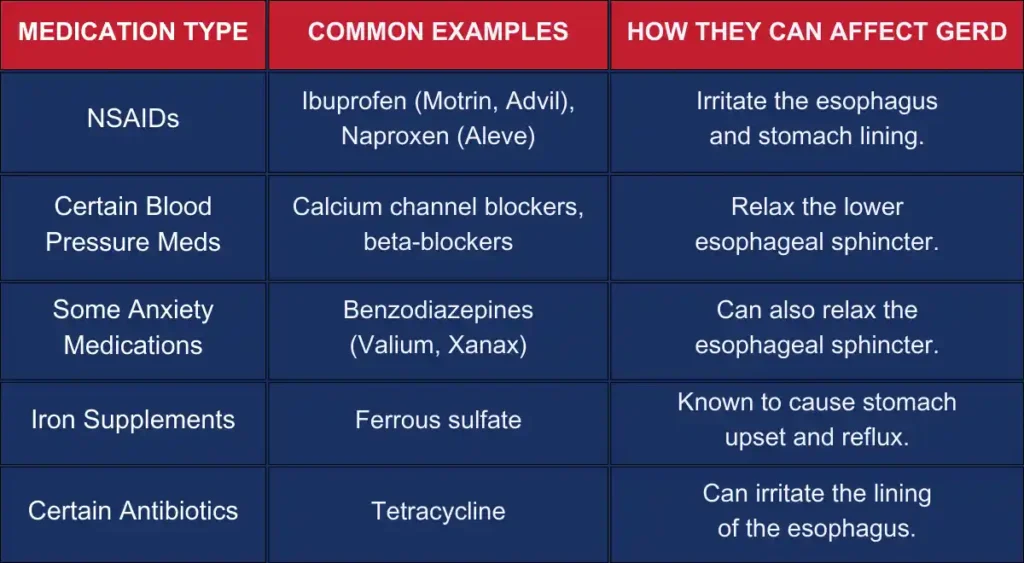
For example, you might have a VA disability rating for bad back or knee injuries from your service. To manage the chronic pain, you were likely prescribed NSAIDs, such as Ibuprofen. While these medications help with pain, they can damage your stomach lining over time, leading to GERD.
This creates a clear chain of events for the VA to follow. Your military service caused the initial injury, that injury required medication with known side effects, and that medication has now caused or worsened your gastroesophageal reflux disease. This secondary basis requires solid medical evidence to support each step.
The Link Between Medications and GERD
The connection between certain medications and GERD is well-established in medical literature. Nonsteroidal anti-inflammatory drugs (NSAIDs) are particularly notorious for causing gastrointestinal issues. These drugs can weaken the lower esophageal sphincter, the muscular valve that prevents stomach acid from flowing back into the esophagus.
When this valve is weakened, acid reflux becomes more frequent and severe. Research from the National Institutes of Health has identified long-term NSAID use as a significant risk factor for developing GERD. Your documented history of taking these medications for a service-connected disability is powerful nexus evidence.
It’s not just Ibuprofen; many other prescription drugs can cause or aggravate acid reflux. Reviewing your medical and pharmacy records is a good way to build your case. You might be surprised to find a link you hadn’t considered before.
Building Your Case: What You Need
To win a secondary VA claim, you must present the VA with clear, compelling evidence that connects the dots. Your claim file should tell a logical story supported by official documents. You can’t just state the connection; you have to prove it.
First, you need your medical records that confirm your primary service-connected disability. This establishes the starting point of the chain reaction. Next, you must provide proof you took the specific medications, such as pharmacy records or doctor’s notes prescribing them for your condition.
Finally, a strong medical nexus letter is one of the most important pieces of medical nexus evidence. This is a letter from a doctor who has reviewed your file and offers their professional opinion. The letter should state that your GERD is, more likely than not, caused by the medications you took for your service-connected disabilities.
GERD Secondary to Other Common Veteran Conditions
Medication side effects are a major cause, but they are not the only one. Many other common service-connected conditions can lead directly to GERD. The stress and strain of military life have long-lasting effects that can manifest in unexpected ways, creating a basis for other secondary VA claims.
Understanding these connections can open another avenue for your VA disability claim. If you’re service-connected for mental health conditions or other physical ailments, it’s worth exploring whether they could be the root cause of your digestive problems. It’s about showing the VA the complete picture of your health.
GERD Secondary to PTSD, Anxiety, or Depression
There is a powerful link between your brain and your gut, often called the gut-brain axis. If you are service-connected for PTSD, anxiety, or depression, you may have experienced this firsthand. The chronic stress from these conditions has a direct physical impact on your body’s systems.
When you’re constantly stressed or anxious, your body can produce more stomach acid and may slow down the digestive process. This combination can lead to severe acid reflux and GERD. The connection between depression gerd and anxiety gerd is well-documented in medical studies.
For your claim, this means your service-connected PTSD GERD could be the direct cause. A nexus letter from a doctor explaining this gut-brain connection can be incredibly effective. It validates what you are experiencing every day and provides the medical evidence the VA needs to see.

GERD Secondary to Musculoskeletal Issues & Weight Gain
This path often circles back to the medication issue but can also stand on its own. Many veterans have service-connected disabilities for back conditions, joint problems, or arthritis. These painful conditions frequently lead to a more sedentary lifestyle and can make exercise difficult.
This reduction in physical activity can lead to weight gain. Increased body weight, particularly around the abdomen, puts pressure on the stomach and can force acid up into the esophagus. This makes weight gain obesity a significant risk factor for developing or worsening GERD.
In this scenario, your service-connected knee injury led to reduced mobility and subsequent weight gain, which then caused your GERD. This is a valid argument for a secondary service connection. You are showing a logical progression from an in-service injury to the daily pain of GERD.

GERD Secondary to Sleep Apnea or Asthma
The relationship between GERD and sleep apnea is complex and bidirectional, meaning each condition can worsen the other. If you have service-connected sleep apnea, the pressure changes in your airway and chest during an apnea episode can actually pull stomach acid up into your esophagus. Filing for gerd secondary to sleep apnea is a valid strategy.
Conversely, acid reflux at night can irritate the throat and airways, potentially triggering or worsening sleep apnea events. This creates a vicious cycle that can severely impact your health. Providing medical evidence that links your apnea secondary to GERD, or vice versa, can support your claim.
Similarly, there is a connection between GERD and respiratory conditions like asthma. Acid reflux can irritate the airways and trigger asthma attacks, a condition known as asthma secondary gerd. If you have service-connected asthma, your GERD may be a secondary condition.

How the VA Rates GERD
Once you’ve established service connection, the VA will assign a disability rating based on the severity of your condition. This va rating, expressed as a percentage, determines your monthly compensation amount. For GERD, the VA uses the rating criteria under Diagnostic Code 7346, which also covers hiatal hernias.
The VA disability ratings are based on how significantly your symptoms impact your daily life and health. Your medical evidence, statements, and performance in a VA examination will help determine your rating. It is important to be honest and detailed when describing your symptoms like chest pain or abdominal pain.
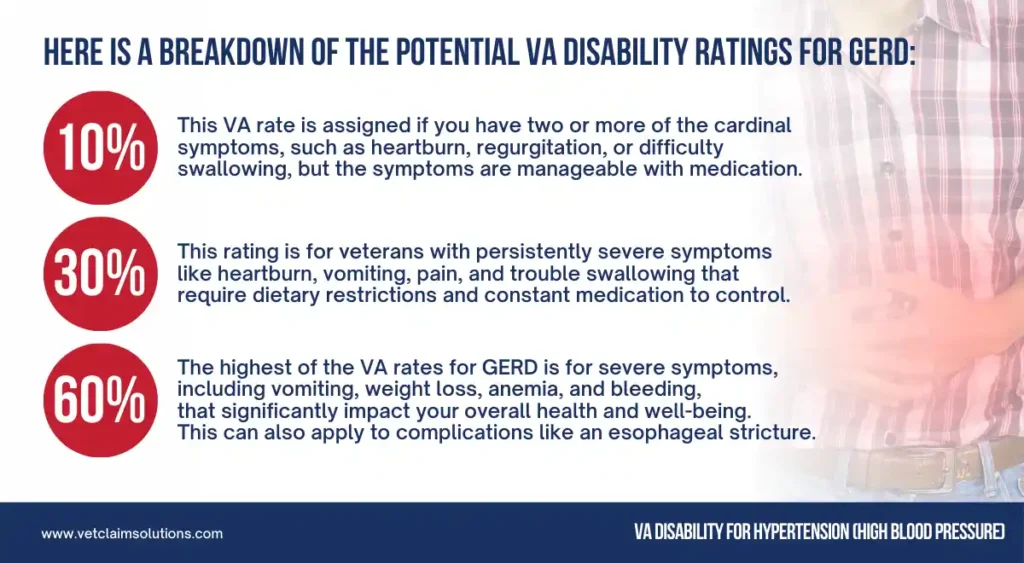
After reviewing all the evidence, the VA will issue a rating decision. Don’t downplay your symptoms during your C&P exam. Explain how GERD affects your sleep, your diet, and your ability to work or enjoy life, as this is a key part of the va rating criteria.
Getting the Help You Need for Your Claim
Putting together a successful VA claim for GERD takes work and organization. As the veteran, you are your own best advocate. Start by gathering all your medical records, both from your time in service and from any civilian doctors you have seen since.
Consider asking friends, family, or fellow service members who have witnessed your struggles to write “buddy letters.” These personal statements can describe how GERD affects you from an outside perspective. They add a powerful, human element to your claim file that complements the clinical medical evidence.
Keeping a symptom journal can also be invaluable. Each day, note what you ate, the GERD symptoms you experienced, and their severity on a scale of 1 to 10. This detailed record of your veteran reported symptoms can be more persuasive than a single doctor’s report and shows a consistent pattern of disability.
Finally, obtaining well-written nexus letters is crucial for secondary claims. Consulting with a professional who understands veterans law can help you identify the strongest path for your claim and ensure your evidence is presented clearly. They can help you prove your gerd connection effectively.
Conclusion
Dealing with the daily pain and frustration of GERD is draining. It’s a real and debilitating condition that can diminish your quality of life. Connecting it back to your service, whether through direct cause, as a secondary condition, or from VA medication side effects, is your right.
You do not have to simply live with the symptoms and accept this as your new normal. Understanding how to build your case for a GERD VA claim for GERD secondary service connection from VA medication side effects puts you on the path to getting the compensation you’ve earned. The VA claims process can be long, but by methodically gathering your evidence and clearly telling your story, you can succeed.
Whether your gerd is secondary to PTSD, sleep apnea, or a physical injury, there are established paths to secure the VA disability benefits you deserve. Taking the first step to organize your claim is the start of getting the recognition and support you need for your service-connected gastroesophageal reflux disease.