


VA kidney disease rating nephritis VA claim VA secondary kidney condition. Those words alone can feel heavy when you are a veteran just trying to figure out how sick kidneys turn into a fair rating and steady monthly compensation. You want answers about your health and your financial future.
You might be dealing with labs you do not understand or confusing terms like GFR and nephritis. Perhaps a VA rater who has never met you is trying to judge how bad your condition really is. Add in the stress of linking your kidney problems to service, and it can feel like the deck is stacked against you.
This guide is built for you. You will see how the VA actually rates kidney disease and what nephritis is in plain language. We will look at how to frame a strong VA kidney disease rating nephritis VA claim VA secondary kidney condition so you get the benefits you earned.

Why Kidney Disease Hits Veterans So Hard
Kidney problems are far more common than most people realize. The National Kidney Foundation notes that about 37 million people in the United States may have chronic kidney disease, yet most have no idea. This silent issue affects civilians and service members alike. For veterans, the picture is even more serious due to the rigors of military service. VA research reports that veterans carry higher rates of kidney disease than the general public. This is especially true for Black, Hispanic, and Asian vets.
Your story is likely personal and specific. Maybe your kidney labs started slipping after years on blood pressure meds or after exposure to toxins. Perhaps you have diabetic nephropathy caused by service-connected diabetes. You deserve to know how the VA is supposed to look at this. Whether it is from direct service or a secondary service issue, the path to a proper VA rating exists. It starts with understanding the scope of the problem.
Kidney Basics In Plain English
You do not need a medical degree to win a VA claim, but you do need to know some basics. Kidneys sit under your rib cage on both sides of your spine. A normal kidney filters waste, balances fluids, controls blood pressure, and helps with red blood cell production. When the kidneys get damaged, waste and fluid build up in your body. This buildup impacts the urinary tract and causes other systems to fail. To measure how well kidneys work, doctors often talk about GFR, or glomerular filtration rate.
The National Kidney Foundation reports that a normal GFR usually falls between 90 and 120. The lower your GFR drops, the worse your kidney function gets. Doctors will also look at a blood test for creatinine levels to see how well the organs are filtering toxins.

Types Of Kidney Conditions The VA Sees A Lot
Kidney disease is a big umbrella term. VA raters see several patterns again and again. You might fall into more than one group depending on your service history.
Chronic Kidney Disease And Renal Dysfunction
Chronic renal disease is long-term damage that reduces kidney function over months or years. The VA usually looks at chronic kidney disease under the schedule for renal dysfunction. This lives in the genitourinary section of their rating rules. CKD shows up under diagnostic code 7540. Disability ratings depend on things like GFR and creatinine levels. They also check for albuminuria, which is having too much protein in your urine.
Sometimes doctors find granular casts in your urine. These are small particles that indicate damage to the kidney’s filtering tubes. Presence of these casts helps prove the severity of your condition.
Nephritis
Nephritis means inflammation inside the kidney. It can come from infections, immune problems, or reactions to medicines. In practice, the VA rate for nephritis is usually determined the same way as other kidney damage. The main concern is always how much your kidneys have lost their filtering power. Even though the word sounds different, nephritis usually flows into the same rating system. The criteria are found under 38 CFR 4.115a.
Acute Kidney Disease vs. Chronic Issues
There is a difference between acute kidney issues and chronic ones. Acute kidney failure or acute kidney disease happens suddenly, often due to dehydration, injury, or severe infection. If this happened in service, it could be the start of your claim. However, the VA usually compensates for long-lasting issues. If your acute injury healed completely, you might not get a rating. But if that acute event led to permanent damage, it becomes a chronic claim.
Kidney Stones
Kidney stones are small hard deposits that form in the kidneys. They can cause serious pain, blood in the urine, and infections. VA gives kidney stones their own diagnostic code under 38 CFR 4.115b, diagnostic code 7508.
Stones can sometimes lead to scarring and long-term kidney damage. This scarring can then be rated as renal dysfunction as well. A history of repeated stones often becomes a bridge to a VA disability rating for chronic disease.

Diabetic Kidney Disease
If you have type 2 diabetes, you should pay special attention here. The National Institute of Diabetes and Digestive and Kidney Diseases reports that type 2 diabetes is the top cause of kidney failure. This condition is formally known as diabetic nephropathy. They estimate diabetes drives around 44 percent of new kidney failure cases across the country. High blood sugar levels slowly destroy the tiny filters in the kidneys. If the VA has already granted diabetes from service, any new kidney diagnosis needs a close look.
You can see more background on how diabetes and kidneys are linked by reading about type 2 diabetes and kidney disease in consumer level guides. This is a very common secondary service connection.

Hypertension Related Kidney Disease
High blood pressure squeezes the blood vessels that feed the kidneys. Over time, that pressure damages those tiny filters. Veterans with long-term hypertension have a higher chance of developing kidney conditions.
Building a case here follows a simple three-step formula. First, you need a firm kidney diagnosis. Second, you show the VA you have service-connected hypertension. Third, you add a medical nexus opinion. This ties the two conditions together. It explains how hypertension caused or worsened the renal disease.

Polycystic Kidney Disease
Some veterans suffer from polycystic kidney issues. Polycystic kidney disease is often genetic, which can make VA claims tricky. However, service can aggravate this pre-existing condition. If your time in service made the condition worse than its natural progression, you can still file a claim. You will need strong medical evidence to prove the aggravation.
Agent Orange and Toxic Exposure
Many Vietnam veterans have concerns about Agent Orange. Agent orange exposure is linked to several conditions, including Type 2 diabetes and hypertension. Both of those conditions are leading causes of kidney failure. While kidney disease itself is not always a presumptive condition, the diseases that cause it often are. If orange exposure caused your diabetes, and diabetes caused your kidney failure, you have a path to benefits. This is a critical route for many older veterans.
How The VA Kidney Disease Rating System Works
This is the part most veterans never get clearly explained. The VA does not just look at one lab number. They are supposed to look at your lab trends and your daily symptoms over time.
Kidney disease is rated under the 38 CFR 4.115a section. This covers the Genitourinary System. For most chronic kidney issues, the VA applies the rating criteria for renal dysfunction.
The Rating Tiers For Renal Dysfunction
Within that schedule, kidney problems fall into several rating levels. The VA rates generally follow the severity of your lab work and physical limits. Here is a general picture of how the VA thinks about those tiers.
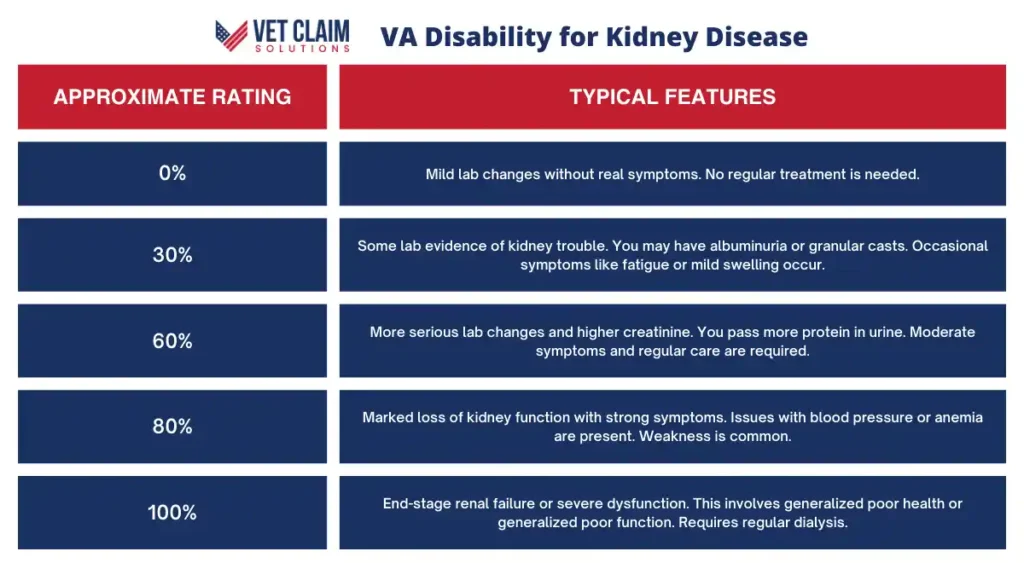
You should always look at the detailed wording in 38 CFR 4.115a. Reading the official kidney schedule as reproduced on government law sites helps you map your labs to a target rating. This knowledge helps you argue for the correct percent rating.
Why GFR And Labs Matter So Much
Lab values give the VA something to grab onto. If your GFR is within the normal range, the rater may struggle to see significant kidney loss. This happens even if you do not feel right. But once that number drops and stays down, the record matches what your body feels. Creatinine and BUN levels also play a large part. The level of protein in your urine helps prove dysfunction under the VA rates kidney disease rules.
How Symptoms Feed Into Your Rating
Symptoms can bridge the gap between raw numbers and real life. Swelling in your legs or around your eyes is common. Shortness of breath is another sign. Needing to nap all the time or frequent urination at night belongs in your file. The VA looks for a match between test results and everyday limits. Some high disability ratings require proof of “generalized poor health.”
Temporary Ratings and Transplants
If your condition progresses to the point of a kidney transplant, the rating rules change. You are typically entitled to a 100 percent rating for one year following the surgery. After that year, the VA will re-evaluate your condition. They check your current level of dysfunction to assign a permanent rating. Additionally, temporary 100 percent ratings can be assigned for consecutive months of hospitalization. This applies if you are hospitalized for more than 21 days due to the service-connected kidney issue.

Secondary Kidney Conditions And Service Connection
You may not have hurt your kidneys directly in uniform. That does not close the door on a strong claim. Many kidney grants are for a kidney disease secondary to another issue.
Common Secondary Paths To Kidney Disease
There are some very common paths that veterans use to get secondary service-connected status. Here are several you should think about.
- Type 2 diabetes that later leads to diabetic nephropathy.
- Heart disease which compromises blood flow to the kidneys.
- Long-term hypertension that slowly damages kidney blood vessels.
- Autoimmune problems like lupus, which can cause nephritis.
- Long-term use of pain medicines for service-connected orthopedic conditions.
- Recurrent kidney stones linked to service that cause later kidney scarring.
As the NIDDK explains, diabetes leads the list of causes for chronic kidney disease. It is a heavy factor in new dialysis cases. That means VA raters see this secondary link over and over again.
The Three Essential Elements For A Secondary Kidney Claim
You might hear lawyers and claim experts repeat this formula. It is as simple as three building blocks. You need these to win VA disability benefits for a secondary issue.
- Current medical diagnosis of a kidney condition, backed by labs or imaging.
- An already service-connected condition like diabetes or hypertension.
- A medical nexus that clearly explains how one caused or aggravated the other.
The last part usually comes in the form of a written opinion. Many veterans seek an independent doctor for this. They write a nexus letter laying out how the service-connected issue led to disease secondary to the primary one.
VA Kidney Disease Rating Nephritis VA Claim VA Secondary Kidney Condition: Step By Step Game Plan
You might be thinking this sounds great in theory. But what do you actually do on Monday morning? Let us walk through a simple claim path you can adapt.
Step 1: Nail Down The Medical Side
First, you need recent labs and a clear diagnosis. That usually means working with a nephrologist or a primary care doctor. They need to know kidney medicine well. Ask your doctor direct questions about your blood test results. What is my GFR? Is my condition mild, moderate, or severe? Is it likely caused by my diabetes or blood pressure? Read patient-facing material on kidney disease and health or simple kidney disease prevention guides. This ensures you walk into appointments understanding what you face.
Step 2: Decide If You Are Filing Direct Or Secondary
Next, decide which theory you are going to lean on. You have two main doors. You can claim direct service connection if your kidney problems started during service. You can also claim a secondary kidney condition due to established disabilities. Often, the secondary path is cleaner. There is much medical backing for links to diabetes and hypertension.
Step 3: Gather Nexus Evidence
Even the strongest lab values do not mean much if the VA cannot see the link to service. That is where medical opinions come in. You want a clear nexus statement. It must explain why your kidney diagnosis is linked to your service-connected condition. Some vets turn to independent experts or guided programs like Brian Reese. His SEM Method Blueprint has helped thousands of vets structure better claims.
This method focuses on tight medical support. It also emphasizes strong explanations of symptoms. The goal is to make the link undeniable.
Step 4: File Your Claim The Right Way
Once you have your diagnosis, records, and medical opinion, you are ready to file. Most vets use the standard VA form. You can use VA Form 21-526EZ to submit.
- File the 21-526EZ claim online through your VA account.
- Take it to your local regional VA office in person.
- Mail it in using certified mail so you have proof.
Pay close attention to the part where you explain your theory. Spell out that you are claiming a secondary condition. Reference attached medical opinions right there in the claim form.
Step 5: Prepare For Your C&P Exam
Once the VA gets your claim, they will usually send you to a compensation and pension exam. This visit matters immensely. It is often short, so be prepared. Bring a list of symptoms you want to mention. Be ready to talk about how often you use the bathroom at night. Mention if you suffer from generalized poor health due to fatigue.
Tell them if your legs or feet swell and how often you need treatment. Do not play tough. Keep in mind the exam is your one shot to set the record straight.
Common Pitfalls In Kidney Claims And How To Avoid Them
Plenty of kidney cases should win the first time but run into roadblocks. These mistakes are avoidable. Here are a few you can skip.
Relying Only On One Old Lab
VA raters get nervous when they only see one slightly abnormal lab test from years ago. If your kidneys have gotten worse, get updated labs. You need current evidence for a current rating. A pattern of low GFR over time carries far more weight. Combining this with specialist notes creates a strong file. Do not rely on outdated data.
Also, ensure they check for things like granular casts or protein. These specific markers help justify higher ratings. Without them, you might get a lower rating than you deserve.
Ignoring Secondary Theories
Too many veterans try to argue their kidneys were damaged during service directly. This is hard if you have normal labs in uniform. They ignore that they later got diabetes or hypertension from service. The direct path may still be open, but do not walk past the secondary door. The research is stacked in your favor for conditions like diabetes. It makes sense to lean on that when it matches your history.
Weak Or Missing Nexus Letters
A quick note from a doctor that says “maybe” is not much help. You want language that meets the VA’s legal standard. It should show the doctor looking at your full file. If your first letter is too vague, consider going back for a stronger one. The nexus letter is where many kidney claims live or die. It bridges the gap between your service and your current renal disease.

Life With Service Connected Kidney Disease
Your VA disability rating is only one piece of the puzzle. The larger goal is living with kidney disease while maintaining your quality of life. Benefits give you a stable financial base to do this. That often means lifestyle changes guided by your doctors. You must follow up on labs and pay attention to early warning signs. There are many practical tips covered in consumer guides on kidney disease and health.
You already know discipline from your military days. Now you use that discipline to track fluid intake and medications. These slow, careful choices keep you off dialysis for as long as possible. If you eventually reach end-stage renal failure, you will need more support. Requiring regular dialysis changes your life schedule significantly. The VA recognizes this burden with the 100 percent rating.
Conclusion
You have seen how the VA tries to rate kidney damage through lab values and symptoms. We explored the rating levels in 38 CFR 4.115a. We also discussed how veterans often walk around for years without knowing they are sick. The key shift now is that you do not have to stay in the dark. You can push for real testing. You can read up on how conditions like diabetes drive kidney loss.
Line up the evidence to support a fair rating. With the right diagnosis, a clear nexus opinion, and a record of symptoms, you can win. Your VA kidney disease rating nephritis VA claim VA secondary kidney condition can go from confusing to clear. Most of all, remember that your claim is not a favor you are asking. It is a benefit you earned through your service. Your kidneys may be failing you, but the system does not have to.