

If you are a Vietnam veteran living with type 2 diabetes, you might suspect your service had something to do with it. You may have heard the phrase VA diabetes type 2 Agent Orange presumptive Vietnam Veteran benefits and wondered what that actually means for you. Many veterans find the rules confusing at first glance.
Maybe you are tired of guessing. You might be tired of hearing second hand stories at the VA clinic. You just want a clear answer to one simple question. Does my diabetes count as service connected? Can it bring real monthly compensation and health care for me and my family? These are the questions that matter most to your future.
This guide breaks that down in plain language. We will walk through how VA diabetes type 2 Agent Orange presumptive Vietnam Veteran benefits work. We will also cover who qualifies and what kind of rating you can get. Finally, we will look at the steps to file a VA disability claim to get what you have earned. Understanding your rights regarding agent orange is the first step.

Why type 2 diabetes is a presumptive Agent Orange condition
The first piece to understand is the word presumptive. In VA language, an orange presumptive condition is one the government already accepts is related to certain service. You do not have to prove the exact cause. Congress and the Department of Veterans Affairs have already connected the dots for you. This removes the burden of proving that a specific event caused your illness. It simplifies the process significantly.
For type 2 diabetes, VA relies on scientific studies showing a link between herbicides used in Vietnam and this disease. The National Academies reported there is limited or suggestive evidence that herbicide or orange exposure relates to type 2 diabetes. VA uses those findings and lays out the link on its own Agent Orange pages. They include current research on health effects of Agent Orange. This research drives the policy decisions that affect VA benefits. Without this scientific backing, the presumption would not exist.
VA’s official Agent Orange and diabetes page confirms that type 2 diabetes is on the list of diseases the department presumes are connected to that exposure. This is one of the specific agent orange presumptive conditions listed in the regulations. You can read more detail on that at the condition overview.
Who qualifies for VA diabetes type 2 Agent Orange presumptive Vietnam Veteran benefits
The presumptive label only helps if your service fits into the recognized exposure categories. That part trips up a lot of veterans. The good news is that the list of eligible locations and service periods has grown over the years. For most Vietnam era veterans, there are a few common paths to presumptive status. It usually comes down to where your military service took place. Specific zones are key. Service in Vietnam, inland waterways, and certain surrounding areas
VA presumes you had agent orange exposure if you served:
- On the ground in the Republic of Vietnam.
- On its inland waterways, often called brown water.
- Within 12 nautical miles off the coast of Vietnam during certain dates.
Blue Water Navy veterans were finally written into law through the Blue Water Navy Vietnam Veterans Act of 2019. That law, Public Law 116 23, expanded presumptive exposure to many veterans who served offshore. These veterans served on navy ships but never set foot on land. You can read the full legal language in the Blue Water Navy Vietnam Veterans Act of 2019. This act corrected a long standing gap in VA disability benefits. It opened doors for thousands of sailors.
VA also recognizes some service along the Korean Demilitarized Zone and certain Thailand bases. Work around C 123 aircraft used to spray herbicides also counts. A VA publication gives specific details on those Agent Orange exposure locations. Airmen and crews tied to contaminated aircraft can look at the VA’s own Air Force specialty codes. They can check units for C 123 aircraft to see if they fall in one of those units. This includes reservists who flew these planes later.

Service dates that matter for presumptive exposure
For Vietnam, the general dates are between January 9, 1962, and May 7, 1975. Other areas, like the Korean DMZ and certain Thailand bases, have slightly different windows of time that VA recognizes. You must check your specific military base assignment dates. The important point is this. You need two things lined up. First, you need type 2 diabetes diagnosed any time after service.
Second, you need qualifying service in a place and time VA has already tied to herbicide exposure. If you have both, you generally meet the criteria for orange presumptive conditions. This combination creates the basis for your claim.
How VA looks at type 2 diabetes for disability ratings
Once VA accepts that your type 2 diabetes is service connected under the presumptive rules, the focus shifts to the rating. That percentage will control your monthly tax free check. It also affects many VA health care options and family benefits. VA uses the rating schedule under endocrine disorders to grade diabetes. The main factors include your treatment and how stable your blood sugar is. It also looks at what daily limits the condition puts on you.
Key rating levels for diabetes
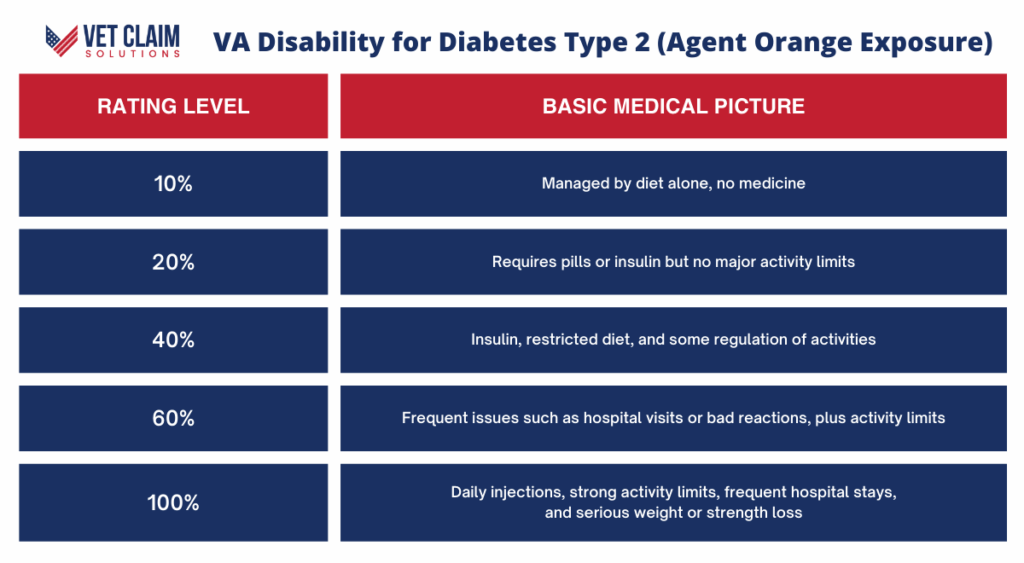
On top of this base rating, many veterans end up with extra ratings for complications. These might include neuropathy in the hands and feet or kidney problems. Vision loss and heart disease are also common. VA acknowledges that type 2 diabetes carries long term health risks. General factors like age over 45 or family history can play a role. A sedentary lifestyle or obesity may also contribute.
However, if you meet the service requirements, you do not have to tease out which factor mattered more. The orange presumptive rule does that heavy lifting. It assumes the service caused it regardless of other factors.
Medical care, treatment options, and why good records matter
Your VA disability claim will only be as strong as your medical file. That includes private doctors and VA providers. You want clear notes about how often you test your blood sugar. Your records should show what your A1C trends look like. They must also list which medicines you use. This helps health care providers understand the severity of your condition.
There are many treatment paths for type 2 diabetes. Some veterans use pills. Some end up on insulin. If you want a simple look at modern treatment options and education, check out the National Institutes of Health content on Medline Plus for diabetes. This information can help you discuss options with your care provider. Being informed improves your health outcomes.
You might be wondering about advanced tools, such as insulin pumps. You may also want to know how different ways insulin works. To learn how different kinds of insulin are used, review WebMD’s guide on types of insulin for diabetes treatment. For some veterans with type 1, there are even videos that show daily life on pumps. You can watch this WebMD piece on diabetes type and insulin pump use. Even if you are type 2, those give you a feel for the level of tracking doctors expect today.
How your diabetes symptoms support your VA claim
You may have lived with diabetes so long that you ignore the symptoms. For VA, though, those day to day struggles are evidence. They show the true impact on your work life, social life, and energy level. Typical symptoms include extra thirst and frequent trips to the bathroom. Blurry vision and tingling in feet are also common. Slow healing and deep tiredness often occur.
Some veterans chalk those up to age, which is easy to do. Medical experts remind us that those are clear warning flags for both type 1 and type 2. A quick refresher from Forbes Health on symptoms of diabetes type 1, type 2 and gestational can help you compare what you live with every day. Make a simple log of your symptoms. Jot down your bad days and episodes of low or high blood sugar. Note missed events because you did not feel well.
Include any urgent care or ER visits in your log. That record often lines up closely with the rating language VA uses. It supports the 40, 60, or 100% levels.

Can type 2 diabetes be improved or reversed
A lot of veterans ask if it even matters to chase better blood sugar once the disease is locked in. It does matter greatly. Better control usually leads to fewer long term problems. You may see fewer hospital visits. You will likely enjoy a better quality of life. The health benefits of management are significant.
There is debate around the word reverse. Some people are able to reach a level of remission through diet changes. Weight loss and activity also help. WebMD reviews current medical views in their article Can you reverse type 2 diabetes. Doctors do not promise miracles. However, they see many patients lower medicine needs and cut back on flare ups.
VA even runs general wellness programs. These focus on diet and exercise. You can find tips for healthy living through VA prevention programs. Participating in these does not change your presumptive status. You will not lose your disability benefits by getting healthier. They can make daily life with diabetes much more livable.
Broader context of military exposures and veterans’ illnesses
While this guide focuses on Agent Orange, it is helpful to understand the wider scope of military exposures. The VA is constantly evaluating health outcomes military exposures cause in different generations. This includes women veterans who also served in these zones. For example, gulf war veterans’ illnesses often involve different toxins. These might include airborne hazards from burn pits or depleted uranium. Just like with Agent Orange, gulf war veterans face medically unexplained illnesses.
VA has set up various tracking systems for these war veterans’ illnesses. This includes the du follow-up program for du exposure. This program involves du screening and monitoring for embedded fragments or requiring fragment removal. Understanding this context helps you see that toxic exposure is a major focus for VA. Whether it is gulf war service or Vietnam service, the principle is the same. The government is acknowledging that war service causes long term health issues.
These unexplained illnesses and infectious diseases are now better understood. Research into health outcomes military personnel face is ongoing. This leads to better provider resources for health care providers.
Other risk factors VA may consider, even with presumptive service
It is true that many non veterans get type 2 diabetes. The disease shows up more often after age 45. It is especially common in people with a strong family history. Lifestyle and diet matter for the general population. Lack of exercise and weight gain are also major factors. These issues affect everyone.
Those same factors do show up in veterans too. Some Vietnam veterans spent decades after service working hard. They may have been eating on the go and skipping sleep. Pushing through stress was a way of life. So they may worry that their diabetes is their fault. This guilt is common among war veterans’ communities.
The presumptive rules step in at that point. Even if you check many general risk boxes, VA policy protects you. If you serve in certain locations and later develop type 2 diabetes, the agency acts. They will still treat it as service connected. Scientific findings on herbicide and dioxin exposure created that benefit. VA will not hold common lifestyle issues against you for basic service connection.

How VA diabetes type 2 Agent Orange presumptive Vietnam Veteran benefits show up in your life
The label itself is long, but what does it mean in real life? For many veterans and families, it translates into stable monthly money. It also provides health coverage and added security in retirement years.
Here are some of the va disability benefits tied to a grant of service connection:
- Monthly disability compensation, tax free.
- VA health care tied to service connection for diabetes and related complications.
- Access to low cost or free prescriptions for diabetes management.
- Extra pay for a spouse, minor children, or certain dependents at 30 percent or higher ratings.
- State and local breaks, like reduced property tax or hunting and fishing licenses in some states.
These sit beside other government programs some veterans use in older age. Examples include Social Security and pension. If you want a broader picture of planning, you can check other resources. You can look at how firms talk about veteran benefits within elder care and estate work. That is outside VA itself. But it helps you see the bigger financial picture.
Extra Agent Orange related benefits tied to Vietnam service
Agent Orange did not just hit veterans. Children and surviving spouses can be touched by those same exposure findings. VA acknowledges that in some cases. There are specific benefits for certain birth defects in children of Vietnam veterans. This also applies to veterans with specific service in Korea or Thailand. VA explains those in its material on birth defects in children of Vietnam veterans.
Some conditions are also treated as presumptive for all veterans with longer service. One example is Lou Gehrig’s Disease or ALS. Note that ALS itself is not linked to Agent Orange directly. VA points that out on its Agent Orange conditions index page. All of this matters if your family is looking at several health concerns. You need to see which ones may bring extra VA support.

VA programs that can help you build and support your diabetes claim
You are not stuck trying to figure out this system alone. VA runs programs that deal with Agent Orange issues all day long. The smart move is to use what is already built. Do not try to reinvent the wheel from your kitchen table. Start with VA’s Agent Orange Registry exam. This acts as a specialized health registry evaluation.
This free exam gives you a focused health review related to herbicide exposure. VA’s public health site has a step by step walk through on how to enroll in the Agent Orange registry. It is a critical health registry tool. There are also general exposure tools for doctors. One example is the Exposure Ed mobile app. These help them answer veteran questions regarding military exposures.
VA discusses this tool in an article titled Have you heard of Exposure Ed. These resources remind care providers that diabetes can be related to your past service. They give them quick facts they can fold into your medical notes. Proper documentation from your health care provider is vital. Make sure they use the available provider resources. This ensures your registry evaluation is thorough.
Step by step: filing a VA disability claim for type 2 diabetes
Let us walk through the practical steps. This part is where many veterans freeze. It looks like too much paperwork. It can feel like too much legal talk and too much red tape. But the path is actually straightforward. You just need to tackle it piece by piece.
- Confirm your service qualifies
Look at your DD214, ship logs, or orders. Did you serve in Vietnam or inland waterways? Did you serve in the qualifying offshore zone, the Korean DMZ, or Thailand bases? Check if you were in C 123 units in the time frames VA recognizes. The exposure location guide from VA, Agent Orange Exposure Locations, can help confirm that part. - Gather your diabetes diagnosis and treatment records
Pull VA clinic notes and private doctor charts. Get your lab reports and prescription lists. Use those to show you have type 2 diabetes and how long you have had it. - List all diabetes related problems
Do you have neuropathy or kidney disease? Do you suffer from vision loss, heart disease, or sexual health issues? If your doctor links these to diabetes, make a list. VA can rate each as its own disability once diabetes is service connected. - Complete VA Form 21 526EZ
This is the standard form for new VA claims. On the form, list “type 2 diabetes due to Agent Orange exposure” as the disability. Mark that your service was in a presumptive location. - Work with an accredited representative if needed
Many veterans pick a service officer, agent, or attorney who knows VA rules. VA keeps an index of these on its claims representation page. They can help navigate the medically unexplained aspects of some claims. - Respond quickly to any VA letters
VA might schedule you for a C and P exam. They might send a duty to assist letters or ask for records. Answer on time. Slow answers, slow claims.
If you are curious about how to get a fast claim result, VA gives its own tips. You can read them under an article called The fastest way to get a disability claim decision. The key theme is to fill the form correctly.
Send the right records immediately. Keep VA informed if something changes. This proactive approach prevents delays.

VA health care access once your claim is granted
Once your diabetes claim is service connected, you gain an even stronger foothold in the VA health care system. You can apply or confirm coverage through VA’s general health care application process. This opens up a wider range of health benefits. Vietnam veterans exposed to Agent Orange may be placed in higher priority groups. This often means lower copays. It also provides better access to care.
VA explains the basic health care options tied to exposure on its page about health care benefits for veterans exposed to Agent Orange. This coverage is comprehensive. It addresses veterans’ diseases related to service. At the same time, keep an eye on changes in law. These may bring even broader rights. For instance, recent laws address outcomes military exposures have on lungs.
VA posts new legislation summaries and updates at places like The PACT Act and your VA benefits. They also share agency wide updates through VA News and formal press releases. Staying updated is important for maintaining your benefits.
How VA keeps studying Agent Orange and Vietnam veteran health
Many veterans worry that the list of presumptive conditions may change. They fear VA might remove things. However, the record so far shows that VA is moving in the direction of adding conditions. That change is driven by medical studies. For Vietnam veterans, the department has spent years tracking long term outcomes military service causes. They look closely at veterans’ illnesses as the population ages.
VA discusses that effort in its piece titled VA continues to study the health of Vietnam veterans. The more they learn, the better they can refine the rules. This helps clarify who qualifies for which presumptions. If science makes the case, conditions can be added. We saw this with past updates on heart disease and Parkinson’s. Type 2 diabetes was one of the earlier big wins in that process.
Ongoing Agent Orange studies keep the door open for more refinements. This research creates a clear benefits overview for the future. You can often find a publications list on the VA website detailing these studies.

Protecting your mental health during the claim process
The claims path is not just a paper chase. For some Vietnam veterans, talking about herbicides and illness pulls old memories back to the surface. It can be an emotional time. You may feel anger or sadness. You might even feel guilt for the health problems your kids or spouse face. These feelings are normal but heavy.
Take those feelings seriously. Talk with a trusted person or chaplain. Counselors are also available to help. If thoughts get heavy, seek help immediately. If you or a loved one has any thoughts of self harm, call or text the Veterans Crisis Line. You did not cause Agent Orange exposure. You did your job in a war zone. The benefits described here are part of the country’s obligation to you.
Conclusion
VA diabetes type 2 Agent Orange presumptive Vietnam Veteran benefits can sound like dry government language on a page. In real life, though, that label allows for vital support. It can mean the difference between struggling through chronic illness alone and having stability. It provides a mix of income, care, and support. This makes your later years more secure. It validates your service and your sacrifice.
If your story is simple on paper, you likely qualify. This means having boots on the ground in Vietnam and type 2 diabetes after service. The rules created through laws like the Blue Water Navy Vietnam Veterans Act of 2019 are on your side. If your path is more tangled, you still have options. Service in surrounding areas or C 123 units might make things complex. However, you have strong tools and science behind you.
Use resources from ongoing Agent Orange research. Utilize programs like the Agent Orange Registry exam. These tools are designed to assist you. You do not have to be a lawyer to claim what you earned. Start by gathering your service records. Get your medical file in order. Read up at trusted sites such as Medline Plus on diabetes. Check current VA guidance on diabetes and Agent Orange. Then file through VA Form 21 526EZ.
VA diabetes type 2 Agent Orange presumptive Vietnam Veteran benefits are there for a reason. They exist so you are not left carrying the cost of that war alone today. Claim the benefits you deserve.