


Understanding VA Disability Chronic Pain and the Reality for Veterans Seeking Benefits
Living with continuous physical discomfort changes every single aspect of a veteran’s daily life after their military discharge. Many former service members deal with severe VA disability chronic pain long after they officially leave active military service duty. You might wonder how to successfully secure proper financial support for this persistent issue through official government channels. The transition from active duty to civilian life is often complicated by these lingering injuries, making it difficult to maintain steady employment or enjoy family activities. For many, the struggle to receive VA disability becomes a full-time job in itself, requiring patience and meticulous record-keeping.
The Department of Veterans Affairs offers specific compensation programs to help injured veterans manage these difficult health conditions. Understanding the complex rules for a VA claim regarding chronic pain can significantly improve your chances of getting approved. You must approach the entire application process with a clear legal strategy and incredibly solid medical treatment evidence. This involves not only documenting the pain itself but also how that pain limits your functional capacity in the workplace and at home. By focusing on the intersection of veterans health and legal requirements, you can build a stronger case for the disability compensation you deserve.
Recent changes in how the veterans affairs department views pain have opened new doors for those seeking a va rating. Historically, it was difficult to get a disability rating for pain that didn’t have a clearly defined underlying clinical diagnosis. However, legal precedents have established that chronic pain that results in functional loss is a valid health condition for VA disability benefits. This shift means that even if your X-rays or MRIs come back “normal,” your reported level of agony and its impact on your daily life are critical factors in your disability claim.

Understanding VA Disability Chronic Pain and the Reality for Veterans Seeking Benefits
Millions of military veterans experience intense chronic pain due to severe injuries sustained during their active military service. This constant physical discomfort often stems from carrying heavy combat gear, absorbing physical impacts, or surviving dangerous combat situations. The heavy physical toll frequently leads to a formal medical diagnosis of chronic pain syndrome from treating medical professionals. When this pain syndrome becomes a permanent fixture in a veteran’s life, it requires a comprehensive approach to health care that addresses both the physical and neurological aspects of the condition.
When a veteran suffers from a health condition that persists for months or years, it impacts their ability to work and maintain social connections. This persistent chronic pain can manifest as back issues, joint degradation, or nerve damage that never fully heals despite multiple surgeries or physical therapy sessions. To receive VA disability, a veteran must demonstrate how these physical limitations prevent them from performing standard daily tasks, such as lifting, sitting for long periods, or walking. The va disability system is designed to compensate for this loss of earning capacity and quality of life.
The VA disability system recognizes that chronic pain is not just a symptom but a debilitating state of being that affects the entire nervous system. Veterans often find that their chronic pain is exacerbated by traumatic brain injuries or other orthopedic traumas sustained in the field. Without proper disability compensation, many former service members struggle to afford the specialized treatments, such as chiropractic care or pain management injections, required for long-term relief. Furthermore, chronic pain syndrome often leads to a cycle of inactivity, which can then cause further health conditions like weight gain or cardiovascular issues.
It is also important to recognize that chronic pain can be “intermittent” but still qualify for a high VA rating. If your pain flares up to the point of immobilization several times a month, that functional loss must be accounted for in your disability ratings. The veterans affairs examiners are required to consider how your service-connected condition behaves during these flare-ups, not just how you feel on a “good day” during your VA claim exam. Documenting these episodes is vital for ensuring your disability benefits accurately reflect your level of impairment.

Establishing Service Connection and VA Disability for Your Chronic Pain Symptoms
To successfully navigate a disability claim, you must first establish a clear service connection for your current physical ailments. This requires showing a direct link between your time in the military and the chronic pain you feel today. A service-connected condition is the foundation upon which all VA disability benefits are built and approved by the department. Without a “nexus”—a medical link—between your current health condition and your military service, the VA denies many claims that might otherwise be valid.
The regional office will look for three specific elements: a current diagnosis, an in-service event or injury, and a medical nexus letter. If the VA denies your initial application, it is often because the medical nexus link was not sufficiently established or the examiner did not believe the chronic pain was related to an event that happened years ago. Providing detailed records of your chronic pain history, including buddy statements from those you served with, is essential to proving that your service connection is valid and ongoing. These statements can provide the regional office with context that medical records might miss.
Many veterans find that their VA disability status depends on how well they document their flare-ups and functional loss over time. It is important to remember that chronic pain can be rated as a primary condition or as a secondary condition to another injury, such as a knee or hip problem. When you receive VA notification of your status, ensure that every service-connected condition is accurately reflected in your file. If you have multiple injuries contributing to your chronic pain syndrome, the VA uses a “combined rating” system to determine your total disability rating.
The Compensation and Pension (C&P) exam is perhaps the most critical stage of establishing service connection. During this exam, a VA health provider will evaluate your range of motion and pain levels. It is crucial to be honest about your worst days during this evaluation. If you stop moving because of pain, that is where your range of motion ends for va rating purposes. Many veterans try to “tough it out” during exams, which unfortunately results in lower disability ratings than they actually deserve. Clear communication about your chronic pain is the only way to ensure the VA claim process works in your favor.
The Link Between Physical Discomfort, Mental Health, and Your VA Disability Rating
There is an undeniable connection between long-term chronic pain and various mental health conditions that veterans face daily. Persistent physical suffering often leads to depression, anxiety, or a specific somatic symptom disorder that complicates the recovery process. A high disability rating often accounts for the combined impact of physical and mental health challenges on a veteran. When the body is in a constant state of “fight or flight” due to chronic pain, the mind inevitably suffers, leading to a decreased ability to cope with stress.
When chronic pain becomes overwhelming, it can trigger a somatic symptom response where the psychological distress manifests as physical agony, creating a feedback loop. Veterans dealing with somatic symptom disorder may find that their mental health deteriorates as their physical mobility decreases over time. It is vital to seek help through va health care if you experience thoughts of self-harm or despair. The va health system provides integrated care models that treat both the mental health conditions and the physical pain syndrome simultaneously to improve overall outcomes.
If you are in a crisis, the veterans crisis line is available to provide immediate support for those struggling with the weight of their health conditions. Your va rating should reflect the totality of your experience, including how chronic pain affects your emotional stability and social functioning. Proper disability ratings take into account both the physical limitations and the mental health toll of living with injury. For example, if your chronic pain causes insomnia, which then leads to depression, those mental health issues can be filed as secondary conditions to your physical va claim.
Furthermore, many veterans with traumatic brain injuries find that their mental health is inextricably linked to their physical symptoms. The cognitive fog associated with traumatic brain issues can make managing chronic pain even more difficult. The veterans affairs department recognizes these “comorbidities” and encourages veterans to seek a comprehensive disability rating that covers all aspects of their veterans health. By addressing mental health as part of your va disability benefits strategy, you ensure a more holistic approach to your long-term recovery and financial stability.

Specific Challenges Facing Women Veterans and VA Disability Benefits
The experience of women veterans in the military often involves unique physical stressors that lead to specialized chronic pain. Many women veterans suffer from musculoskeletal issues related to ill-fitting equipment designed for men or the physical demands of diverse service roles. Securing disability benefits requires a nuanced understanding of how these specific injuries develop over a long military career. Women veterans are also statistically more likely to be diagnosed with fibromyalgia or other systemic pain syndrome conditions that require specific va rating criteria.
Furthermore, women veterans may have experienced military sexual trauma (MST), which can lead to long-term physical and psychological complications. The aftermath of sexual trauma often includes chronic pain in the pelvic or abdominal regions that is difficult to diagnose without a trauma-informed medical approach. Ensuring that women veterans have access to tailored health care is a priority for the modern va health care system. When filing a VA claim, it is important to work with a regional office coordinator who understands the sensitivities surrounding military service and sexual trauma.
When filing for VA disability benefits, it is crucial to document how military sexual incidents have impacted your physical health and daily life. The chronic pain resulting from such experiences is a valid basis for a VA claim and should be treated with the same clinical rigor as a combat injury. Comprehensive VA health services are designed to address these sensitive issues while providing the necessary financial disability compensation. Women veterans should not hesitate to claim secondary conditions like depression or somatic symptom disorder that often stem from these traumatic experiences.
The veterans affairs department has recently expanded its outreach to women veterans to ensure they receive VA disability at rates comparable to their male counterparts. This includes specialized health care clinics and better training for va rating examiners. If you are a woman veteran dealing with chronic pain, your military service history is a vital piece of evidence. Whether your pain is from an orthopedic injury or the long-term effects of sexual trauma, you are entitled to the same disability benefits and veterans health support as any other service member.

Common Secondary Condition Issues and Your VA Disability Rating
A secondary condition is a health issue that is caused or aggravated by an existing service-connected disability. For instance, chronic pain in the lower back can eventually lead to sleep apnea due to weight gain or heart disease from chronic inflammation. Obtaining a higher va rating often involves identifying these linked conditions and adding them to your existing disability claim. The regional office must consider how your primary service-connected condition has “proximately caused” these additional health conditions.
Veterans should also be aware of how chronic pain medication might lead to irritable bowel syndrome or other digestive issues. If you suffer from irritable bowel or bowel syndrome as a result of NSAIDs or opioid use for your pain, these can be rated as secondary to your primary chronic pain condition. Additionally, hearing loss and traumatic brain injuries are frequently found alongside chronic orthopedic pain in combat veterans, often complicating the va claim process. Each secondary condition can add to your overall disability rating, potentially leading to 100% disability compensation.
The development of heart disease can also be a secondary effect of the sedentary lifestyle forced by chronic pain. Even exposure to agent orange can create a complex web of health issues that result in heart disease or irritable bowel syndrome over time. Documenting these connections through va health care records is the best way to ensure your disability compensation reflects the true extent of your injuries. A secondary condition like radiculopathy (nerve pain) is also very common in veterans with chronic pain in the spine, and it can be rated separately for each limb affected.
Understanding the “pyramiding” rules is also essential when claiming secondary conditions. The veterans affairs department will not allow you to be rated twice for the same symptom, but they will allow multiple ratings for different manifestations of a service-connected condition. For example, if your chronic pain causes both a physical limitation and a somatic symptom disorder, you may be eligible for ratings in both categories. Working with a veterans health advocate can help you navigate these complex disability ratings to maximize your va benefits.
Managing Your VA Claim and Veterans Health Care Services
Successfully managing your va claim requires consistent communication with your doctors and the veterans health administration. You should utilize va health care resources to keep your medical records updated with the latest information on your chronic pain. Regular visits to va health clinics provide the evidence needed to maintain or increase your disability rating. If you stop seeking treatment, the regional office may assume your health condition has improved, which could lead to a reduction in your disability benefits.
If your chronic pain prevents you from maintaining gainful employment, you may be eligible for TDIU benefits through the VA. These TDIU benefits (Total Disability based on Individual Unemployability) allow veterans to be paid at the 100% rate even if their individual disability ratings are lower than 100%. To qualify for TDIU benefits, you generally need one service-connected condition rated at 60% or a combined rating of 70% with one condition at 40%. Navigating the va health care system effectively ensures that you have the documentation required for such a significant increase in disability compensation.
Always keep a journal of your chronic pain symptoms and how they affect your daily life to share with your health care providers during every scheduled appointment. This personal record serves as a powerful supplement to your official va disability file during the review process. Mention specific instances where your pain syndrome prevented you from working or attending social events. Staying proactive with your health care is the most effective way to protect your long-term financial and physical well-being while you receive VA support.
Furthermore, don’t be afraid to request a “Decision Review Officer” or file a “Supplemental Claim” if the va denies your request for an increase. The va claim process is often a marathon, not a sprint. Using va health data to show a “clear and unmistakable error” or providing “new and relevant evidence” can turn a denial into an approval. Your disability compensation is a right earned through military service, and the veterans affairs department is legally obligated to provide it when the evidence supports your health conditions.

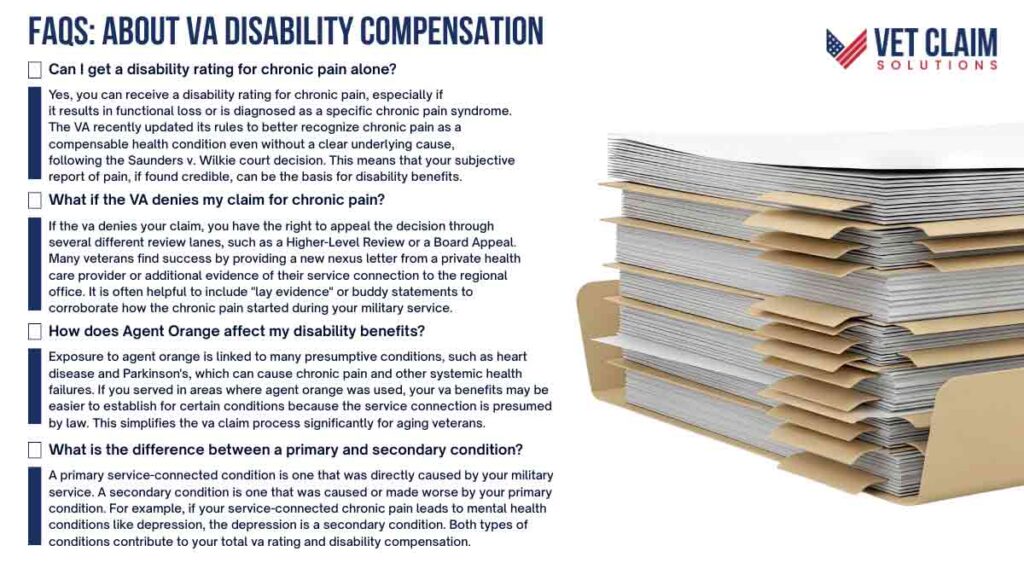
Frequently Asked Questions About VA Disability Compensation
Can I get a disability rating for chronic pain alone?
Yes, you can receive a disability rating for chronic pain, especially if it results in functional loss or is diagnosed as a specific chronic pain syndrome. The VA recently updated its rules to better recognize chronic pain as a compensable health condition even without a clear underlying cause, following the Saunders v. Wilkie court decision. This means that your subjective report of pain, if found credible, can be the basis for disability benefits.
What if the VA denies my claim for chronic pain?
If the va denies your claim, you have the right to appeal the decision through several different review lanes, such as a Higher-Level Review or a Board Appeal. Many veterans find success by providing a new nexus letter from a private health care provider or additional evidence of their service connection to the regional office. It is often helpful to include “lay evidence” or buddy statements to corroborate how the chronic pain started during your military service.
How does Agent Orange affect my disability benefits?
Exposure to agent orange is linked to many presumptive conditions, such as heart disease and Parkinson’s, which can cause chronic pain and other systemic health failures. If you served in areas where agent orange was used, your va benefits may be easier to establish for certain conditions because the service connection is presumed by law. This simplifies the va claim process significantly for aging veterans.
What is the difference between a primary and secondary condition?
A primary service-connected condition is one that was directly caused by your military service. A secondary condition is one that was caused or made worse by your primary condition. For example, if your service-connected chronic pain leads to mental health conditions like depression, the depression is a secondary condition. Both types of conditions contribute to your total va rating and disability compensation.
Securing Your Future with Proper VA Disability Benefits and Support
Securing your va disability benefits is a vital step toward reclaiming your life after years of chronic pain and sacrifice. By understanding the va rating process and documenting your service-connected condition, you can ensure a stable future for yourself and your family. Do not let the complexity of the disability claim process or an initial va denies letter discourage you from seeking the help you earned. The path to disability compensation is often long, but the financial and health care security it provides is invaluable.
Your chronic pain is a real and valid consequence of your service, and the va disability system is there to support you. Whether you are dealing with hearing loss, mental health issues, or physical trauma, there are resources available to help. Take the first step today by contacting your local regional office or a qualified veterans service officer to discuss your disability compensation options. Remember that veterans health is a priority, and you deserve access to the best va health care available for your chronic pain syndrome.
With the right medical evidence and a clear understanding of va disability benefits, you can manage your chronic pain more effectively. Stay persistent, stay informed, and continue to advocate for the veterans health services that you deserve as a former service member. Your health and your future are worth the effort of pursuing a successful va claim. By securing your va rating, you are not just getting a check; you are gaining access to a lifetime of va health support and the recognition of your military service sacrifices.