


Navigating military disability made easy pancreatitis starts with understanding how the Department of Veterans Affairs evaluates pancreatic conditions for VA disability benefits. Veterans with acute pancreatitis, chronic pancreatitis, or recurring pancreatic inflammation may experience severe abdominal pain, nausea, vomiting, weight loss, digestive issues, chronic fatigue, and flare-ups that interfere with work and daily life. To secure the correct disability rating, veterans need strong medical evidence, consistent treatment records, and clear documentation showing how pancreatitis affects their long-term health.
The pancreas is a vital organ located behind the stomach. It helps digest food by producing enzymes and helps regulate blood sugar through hormone production. When this organ becomes inflamed, the condition is diagnosed as pancreatitis. For veterans, pancreatitis may be linked to military service through direct physical trauma, medication use, toxic exposure, environmental hazards, or other service-related medical events. A strong VA claim should explain not only the diagnosis, but also how the condition began, worsened, or became connected to service.
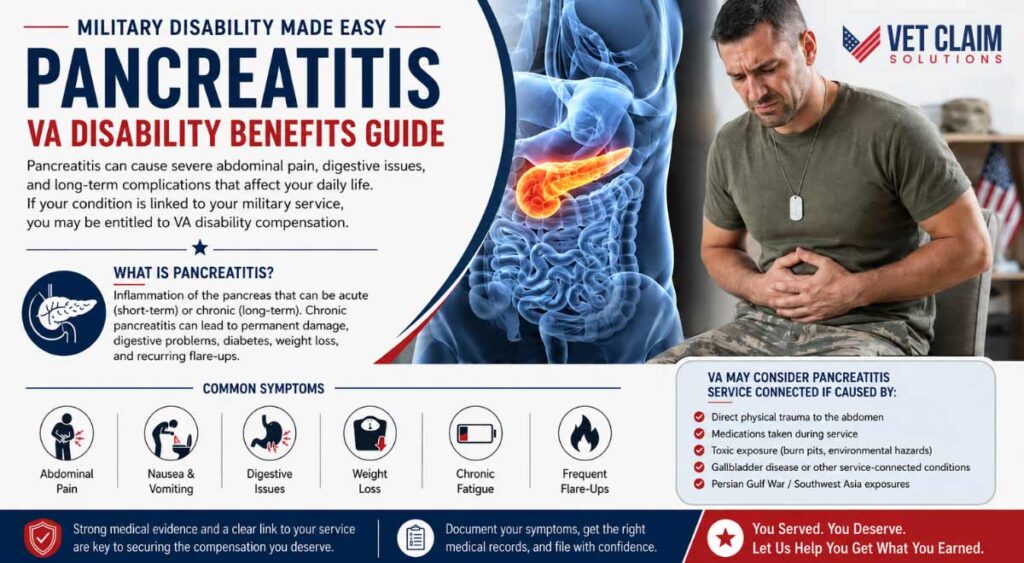
Medical professionals generally divide pancreatitis into two categories: acute and chronic. Acute pancreatitis appears suddenly and may improve with proper treatment, while chronic pancreatitis can cause permanent damage over time. Chronic cases may lead to recurring pain, digestive problems, malabsorption, weight loss, diabetes, or other secondary complications. These symptoms can significantly affect a veteran’s ability to work, eat normally, maintain energy, or perform daily activities.
To qualify for VA disability compensation, veterans must show that pancreatitis is connected to service. This may require service treatment records, private medical records, hospital records, lab results, imaging, medication history, and doctor statements explaining the severity of the condition. The VA evaluates pancreatitis under specific diagnostic code criteria, so your records should clearly document the frequency of attacks, symptom severity, hospitalizations, flare-ups, and any long-term complications.

Veterans may also qualify through service connection if pancreatitis began during service, was aggravated by service, or is secondary to another service-connected disability. Some claims may involve exposures from the Persian Gulf War, the Southwest Asia theater, burn pits, environmental hazards, or other deployment-related factors. In these cases, the VA may look closely at record evidence, lay statements, and medical opinions that explain how the veteran’s symptoms are related to service.
This guide breaks down pancreatitis VA rating rules, VA disability rating requirements, service connection evidence, and claim-building steps. Whether you are filing an initial disability claim, seeking an increased rating, or reviewing a previous denial, understanding the evidence requirements can help you prepare a stronger case and avoid common mistakes.
Note: The VA evaluates acute and chronic pancreatitis differently based on the permanence of your digestive symptoms. Chronic cases generally receive higher disability ratings because they cause permanent damage to your internal organs and require constant medical intervention. Veterans should ensure their medical records specifically distinguish between a one-time acute event and a recurring chronic condition.
Establishing Direct Service Connection for Military Disability Made Easy Pancreatitis

Establishing direct service connection for military disability made easy pancreatitis means showing that your pancreatic condition began during military service or was caused by an event that happened while you were on active duty. For many veterans, the first signs may include severe abdominal pain, nausea, vomiting, digestive issues, or sudden illness during training, deployment, or combat-related duties. If those symptoms were documented in your service treatment records, they can become important record evidence for your VA claim.
Direct physical trauma to the abdomen may also support a pancreatitis VA rating claim. Vehicle accidents, blast injuries, falls, blunt force trauma, or combat-related impact can damage the pancreas or pancreatic duct system. Even if the injury seemed minor at the time, later symptoms may develop into acute pancreatitis, chronic pancreatitis, or recurring flare-ups that affect daily life. This is why veterans should gather medical records, hospital reports, imaging results, emergency room notes, and treatment history showing how the condition progressed after service.
One of the most important pieces of medical evidence is a strong nexus letter. A qualified medical professional can review your history and explain whether your current pancreatitis diagnosis is “at least as likely as not” related to an in-service event. This opinion helps connect your current condition to your service history and may strengthen your VA disability claim. A strong nexus letter should discuss your diagnosis, symptoms, treatment records, military duties, toxic exposure history, and any medical reasoning that supports service connection.
Veterans may also support their claim with lay statements from fellow service members, family members, or coworkers. Buddy statements can describe abdominal injuries, sudden illness, repeated complaints, missed duties, hospital visits, or symptoms that began during or shortly after service. These statements are especially helpful when official service records are incomplete or do not fully describe what happened in the field.
In some cases, veterans may also need to explain whether pancreatitis is connected to toxic exposure, burn pits, contaminated water, or deployment-related hazards. Veterans who served in the Persian Gulf War, the Southwest Asia theater, or other high-exposure environments should make sure their claim includes detailed evidence about where they served, what exposures occurred, and how those exposures may relate to their pancreatic condition. The stronger the evidence connecting pancreatitis to military service, the better chance the VA has of understanding the full impact of the condition.
Key Takeaways
- Direct service connection requires a medical nexus letter linking your condition to active duty.
- Buddy statements provide crucial lay evidence to support undocumented in-service abdominal injuries.
- Chronic pancreatitis cases receive higher disability ratings than isolated acute attacks.
Secondary Service Connection and VA Claim for Pancreatitis

Many veterans develop pancreatic problems years after leaving military service, which is why secondary service connection can be important in a VA claim for pancreatitis. A veteran may qualify for VA disability benefits if a current service-connected disability caused or aggravated their pancreatic condition. For example, gallbladder disease may contribute to gallstones that block the pancreatic duct and trigger acute pancreatitis, chronic pancreatitis, severe abdominal pain, digestive problems, and recurring flare-ups.
A secondary VA disability claim must show a clear medical link between the already service-connected condition and the new pancreatic diagnosis. If a veteran has a service-connected gallbladder condition, digestive disorder, or biliary system issue, the claim should include strong medical evidence, treatment records, imaging, lab results, hospitalization records, and a nexus letter explaining how the condition contributed to pancreatitis. The stronger the record evidence, the easier it is for the VA to understand why pancreatitis should be considered part of the veteran’s overall disability compensation picture.
Mental health conditions may also be relevant in some secondary pancreatitis claims. Veterans with service-connected PTSD, depression, anxiety, or another mental health condition may develop alcohol use disorder or other health behaviors that contribute to alcohol-related pancreatitis. In this type of claim, the evidence must carefully explain how the mental health condition led to the behavior or medical complication that caused or aggravated pancreatitis. A strong medical opinion can help connect the veteran’s symptoms, diagnosis, and service-connected mental health history to the current pancreatic condition.
Prescription medications may also play a role in some pancreatitis claims. Veterans who take long-term medication for a service-connected disability, chronic pain, inflammatory conditions, or other rated conditions should review their medication history with a qualified doctor. If a prescribed medication caused or aggravated pancreatitis, the veteran’s medical records should include the medication timeline, known side effects, lab findings, imaging results, and physician notes connecting the medication to the pancreatic condition.
To support a secondary VA disability claim for pancreatitis, veterans should gather all relevant treatment records, private medical records, VA medical records, medication lists, hospital reports, and doctor statements. A detailed nexus letter should explain whether the pancreatitis is “at least as likely as not” caused or aggravated by the service-connected condition. This evidence can help support the correct pancreatitis VA rating, disability rating, or even an increased rating if the condition has worsened over time.
Pro Tip: Secondary claims require robust medical literature linking your primary service-connected condition to your pancreatic inflammation. Always submit peer-reviewed medical studies alongside your doctor’s nexus letter to strengthen your compensation case and provide the VA with scientific justification. This helps the rater understand that your condition is a medically recognized complication of your primary disability.
VA Rating System: Chronic Pancreatitis VA Rating and Diagnostic Code 7311

The Department of Veterans Affairs rates chronic diseases of the pancreas under Diagnostic Code 7311. Claims evaluators assign specific percentage ratings based entirely on the documented severity of your ongoing digestive symptoms. They look for documented weight loss, severe malnutrition, and the exact frequency of your painful abdominal attacks. The more evidence you provide regarding these specific criteria, the more likely you are to receive an accurate rating. The VA uses a specific formula to determine if your symptoms meet the threshold for each percentage level.
A ten percent disability rating applies when veterans experience relatively mild and highly infrequent digestive system symptoms. These specific veterans might have occasional abdominal pain but generally maintain a normal body weight and healthy diet. If you suffer from frequent attacks that require minor dietary restrictions, the VA may award a thirty percent rating. At this level, the condition is beginning to interfere with your daily life and nutritional intake. A 30% rating often reflects a veteran who must take regular medication or enzymes to manage their digestion.
Highly severe medical cases regularly warrant a sixty percent or maximum one hundred percent VA disability rating. A sixty percent rating requires frequent, severe attacks accompanied by noticeable body weight loss or chronic steatorrhea. The maximum hundred percent rating goes to veterans experiencing severe malnutrition, extreme weight loss, and constant abdominal pain. These ratings reflect a total inability to maintain normal health and often prevent the veteran from maintaining steady employment. At the 100% level, the veteran is often in a state of total physical exhaustion due to the inability to absorb nutrients.
️ Warning: Do not rely solely on the VA’s internal doctors during your Compensation and Pension examination. Always have your private physician complete a Disability Benefits Questionnaire (DBQ) to document your exact symptoms accurately and ensure all clinical findings are represented. Private doctors often have a more comprehensive understanding of your long-term medical history than a one-time VA examiner.
Step-by-Step Guide to Filing Your VA Claim for Pancreatitis

Filing a strong VA claim for pancreatitis requires careful preparation, detailed medical evidence, and clear documentation of how the condition affects your daily life. Before submitting your VA disability claim, veterans should gather all relevant medical records, treatment records, lab results, imaging reports, hospital records, and physician statements related to acute pancreatitis, chronic pancreatitis, abdominal pain, digestive issues, and flare-ups. A well-prepared claim can help the VA understand the severity of your condition and assign the correct disability rating under the proper diagnostic code.
Before filing, consider submitting an Intent to File to help protect your potential effective date for back pay. Then organize your records in chronological order so the VA can clearly follow the progression of your pancreatic condition. Highlight key evidence such as emergency room visits, hospitalizations, elevated amylase or lipase levels, imaging findings, dietary restrictions, medication history, and provider notes describing recurring abdominal pain or digestive complications. These details can support your pancreatitis VA rating and help reduce the risk of an avoidable denial.
Veterans should also include evidence that supports service connection. This may include service treatment records, deployment records, toxic exposure history, lay statements, buddy statements, or a nexus letter explaining how pancreatitis is related to military service. If pancreatitis is caused or aggravated by another service-connected disability, make sure the claim clearly explains the secondary connection and includes medical reasoning from a qualified provider.
A fully developed claim is stronger when it is easy for the VA to review. Label each document clearly, separate medical evidence by date, and include a short personal statement explaining your symptoms, flare-up frequency, work limitations, hospital visits, and the impact on your quality of life. Strong organization can help claims evaluators understand your condition faster and may improve your chances of receiving the proper VA disability rating or disability compensation.
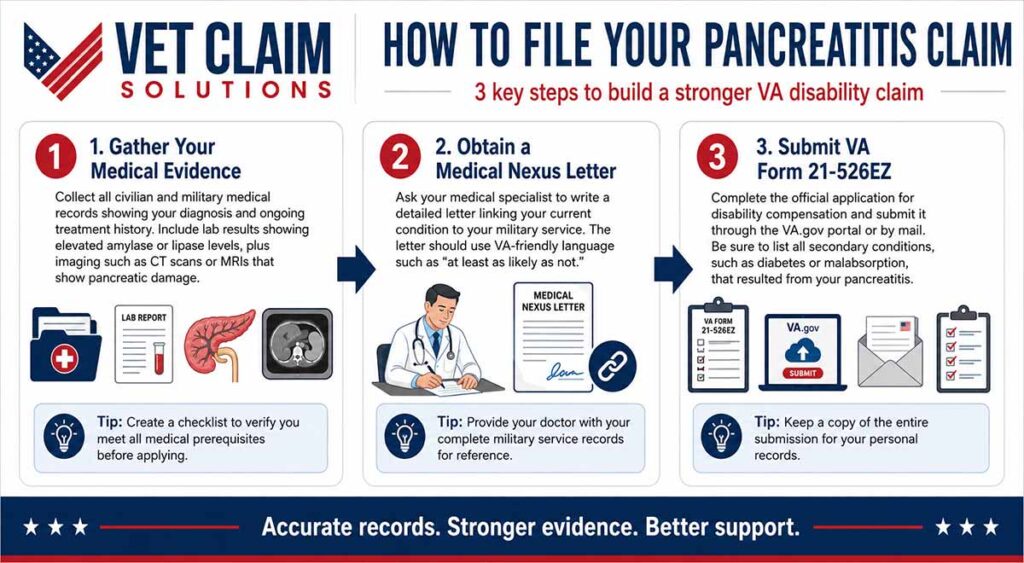
How to File Your Pancreatitis Claim
- Gather Your Medical Evidence
Collect all civilian and military medical records showing your diagnosis and ongoing treatment history. Ensure you include lab results showing elevated amylase or lipase levels, as well as imaging like CT scans or MRIs that show pancreatic damage.
Tip: Create a checklist to verify you meet all medical prerequisites before applying.
- Obtain a Medical Nexus Letter
Ask your medical specialist to write a detailed letter linking your current condition to your service. This letter should use the VA’s preferred legal language, such as “at least as likely as not.”
Tip: Provide your doctor with your complete military service records for reference.
- Submit VA Form 21-526EZ
Complete the official application for disability compensation and submit it via the VA.gov portal or by mail. Be sure to list all secondary conditions, such as diabetes or malabsorption, that have resulted from your pancreatitis.
Tip: Keep a copy of the entire submission for your personal records.
C&P Exam for Pancreatitis: Preparation and Best Practices
The Compensation and Pension exam, often called a C&P exam, is a major step in the military disability made easy pancreatitis process. During this exam, a VA examiner or VA-contracted physician evaluates the severity of your pancreatic condition and how it affects your daily life. For a VA disability claim, the examiner may review your diagnosis, medical records, treatment records, lab results, imaging, flare-up history, and symptoms related to acute pancreatitis or chronic pancreatitis.
Veterans should be honest and detailed about their worst days, not just how they feel on the day of the exam. Many veterans unintentionally downplay their abdominal pain, nausea, vomiting, diarrhea, fatigue, weight loss, and digestive problems. This can lead to an incomplete exam report and possibly a lower disability rating. The examiner is not only looking for a diagnosis. They are also looking for functional limitations, such as missed work, dietary restrictions, frequent rest periods, hospital visits, and difficulty completing normal daily activities.
Before the exam, prepare a symptom diary that tracks the frequency, duration, and intensity of your pancreatitis flare-ups. Include episodes of severe abdominal pain, nausea, vomiting, diarrhea, malabsorption, weight changes, emergency room visits, and any periods of bed rest. This record can help the examiner understand the chronic nature of your condition and may support the correct pancreatitis VA rating under the proper diagnostic code.
If you have lost weight because of malabsorption, appetite changes, or digestive problems, make sure the examiner documents your current weight and compares it with your normal baseline. Weight loss, nutritional problems, recurring attacks, and hospitalization history may become important medical evidence when the VA evaluates your VA disability rating. Veterans should also bring or reference relevant VA medical records, private treatment notes, lab reports showing elevated amylase or lipase, imaging results, medication lists, and records of any dietary restrictions.
Review the Disability Benefits Questionnaire, or DBQ, for pancreatitis before your appointment. The DBQ can help you understand what symptoms and limitations the examiner may ask about. Focus on how pancreatitis affects your ability to work, eat normally, maintain energy, travel, sleep, and perform daily tasks. If the examiner does not ask about weight loss, frequency of attacks, hospitalizations, chronic pain, or digestive complications, politely bring those details up so they are included in the report.
A strong C&P exam can help support service connection, an accurate disability rating, or an increased rating if your pancreatitis has worsened. The goal is to make sure the VA sees the full impact of your condition, not just a brief snapshot from one appointment.
Appealing a Denied Service-Connected Pancreatitis Claim

Receiving a denial for a service-connected pancreatitis claim can be frustrating, but it does not mean your case is over. Many VA disability claims for acute pancreatitis or chronic pancreatitis are denied because the VA does not see enough medical evidence, the records do not clearly prove service connection, or the nexus between the condition and military service is weak. Before choosing an appeal option, carefully review the denial letter to understand whether the VA questioned your diagnosis, treatment records, symptom severity, diagnostic code, or connection to an in-service event.
Veterans generally have three main appeal paths: Higher-Level Review, Supplemental Claim, or Board Appeal. A Higher-Level Review may be useful if you believe the VA made an error based on the evidence already in your file. You cannot submit new evidence in this lane, but a senior reviewer will look again at the existing record. This may help if the VA overlooked favorable medical records, misread your service treatment records, or failed to properly evaluate your pancreatitis symptoms.
A Supplemental Claim may be the better option if you have new and relevant evidence. This could include updated medical records, hospital records, lab results, imaging, a stronger nexus letter, specialist notes, or documentation showing recurring abdominal pain, nausea, vomiting, weight loss, malabsorption, or flare-ups. New evidence can directly address the reason for the denial and may help support the proper pancreatitis VA rating, disability rating, or increased rating if the condition has worsened.
For complex claims involving secondary service connection, toxic exposure, the Persian Gulf War, the Southwest Asia theater, or multiple service-connected disabilities, a Board Appeal may be necessary. This option allows a Veterans Law Judge to review the case and consider more detailed legal and medical arguments. Board Appeals can take longer, but they may be appropriate when the claim involves complicated medical history, conflicting opinions, or evidence that the VA did not fully consider.
The key to a stronger appeal is focusing on the exact reason the VA denied the claim. Veterans should continue documenting symptoms, treatment, hospital visits, medication use, dietary restrictions, and functional limitations. A detailed medical opinion from a qualified provider can help explain whether pancreatitis is “at least as likely as not” related to military service or caused or aggravated by a service-connected disability. Stronger evidence can improve your chances of securing the correct VA disability rating and the disability compensation your condition may warrant.
Maximizing Your VA Disability Compensation for Pancreatitis

To maximize your VA disability compensation for pancreatitis, your claim must show the full impact of the condition—not just the diagnosis. Veterans with acute pancreatitis or chronic pancreatitis should document recurring abdominal pain, nausea, vomiting, weight loss, malabsorption, fatigue, dietary restrictions, hospitalizations, and flare-ups that affect daily life. The stronger your medical evidence, treatment records, lab results, imaging, and provider notes are, the easier it is for the VA to assign the correct pancreatitis VA rating under the proper diagnostic code.
Secondary conditions can also affect your overall disability rating. For example, chronic pancreatitis may contribute to diabetes mellitus if the pancreas can no longer produce enough insulin. Veterans may also develop digestive complications, nutritional deficiencies, chronic pain, or mental health symptoms related to the stress of managing a severe medical condition. If these conditions are caused or aggravated by service-connected pancreatitis, they may support secondary service connection and potentially increase your combined VA disability rating.
Another important option is Total Disability based on Individual Unemployability, commonly called TDIU. If your service-connected pancreatitis prevents you from maintaining substantially gainful employment, you may qualify for payment at the 100% rate even if your combined rating is lower. This may apply to veterans who experience frequent attacks, unpredictable flare-ups, repeated hospitalizations, severe fatigue, dietary limitations, or symptoms that make a regular work schedule impossible. Evidence such as employer statements, vocational expert reports, medical opinions, and work history can help support a TDIU claim.
Veterans should also make sure the VA evaluates all symptoms under the correct rating criteria and diagnostic codes. The VA generally cannot compensate the same symptom twice, but separate conditions may qualify for separate ratings if they involve distinct symptoms and medical findings. For example, pancreatitis, diabetes, digestive complications, or other secondary disabilities may need to be evaluated separately if the evidence supports it.
If your pancreatitis is exceptionally severe, you may also want to review whether Special Monthly Compensation, or SMC, applies. SMC may be relevant when a service-connected disability causes severe impairment, loss of independence, or the need for regular aid and attendance. A qualified Veterans Service Officer, accredited attorney, or claims professional can help review your VA claim, identify missing evidence, and determine whether an increased rating, secondary claim, TDIU, or SMC may apply.
Conclusion

Securing a fair VA disability rating for pancreatitis can be challenging, but the right evidence can make the process much stronger. Veterans with acute pancreatitis, chronic pancreatitis, or recurring pancreatic flare-ups should focus on building a complete record that shows the full impact of the condition. Strong medical evidence, consistent treatment records, lab results, imaging, hospital records, and provider statements can help the VA understand the severity of your symptoms and assign the proper pancreatitis VA rating.
A successful VA claim should clearly explain how pancreatitis is connected to military service. This may involve direct service connection, an in-service event, toxic exposure, or a medical link to another service-connected disability. If pancreatitis developed as a secondary condition, your records should explain how the original disability caused or aggravated the pancreatic condition. The clearer the connection, the stronger your VA disability claim becomes.
Veterans should also document symptoms such as severe abdominal pain, nausea, vomiting, weight loss, malabsorption, fatigue, dietary restrictions, missed work, emergency visits, and hospitalizations. These details can support the correct disability rating, an increased rating, or additional benefits such as TDIU if the condition prevents substantially gainful employment. If the VA denies your claim or assigns a lower rating than your symptoms support, continue gathering updated medical records, nexus evidence, and lay statements before filing an appeal.
Your service should not leave you carrying the financial burden of a chronic illness alone. Whether you are filing for direct service connection, secondary service connection, or a higher VA disability compensation level, organization and persistence matter. By staying proactive, tracking your symptoms, and submitting strong evidence, you can make the military disability made easy pancreatitis process more manageable and build a stronger path toward the benefits you deserve.