


How Organized Files, a Clear Personal Statement, and Solid VA Medical Proof Turned a 0 % Rating into a 40 % Lumbar Strain Rating (plus a 20 % Sciatica Rating)
Overview
A lot of former service members assume that after the VA gives them a rating, the process stops there. A 0% rating can feel like a complete rejection, like the battle is over. In reality, a 0% rating means VA recognizes the condition as service connected, but the evidence may not yet show the level of severity needed for compensation.
For Keith, the turning point came when he connected with a Vet Claim Solutions Claim Coach who helped him understand the process, organize his records, and focus on what the VA needed to see. Together, they followed a well-drafted strategy: gather the right documents, prepare a clear personal statement, submit strong VA medical evidence, and present the claim in a clean, organized way from the start.
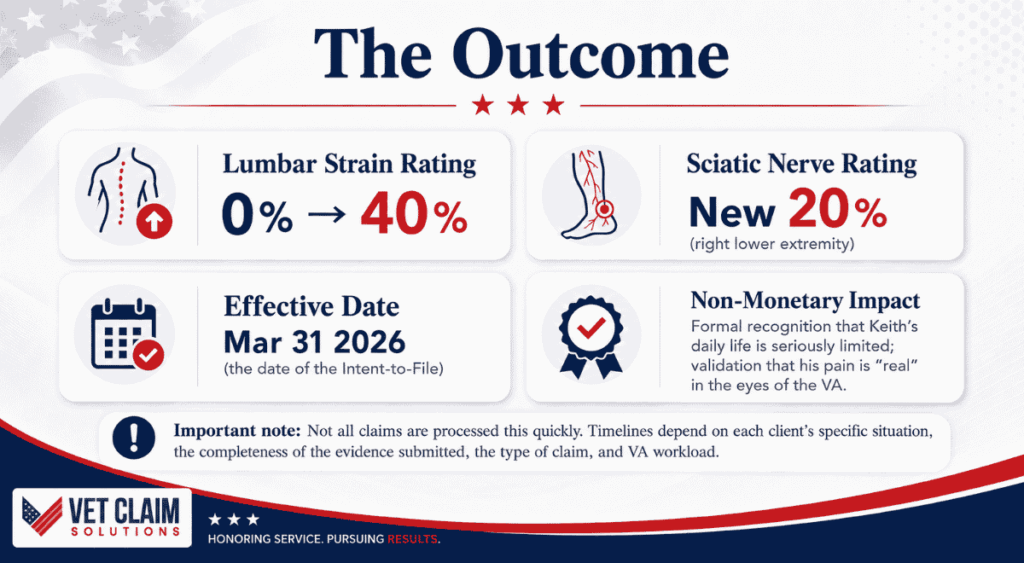
That strategy helped turn Keith’s case into a meaningful victory. His lumbar strain, originally rated at 0%, was increased to 40%, and VA also granted a new 20% rating for right-leg sciatic nerve involvement.
Keith’s case shows that the right guidance, a clear plan, organized files, and solid medical documentation can help VA see the full picture of what a veteran is truly living with.
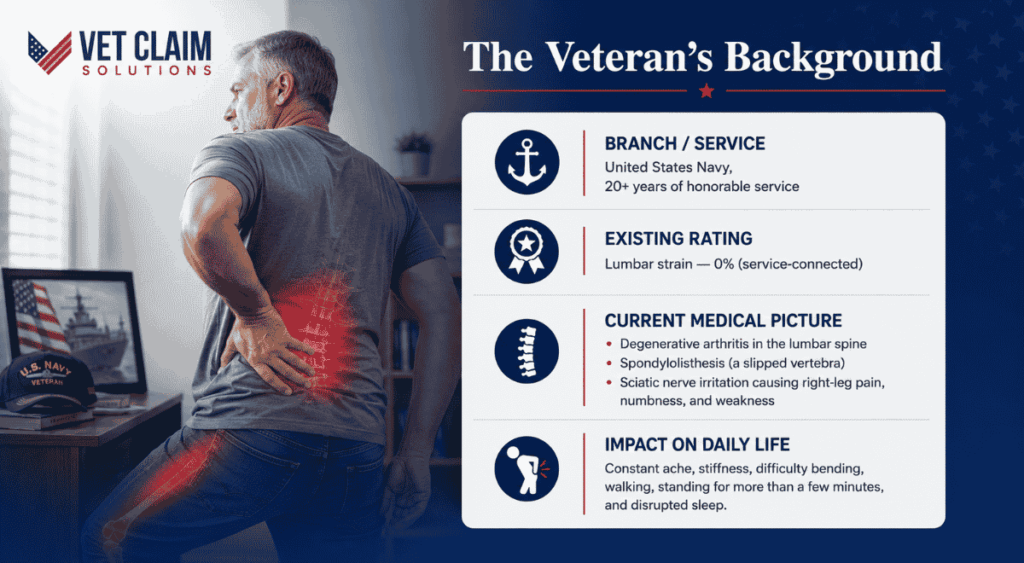
The Challenge: Proving the Condition Had Worsened
A 0 % rating can feel like a “dead end,” but the real struggle was showing the VA that Keith’s back condition had progressed enough to merit a higher rating and that the right‑leg nerve pain was directly linked to the lumbar injury.
Two questions had to be answered:
- Has the lumbar strain deteriorated to a compensable level?
- Is the right‑leg sciatic pain a secondary manifestation of the lumbar condition?
Because back injuries often “radiate” down the leg, the VA must consider the whole picture—spine and nerve symptoms together.
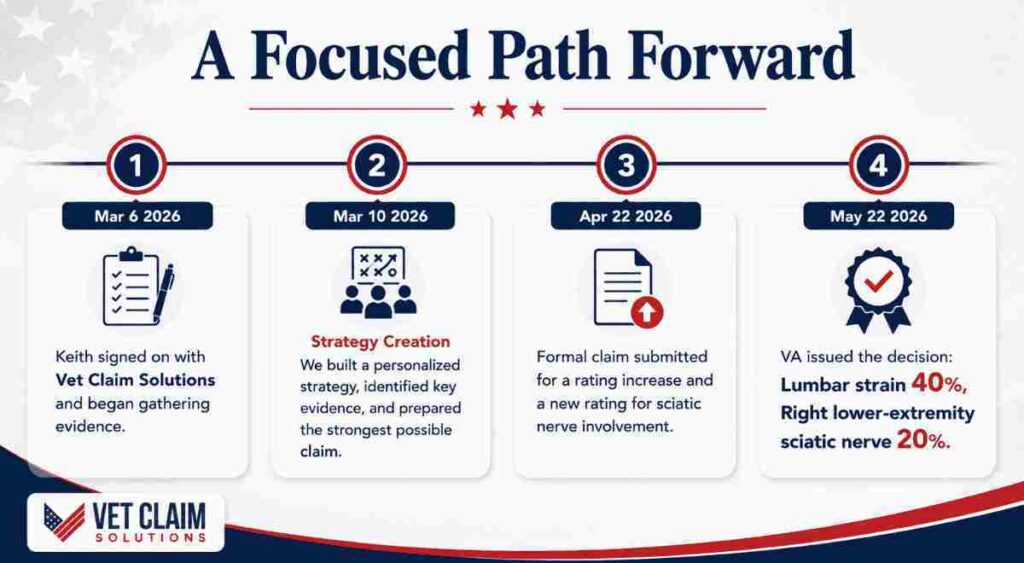
The process was straightforward because the claim packet was organized from the start—no back‑and‑forth requests for missing documents.
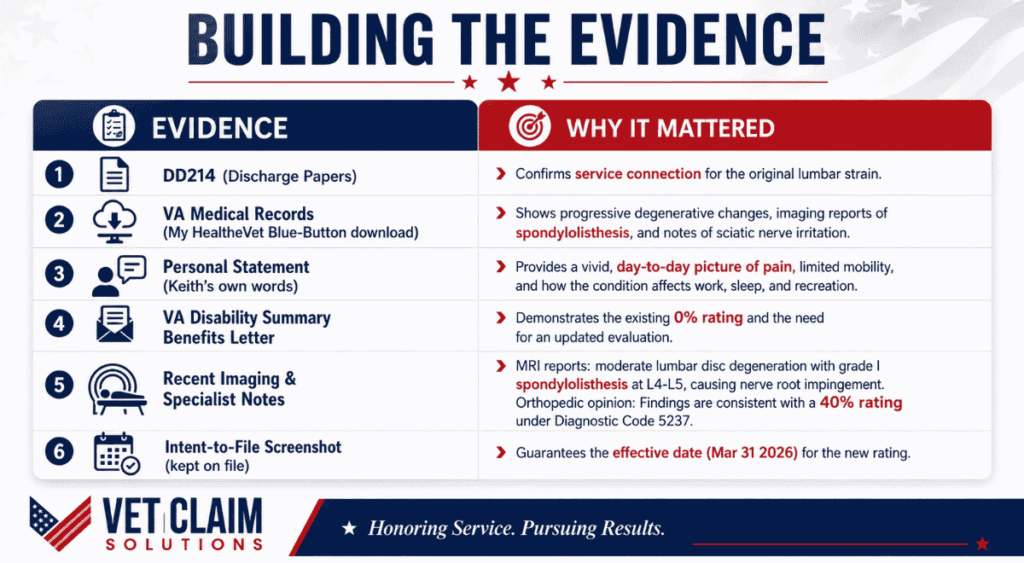
Note: No separate nexus letter was required because the VA’s own medical records already linked the sciatic symptoms to the lumbar pathology.
What the VA Decision Said
TThe VA’s rating board applied the Veterans Affairs Schedule for Rating Disabilities (VASRD). With the help of a Vet Claim Solutions, Keith’s evidence was organized and presented in a way that helped show the full picture of his lumbar condition and related right-leg symptoms.
- Lumbar Strain (Diagnostic Code 5237) – The veteran’s range‑of‑motion loss, pain on motion, and functional limitation met the criteria for a 40 % rating (moderate functional loss).
- Sciatic Nerve (Diagnostic Code 8525) – Documented “pain, weakness, or limitation of motion of the lower extremity” that was “moderately severe” earned a 20 % rating for the right lower extremity.
The decision letter highlighted that the medical evidence demonstrated a clear progression from the original 0% rating and that the right-leg symptoms were connected to the lumbar condition. This is where the Vet Claim Solutions strategy mattered: by organizing the records, personal statement, and VA medical evidence clearly, the claim helped VA better understand what Keith had been living with every day.
Key Lessons for Veterans
1. Your First Claim Is Critical – Build a complete, organized packet the first time. The VA will often decide on the spot if the evidence is clear.
2. Back Pain Is Often More Than “Just a Back” – Degenerative arthritis, spondylolisthesis, and nerve irritation can all increase severity.
3. Never Ignore Nerve Symptoms
Sciatica, tingling, or weakness in the legs can qualify for a separate rating if they’re linked to the spine injury.
4. Personal Statements Matter – Your own words give the reviewer the human context that charts can’t convey.
5. A Nexus Letter Isn’t Always Required – When the VA’s own medical records already show the connection, a separate nexus letter may be unnecessary.
6. Keep Everything Organized – DD214, medical records, screenshots, personal essays, and the Intent‑to‑File all in one folder (digital or paper).
7. A Higher Rating Is More Than Money – It’s recognition, validation, and the first step toward getting the right medical care and accommodations.
Final Thoughts: The Record Can Catch Up
Keith’s story shows that a 0% rating can be the beginning of the process, not the end. When a condition worsens or the original rating no longer reflects daily life, the record can be updated and the VA can take another look. The key is:
- Document the progression through doctor visits, imaging, and symptom notes.
- Package the evidence cleanly with no missing pages and clear labels.
- Tell your story in your own words.
If you feel the VA’s current rating does not reflect the pain you live with every day, do not lose hope. Gather your records, stay organized, and work with the right support to submit a well-structured claim.
Not every claim moves quickly, and some claims may take longer or receive a denial at first. But that does not mean the journey is over. With Vet Claim Solutions, the client is not left to figure out the next step alone. A Claim Coach will help review the decision, look for possible gaps in the evidence, and guide the client toward the best path forward.
“A denial isn’t the final answer; a well‑prepared claim can turn the page to a new chapter of recognition and relief.”
