


Veterans may face challenges when seeking a pancreatitis VA disability rating. Symptoms can affect digestion, energy, weight, and daily life. This guide explains how the VA reviews pancreatitis claims. It also covers the evidence Veterans need to build a stronger case. Pancreatitis can cause pain, nausea, weight loss, and digestive problems. The VA reviews how these symptoms affect health and daily function.
Pancreatitis occurs when the pancreas becomes inflamed. The pancreas is a vital gland located behind the stomach that helps produce digestive enzymes and regulate blood sugar. Doctors generally classify the condition as acute pancreatitis or chronic pancreatitis. Acute pancreatitis can happen suddenly and may require emergency care or hospitalization, while chronic pancreatitis can lead to long-term damage, recurring symptoms, and ongoing treatment needs.
To receive VA disability for pancreatitis, veterans need more than a diagnosis. The VA usually looks for three key elements: a current diagnosis, an in-service event or exposure, and a medical nexus connecting the condition to service. Your medical records should show when the symptoms began. They should also explain how service caused or worsened the condition. Without strong medical evidence, the VA may deny the VA claim even when the veteran has serious symptoms.

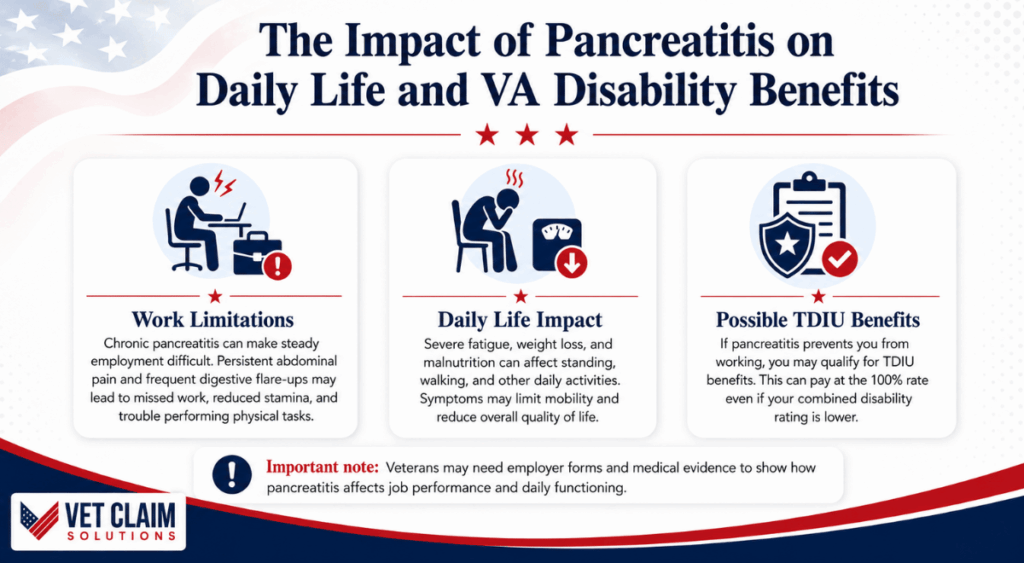
The VA may evaluate pancreatitis under the correct VA rating code and assign a disability rating based on severity. Factors may include recurring attacks, digestive limitations, weight loss, abnormal pancreatic enzyme findings, hospitalization history, and the overall impact on daily life. Veterans with severe symptoms may need to show how the condition affects work, physical activity, diet, and long-term health. This evidence can help support a higher VA rating or a more accurate VA disability rating.
Some veterans may also have related health concerns that should be documented carefully. For example, chronic digestive issues may contribute to fatigue, chronic fatigue, or symptoms that overlap with chronic fatigue syndrome. Others may experience mid-back pain, nutritional problems, or complications that require ongoing specialist care. Tell your medical provider about any possible toxic exposure. This may include Agent Orange exposure or Gulf War service.
A successful pancreatitis claim depends on clear documentation. Veterans should gather service records, private and VA treatment notes, lab results, imaging reports, hospitalization records, medication history, and statements describing how symptoms affect daily life. A well-organized file helps the VA understand your condition. This is important for initial claims, appeals, and requests for a higher rating.
Key Takeaways
- Acute and chronic pancreatitis are rated under the VA digestive system schedule based on symptom severity.
- You must have a formal medical diagnosis before filing your disability claim.
- A successful claim requires a current diagnosis, an in-service event, and a clear medical nexus.
Proving direct service connection for a Pancreatitis VA Claim

Proving direct service connection for a pancreatitis claim generally requires evidence that the veteran’s condition began during active duty or active service. Veterans must identify an event that occurred during service. This may include an injury, illness, exposure, or early symptoms of pancreatitis. This may include documented abdominal pain, nausea vomiting, digestive issues, mid-back pain, abnormal pancreatic enzyme results, or other in-service medical complaints that appeared during military service.
A strong claim starts with a clear current diagnosis from a qualified medical provider. The VA generally wants to see a formal medical diagnosis, consistent treatment records, and a full medical history showing how the condition developed over time. If the veteran was diagnosed after discharge, the records should still explain how symptoms began, continued, or worsened across different time periods after service.
Veterans should gather service treatment records, VA medical records, private medical records, lab results, imaging reports, hospitalization notes, and any current treatment records. Some Veterans did not seek treatment during service. Personal and buddy statements can describe symptoms, missed duties, and dietary restrictions. These statements can support the timeline, but they are usually strongest when combined with medical evidence.
A successful disability claim pancreatitis also needs a strong medical nexus. This means a doctor provides a medical opinion explaining how the veteran’s condition is at least as likely as not related to military service. The opinion should discuss the in-service event and current diagnosis. It should then explain the medical connection between them. Without this link, the VA may deny the claim even when the veteran has serious symptoms.
Some veterans may also need to explain whether toxic exposure played a role. The claim may involve Agent Orange exposure or Gulf War service. Medical evidence should explain why that exposure is relevant. The VA presumes certain conditions are related to specific exposures, but pancreatitis is not always treated the same way as other presumptive conditions. Because of this, service connection veterans are often required to provide strong medical evidence showing how the exposure contributed to the condition.
In some cases, pancreatitis may also be linked to another service-connected condition, such as service-connected diabetes or another digestive or metabolic disorder. However, that would usually involve secondary service connection rather than direct service connection. For direct service connection, the focus remains on proving that military service itself caused or aggravated the condition.
Once service connection is established, the VA will evaluate the severity of the condition to determine the proper disability rating, percent disability, or percent disability rating. The rating may depend on symptoms such as recurring abdominal pain, weight loss, digestive complications, hospitalization, abnormal labs, and how the condition affects daily life. A well-supported claim pancreatitis file can help veterans pursue the correct compensation benefits and improve the chances that the VA recognizes the full impact of the condition.
Pro Tip: Request your complete military medical file (C-file) before submitting your application. This file contains crucial treatment records that substantiate your in-service event and strengthen your nexus letter.
Secondary Service Connection: Chronic Pancreatitis Secondary to PTSD
Many veterans file a disability claim pancreatitis case through secondary service connection when pancreatitis develops because of an already service connected condition. Unlike direct service connection, secondary service connection generally requires evidence that another VA-recognized condition caused or aggravated the pancreas disorder. This means the veteran needs a clear current diagnosis, a formal medical diagnosis, and strong treatment records showing how the condition developed over different time periods.
For example, some veterans may develop chronic pancreatitis because of complications from another service-connected digestive, metabolic, or gallbladder condition. In other cases, pancreatitis may be linked to service-connected diabetes, medication side effects, or long-term health changes related to a primary disability. If a veteran diagnosed with pancreatitis believes another VA-rated condition contributed to the illness, the claim should include a comprehensive medical review explaining the connection.
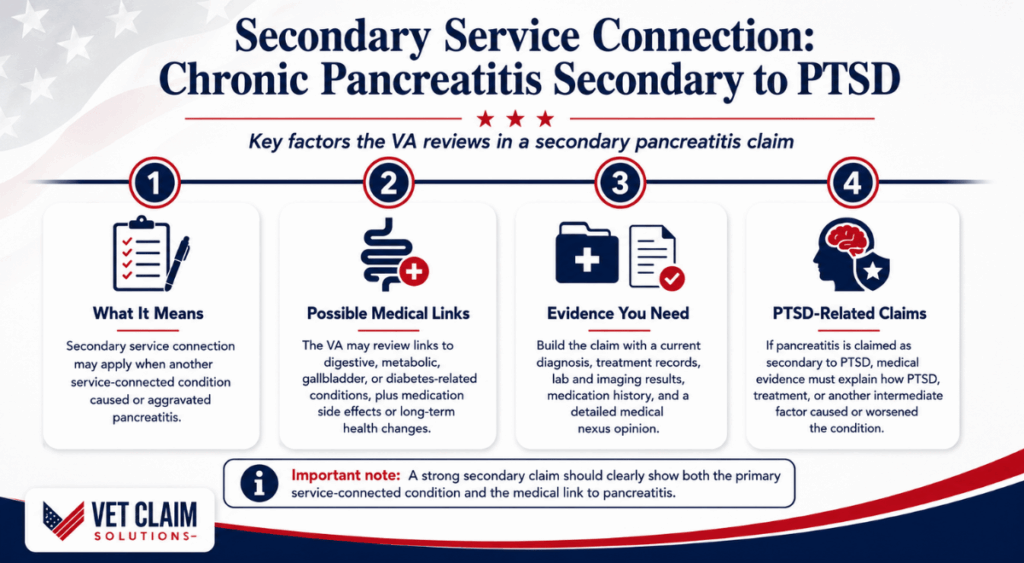
A strong secondary claim often depends on a detailed medical nexus. The doctor’s medical opinion should explain how the primary service-connected condition caused or worsened the veteran’s condition. The opinion should reference VA and private medical records. It should also discuss test results, symptoms, imaging, and current treatment.
Some pancreatitis veterans may also wonder whether toxic exposure or presumptive conditions apply. In certain cases, the VA presumes service connection for specific medical conditions based on location, exposure, or military history. However, pancreatitis is not always one of the conditions the VA recognize as presumptive. When no presumption applies, service connection veterans usually need stronger evidence VA can review, including a nexus letter that explains why the connection veteran is medically reasonable.
For claims involving PTSD, the issue can be more complex. Some Veterans may claim pancreatitis as secondary to PTSD. Medical evidence must identify the factor that caused or worsened the condition. This type of pancreatitis secondary claim generally requires a careful explanation from a qualified medical provider. The VA will want to see how the primary service-connected mental health condition led to the secondary illness.
Veterans should gather service records, treatment notes, and medication histories. They should also include hospital records, specialist reports, and personal statements. A well-supported claim pancreatitis file can help veterans pursue compensation benefits and potentially receive VA disability rating consideration for the full impact of chronic pancreatitis.
Military Disability Made Easy Pancreatitis VA Claim: What Veterans Should Know about VA Ratings
The VA evaluates pancreatic disorders under Diagnostic Code 7311 for diseases of the pancreas within the digestive system schedule. Raters assign disability percentages based on the frequency of attacks and the level of resulting physical impairment. A 10 percent rating applies to veterans who experience occasional mild attacks but maintain relatively normal weight and digestion.
Veterans with more severe symptoms can qualify for a 30 percent or 60 percent pancreatitis VA disability rating. A 30 percent rating requires moderately severe attacks that happen frequently and cause significant intestinal disturbances. To secure the 60 percent rating, your condition must involve severe abdominal pain, steatorrhea, and substantial weight loss.
In the most extreme cases, the VA awards a 100 percent total disability rating for chronic pancreatitis. This maximum rating requires continuous severe pain, profound malnutrition, and repeated hospitalizations that make maintaining employment impossible. Title 38 of the Code of Federal Regulations outlines these exact criteria for all digestive system disabilities.
Warning: Do not rely solely on personal statements to prove weight loss or severe pain. Raters require objective medical evidence, such as BMI charts and emergency room discharge summaries, to award ratings of 30 percent or higher.
The VA Claims Process and the Pancreatitis C&P Exam
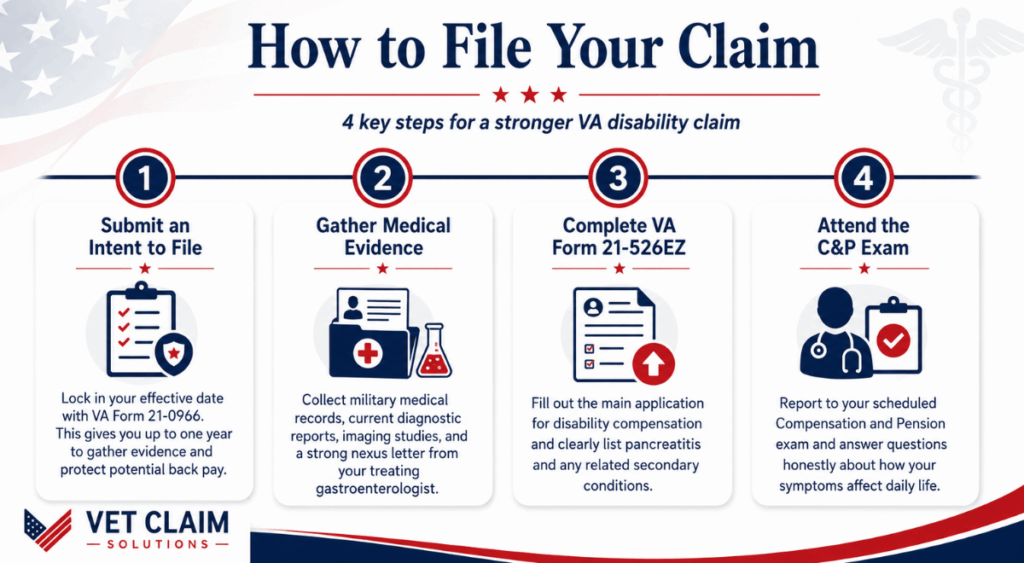
Filing a successful military disability made easy pancreatitis VA claim requires strict attention to procedural details. You must gather strong medical evidence, submit the correct forms, and attend mandatory evaluation exams. The VA claims process can take several months, so submitting a fully developed claim helps speed up the decision timeline.
Common Reasons for Pancreatitis VA Claim Denials
The VA denies many gastrointestinal claims because veterans fail to establish a clear medical nexus. You might have a current diagnosis and proof of service, but missing the connecting medical opinion ruins your chances. Raters cannot assume that your military service caused your illness without a doctor explicitly stating it in writing.
Inadequate medical documentation also leads to frequent claim rejections or lower-than-expected VA rating percentages. Some veterans try to claim a 60 percent rating based on weight loss, but they forget to submit their medical weight history. The VA needs medical proof of symptom severity. This may include CT scans, enzyme tests, and hospital records.
If your Board of Veterans’ Appeals case lacks this documentation, the judge will likely uphold the original denial. Finally, missed Compensation and Pension (C&P exam) appointments result in automatic claim denials. The VA schedules these exams to evaluate the current severity of your condition and verify your submitted medical records.
Appealing an Unfavorable Pancreatitis VA Disability Decision
Veterans have specific legal options if the VA denies their initial claim for pancreatic disease. You have one year from the date of your decision letter to file an official appeal. The Higher-Level Review option allows a senior claims adjudicator to look at your existing evidence for potential errors.
Are you wondering which appeal lane fits your specific situation? If you need to submit new evidence, you should choose the Supplemental Claim lane instead. This option allows you to submit new evidence. Examples include medical reports, buddy statements, and a stronger nexus letter. The final option involves appealing directly to a Veterans Law Judge, which offers a formal hearing but takes significantly longer.
Key Takeaways
- The VA rates pancreatitis based on objective symptom severity, ranging from 10 percent to 100 percent.
- You must submit clinical evidence like CT scans and weight history to get higher ratings.
- Missed C&P exams or missing nexus letters are the most common reasons for claim denials.
Conclusion: Securing Your Pancreatitis VA Disability Rating
Building a strong pancreatitis VA claim requires more than reporting pain or digestive symptoms. Veterans should document their diagnosis, treatment history, pain episodes, hospitalizations, dietary restrictions, pancreatic enzyme use, and the ways the condition affects daily functioning.
The evidence should also explain why chronic pancreatitis is connected to military service or how an existing service-connected disability caused or aggravated it. When the VA issues an denied or incorrect decision, veterans should carefully review the reasons for denial and select the decision-review option that matches the evidence available.
Accurate medical documentation, a clearly supported service-connection theory, and records that address the current Diagnostic Code 7347 criteria can help the VA understand the full severity of the condition.