

How to Check If I Am Rated P&T by the VA is an important question for veterans who have received a high VA disability rating but are unsure whether their conditions are considered permanent. A 100% total rating or combined disability rating does not automatically confirm Permanent and Total status. Under federal regulations, a permanent disability is one that is reasonably certain to continue throughout the veteran’s lifetime. Because permanence is a separate VA determination, a disability rating calculator or the percentage shown in your online profile cannot confirm P&T status by itself. Learn more about the federal definition of a permanent and total disability rating.
The most reliable way to verify your status is to review your official rating decision and download your VA Benefit Summary Letter. Veterans can also view their VA disability ratings online, including each individual rating and their VA combined disability rating. However, your combined rating, individual disability ratings, and monthly disability compensation do not always reveal whether the VA has assigned a permanent rating. Your official documents should clearly state whether you are considered permanently and totally disabled because of your service-connected conditions.
Confirming P&T status matters because it may affect eligibility for additional VA benefits and qualifying veteran programs. Depending on the applicable requirements, eligible family members may qualify for CHAMPVA health care benefits or Dependents’ Educational Assistance. These programs are separate from the veteran’s regular VA health care and are not granted solely because the veteran has a high VA rating. Reviewing current VA resources and VA updates can help veterans understand which additional disability benefits may apply to their families.
This guide explains where to find your P&T determination, how to interpret your rating decision, and how a total disability rating differs from a permanent-and-total classification. It also covers the relationship between a 100% schedular rating, Total Disability Based on Individual Unemployability, VA disability compensation, dependent health care, and educational assistance so you can understand your current status and available benefits.
Total Disability: The Definition of a Total Rating

A total disability rating generally means the Department of Veterans Affairs has determined that a veteran qualifies for compensation at the 100% rate. The VA assigns each disability rating according to the severity of a service-connected disability and how much it affects the veteran’s health and ability to function. A total rating may result from one condition evaluated at 100% or multiple individual ratings that produce a 100% combined disability rating under the VA’s combined-ratings formula.
Veterans may also receive compensation at the 100% rate through Total Disability Based on Individual Unemployability. TDIU may apply when disabilities connected to military service prevent a veteran from securing or maintaining substantially gainful employment, even when the veteran’s schedular VA rating is below 100%. In approved cases, the veteran receives disability compensation at the same rate as someone with a schedular 100% rating.
A total rating usually provides the highest basic monthly compensation level under the standard compensation schedule, although additional amounts may be available in qualifying circumstances. The veteran’s payment may also depend on factors such as dependent status. Veterans should review their rating decision and official VA records instead of adding their separate disability ratings together, because the VA calculates a combined rating using its own formula.
However, a 100% VA disability rating does not automatically mean the condition is permanent. The VA may classify a disability as total but subject to future review when medical improvement is considered possible. A permanent rating requires a separate finding that the impairment is reasonably certain to continue throughout the veteran’s lifetime.
This distinction matters because some additional VA benefits, veteran programs, dependent health care, and educational assistance may require Permanent and Total status rather than a temporary or reviewable total rating. Veterans who are uncertain about their classification should check their official benefit letter, consult current VA resources, or seek assistance from a VA-accredited representative.
VA Benefit: What Makes a Rating Permanent?
The “permanent” part of a Permanent and Total rating refers to whether the disabling impairment is reasonably certain to continue throughout the veteran’s lifetime. Under 38 CFR § 3.340, the Department of Veterans Affairs may consider the nature of the disability, the likelihood of improvement, the veteran’s age, and other relevant medical evidence when determining permanence. A condition does not have to remain completely unchanged, but the evidence must show that meaningful improvement is not reasonably expected.
Medical records can strengthen this determination when they document a long-term diagnosis, unsuccessful treatments, worsening symptoms, permanent functional loss, or a poor prognosis. However, a physician does not personally assign a permanent service disability rating. Medical professionals provide the clinical evidence, while VA decision-makers review the complete record and determine whether the veteran’s total disability is permanent.
Permanent and Total status does not necessarily require every one of the veteran’s individual ratings to be labeled static. Instead, the evidence must establish that the disabilities supporting the total evaluation create impairment that is reasonably certain to continue for life. Veterans should therefore review their official rating decision instead of assuming that a 100% combined rating automatically qualifies as P&T.
The VA may schedule a future examination when improvement is considered likely or when the evidence suggests a material change in a disability. Under 38 CFR § 3.327, routine reexaminations are generally not scheduled when a disability is static, has persisted without material improvement for an extended period, is permanent in character, or when another listed exception applies.
Veterans uncertain about their status can review their rating decision and benefit summary letter or seek help from a VA-accredited representative. An accredited representative can explain the claims process, help identify whether future examinations are scheduled, and review the evidence supporting the permanent designation. Veterans can also view their combined and individual disability ratings through the VA’s online rating tool, although the percentages alone may not confirm P&T status.
Key Takeaways
- A total rating provides maximum compensation but does not guarantee lifelong protection from re-evaluation.
- Permanent status means the government considers your medical conditions static with zero chance of improvement.
- You must achieve both designations simultaneously to unlock the full spectrum of permanent benefits.
How to Check If I Am Rated P&T by the VA Online
The fastest way to check your Permanent and Total status is through your official VA.gov account. After signing in, you can review your VA disability rating, download benefit letters, and access recent rating decisions without waiting for documents to arrive by mail. However, the percentage displayed in the online rating tool does not confirm P&T status by itself because a 100% or total rating is not always permanent. The VA’s online disability-rating tool shows your combined rating, individual ratings, and which disabilities are service connected.
The most useful online document is usually your Benefit Summary and Service Verification Letter, sometimes called a VA award letter. Veterans can access it through the VA’s official benefit-letter download page. Review the letter for language confirming that you are considered permanently and totally disabled because of your service-connected disabilities. The VA allows eligible veterans to download benefit summary, benefit verification, service verification, commissary, and other official letters online.
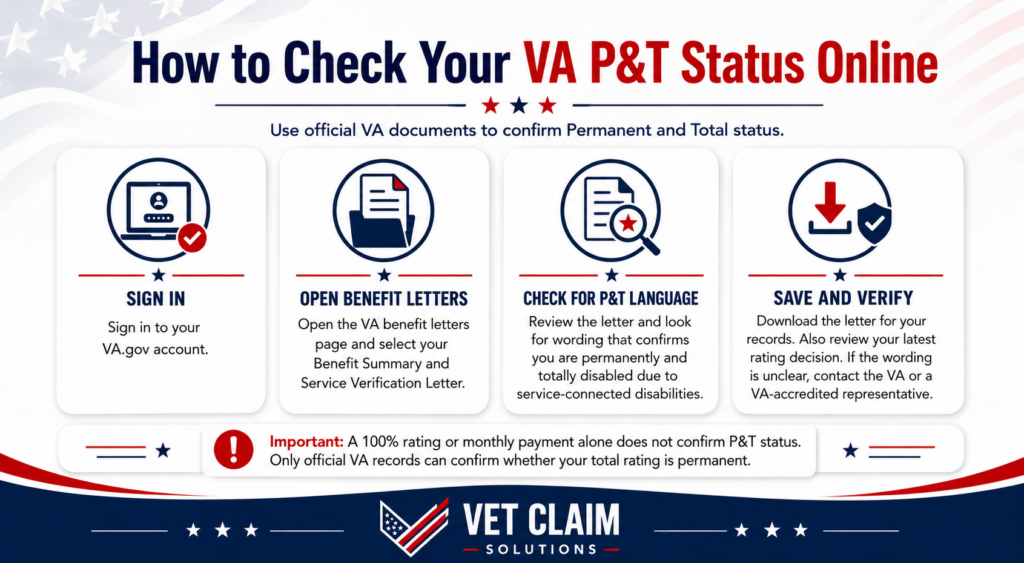
Steps to Check Your P&T Status Online
- Sign in to your VA.gov account.
- Open the VA benefit letters page.
- Select Benefit Summary and Service Verification Letter.
- Review the information included in the letter.
- Look for a statement confirming that you are permanently and totally disabled due to your service-connected disabilities.
- Download or save the letter for your records.
You should also review your most recent rating decision or decision-notification letter. VA.gov allows veterans to view and download available decision letters after a claim has closed. From the claim-status page, select the relevant closed claim, open its details, and choose the option to access your claim letters.
Your benefit letter may be used as proof of disability status when applying for certain federal, state, or local programs. However, requirements for property-tax exemptions, dependent benefits, and small-business programs vary. Review the rules for the specific program rather than assuming that a 100% rating alone satisfies its eligibility requirements.
If the online documents do not clearly state whether your rating is permanent, contact the VA or ask a VA-accredited representative to review your decision. Checking your combined disability rating online can confirm your percentage, but only your official VA records can establish whether that total evaluation also carries a permanent designation.
Decoding Your VA Rating Decision Letter
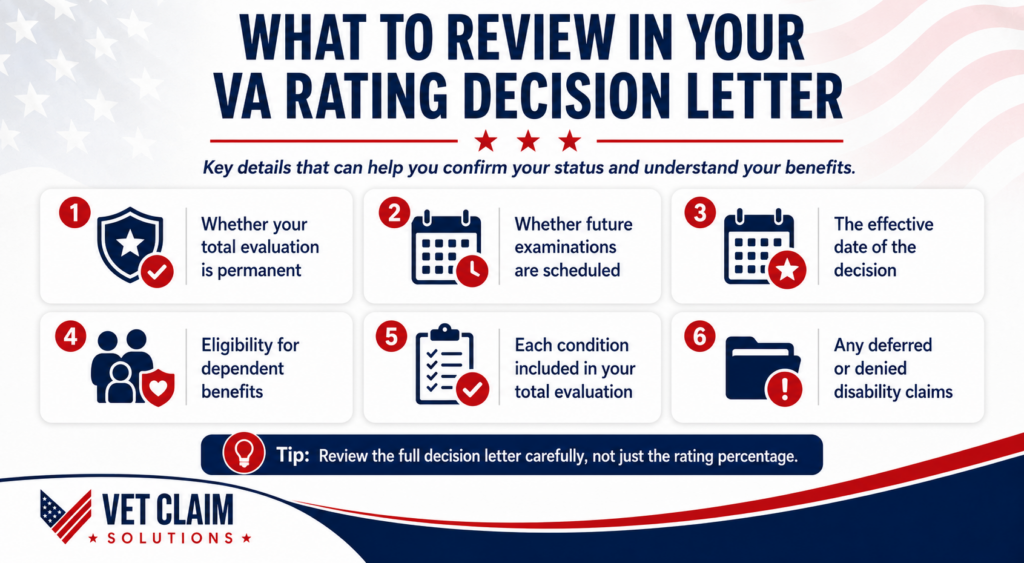
Your rating decision is one of the most reliable documents for confirming Permanent and Total status. Review the sections explaining the decision, future examinations, and eligibility for additional benefits. Language establishing eligibility for Dependents’ Educational Assistance may indicate that the VA has determined your service-connected total disability to be permanent. However, you should read the entire decision instead of relying on a single sentence.
Also check whether the decision schedules future examinations. The absence of a future examination may support a finding that your disabilities are considered static, but it should not be treated as the only proof of P&T status. Your Benefit Summary and Service Verification Letter should provide clearer confirmation.
A physician at a VA medical center can document your diagnosis, prognosis, treatment history, and functional limitations. However, the medical provider does not personally assign disability rating percentages or grant P&T status. VA rating personnel evaluate the medical and service evidence and issue the official decision.
If the wording remains unclear, an accredited representative can review the decision and explain whether the VA has granted a permanent designation. VA-accredited VSO representatives can assist with benefit claims without charging veterans for their services.
The Core Benefits of a P&T Classification
Permanent and Total status may qualify a veteran’s eligible spouse or children for additional programs that are not automatically available with every 100% rating.
One significant program is Dependents’ Educational Assistance, also known as Chapter 35. This program may help an eligible spouse or child pay for school, career training, or other approved education. The veteran generally must have a permanent and total disability caused by a service-connected condition, although other eligibility pathways also exist.
Eligible family members may also qualify for CHAMPVA, which can help cover certain health care costs when a service-connected condition causes the veteran’s permanent and total disability. CHAMPVA eligibility differs from the veteran’s own VA health care access, and dependents generally cannot receive CHAMPVA if they qualify for TRICARE.
Other potential programs may include:
- Additional educational assistance
- Certain dependent health care benefits
- Commissary or exchange privileges in qualifying cases
- State-level tax or tuition programs
- Additional federal, state, or local veteran benefits
Each program has separate eligibility requirements. Receiving P&T status does not automatically enroll the veteran or dependent in every available program.
Additional Benefits at the State and Federal Levels
State benefits can differ significantly based on the veteran’s residence. Some states offer property-tax relief, vehicle-registration benefits, tuition assistance, hunting or fishing privileges, or other programs for veterans with qualifying total ratings. Local agencies may require a current VA benefit letter before approving the application.
P&T status also does not automatically guarantee eligibility for every small business program or employment resource. Veterans interested in starting a small business should review the rules for the individual federal or state program.
Additional resources may be available through Veterans Affairs offices, VA outreach events, and official VA outreach materials. The National Resource Directory connects service members, veterans, families, and caregivers with national, state, and local programs involving employment, education, housing, recovery, and community support.
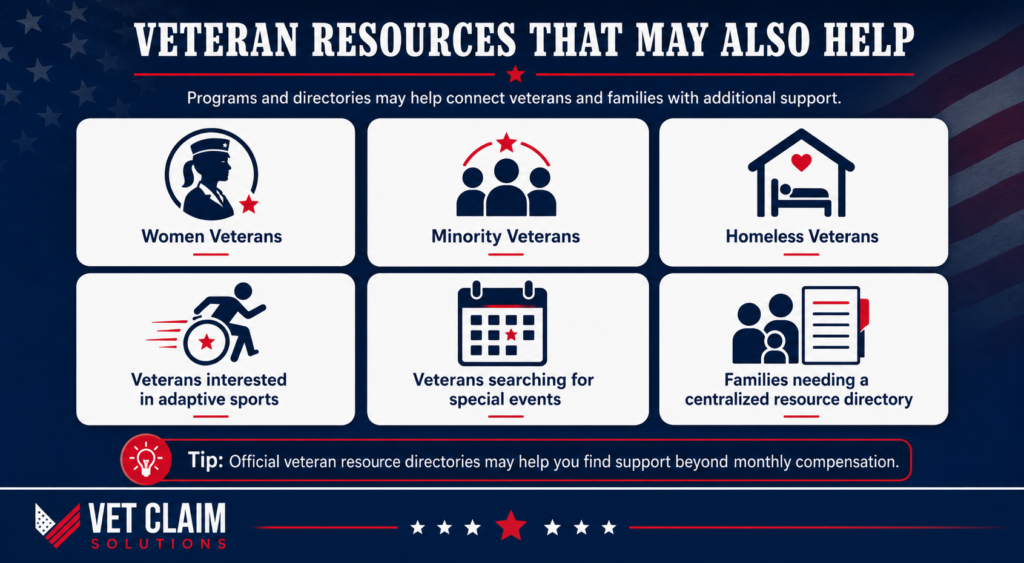
These programs are not necessarily P&T benefits, but they may improve overall care access and help veterans locate services beyond monthly compensation.
1. Understanding the Different Paths to a 100% Rating
Veterans may reach the 100% compensation level through different paths. Understanding how you reached that level is essential because not all total ratings carry the same employment rules or permanent designation.
100% Schedular Rating
A schedular 100% rating may come from one condition rated at 100% or several individual evaluations that combine to 100% under VA math. The VA uses its combined-ratings method instead of simply adding percentages together.
2. Total Disability Based on Individual Unemployability
TDIU allows eligible veterans to receive disability compensation at the 100% rate when their service-connected conditions prevent substantially gainful employment, even though their combined schedular rating is below 100%.
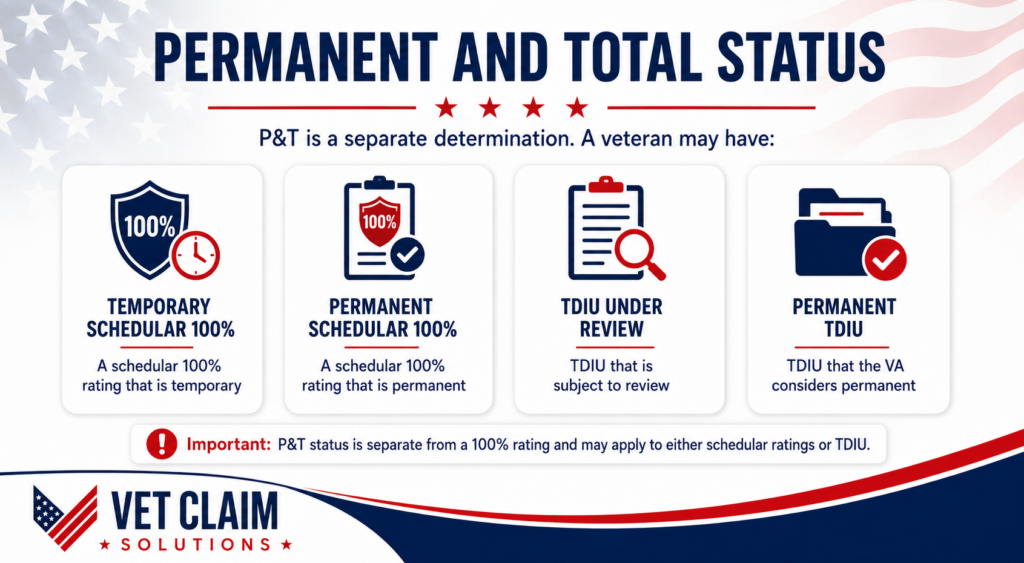
Veterans whose conditions began or worsened during active-duty military service may receive compensation once service connection and severity are established. Permanence is determined separately based on the long-term medical evidence.
3. Can You Work With a P&T Rating?
P&T status by itself does not create a universal prohibition against employment. A veteran with a schedular 100% P&T rating can generally work because that evaluation is based on the rating schedule rather than an individual finding of unemployability.
The rules are different when the veteran receives compensation at the 100% rate through TDIU. TDIU is based on the inability to maintain substantially gainful employment because of service-connected disabilities. Marginal employment, including some work in a protected environment or family business, may not count as substantially gainful employment, but the VA reviews the facts of each situation.
Veterans receiving TDIU should carefully consider how employment, self-employment, or income from a small business could affect their eligibility. An accredited representative can help review the specific circumstances before a veteran makes a major employment change.
4. Using a VA Disability Rating Calculator
A disability rating calculator can provide a useful estimate of how multiple percentages may combine, but it cannot confirm P&T status. It also cannot officially assign disability evaluations, determine service connection, or predict the outcome of pending claims.
Only the VA can assign a disability rating after reviewing the applicable rating criteria and evidence. The online VA rating tool displays existing combined and individual evaluations, but it does not include disability claims that are still pending.
Use a calculator for general planning only. Your rating decision and Benefit Summary Letter remain the controlling documents.
5. Can the VA Reduce a P&T Rating?
A P&T determination provides important protection from routine future examinations, but it should not be described as completely untouchable. Federal regulations allow reexaminations when the evidence suggests material improvement or a meaningful change in the disability. Routine examinations are generally not scheduled when a disability is static, permanent in character, or unlikely to improve.
Before reducing certain total ratings, the VA must consider whether material improvement occurred under the ordinary conditions of life. A temporary improvement during prolonged rest or under conditions that prevent employment may not be enough to justify a reduction.
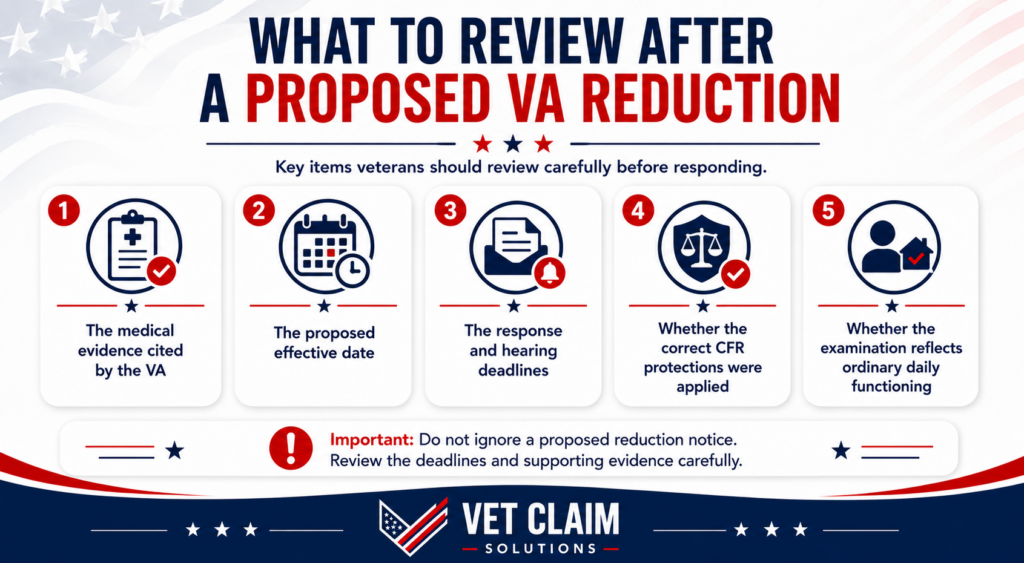
Do not ignore a proposed-reduction notice. Responding within the stated deadlines can help preserve review rights.
What to Do If You Are Not Rated P&T Yet
If your online letter or decision does not confirm P&T status, first determine whether the VA considers improvement possible. Review your medical history for evidence describing the condition as chronic, progressive, treatment-resistant, or unlikely to improve.
Depending on the circumstances, the next step may involve:
- Filing a claim for an increased evaluation if a service-connected condition has worsened.
- Submitting new and relevant evidence through a Supplemental Claim.
- Requesting a Higher-Level Review when you believe the VA made an error based on the existing record.
- Filing a Board Appeal for review by a Veterans Law Judge.
The VA currently offers three primary decision-review options: Supplemental Claim, Higher-Level Review, and Board Appeal. For most benefits, the veteran generally has one year from the decision date to request a Higher-Level Review or Board Appeal and preserve important review rights.
Veterans can use official VA forms, visit regional Veterans Affairs offices, or work with an accredited representative. VA mobile apps can also help users check benefits, communicate with health care teams, and manage certain services, but the official decision letter remains the best source for determining P&T status.
Conclusion: Confirming Whether You Are Rated P&T
Learning How to Check If I Am Rated P&T by the VA begins with reviewing the right official documents. A 100% combined rating, high monthly payment, or online percentage does not automatically confirm Permanent and Total status. Your rating decision or Benefit Summary and Service Verification Letter should provide the clearest confirmation.
Look for language stating that the VA considers your service-connected total disability permanent. Review your records for any scheduled future examinations and check whether the VA has granted eligibility for programs such as Dependents’ Educational Assistance. When the documents remain unclear, contact the VA or ask an accredited representative to review them.
Understanding your exact classification can help you protect your VA disability benefits, make informed employment decisions, and determine whether your family may qualify for additional health care or educational programs. Keep copies of your decision letters, medical evidence, and benefit summaries so you can respond quickly to future VA updates or requests.