


When navigating Cervical Strain VA Claims and Proven Ways to Strengthen Your Case, veterans often find themselves overwhelmed by the complexity of the federal system. Are you struggling to get the va compensation you deserve for your physical injuries sustained during your time in uniform? Veterans who carried heavy equipment or suffered physical trauma often develop a painful cervical strain that limits their mobility and causes chronic neck pain. If you suffer from debilitating neck pain, securing an accurate va disability rating provides vital financial support for your future and your family. Understanding your va disability options is your first step toward winning your case and protecting your livelihood through va benefits.
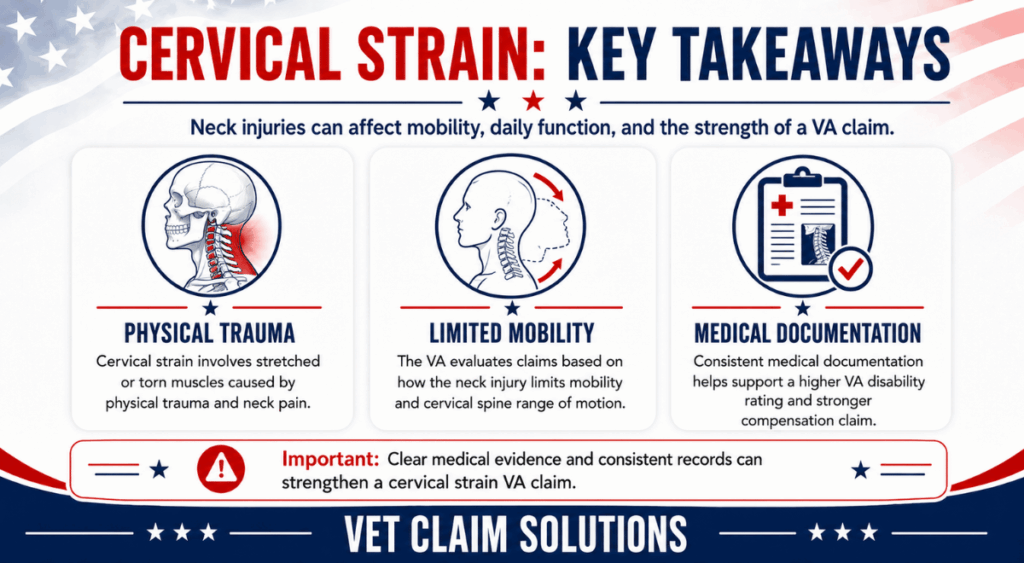
A cervical strain occurs when the muscles and tendons in your neck stretch or tear unexpectedly, leading to chronic neck issues. This type of neck injury frequently happens during military service due to vehicle accidents, parachute jumps, or intense combat training. The resulting neck pain can severely limit your mobility and impact your daily activities, making it difficult to perform even basic tasks. When you file a VA disability claim, you are asking the government to recognize the long-term impact of these service-related events.
Establishing your va disability eligibility requires clear medical evidence of this ongoing physical impairment and its origins. Veterans must understand how the Department of Veterans Affairs views this specific neck condition during the review process. The agency evaluates your physical limitations, specifically your range of motion, to determine your overall va disability rating. This disability rating is the primary factor in determining the amount of monthly va compensation you will receive for your neck pain.
Documenting your neck pain accurately gives you the best chance to secure maximum disability benefits. You must maintain consistent medical records that detail exactly how the neck injury affects your normal routine and work capacity. A strong paper trail of medical conditions forces the examiner to acknowledge the severity of your physical neck condition. Without these records, the VA may underestimate the level of neck pain you experience on a daily basis.
The cervical spine consists of seven vertebrae, labeled C1 through C7, which support the weight of the human head. When these structures are compromised by sudden trauma or repetitive stress, the surrounding soft tissues often suffer significant micro-tears. Over time, these minor injuries can coalesce into a chronic condition that requires ongoing medical intervention and physical therapy. Understanding the anatomical complexity of the neck helps veterans articulate their symptoms more effectively during the clinical evaluation process.
Neck Pain and How the VA Evaluates the Cervical Spine
The VA uses a specific diagnostic code system to evaluate neck conditions, primarily focusing on the cervical spine. When you attend a Compensation and Pension (C&P) exam, the doctor will measure your combined range of motion using a goniometer. This tool determines how far you can bend your neck forward, backward, and side-to-side before neck pain begins. The VA disability rating for cervical strain is largely based on these measurements of limitation.
In some cases, the VA looks for favorable ankylosis or unfavorable ankylosis, which refers to the permanent stiffening of the joint. If your cervical spine is frozen in a position that makes it difficult to see or move, your disability rating may be higher. The va rate for these conditions is strictly defined in the 38 CFR Part 4, which outlines the schedule for rating disabilities. Understanding these technicalities is essential for any veteran seeking VA disability benefits for neck pain.
It is important to note that the VA also considers the thoracolumbar spine when evaluating overall back and neck injuries. If your neck pain radiates down into your mid-back, it may affect your combined range of motion score. The examiner must document any “flare-ups” that cause temporary but severe neck pain and decreased mobility. These flare-ups can justify a higher va rating even if you have a good day during the actual exam.
The General Rating Formula for Diseases and Injuries of the Spine dictates specific percentages based on the degrees of flexion. For example, a 10% rating is typically granted if forward flexion of the cervical spine is greater than 30 degrees but not more than 40 degrees. If your forward flexion is limited to 15 degrees or less, you may qualify for a 40% disability rating. Veterans should be aware that the VA also considers functional loss due to pain, which can impact the final decision.
Service Connection: Establishing Direct Service Connection for Neck Injuries
To win your disability claim, you must prove a direct service connection between your current neck pain and your military service. This requires three specific elements: a current diagnosis of a neck condition, evidence of an in-service event or neck injury, and a “nexus” linking the two. Without a clear service connection, the VA will likely deny your request for va disability benefits. Many veterans find that obtaining a professional nexus letter from a medical expert is the turning point in their case.
Your medical records from your time in the service are the most valuable pieces of medical evidence you possess. If you visited a medic for neck pain after a training exercise, that record serves as proof of an in-service event. Even if the neck injury seemed minor at the time, it can be used to establish a service-connected condition years later. The VA must see that your chronic neck pain did not simply appear out of nowhere after you were discharged.
When connecting neck issues to your service, be sure to describe the specific physical demands of your MOS. For example, pilots often suffer from neck pain due to the weight of flight helmets and high-G maneuvers. Infantry soldiers may develop neck injuries from carrying heavy rucksacks over long distances. Highlighting these specific stressors helps the VA understand how your military service directly caused your cervical spine issues and justifies a higher va rating.
The “nexus” is often the most difficult element to establish, as it requires a medical professional to state that the condition is “at least as likely as not” related to service. This legal standard means there is at least a 50% probability that the injury originated during your time in uniform. Providing the doctor with your complete military medical file allows them to write a more persuasive and evidence-based nexus letter. Without this critical link, even the most severe neck injuries may be dismissed as age-related or non-service-connected.
Exploring Secondary Service Connection and Neck Conditions

A secondary service connection is established when a disability is caused or aggravated by an existing service-connected condition. For instance, if you have a service-connected neck injury, it may eventually lead to spinal stenosis or herniated disc issues. These secondary conditions can be added to your va disability claim to increase your overall va disability rating. It is common for neck pain to lead to other medical conditions like radiculopathy, which causes tingling or numbness in the arms.
The relationship between the spinal cord and the rest of the body means that neck conditions rarely stay isolated. Chronic neck pain can lead to tension headaches or even migraines, which are frequently rated as a secondary service disability. If your neck injury causes you to change your posture, you might develop issues in your thoracolumbar spine as well. Documenting these conditions va recognizes as secondary is a proven way to strengthen your case for va compensation.
When filing for a secondary condition, you still need a medical nexus to prove the link. A doctor must state that it is “at least as likely as not” that your new neck condition was caused by your original neck injury. This medical logic is essential for the VA to grant a va disability rating for these additional problems. By identifying all related neck injuries, you ensure that your va disability benefits accurately reflect your total level of impairment.
Radiculopathy is one of the most frequent secondary conditions associated with cervical strain and degenerative disc disease. This occurs when a nerve root in the cervical spine becomes compressed, leading to radiating pain, weakness, or numbness in the upper extremities. The VA rates radiculopathy for each affected limb, which can significantly boost your combined disability rating. Ensuring that your physician performs a thorough neurological exam can provide the evidence needed to support these additional claims.
Specific Diagnoses and VA Rating for Neck Pain
There are several specific diagnoses that fall under the umbrella of neck conditions in the VA system. Degenerative disc disease is one of the most common, involving the wear and tear of the intervertebral disc over time. If your medical records show a degenerative disc, the VA will evaluate how much it limits your cervical spine movement. Another common diagnosis is spinal stenosis, which is the narrowing of the spaces within your spine that can put pressure on the spinal cord.
A herniated disc occurs when the soft center of an intervertebral disc pushes through a crack in the tougher exterior casing. This can cause intense neck pain and may require surgery or long-term physical therapy. The VA rates disc disease based on the frequency of “incapacitating episodes” or the limitation of motion. If you have been diagnosed with degenerative disc disease, ensure your doctor notes any nerve involvement, as this can lead to a higher VA disability rating.
Understanding the difference between a simple strain and a disc disease is vital for your VA disability claim. While a strain involves muscles, degenerative disc issues involve the actual structure of the cervical spine. Both can cause severe neck pain, but the long-term prognosis and va rating may differ. Providing the VA with imaging like MRIs or X-rays is the best way to confirm these specific medical conditions and secure your VA benefits.
Intervertebral disc syndrome (IVDS) is another diagnosis that the VA evaluated using a different set of criteria based on incapacitating episodes. An incapacitating episode is defined as a period of acute signs and symptoms that requires bed rest prescribed by a physician. If your neck condition results in frequent episodes of prescribed bed rest, you may receive a higher rating under this specific diagnostic code. It is essential to keep a record of every time your doctor advises rest due to severe flare-ups.
Common Mistakes in a VA Disability Claim for Neck Pain
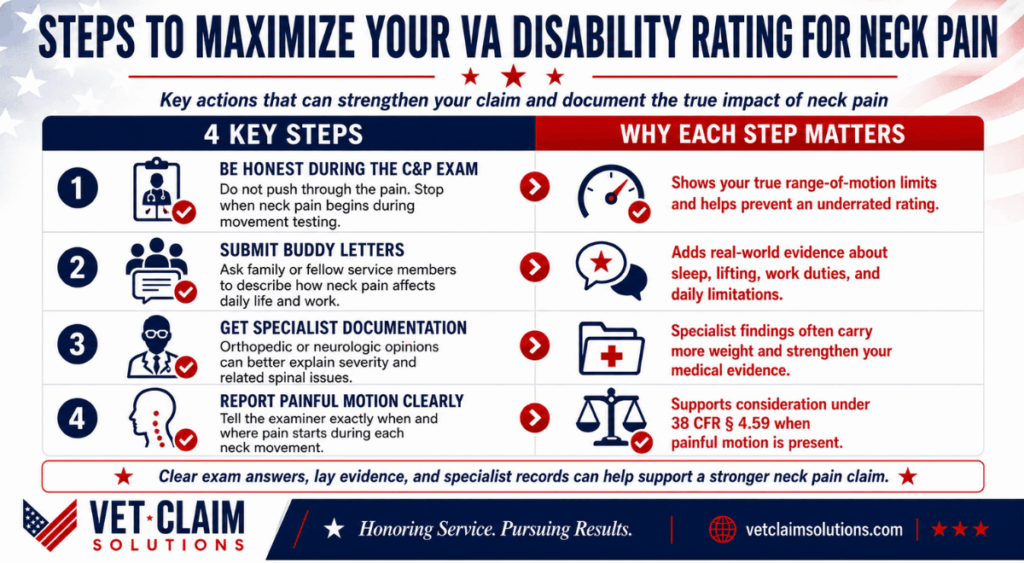
One of the most common mistakes veterans make in a disability claim is failing to seek regular medical treatment. If there are large gaps in your medical records, the VA may assume your neck pain has improved or resolved. Even if you feel that treatment isn’t helping, continuing to see a doctor ensures your neck condition remains documented. This consistency is key to maintaining a service connection and stable va ratings over time.
Another mistake is failing to mention how neck pain affects other parts of your life, such as your mental health. Chronic neck pain often leads to depression or anxiety, which can be rated as a secondary condition. If you only focus on the physical neck injury, you are missing out on potential va disability benefits. Always be comprehensive when describing the impact of your medical conditions to the VA examiner.
Lastly, many veterans do not provide a clear nexus letter when filing their va disability claim. They assume the VA will “connect the dots” between their military service and their current neck pain. However, the burden of proof is on the veteran to show that service-connected condition. Without a professional medical opinion linking your cervical spine issues to your service, your claim for va compensation is at risk of denial.
Veterans also frequently fail to account for the “DeLuca Criteria,” which requires the VA to consider functional loss due to factors like fatigue and lack of endurance. If your neck becomes weaker or more painful after repetitive use, the examiner must take this into account during the rating process. Simply measuring range of motion once during a quiet office visit does not accurately reflect your level of impairment. You must explain how your neck performs during a full day of activity or during a severe flare-up.
The Impact of Neck Injuries and Neck Pain on Employment
Severe neck pain can have a devastating impact on your ability to maintain gainful employment. If your neck injury prevents you from sitting at a desk for long periods or performing physical labor, you may be eligible for Total Disability based on Individual Unemployability (TDIU). This allows veterans to receive disability compensation at the 100% va rate even if their va disability rating is lower. Proving that your neck condition makes you unemployable is a powerful way to secure your financial future.
When applying for disability benefits based on unemployability, you must show how neck pain interferes with specific job tasks. For example, if you cannot turn your head to check blind spots while driving, you may be unable to work as a commercial driver. If chronic neck pain causes frequent headaches that require you to lie down in a dark room, you cannot maintain a standard work schedule. These limitations on daily activities are crucial for the VA to understand.
Vocational expert testimony can also be a valuable asset in your VA disability claim. These experts can analyze your medical records and explain why your neck injuries prevent you from working in your field. They can bridge the gap between your VA disability rating and your actual ability to earn a living. For many veterans with cervical spine issues, this is the most effective way to maximize their VA disability benefits.
The physical requirements of modern workplaces often exacerbate cervical strain, especially for those required to use computers for eight hours a day. “Tech neck” or postural strain can turn a manageable service-connected injury into a career-ending disability. If your employer has had to provide special ergonomic accommodations, be sure to document these changes as evidence of your functional limitations. This information provides a practical context for the VA to evaluate the severity of your condition in a real-world setting.
Tracking Your Symptoms for the VA Disability Rating
Keeping a “pain journal” is a highly effective way to document your chronic neck pain for the VA. In this journal, you should record the intensity of your neck pain on a scale of 1 to 10 and note any specific triggers. You should also document how the neck injury affects your daily life, such as grooming, driving, or sleeping. This detailed log serves as powerful medical evidence during a va disability appeal or C&P exam.
Be sure to note any symptoms of radiculopathy, such as “pins and needles” in your fingers or weakness in your grip. These symptoms indicate that your neck condition is affecting the nerves exiting the cervical spine. If you experience favorable ankylosis or unfavorable ankylosis during a flare-up, record how long the stiffness lasts. The more specific you are about your neck pain, the easier it is for the VA to assign an accurate VA rating.
Share this journal with your doctor so they can include your observations in your official medical records. When the VA reviews your disability claim, they will see a consistent history of neck pain and its impact on your life. This proactive approach shows the VA that your neck injuries are a constant burden, not just an occasional nuisance. It is one of the best ways to ensure your VA disability rating reflects the reality of your neck condition.
In addition to tracking pain levels, you should also record the frequency and duration of any “incapacitating episodes” that require bed rest. If you are forced to miss work or social obligations due to a sudden spike in symptoms, write down the date and the specific reason. This data is invaluable when trying to prove that your condition meets the criteria for a higher disability rating. A well-maintained journal transforms subjective complaints into objective, chronological data that is much harder for the VA to ignore.
Why Claims Get Denied and How to Appeal for VA Disability Benefits
If your VA disability claim for neck pain is denied, do not lose hope; many initial claims are rejected due to lack of evidence. The most common reason for denial is a missing service connection or an inadequate nexus letter. You have the right to appeal the decision through several different lanes, including a Supplemental Claim or a Higher-Level Review. Each lane has its own advantages depending on whether you have new medical evidence to submit.
During the appeal process, you can submit additional medical records that clarify the severity of your neck condition. If your va rating was too low, you can request a new C&P exam to re-evaluate your cervical spine range of motion. It is often helpful to have a specialist review your spinal cord imaging to provide a more detailed diagnosis of spinal stenosis or disc disease. These steps can help you secure the VA disability benefits you were originally denied.
Working with an experienced veterans’ advocate or attorney can significantly improve your chances of a successful appeal. They understand the nuances of va compensation law and can help you gather the necessary medical evidence. They can also ensure that your neck pain and secondary conditions are properly linked to your military service. Don’t let a denial be the end of your journey toward receiving the VA disability rating you deserve.
The Board of Veterans’ Appeals (BVA) is another option for those who have been unsuccessful at the regional office level. At the BVA, a Veterans Law Judge will review your case and can hold a hearing to listen to your testimony directly. While this process can take longer, it often provides a more thorough review of the legal and medical facts of your claim. Persistence is often the most important factor in eventually winning a complex cervical strain case.
Cervical Strain VA Claims and Proven Ways to Strengthen Your Case: Legal Considerations

Navigating Cervical Strain VA Claims and Proven Ways to Strengthen Your Case requires a basic understanding of the legal standards used by the VA. The “benefit of the doubt” rule states that if the evidence for and against your disability claim is equal, the VA should rule in your favor. However, you must still provide enough medical evidence to reach that “equipoise” state. Understanding these legal principles can help you better prepare your VA disability application.
The VA’s rating schedule for the cervical spine is found in 38 CFR § 4.71a, under diagnostic code 5237. This code covers cervical strain and other neck injuries, providing a clear framework for your VA disability rating. It is important to know that the VA cannot ignore your reports of neck pain during a range of motion tests. If the examiner fails to account for your pain, it may be grounds for a legal challenge of your va rating.
Finally, remember that your VA compensation is a right you earned through your military service. The law is designed to support veterans who have suffered neck conditions and other medical conditions due to their duty. By staying informed and persistent, you can navigate the VA disability claim process and secure the VA benefits necessary for your long-term health. Your neck pain is real, and the law provides a path for you to receive the support you need.
The “Presumption of Soundness” is a critical legal concept that assumes you were in good physical health when you entered the military. If your entrance exam did not note any neck issues, the VA must prove that your current condition was not caused by your service. Conversely, the “Presumption of Aggravation” applies if you had a pre-existing neck condition that was made worse by your military duties. Knowing which of these legal presumptions applies to your case can help you focus your evidence more effectively.
Conclusion: Securing the VA Compensation You Deserve
Securing a fair VA disability rating for neck pain is a journey that requires patience, documentation, and a clear strategy. By understanding how the VA evaluates the cervical spine and neck injuries, you can present a much stronger case. Remember to document every instance of chronic neck pain and seek regular treatment to keep your medical records current. Whether you are dealing with degenerative disc disease or a simple strain, your VA disability benefits are essential for your quality of life.
Don’t overlook the importance of secondary conditions and the impact of neck pain on your daily activities. Every piece of medical evidence, from a nexus letter to a pain journal, brings you one step closer to a successful VA disability claim. If you are struggling, reach out for professional help to navigate the complexities of va compensation. You served your country with honor; now, it is time to ensure the system works for you and provides the VA rating you have earned.
The path to a successful claim is rarely a straight line, but the financial and medical support at the end is worth the effort. By treating your claim like a mission and gathering every possible piece of intelligence, you increase your odds of victory. Stay diligent in your medical appointments and never hesitate to appeal a decision that does not reflect your true level of disability. Your health and your family’s future depend on your willingness to fight for the benefits you were promised when you took your oath.