

Many veterans leave active duty with permanent hearing loss after years of dedicated military service. Exposure to high-decibel gunfire, roaring aircraft engines, and heavy industrial machinery damages the delicate structures of the inner ear over time, often leading to a lifelong hearing impairment. Filing a successful va disability claim for hearing loss requires specific medical evidence and a clear understanding of Sensorineural Hearing Loss VA Claims and the Evidence Veterans Need. This comprehensive guide will help you navigate the complexities of the VA system to secure the disability compensation you deserve for your service-connected injuries.
You need a complete understanding of how the government evaluates your hearing impairment before applying for va disability benefits. This guide explains the medical records required to win your va disability case and obtain a fair va disability rating based on current federal regulations. We will break down the exact requirements for a successful hearing loss claim, including the necessary hearing tests and the role of service connection. Understanding the nuances of hearing loss benefits is the first step toward a successful outcome in your va disability claim process.
The Department of Veterans Affairs processes hundreds of thousands of claims annually, making it imperative that your documentation is both thorough and accurate. Veterans often struggle with the technical nature of audiometric data and how it translates into a monthly compensation amount. By mastering the terminology and the specific evidentiary standards, you can better advocate for yourself during the C&P examination. This article serves as a roadmap for veterans seeking to bridge the gap between their military service and their current auditory health challenges.
Medical professionals classify hearing loss into a few distinct categories based on the physiological location of the injury. The most common type among military veterans is sensorineural hearing loss, which occurs when the tiny hair cells in the cochlea are damaged or destroyed. This damage is almost always permanent and results from prolonged exposure to loud noise or sudden, violent acoustic trauma during military service. Unlike conductive hearing loss, which involves the outer or middle ear, sensorineural hearing loss affects the nerve pathways leading directly to the brain.

It is important to distinguish between these types because the VA evaluates them differently under the rating schedule. Conductive hearing issues might be treatable with surgery, medication, or specialized hearing devices, whereas sensorineural hearing loss often requires permanent hearing aids to manage. When a veteran suffers from both types simultaneously, the condition is medically referred to as mixed hearing loss. Understanding your specific hearing impairment is crucial for your va claim, as the medical evidence must reflect the physiological cause of your hearing loss to be valid.
Sensorineural damage often manifests as a high-frequency hearing loss, making it difficult to hear birds chirping or the voices of women and children. This specific type of hearing impairment can also make it nearly impossible to distinguish speech in crowded or noisy environments. Because the auditory nerve is involved, the brain receives distorted signals, which complicates the rehabilitation process even with modern technology. Veterans should ensure their private medical records clearly state the sensorineural nature of their condition before submitting their va disability claim.
The VA recognizes that hearing loss is one of the most prevalent service-connected disabilities across all branches of the military. However, simply having a clinical diagnosis of hearing loss is not enough to receive a compensable va disability rating. You must demonstrate that the hearing loss is severe enough to meet the VA’s strict legal definition of a disability under 38 CFR. This involves undergoing a specific audiometric test that measures your ability to hear different frequencies and understand speech in various controlled environments.
Establishing Direct Service Connection for Hearing Loss
To receive disability benefits, you must establish a direct service connection between your current hearing loss and your time in the military. This legal requirement requires three specific elements: a current diagnosis of hearing loss, evidence of an in-service event or injury, and a medical nexus linking the two. For many veterans, the “event” is years of cumulative exposure to loud noises from jet engines, heavy artillery, or consistent small arms fire. Without a clear direct service link, the VA may deny your hearing loss benefits regardless of the severity of your condition.
In some cases, a veteran might seek a secondary service connection for their auditory issues. This occurs when a service-connected condition, such as traumatic brain injury (TBI) or certain medications, causes or aggravates your hearing loss. For example, if you already have a va rating for TBI and that neurological condition led to a decline in your hearing, you can claim hearing loss as secondary. This strategy can be vital for increasing your overall va disability rating and ensuring you receive the full scope of loss benefits available to you under the law.
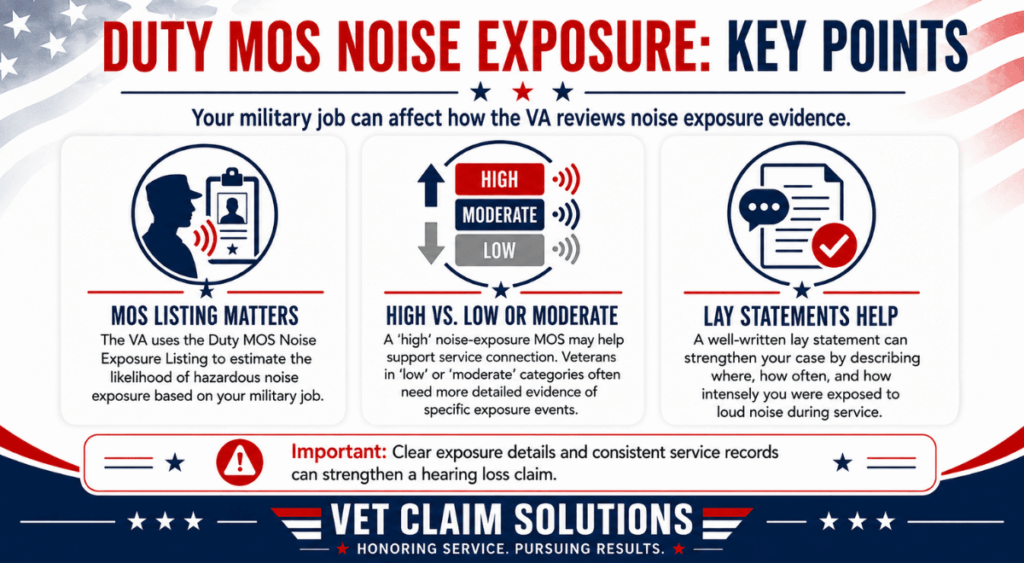
Documentation is the backbone of any VA hearing loss claim, especially when years have passed since your discharge. You should gather all service treatment records that mention ear pain, ringing in the ears (tinnitus), or any difficulty hearing during your enlistment. If you were not treated for hearing loss during your military service, you might need buddy letters from fellow service members who can attest to the loud noise environments you worked in daily. These personal accounts help build a narrative that supports your service connection even if your official medical records are incomplete or missing.
The VA Hearing Test and Medical Evidence Requirements
The VA requires a specific type of hearing test conducted by a licensed audiologist to determine your disability rating. This is not a standard screening you might receive at a local pharmacy or during a routine physical. The VA-approved audiometric test must include two primary components: a pure tone audiometric test and a speech discrimination test. These tests measure different aspects of your hearing loss and are used to calculate your va rating according to the federal rating schedule.
The pure tone test measures the quietest sounds you can hear at different frequencies, known as Hertz (Hz), across a specific range. The audiologist will test your hearing at 1000, 2000, 3000, and 4000 Hz to establish your pure tone threshold. The results are recorded on an audiogram, which the VA uses to determine the severity of your hearing loss for compensation purposes. If your tone audiometric results show a significant loss in these specific frequencies, you are more likely to qualify for a higher hearing loss rating.
It is important to understand that the VA’s definition of hearing loss is purely objective and based on these specific decibel levels. Even if you feel you cannot hear well, if your test results do not meet the decibel thresholds, your va claim may be rated at 0%. This non-compensable rating still acknowledges the service connection, which is a critical first step for future increases. Veterans should prepare for the hearing tests by ensuring they are well-rested and free from temporary noise exposure for at least 48 hours prior to the exam.
In addition to the tone audiometric test, the VA places heavy emphasis on your ability to understand speech in a controlled setting. Even if you can hear sounds, you may struggle to distinguish words, especially in noisy environments or during fast-paced conversations. This is why the speech discrimination portion of the hearing tests is so critical for a comprehensive evaluation. The VA uses these results to see how your hearing loss impacts your daily communication and employment potential, which directly influences your va disability compensation levels.
Speech Discrimination and the Maryland CNC Test
The Maryland CNC test is the gold standard for speech discrimination in VA claims and is required by law. During this discrimination test, you will be asked to repeat a list of 50 phonetically balanced monosyllabic words delivered at a controlled volume. The percentage of words you repeat correctly determines your speech discrimination score, which is a major factor in your rating. A lower score indicates a more severe hearing impairment, which can lead to a higher va disability rating for hearing loss.
It is important to note that the cnc test must be performed without the use of hearing aids to get a baseline. The VA wants to measure your natural hearing ability to determine your loss va rating before any technological intervention. Many veterans find this test frustrating because it highlights their daily struggle to communicate with others. However, an accurate maryland cnc score is essential for the VA to assign a hearing loss va rating that truly reflects your level of disability. If the maryland cnc test is not performed correctly, your claim could be significantly delayed or denied.
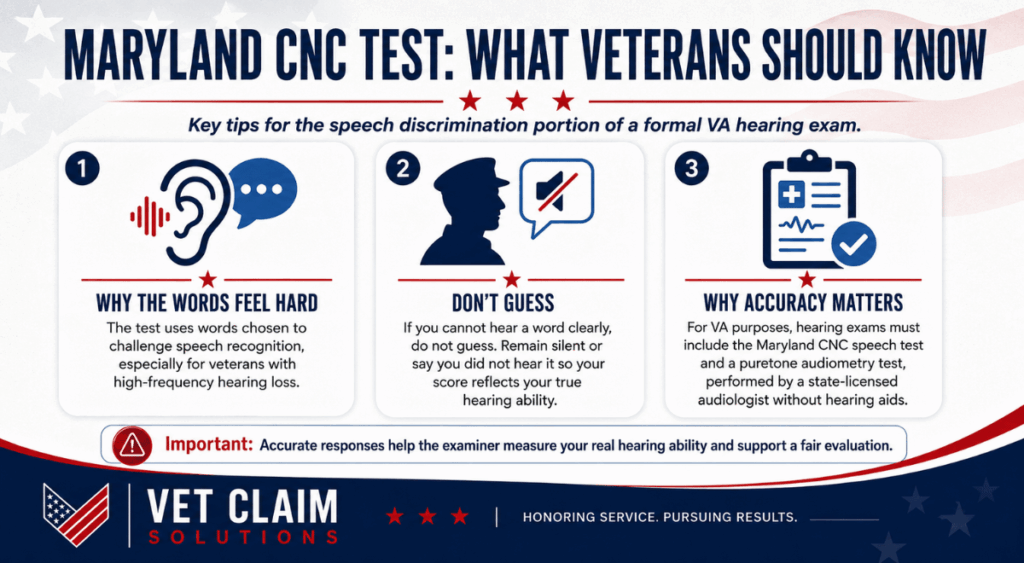
When preparing for your speech discrimination test, ensure the audiologist is familiar with specific VA requirements and the 38 CFR guidelines. The results of this discrimination test are often the deciding factor in whether a veteran receives a 0% non-compensable rating or a higher, paid disability rating. Because the VA’s rating schedule for hearing loss is very strict, even a small difference in your speech discrimination score can have a significant impact on your va disability benefits and monthly compensation.
How the VA Calculates Your Bilateral Hearing Loss Disability Rating
The VA uses a complex grid, known as Table VI, to determine your va disability rating based on the results of your audiometric test. They look at both ears to determine if you have bilateral hearing loss, which is the most common scenario for veterans. Interestingly, the VA rates bilateral hearing as a single disability rather than rating each ear separately and combining them. This is because the brain processes sound from both ears together, and bilateral hearing loss has a more profound impact on a veteran’s life than loss in just one ear.
To calculate your va ratings, the VA takes the average pure tone threshold from your tone audiometric results and pairs it with your speech discrimination score. They then use a table in the 38 CFR Part 4 to find your specific hearing loss rating. Most veterans find that they receive a 0% or 10% rating, as the criteria for higher percentages like 30% or 50% are exceptionally high. However, even a 0% rating is valuable because it grants you access to hearing aids and other va hearing loss treatments through the VA healthcare system.
The calculation involves assigning a Roman numeral (I through XI) to each ear based on the intersection of the pure tone average and the speech discrimination score. Once each ear has a Roman numeral, the VA uses a second table to find the combined va disability rating. For example, if one ear is a Roman numeral I and the other is a Roman numeral II, the resulting rating is typically 0%. This mechanical process leaves little room for the rater’s discretion, making the accuracy of the initial hearing test paramount.
If your hearing loss is so severe that you are profoundly deaf in both ears, you may qualify for a much higher va rating, potentially up to 100%. However, for the average veteran with bilateral hearing issues caused by loud noises during military service, the goal is often to establish a service connection first. Once the va claim is approved, you can seek increases in your disability rating if your hearing loss worsens over time. This is why regular hearing tests are important for maintaining your medical evidence and tracking the progression of your hearing impairment.
Steps to File Your VA Disability Claim for Hearing Loss
Filing a va claim for hearing loss starts with gathering your evidence and establishing an “Intent to File” to preserve your effective date. You should begin by visiting a private audiologist or a VA doctor to get a formal diagnosis of sensorineural hearing loss. Make sure they perform a pure tone audiometric test and a speech discrimination test that meets VA standards. Once you have your diagnosis, you can submit your application through the VA.gov website or with the help of a Veterans Service Officer (VSO) to seek hearing loss benefits.
In your application, be sure to highlight the specific loud noise exposure you experienced during your time in the military. Whether it was working on a flight deck, serving in the infantry, or participating in heavy vehicle maintenance, the VA needs to know the source of your hearing impairment. Providing a detailed statement about how your hearing loss affects your life—such as needing hearing aids to talk to your family or struggling at work—can help the rater understand the severity of your va disability beyond just the numbers on a page.
After you file, the VA will likely schedule a Compensation and Pension (C&P) exam to verify your condition. This is another hearing test where a VA-contracted audiologist will verify your bilateral hearing loss and assess the service connection. It is vital to be honest and transparent during this exam about your symptoms and history. Do not try to “pass” the test; instead, accurately report when you can and cannot hear the tones or words. The results of this audiometric test will be the primary evidence used to determine your final va disability rating.
Appealing a Low Hearing Loss VA Rating or VA Rating
Many veterans are disappointed when they receive a 0% va rating for their hearing loss after years of struggling. While this can be frustrating, it is a common outcome due to the strict rating schedule used by the Department of Veterans Affairs. If you believe your hearing loss va rating does not accurately reflect your hearing impairment, you have the right to appeal the decision. You can request a Higher-Level Review, file a Supplemental Claim with new evidence, or appeal directly to the Board of Veterans’ Appeals to secure better disability benefits.
A successful appeal often requires new and relevant medical evidence that was not considered during the initial claim. This might include a more recent speech discrimination test or a nexus letter from a medical expert that provides a stronger link to your military service. If your hearing has worsened significantly since your last hearing test, a new pure tone audiogram can be the key to increasing your loss rating. Remember, the VA system is designed to allow for updates as your condition changes over time, so an appeal is a standard part of the process.
Working with an experienced advocate or attorney can also help you navigate the complex va ratings appeal process. They can help you identify if the VA missed any secondary service connections or if they failed to properly apply the bilateral hearing loss rules. Persistence is often required to get the va disability benefits you earned through your sacrifice. Don’t give up if your initial va claim doesn’t result in the disability compensation you expected; many veterans win their cases on appeal.
Common Mistakes in Sensorineural Hearing Loss VA Claims and the Evidence Veterans Need

One of the most common mistakes veterans make is waiting too long to file a va claim after their discharge. The longer you wait after leaving military service, the harder it can be to prove a direct service connection to the satisfaction of the VA. Another mistake is failing to mention tinnitus during the application process. Tinnitus, or ringing in the ears, is often associated with hearing loss and has its own 10% va disability rating, which can be added to your overall va disability score for a higher monthly payment.
Another frequent error is not providing enough detail about the specific loud noises exposure you encountered. Simply saying you were in the Army or Navy is often not enough; you need to describe your MOS and the specific equipment or environments you used. Additionally, some veterans fail to provide results from a maryland cnc test, which is legally required for the VA to process the speech discrimination portion of the claim. Without this specific cnc test, the VA may not be able to assign a compensable hearing loss rating, leading to a 0% award.
Finally, many veterans do not realize that hearing aids provided by the VA do not count against their disability rating. In fact, needing hearing aids is strong evidence that your hearing impairment is significant and impacts your daily life. Always include your prescriptions and treatment records for hearing aids in your va hearing loss claim to show the severity of the condition. This documentation reinforces the direct service link and the ongoing nature of your va disability, making it harder for the VA to deny your claim.
Conclusion: Securing Your Hearing Loss VA Benefits
Navigating Sensorineural Hearing Loss VA Claims and the Evidence Veterans Need can be a daunting and technical process, but it is essential for receiving the disability compensation you deserve. By understanding the importance of the audiometric test, the maryland cnc requirements, and the necessity of a service connection, you can build a much stronger case. Whether you are seeking bilateral hearing loss benefits or a secondary service connection, the key is thorough documentation and persistent advocacy.
Your military service likely exposed you to harsh environments that permanently damaged your hearing, and the VA is there to provide loss benefits for that sacrifice. From obtaining your first va rating to appealing for a higher va disability rating, every step you take brings you closer to the support you need. Keep copies of all your hearing tests and stay proactive in your healthcare journey by attending all scheduled exams. With the right evidence and a clear strategy, you can successfully secure your hearing loss benefits and improve your quality of life for years to come.