

Many former service members assume enrollment in Department of Veterans Affairs healthcare automatically includes surgical procedures. When considering reconstructive treatment, what veterans should know before asking VA for dental implants is that approval demands meeting rigorous clinical thresholds and statutory standards. Understanding how the system evaluates oral prosthetic will save you time and help you advocate for your health effectively.
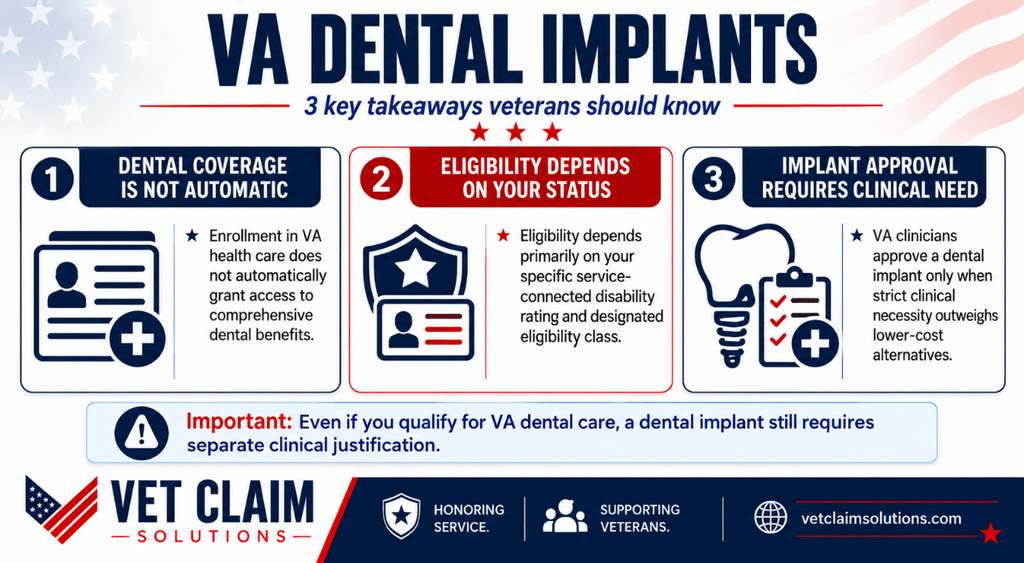
Federal law strictly defines which individuals receive comprehensive outpatient dental care through government facilities. Your specific dental eligibility depends directly on your military discharge status, service-connected disability ratings, and overall income level. Most former service members enrolled in standard healthcare do not automatically qualify for specialized oral rehabilitation.
The agency separates patients into distinct categories, formally known as an eligibility class. For example, Class I includes individuals with service-connected dental conditions directly rated for disability compensation. Class IV covers veterans who maintain a permanent and total disability rating of one hundred percent.
Qualifying for standard medical appointments through va health does not guarantee access to routine cleanings or prosthetic. If your rating does not meet direct criteria, your va dental benefits remain sharply restricted. Understanding your category is the foundation for requesting any extensive treatment plan from regional clinics.
What Veterans Should Know Before Asking VA for Dental Implants: When Will the VA Cover a Dental Implant?
Even when an individual secures comprehensive va dental coverage, approval for restorative surgery remains selective. Clinicians evaluate whether a dental implant represents absolute clinical necessity or purely aesthetic enhancement. Federal policy strictly prohibits using public funds for purely cosmetic procedures across all medical departments.
Consider how the government views cosmetic augmentation such as elective breast implants compared to reconstructive surgery. The VA routinely covers breast implants following a mastectomy because tissue reconstruction serves a clear therapeutic purpose. Conversely, requests for breast implants for simple body enhancement are dismissed immediately.
Oral reconstruction follows identical clinical principles regarding function versus appearance. When treating a missing tooth, providers first review whether removable dentures or fixed bridgework adequately restore mastication. Deciding if the va pay guidelines cover fixtures for cosmetic appearance results in denial unless functional impairment threatens health.
A single tooth implant may receive authorization if surrounding teeth cannot physically support traditional bridge hardware. Similarly, severe trauma cases requiring reconstruction of multiple missing teeth justify surgical intervention. Every authorized dental implant must demonstrate clear functional superiority over cheaper alternatives.
Clinical Prerequisites for Dental Implants: Bone Loss, Gum Disease, and General Health

Qualifying financially represents only half the challenge of securing surgical approval. Your oral surgeon evaluates structural anatomy, periodontal stability, and systemic wellness before authorizing implant surgery. Candidates must possess sufficient mandibular stability to anchor a dental implant firmly over decades of normal use.
Advanced periodontitis or unresolved gum disease destroys connective tissue and causes rapid bone loss. If untreated gum disease has eroded the jaw, clinicians will reject implant placement until tissue heals. Maintaining healthy gum health prevents peri-implantitis, a dangerous bacterial infection that causes fixture failure.
️ Warning: Active smoking drastically reduces blood supply to your jawbone and increases surgical failure rates. VA dental clinics frequently require total cessation of all tobacco products before approving complex oral bone grafting.
Surgeons frequently perform bone grafting when structural deterioration threatens fixture integration into the jaw. Additionally, chronic medical history details like unmanaged diabetes or severe osteoporosis complicate osseointegration. Chronic use of tobacco products constricts blood vessels, leading many specialists to deny advanced implant treatment.
Your comprehensive health history provides providers with vital diagnostic context during early evaluations. Clinicians look closely at past radiation therapy around the head and neck before beginning surgery. Resolving underlying gum disease and systemic issues gives you the strongest chance of surgical success.
Federal Oversight: Medical Devices and Clinical Safety
The surgical components used to replace teeth qualify as regulated medical devices under federal guidelines. The Food and Drug Administration issues detailed guidance documents governing structural safety, biocompatibility, and sterilization standards. These stringent fda guidance documents protect patients by keeping unverified foreign hardware out of American surgical suites.
Just as rigorous testing monitors saline and silicone breast implants, oral fixtures undergo intense laboratory scrutiny. Regulators analyze structural wear on modern dental implants precisely as they inspect long-term integrity in breast implants. Post-market surveillance helps clinical staff track complications across tens of thousands of recipient files nationwide.
Federal authorities publish safety alerts, market withdrawals, and formal warning letters when manufacturing flaws surface. Clinicians can review official press announcements or contact fda investigators to report an unexpected product problem. The agency also convenes advisory committees to deliberate novel biological combination products and therapeutic radiation-emitting products.
Patients seeking safety literature en español or English can inspect official fda guidance records online. When public health concerns emerged regarding textured breast implants, regulatory tracking demonstrated the value of federal oversight. Dental surgeons follow these exact databases to ensure every dental implant meets modern safety baselines.
Steps to Request Implant Care Through VA Providers
Securing oral surgery requires navigating a standardized clinical workflow through your assigned facility. Each regional va medical center enforces consistent administrative protocols before committing substantial surgical resources. Following official clinical pathways prevents administrative delays and miscommunication with administrative personnel.
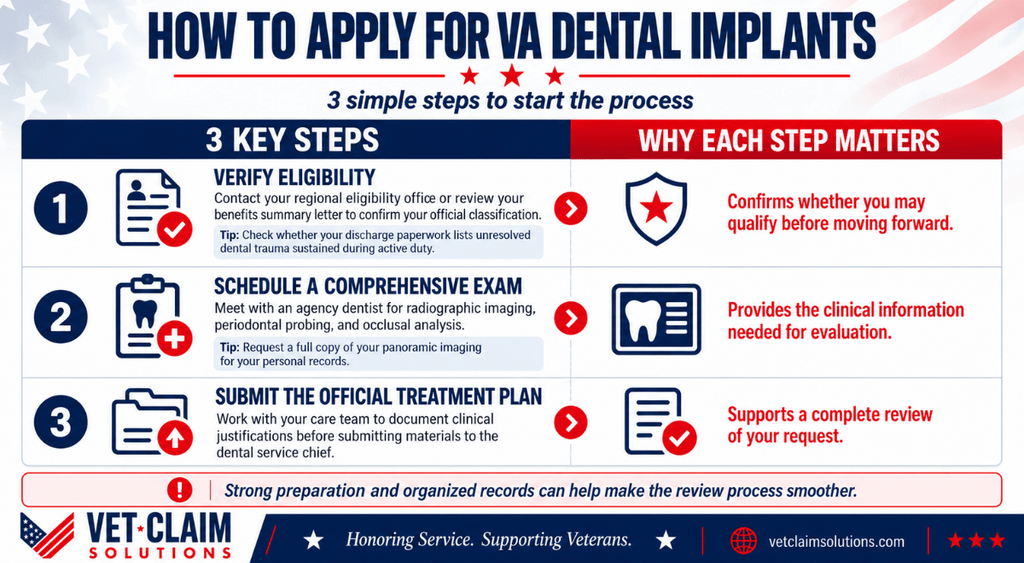
During evaluation appointments, clinicians analyze whether implant teeth offer tangible rehabilitation for daily dietary function. If approved, surgeons insert the titanium post directly into your jawbone beneath the missing tooth. After several months of bone healing, the restorative dentist completes the procedure with an abutment and crown.
Patients with severe anatomical defects may require referral to university hospitals or specialized military clinics. Coordinating appointments between different branches of va medical facilities takes several months to complete. Maintaining patience while keeping every clinical evaluation appointment ensures your case proceeds without administrative cancellations.
Alternative Coverage: Private Insurance and Community Care
What happens if the government rejects your application for surgical dental care? Disqualified individuals still have viable paths to affordably replace a missing tooth. Exploring outside programs prevents you from paying standard out-of-pocket commercial rates for reconstructive care.
The federal system manages the VA Dental Insurance Program, which connects veterans with discounted private plans. Through this program, enrolled individuals buy comprehensive dental insurance via Delta Dental or MetLife. These commercial policies frequently offset costs for complex dental implants, bridges, and crown placements.
Furthermore, qualifying patients under the MISSION Act may access the Community Care Network for treatment. If your regional hospital experiences extreme wait times, outside private insurance providers handle approved treatments. Understanding external va benefits expands your treatment avenues far beyond standard government clinics.
Medical devices used across federal hospitals receive equal scrutiny whether inserted inside or outside government walls. Much like post-mastectomy reconstructive breast implants, outside providers must follow strict pre-authorization criteria. Working with community specialists familiar with federal claims processes accelerates treatment approvals significantly.
Frequently Asked Questions
Navigating government healthcare programs often produces numerous frequently asked inquiries regarding eligibility, procedures, and potential out-of-pocket costs. Below are answers to the most common asked questions regarding reconstructive oral care through federal channels. Reviewing these facts will clarify your choices before speaking with a clinical provider.
Can any enrolled veteran get a dental implant through the VA?
No, you must belong to a qualifying tier such as Class I or Class IV. Clinicians must also establish direct clinical necessity showing an implant provides essential functional benefits. When conventional restorations cannot restore mastication safely, the agency will evaluate surgical options.
Does private dental insurance cover what the VA denies?
Participating commercial plans available through the VA Dental Insurance Program often help cover complex dental implants. While waiting periods may apply, this supplemental dental insurance dramatically lowers out-of-pocket costs for self-funded treatment. Enrolling in these programs gives veterans predictable fee structures across a broad network of participating community dentists.
How does the VA determine if an implant is medically necessary?
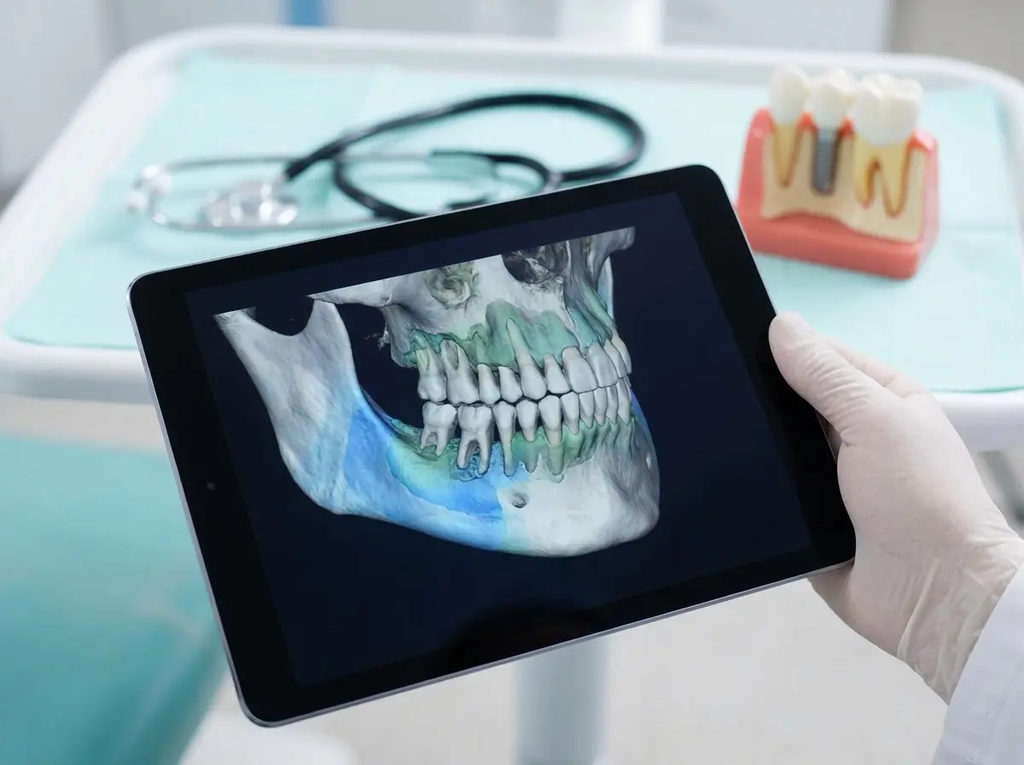
Staff dentists evaluate whether standard dentures or bridges can restore adequate chewing function without surgery. If severe anatomical problems prevent traditional restorations, your provider submits paperwork justifying a surgical dental implant. The regional chief of dental services then reviews your case history before issuing an authorization.
Consulting your primary dentist remains the definitive method to determine if a dental implant matches your circumstances. Federal rules remain demanding, yet qualifying patients receive outstanding restorative support through accredited clinicians. Reviewing your service records today prepares you for a productive consultation at your nearest clinic.