

If clattering dishes, a barking dog, or a crowded restaurant feels physically painful, you may be experiencing hyperacusis. This condition can make everyday sounds difficult to tolerate, especially for veterans exposed to loud noise during military service. Understanding hyperacusis and sound sensitivities can help veterans learn how the VA evaluates these symptoms and their impact on daily life.
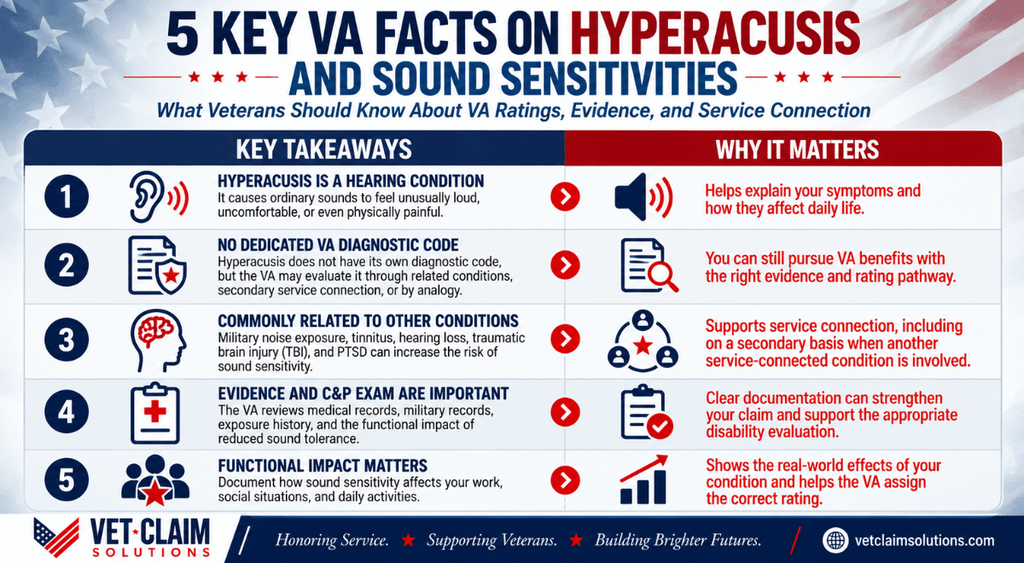
Although the VA has no dedicated diagnostic code for hyperacusis, veterans may still qualify for VA disability benefits. The absence of a specific code does not automatically prevent veterans from establishing service connection or receiving VA disability compensation.
Depending on the evidence, Veterans Affairs may consider hyperacusis alongside a related service-connected disability. The VA may also evaluate secondary service connection or use an analogous rating when appropriate.
This guide explains how the VA reviews these VA claims and what veterans can expect during a C&P exam. It also covers how military records, medical records, noise exposure history, hearing loss, and tinnitus may support a claim. Understanding these factors can help veterans document functional limitations and provide evidence relevant to their VA disability rating.
Hyperacusis is a hearing condition that makes ordinary sounds seem unusually loud, uncomfortable, or even physically painful. Everyday noises like highway traffic, running water, alarms, and clinking dishes may become difficult to tolerate. This can be especially challenging for veterans with a history of military noise exposure, hearing loss, or other auditory symptoms.
Unlike tinnitus, which causes ringing or buzzing without an external sound source, hyperacusis affects tolerance to actual environmental sounds. Understanding these differences helps veterans describe their symptoms accurately when preparing a VA Benefits claim.
Hyperacusis also differs from other sound sensitivity conditions. Misophonia can trigger strong emotional reactions to specific sounds, such as chewing or clicking. Phonophobia involves fear or anxiety related to certain sounds. In contrast, hyperacusis generally causes reduced sound tolerance, making normal sound levels feel excessively loud or painful.
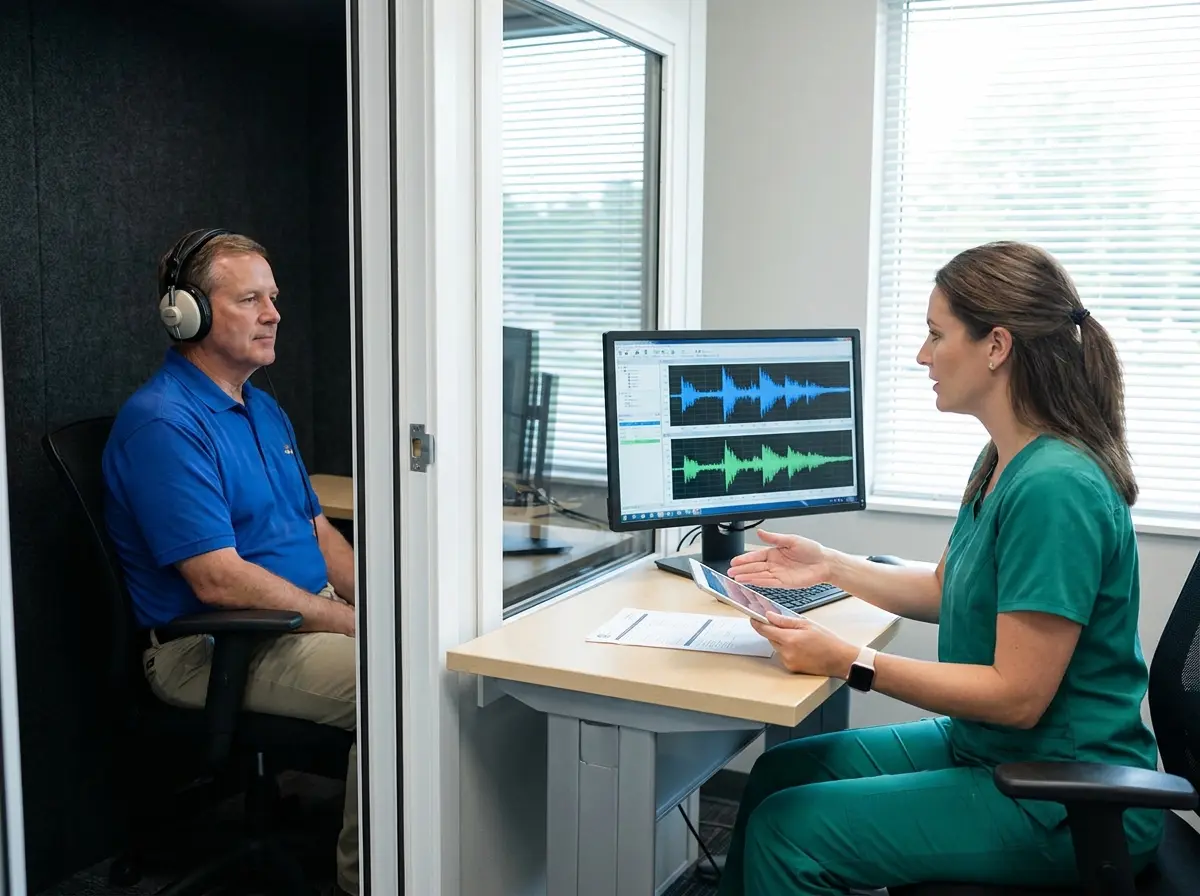
Recognizing these differences can help veterans and service members document their symptoms. Relevant evidence may include noise exposure history, medical records, tinnitus, hearing loss, and other related conditions.
Veterans may face an increased risk of auditory problems because military service often involves repeated exposure to intense noise. Weapons fire, aircraft engines, explosions, and heavy machinery can affect the auditory system over time. Tinnitus and hearing loss remain among the most common service-connected disabilities nationwide. The American Tinnitus Association also provides information about sound tolerance problems associated with these conditions.
Traumatic brain injury (TBI) can create additional auditory challenges for veterans exposed to blasts or intense noise. Research involving post-9/11 veterans has documented hearing-related complaints among individuals with blast-related TBI. These complaints may include sound sensitivity, tinnitus, and hearing loss.
Documenting these symptoms can help establish a clearer picture of a veteran’s auditory health. Military records, exposure history, and medical evidence may help demonstrate how symptoms developed during or after service.
Post-traumatic stress disorder (PTSD) and other stress-related conditions can also influence how veterans respond to sudden or loud sounds. Hypervigilance, exaggerated startle responses, and sensitivity to certain sound levels may make everyday environments difficult to tolerate.
These symptoms may occur alongside traumatic brain injury, tinnitus, hearing loss, or another service-connected disability. Clear documentation can help Veterans Affairs understand how these conditions affect daily activities and overall functioning.
When reviewing VA claims, the VA considers relevant evidence to determine whether a condition qualifies for service connection. The evidence may also help establish the appropriate VA disability rating, depending on the veteran’s circumstances.
VA Disability Claims & Rating Schedule: How VA May Evaluate Hyperacusis and Sound Sensitivities
The VA Schedule for Rating Disabilities, under 38 CFR Part 4, includes hundreds of diagnostic codes. However, hyperacusis does not have its own dedicated diagnostic code. Instead, Veterans Affairs may evaluate sound sensitivity through other applicable rating pathways.
The VA considers several factors, including VA medical records, military records, exposure history, and current symptoms. Related health conditions, such as tinnitus, hearing loss, or traumatic brain injury, may also affect the evaluation.
For military veterans and service members, documenting high-noise or blast exposure can provide important supporting evidence. These records may help explain when symptoms developed and how they relate to military service.
When reviewing VA claims, the Veterans Benefits Administration examines the available evidence. This may include military personnel records, medical findings, and the effects of reduced sound tolerance on daily activities.
Clear documentation of sound levels, loud noise triggers, ringing ears, and functional limitations can strengthen the evidence supporting a claim. These details may help establish service connection and support an appropriate disability evaluation.
Every case is different, and the outcome depends on the available evidence. The VA considers symptom severity, medical findings, and possible connections to other service-connected conditions.
Veterans seeking VA disability benefits should accurately document their noise exposure history, related conditions, and daily limitations. Complete and consistent records can help the VA determine the appropriate disability rating.
VA Disability Rating by Analogy: Evaluating Hyperacusis under 38 CFR

Under 38 CFR § 4.20, the VA may rate an unlisted condition by analogy to a closely related disease or injury. Hyperacusis may be considered under an analogous rating when the applicable VA criteria are met.
Diagnostic Code 6260 covers recurrent tinnitus and provides a maximum schedular rating of 10 percent. This rating applies whether tinnitus affects one ear or both ears. However, hyperacusis does not automatically qualify for a separate tinnitus rating.
The anti-pyramiding rule under 38 CFR § 4.14 is another important consideration for veterans seeking VA disability benefits. This rule generally prevents Veterans Affairs from compensating the same symptoms under multiple diagnostic codes.
For example, sound sensitivity may already be considered during a TBI, tinnitus, or hearing loss evaluation. When symptoms overlap, they may not support an additional VA disability rating.
When reviewing VA claims, the Veterans Benefits Administration considers medical records, military records, and documented exposure history. The VA also examines how hyperacusis affects daily activities and overall functioning.
Clear documentation can help distinguish separate symptoms from overlapping impairments. This evidence may help determine whether hyperacusis warrants an applicable evaluation or is already covered by another service-connected disability.
Secondary Service Connection for Sound Sensitivity and Hyperacusis
Another pathway is secondary service connection under 38 CFR § 3.310. Veterans Affairs may consider hyperacusis when another service-connected disability causes or aggravates the condition. Examples may include tinnitus, hearing loss, traumatic brain injury (TBI), or PTSD.
Supporting evidence may include a current diagnosis and documentation of the primary service-connected condition. Relevant medical records and a medical opinion can also help explain the relationship between the conditions.
Clinical audiology research has examined how acoustic trauma, military noise exposure, and auditory processing changes may contribute to reduced sound tolerance. Specialists sometimes describe a mechanism called central gain, which influences how the brain processes and amplifies sound.
A qualified audiologist, ENT specialist, or other medical professional may provide an opinion about the connection to hyperacusis. This opinion can consider the veteran’s noise exposure history, military records, tinnitus, and hearing loss.
Clear medical evidence can help the Veterans Benefits Administration evaluate whether the condition qualifies for secondary service connection. The VA reviews this information alongside other supporting evidence when assessing a VA disability claim.
Related Auditory Conditions Commonly Evaluated Alongside Hyperacusis
Sound sensitivity often appears alongside other health conditions rather than in complete isolation, especially among military veterans with a history of high noise, blast exposure, or other military exposure. When reviewing VA claims, the Veterans Benefits Administration may consider the broader disability picture, including related symptoms, VA medical records, exposure history, and other service-connected conditions that may affect hearing, daily functioning, or employment.
Depending on the evidence, these related conditions may include tinnitus, hearing loss, traumatic brain injury, stress-related conditions, and other documented impairments. Clear records can help show the potential impacts of each condition and whether the symptoms are distinct, overlapping, or relevant to the veteran’s overall disability evaluation.
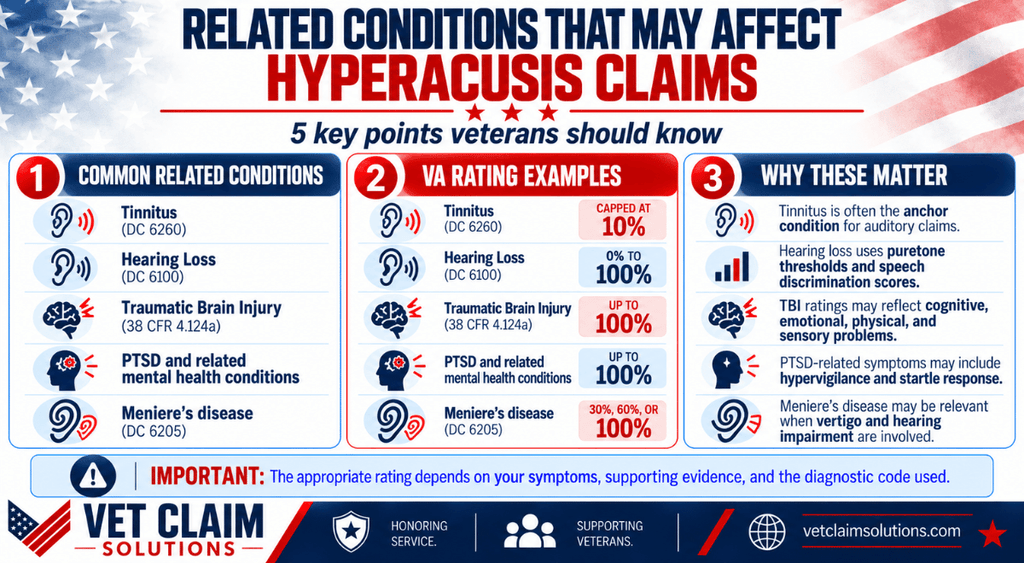
The practical takeaway is that a veteran’s combined disability rating depends on how each service-connected condition is documented and evaluated. A veteran receiving benefits for tinnitus alone may have a different overall rating than someone whose VA claims also include separately evaluated hearing loss, traumatic brain injury, or other health conditions. Accurate VA medical records, treatment notes, and other supporting evidence can help the Veterans Benefits Administration understand the full disability picture.
Sound sensitivity may also help record and document the potential impacts of related conditions, particularly when loud noises, ringing ears, or reduced sound tolerance affect work and daily activities. When veterans are navigating VA disability benefits, clearly separating overlapping symptoms from distinct functional limitations can help VA determine the appropriate evaluation without duplicating compensation for the same manifestation.
️ Warning: Filing hyperacusis as a standalone condition rarely produces a separate payment. The anti-pyramiding rule bars duplicate compensation for the same symptoms, so frame sound sensitivity as part of your broader service-connected picture instead.
VA C&P Exam Process: What Happens During the C&P Exam for Sound Sensitivity
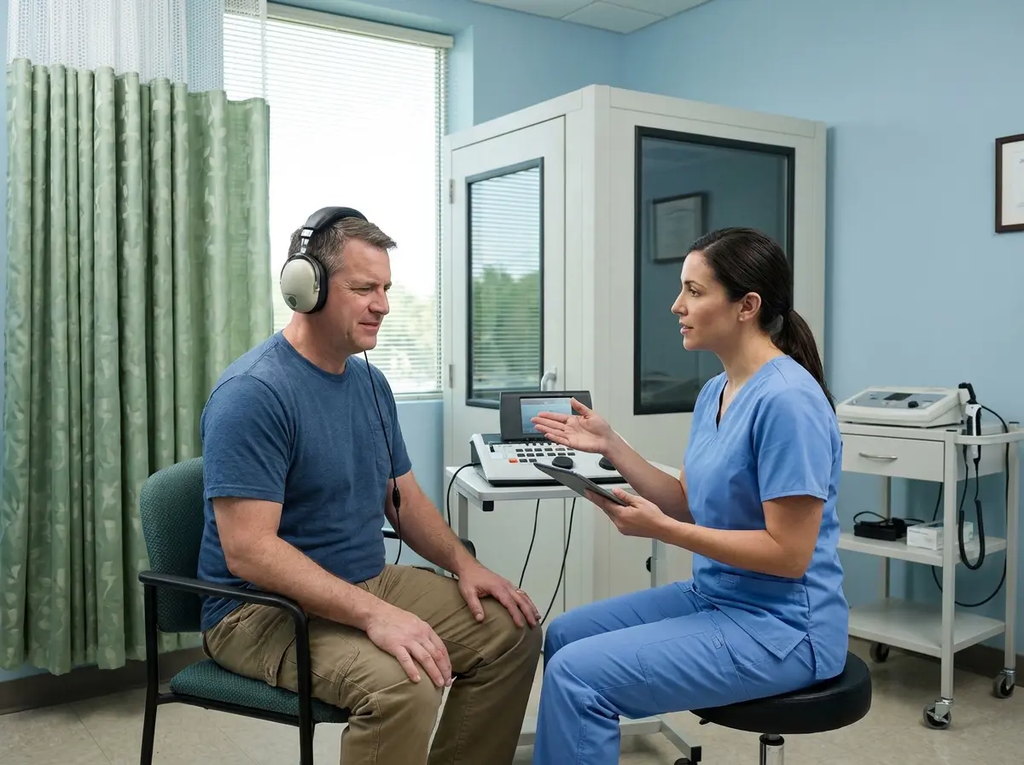
After you file your claim, the VA will usually schedule a mandatory Compensation and Pension exam. For auditory claims, an audiologist typically completes the Hearing Loss and Tinnitus Disability Benefits Questionnaire. This single medical appointment often carries more weight than any other piece of clinical evidence in your file.
Standard hearing evaluations may include puretone audiometry in both ears and speech recognition testing, often using the Maryland CNC word list. These tests help measure hearing loss, baseline hearing thresholds, and word recognition, but they may not fully capture reduced sound tolerance or sensitivity to loud noises. In some cases, an audiologist may also perform loudness discomfort level testing to evaluate the sound levels at which everyday noise becomes uncomfortable or painful.
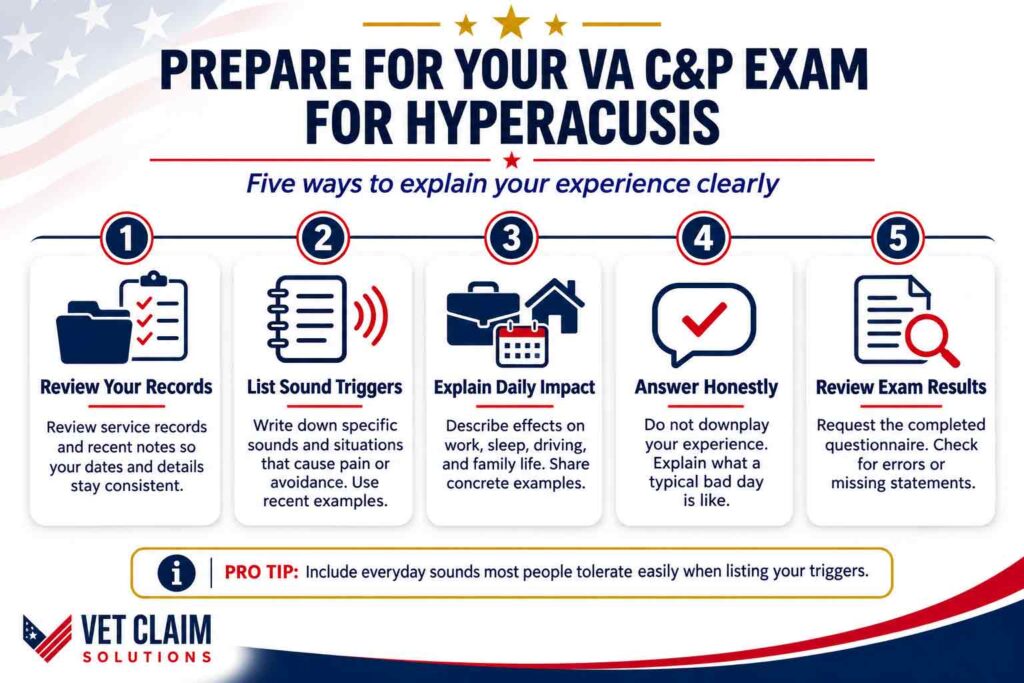
During a C&P exam, testing for hyperacusis or sound sensitivity can vary depending on the purpose of the examination and the veteran’s individual circumstances. If loudness discomfort levels are not specifically measured, the examiner may rely more heavily on the veteran’s reported symptoms, medical records, treatment history, and description of how sound sensitivity affects daily life and employment. Under 38 CFR § 4.10, functional impairment is an important part of the disability evaluation process, so clearly explaining the real-world impact of the condition can help Veterans Affairs understand the severity of the symptoms.
Specific examples are especially helpful when documenting a VA claim. Instead of simply saying that environmental noise is bothersome, a veteran might explain how alarms, traffic, machinery, crowded spaces, or other loud noises affect concentration, communication, work duties, or daily activities. These details, together with military records, noise exposure history, audiology findings, and related conditions such as tinnitus or hearing loss, can give the Veterans Benefits Administration a clearer picture of the veteran’s overall functional limitations.
VA Evidence File: Building a Strong Evidence File for Your VA Claim
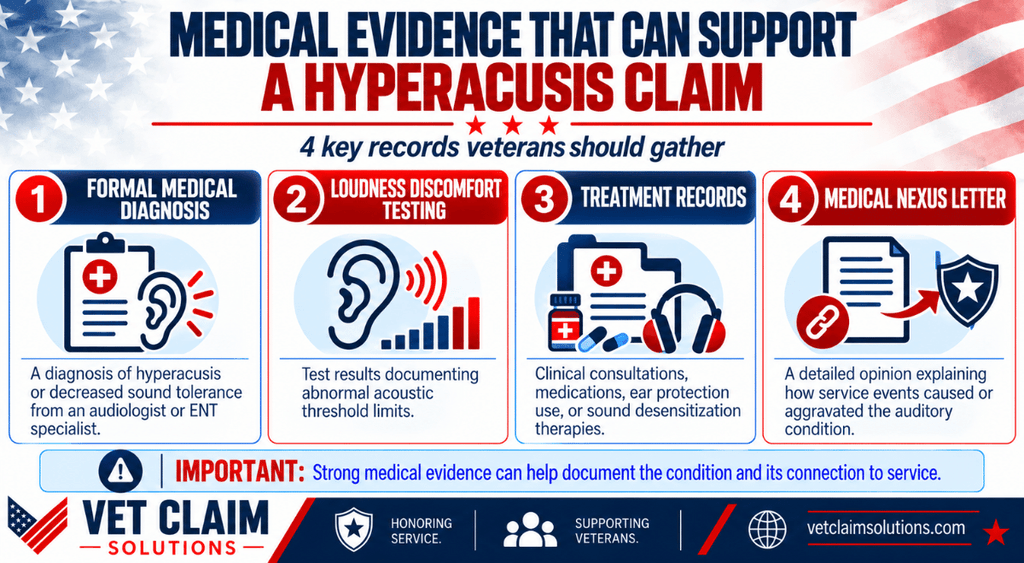
Documenting a sound tolerance disorder can require more than routine puretone testing, especially when standard hearing exams do not fully capture the veteran’s day-to-day limitations. Strong VA claims are typically supported by several types of evidence, including military records, VA medical records, treatment documentation, and lay statements. Together, these records can help the Veterans Benefits Administration understand the veteran’s exposure history, current symptoms, and the potential impacts of sound sensitivity on daily life and work.
Military personnel records can also help document hazardous noise exposure during active duty service. A veteran’s military occupational specialty, duty assignments, deployment history, and other service records may provide important context about military exposure, including exposure to weapons fire, aircraft, heavy equipment, or other high-noise environments. Documents such as the DD Form 214, performance evaluations, and deployment records can help show where and how the veteran encountered significant noise during service and may support efforts to establish service connection.
Lay statements from family members, friends, former coworkers, or other people who have observed the veteran’s symptoms can help document the daily and occupational impact of sound sensitivity. Statements submitted with VA claims, including those provided on VA Form 21-4138, may describe how loud noises, ringing ears, or reduced sound tolerance affect work, communication, sleep, social activities, and other parts of daily life.
This type of evidence can be especially useful when VA medical records or standard hearing tests do not fully capture the veteran’s functional limitations. Clear statements that record and document specific examples can help the Veterans Benefits Administration understand the potential impacts of the condition, including how symptoms affect employment, relationships, and everyday activities while the veteran is navigating VA disability benefits.
VA TDIU Benefits: When Sound Sensitivity Affects Your Ability to Work
When acoustic hypersensitivity becomes severe, maintaining substantially gainful employment in modern work environments can become impossible. Loud machinery, alarms, fluorescent lighting hums, or open office layouts can trigger persistent ear pain, severe migraines, or panic attacks. When service-connected sound issues block you from working, you may qualify for Total Disability Individual Unemployability.
Total Disability based on Individual Unemployability (TDIU) may allow eligible veterans to receive VA disability benefits at the 100 percent compensation rate even when their schedular disability rating is below 100 percent. Eligibility depends on how a veteran’s service-connected disabilities affect the ability to secure or maintain substantially gainful employment, along with other VA requirements.
For veterans experiencing severe sound sensitivity, evidence showing the potential impacts of tinnitus, hearing loss, traumatic brain injury, or related health conditions on employment can be important. Relevant VA medical records, treatment records, employment history, and other records documenting functional limitations may help the Veterans Benefits Administration understand how these conditions affect the veteran’s ability to work. Veterans who are already receiving benefits or are navigating VA disability benefits should document each service-connected condition accurately rather than assuming that hyperacusis alone will establish eligibility for TDIU
Summary: The Bottom Line on VA Hyperacusis Claims and Sound Sensitivities
Understanding how VA may evaluate hyperacusis and sound sensitivities can help military veterans better organize the evidence needed to support their VA claims. Although the VA rating schedule does not include a dedicated diagnostic code for hyperacusis, Veterans Affairs may consider the condition through secondary service connection, rating by analogy, or in relation to another service-connected condition. Evidence such as military records, exposure history, VA medical records, audiology findings, lay statements, and documentation of high noise or military exposure can help establish service connection and show how the condition affects everyday functioning.
Veterans should also clearly document symptoms such as reduced sound tolerance, ringing ears, difficulty around loud or external sound, and related hearing concerns. If a claim is denied or evaluated incorrectly, the appeals process may provide another opportunity to submit additional evidence or clarify key findings. Whether a veteran is filing an initial claim, receiving benefits already, or navigating VA disability benefits for the first time, complete and consistent documentation can help the Veterans Benefits Administration better understand the condition and its potential impact on the appropriate disability rating.