

Many veterans experience serious dental problems after military service, yet securing VA disability compensation for bruxism can be challenging. Many veterans experience serious dental problems after military service. However, securing VA disability compensation for bruxism can be challenging. This Bruxism VA Rating Guide explains how teeth grinding may affect a VA disability claim. It also covers the evidence that may help establish service connection.
Constant jaw clenching and teeth grinding can cause chronic pain, headaches, and tooth damage. Bruxism may also lead to other oral health problems. The VA may evaluate these symptoms through related conditions instead of rating bruxism on its own. Veterans should understand the medical criteria and diagnostic codes that may apply.
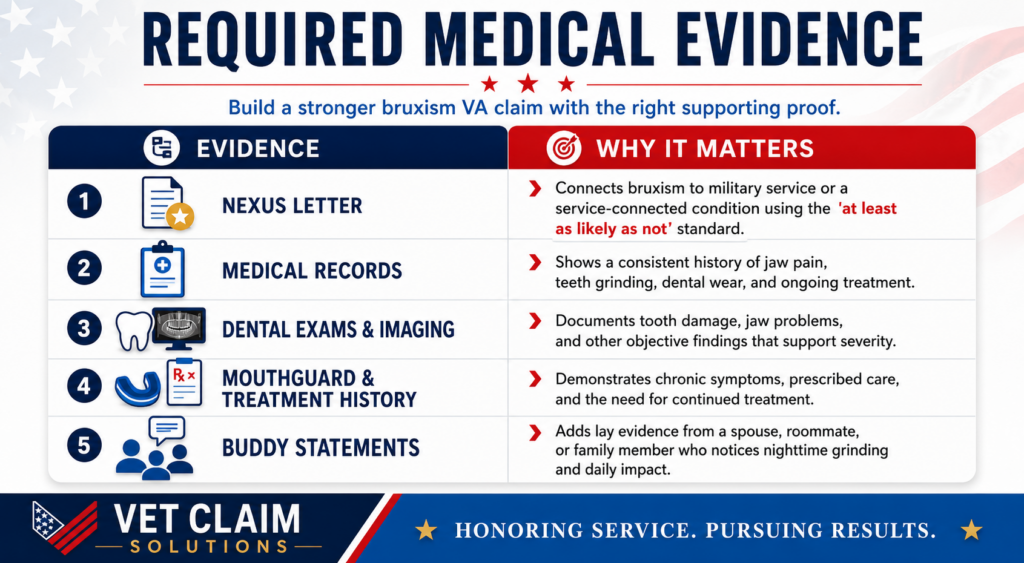
A strong bruxism VA claim should include clear medical evidence. The records should show how the condition relates to military service or another service-connected disability. Documentation can also describe its impact on daily life. This may include problems with sleep, jaw movement, chewing, and overall oral health.
Constant jaw clenching and teeth grinding can lead to chronic pain, headaches, tooth damage, and other oral health problems. Because the VA may evaluate bruxism through related conditions rather than as a standalone disability, veterans should understand the applicable medical criteria and diagnostic codes.
A strong bruxism VA claim should include clear medical evidence showing how the condition is connected to military service or another service-connected disability. Documentation should also explain how bruxism affects daily functioning, sleep, jaw movement, and overall oral health.
Bruxism involves involuntary clenching or grinding of the teeth and jaw. It often occurs during sleep or periods of intense stress. Some veterans develop bruxism during or after military service. Trauma, disrupted sleep, sleep apnea, or certain mental health conditions may contribute to the condition. Over time, untreated bruxism can cause jaw pain, headaches, and damaged teeth. It may also lead to other dental problems that require ongoing care.
A diagnosis alone does not automatically establish eligibility for VA compensation. Veterans need medical records that clearly connect the condition to their service. Bruxism may begin during service or result from a service-connected disability. Another qualifying condition may also aggravate it. When PTSD, medication, sleep problems, or another condition causes bruxism, veterans may pursue secondary service connection. The evidence should explain the cause and its impact on daily life.
The VA may evaluate a related temporomandibular disorder by measuring jaw impairment. During an examination, a provider may measure the veteran’s jaw opening and lateral movement in millimeters. The VA may also consider pain, flare-ups, and dietary limitations. A VA disability calculator can estimate how another rating may affect a combined rating. However, it cannot predict whether the VA will approve a claim.
Because bruxism can gradually damage the teeth and jaw, veterans should document symptoms early. Useful evidence may include dental exams, imaging, treatment records, and mouthguard prescriptions. Medical opinions may also explain when the condition began and what caused it. Veterans can use these records to support direct or secondary service connection. Strong and consistent evidence gives the VA a clearer picture of the condition’s severity.
How the VA Evaluates Teeth Grinding for Your VA Claim and VA Disability Rating
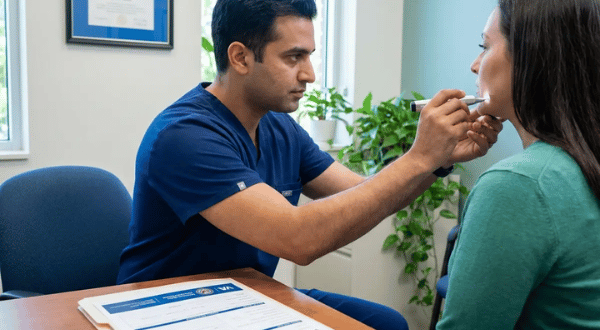
The VA does not typically assign a standalone bruxism VA rating. Instead, it may evaluate bruxism through a related condition or disability. Bruxism is often associated with temporomandibular disorder (TMD) or TMJ problems. To determine a VA disability rating, the VA may review the jaw’s range of motion. It may also consider pain during movement. Limited jaw opening can affect the evaluation. Specific clinical measurements may help document the severity of the condition.
The VA may use measurements of interincisal separation when evaluating jaw impairment. This refers to the distance between the upper and lower teeth when the mouth opens. An examiner may also review whether the condition requires dietary changes. Mechanically altered foods can include soft, pureed, or liquid foods. The required diet may depend on the severity of the jaw condition. These dietary restrictions can also affect how the VA evaluates functional impairment. During an examination, the provider should record jaw measurements accurately.
Dietary limitations can play an important role in a VA disability claim. Veterans should explain any difficulty chewing or eating during their C&P exam. They should also describe whether they rely on soft or mechanically altered foods. Clear information about these limitations can help the VA understand the condition’s impact on daily life.
Establishing a Secondary Service Connection for Your VA Claim and VA Disability
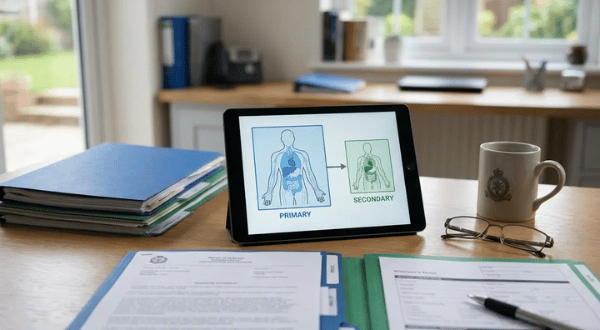
Veterans often pursue bruxism as a secondary condition rather than through direct service connection. To support this type of claim, veterans should show that an existing service-connected disability caused or aggravated their teeth grinding.
Veterans with PTSD may experience ongoing stress or heightened alertness. These symptoms can sometimes contribute to nighttime teeth grinding. A qualified medical provider can explain whether PTSD or another condition contributed to the bruxism. Veterans should also document when their symptoms began or worsened.
Sleep-related conditions, including sleep apnea, may also contribute to bruxism. Veterans who experience both conditions should discuss the possible connection with a qualified medical provider. Medical evidence should explain whether a service-connected condition caused or aggravated the bruxism. A clear medical link can help strengthen a secondary service connection claim.
Diagnostic Code 9905 and Oral Conditions in a VA Claim
The VA uses diagnostic code 9905 to evaluate conditions affecting the temporomandibular joint and related jaw issues. This diagnostic code is the primary tool used by raters to determine your va disability rating for bruxism-related symptoms. The ratings under this code are generally 10%, 20%, 30%, 40%, or 50%, depending on the severity of the limitation of motion and the necessity of a specific diet. Understanding how this diagnostic code works is essential for anyone preparing a va claim for jaw-related disabilities.
To reach a 40% or 50% VA disability rating, the veteran usually must demonstrate that their jaw issues are so severe that they require a diet of mechanically altered items. If the jaw is essentially frozen or has extremely limited movement (0-10mm of separation), the va rating will be at the higher end of the scale. For those with more moderate limitations (21-30mm of separation), a 10% or 20% VA disability rating is more common. Every millimeter counts when the VA is calculating your disability compensation, so ensure your VA claim includes precise clinical measurements from your treating physician.
It is also possible for the VA to use other diagnostic codes if the bruxism has caused extensive tooth loss or bone injury. However, 9905 remains the most frequent diagnostic code applied in these VA disability claims. When reviewing your VA disability benefits summary, ensure that the correct code has been applied to your condition. If the VA uses an incorrect code, it could result in a lower VA rate than what your symptoms actually warrant, necessitating a revision of your VA claim through the appropriate channels.
How to File Your VA Claim and VA Disability Claim for Bruxism
Starting a VA disability claim for bruxism begins with gathering all relevant evidence of your condition. You should first visit a dentist to get a formal diagnosis and a statement regarding the severity of your teeth grinding. Once you have this, you can submit your VA claim through the VA.gov portal or with the help of a Veterans Service Officer (VSO). Be sure to specify that you are seeking a VA disability rating for bruxism secondary to an existing condition like traumatic stress disorder to ensure the rater understands the service connection.
During the application process for a VA disability, you will likely be scheduled for a C&P exam. This exam is a pivotal moment in your VA claim, as the examiner will measure your jaw’s range of motion and ask about your symptoms. Be honest about your pain levels and any dietary restrictions you follow. If you skip details about how often you grind your teeth or the headaches you experience, your VA disability rating may not reflect the true impact on your life, potentially leading to a denial of your disability claim.
Many veterans find it helpful to use VA disability benefits resources to track their VA claims progress. Staying organized and keeping copies of all submitted documents will make the process much smoother. If your VA disability claim is initially denied, do not lose hope; many successful disability ratings are granted only after an appeal. The key is persistence and ensuring that your service-connected disability is clearly linked to your military service or a primary condition within the va claim paperwork.
Managing the Appeals Process for Your VA Claim and Disability Claims
If your va disability claim is denied or you receive a lower va rating than expected, you have the right to enter the appeals process. The appeals process allows you to submit new evidence or request a higher-level review of your file. Many veterans find that their initial va claim was missing a key piece of information, such as a detailed nexus letter or specific range-of-motion measurements. Correcting these errors during the appeals process can lead to a successful VA disability rating and backdated disability compensation.
There are several lanes for appeals, including a Supplemental Claim, a Higher-Level Review, or a Board Appeal. Choosing the right path for your disability claims depends on whether you have new evidence to provide. For bruxism, a Supplemental Claim is often effective if you can obtain a more detailed medical opinion regarding your service-connected condition. Navigating these VA claims requires patience, as the timeline can be lengthy, but the potential increase in your VA disability rating is worth the effort.
During an appeal, it is often beneficial to consult with a legal professional or a specialized VA disability advocate. They can help you identify the weaknesses in your original VA disability claim and gather the necessary documentation to prove your service connection. Remember, the goal of the appeals process is to ensure you receive the disability compensation that accurately reflects your level of impairment. Don’t settle for a 0% va rate if your condition significantly impacts your quality of life and was caused by your va claim related service.

Conclusion: Accessing Free Resources and Maximizing Your VA Claim Rate
Securing a fair VA disability rating for bruxism is a journey that requires medical evidence, a clear service connection, and an understanding of the VA’s rating schedule. By following this Bruxism VA Rating Guide: How to Prove Service Connection, you can better navigate the complexities of VA disability benefits. Whether your condition is linked to post-traumatic stress disorder or sleep apnea, you deserve recognition for the physical toll your service has taken on your health. Ensure you utilize all available free resources to help build the strongest va claim possible.
Remember that your VA disability claim is about more than just a monthly check; it is about accessing the healthcare and support you need for your dental conditions. Chronic jaw pain and traumatic stress are serious issues that should not be ignored. By documenting your symptoms, obtaining a nexus letter, and understanding diagnostic code 9905, you put yourself in the best position to succeed. Your va disability journey may be challenging, but the disability compensation you receive can provide much-needed relief and stability for your future va claim efforts.
As you move forward, keep a close eye on your medical records and continue seeking treatment for your service-connected disability. The VA’s disability ratings are subject to change if your condition worsens, so staying proactive is key to maintaining your VA claim status. For more information on va claims and how to maximize your va rate, look for disability benefits updates regularly. With the right approach, you can successfully prove your service connection and secure the VA disability rating you have earned through your dedicated service to the country.