

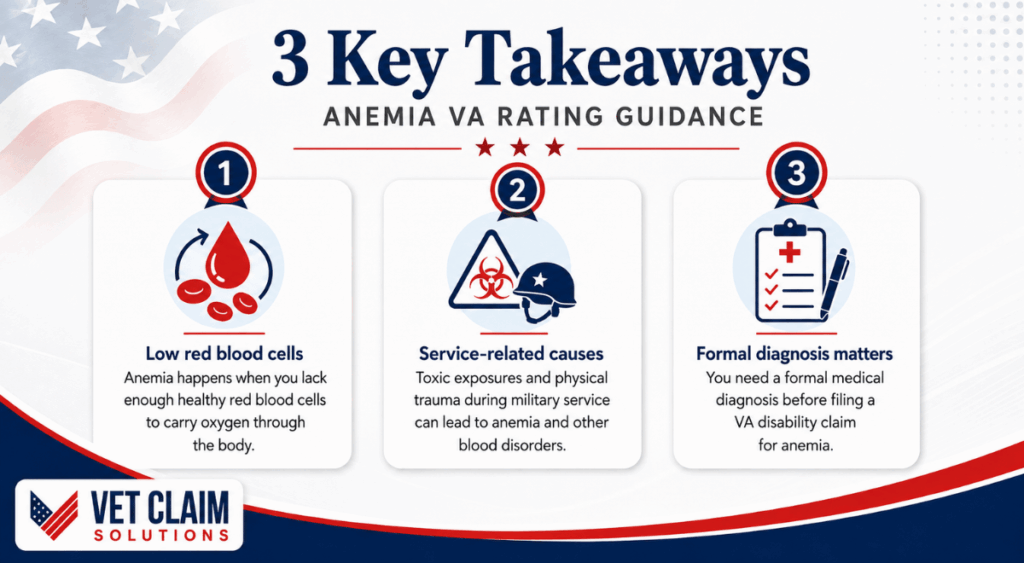
VA Disability Rating for Anemia is important for veterans who experience fatigue, weakness, shortness of breath, or reduced stamina. These symptoms can affect daily activities, work, and overall quality of life. Anemia occurs when the body lacks enough healthy red blood cells to carry oxygen throughout its tissues. The condition may relate to an in-service illness, injury, exposure, or another service-connected condition.
The VA evaluates anemia based on the diagnosis, severity, treatment needs, and supporting medical evidence. Different types of anemia may fall under different rating criteria. These conditions include iron deficiency anemia, aplastic anemia, hemolytic anemia, and sickle cell anemia. Each condition may require different evidence when the VA determines a rating.
Understanding these criteria can help veterans prepare stronger evidence for a VA disability claim. It can also clarify service connection requirements and the potential VA disability rating for anemia.
Veterans may develop blood disorders after exposure to hazards encountered during military service, including burn pits and chemical storage areas. A healthy red blood cell count is essential for maintaining energy levels and supporting normal physical activity. When red blood cell levels fall too low, veterans may experience severe fatigue and weakness that can interfere with manual labor and other daily activities. The heart may also work harder to circulate oxygen throughout the body.
Over time, this added strain may contribute to cardiovascular complications and a reduced quality of life. Chronic anemia can therefore affect both physical functioning and overall well-being. Some veterans also experience toxic exposures or physical trauma that result in significant blood loss during deployments or training exercises. These events may affect the body’s ability to produce healthy red blood cells or maintain adequate iron stores.
Establishing service connection requires medical evidence linking an in-service event or exposure to a current diagnosis of anemia. The blog also notes that certain environmental toxins may interfere with bone marrow function and affect long-term red blood cell production. Without enough healthy red blood cells, veterans may struggle with employment, family activities, and other aspects of daily life. Chronic anemia can also affect cognitive function because the brain depends on an adequate supply of oxygen.
VA Disability Rating for Anemia: Rating Criteria and Benefits Explained – How to Establish Service Connection
To support a VA claim for anemia, you must show that your military service caused or worsened your blood condition. This generally requires a current diagnosis, evidence of an in-service event, and medical evidence connecting the condition to your service. In some cases, the VA may consider certain blood disorders under presumptive service connection rules based on qualifying service or exposure history. This can affect the type of evidence needed to establish the connection.
Providing a detailed history of your symptoms can also help show that your anemia is chronic rather than temporary. Consistent medical records over time can strengthen the evidence supporting your claim. Your VA disability rating will depend on the type and severity of your anemia, the applicable rating criteria, and the medical evidence documenting how the condition affects your daily life.
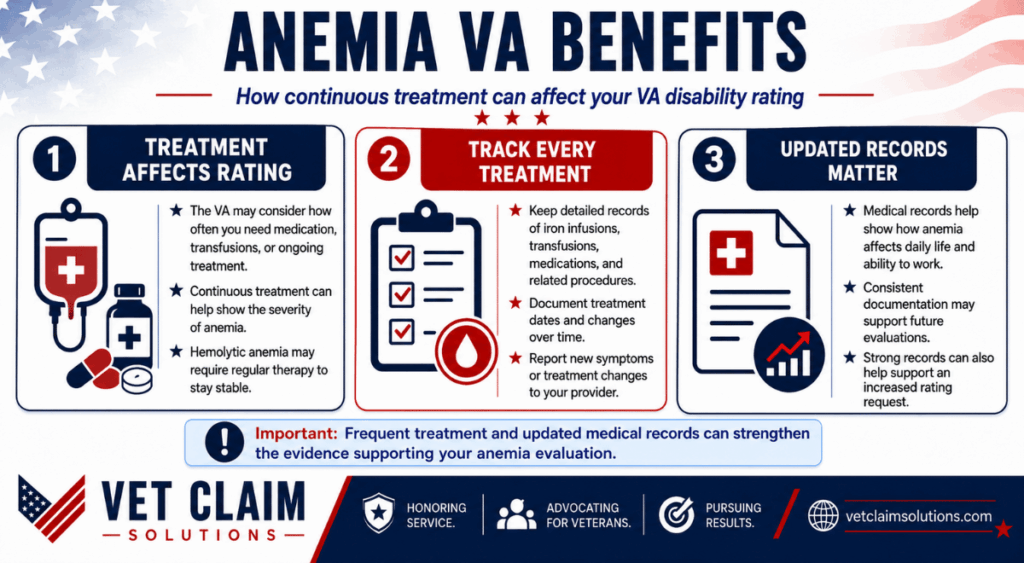
You can also claim this condition secondary to another service-connected illness like chronic kidney disease or cancer treatments that damage the blood-forming organs. Veterans with severe renal issues often develop deficiency anemia because their bodies cannot produce enough necessary erythropoietin hormones to stimulate blood cell production. Providing comprehensive medical records from both private and VA doctors will support your va disability benefits claim and speed up the review process significantly. If your condition requires continuous treatment, such as regular blood transfusions or hormone therapy, ensure this is documented in your official medical file. A well-documented disability rating application is much more likely to result in a favorable decision on the first attempt, saving you months of appeals.
PRO TIP: Always ask your healthcare provider to write a nexus letter if you suspect your iron deficiency anemia relates to another service-connected illness, as this bridge is vital for secondary claims.
Aplastic Anemia and Hemolytic Anemia: VA Rating Schedule for Different Types of Anemia
Are you wondering how the government evaluates your specific blood disorder and determines your va rates? The VA evaluates blood conditions using a specific diagnostic code based on the exact type of illness you have been diagnosed with by a specialist. Evaluators look at your hemoglobin levels and whether you require intensive treatments like a bone marrow transplant to manage your symptoms effectively. For example, aplastic anemia is often rated under diagnostic code 7716, which considers the need for transfusions and the frequency of infections. If you suffer from hemolytic anemia, the VA will look at how often you experience crisis events and the need for immunosuppressive therapy to keep your body from attacking its own cells.
The VA rate for these conditions can range from 0% to 100%, depending on the severity of your blood cell depletion and functional loss. A 100% disability rating is typically reserved for veterans who require continuous treatment or have had a bone marrow transplant within the last six months.
For many veterans, the VA rating for anemia is influenced by hemoglobin levels. According to the blog, hemoglobin levels below 8g/100ml may support the highest ratings, while levels between 8 and 10g/100ml may qualify for a 60% VA disability rating.
Tracking your hemoglobin levels over several months can help show that your condition is persistent rather than a temporary fluctuation caused by diet or a minor illness.
Iron Deficiency Anemia: Symptoms and Intravenous Iron Infusions

Iron deficiency anemia is a common blood disorder among veterans. It occurs when the body lacks enough iron to produce hemoglobin for healthy red blood cells. Some cases may be linked to poor nutrition during deployment or internal bleeding.
Oral iron supplements are often used as treatment. Some veterans may need intravenous iron when oral supplements are ineffective or cause severe gastrointestinal problems.
The need for iron infusions can also show that standard treatment has not worked. According to the blog, infusions more than once every six months may support a higher disability rating.
Common symptoms include extreme fatigue, pale skin, and shortness of breath. These symptoms may appear even during mild activities, such as walking up stairs. They can also make manual labor or a full workweek difficult.
The VA uses Diagnostic Code 7720 to evaluate iron deficiency anemia. The rating considers hemoglobin levels and the intensity of treatment.
If iron levels remain low despite treatment, medical records should document the ongoing problem. The blog describes this persistent condition as “refractory.” Consistent records can help show that the anemia is chronic and requires continuing treatment.
Sickle Cell Anemia and Cell Anemia: Rating Criteria for Hereditary Conditions
Sickle cell anemia is hereditary, but military service may aggravate the condition. High-altitude training, desert heat, and extreme physical stress can trigger painful crises. The VA evaluates sickle cell anemia under Diagnostic Code 7714. The rating focuses on the frequency of painful crises and related hospitalizations.
According to the blog, a 100% rating may apply when painful crises require at least three hospitalizations within a twelve-month period. Less frequent episodes may still support a lower disability rating.
Sickle cell anemia causes red blood cells to become misshapen. These cells can block small blood vessels and cause intense pain. Veterans should document every sickle cell crisis and related hospitalization. Detailed records can help show how often the condition disrupts daily life.
If military service permanently worsened your sickle cell anemia, you may seek service connection through aggravation. The VA may compare pre-service records with your current medical evidence. Consistent documentation is especially important when the VA evaluates the severity of the condition. Keeping a symptom journal can help track painful episodes, treatment, and functional limitations over time.
Aplastic Anemia and Bone Marrow Transplant: High-Level Disability Ratings
Aplastic anemia is a rare and serious condition. It develops when the bone marrow fails to produce enough new blood cells. The blog notes that exposure to benzene, radiation, or other toxic chemicals may contribute to the condition. Some veterans may encounter these hazards during military service or in industrial environments.
The VA evaluates aplastic anemia based on the severity of the condition and the treatment required. A bone marrow transplant or active immunosuppressive therapy may support a higher VA disability rating. According to the blog, the VA may assign a 100% disability rating for six months after a bone marrow transplant. The VA may also apply this rating during active immunosuppressive therapy.
After that period, the VA reviews the veteran’s recovery and remaining symptoms. Updated medical records can help show the veteran’s current level of impairment.
Recovery from a bone marrow transplant can take many months. Veterans may face severe exhaustion and an increased risk of infection during this period. These limitations can make regular employment difficult. The blog notes that a 100% disability rating may provide important financial support during recovery.
If the bone marrow does not fully recover, chronic anemia may continue. Veterans may then need lifelong monitoring and frequent medical visits. Ask your hematologist to document your blood cell counts in detail. These reports should include white blood cells and platelets because they may affect the VA evaluation. The VA may continue reviewing your condition as you recover. Updated medical records can help show your current level of impairment over time.
Understanding Your Anemia VA Rating: How Secondary Service Connection Works for Peripheral Neuropathy
Anemia can cause more than fatigue. In some cases, related deficiencies may also affect the nervous system. For example, pernicious anemia is associated with vitamin B12 deficiency. This deficiency can contribute to peripheral neuropathy and nerve problems in the hands or feet.
Veterans may experience numbness, tingling, balance problems, or other neurological symptoms. These issues can affect mobility, sensation, and daily activities. If a service-connected anemia condition contributes to another diagnosed condition, a veteran may seek secondary service connection. Medical evidence must show a link between the two conditions.
For pernicious anemia, doctors may review vitamin B12 levels, folic acid levels, and absorption problems. These findings can help identify the cause of neurological symptoms. Veterans should document new symptoms and discuss them with their healthcare providers. Records from both a hematologist and neurologist can help show how the conditions are related.
Consistent medical documentation can also help the VA understand the full impact of the condition. This evidence may support the evaluation of any qualifying secondary condition.
How to File a VA Claim for Anemia and Blood Disorders
Filing a VA claim for anemia starts with gathering clear medical evidence. Collect records showing your diagnosis, blood cell counts, and treatment history. Include records of iron infusions, transfusions, medications, or other treatment related to your condition. These documents can help show the severity of your anemia.
You may also submit a personal statement. Explain how fatigue, weakness, or other symptoms affect your work and daily activities.
If you have acquired hemolytic anemia, document related hospitalizations or emergency room visits. These records may help show how often the condition requires treatment.
You can file a VA disability claim online through VA.gov or by mail using VA Form 21-526EZ. A Veterans Service Officer (VSO) may also help you understand the filing process.
After you submit your claim, the VA may schedule a Compensation and Pension (C&P) exam. The examiner may review your blood cell levels, symptoms, and functional limitations. Describe your symptoms accurately during the exam, including how they vary over time. Consistent medical records can help the VA understand the full impact of your condition.
How to Maximize Your Monthly Disability Benefits and VA Claim Success
To maximize your disability compensation, you must ensure that every symptom and complication is accounted for in your va disability rating through thorough documentation. If your iron deficiency anemia is so severe that you cannot maintain “substantially gainful employment,” you may qualify for Individual Unemployability (TDIU). This allows you to be paid at the 100% va rate even if your combined rating is lower, such as 60% or 70%, providing a significant financial boost. TDIU is a critical benefit for veterans whose deficiency anemia causes such profound exhaustion that they cannot work a regular schedule. Documentation of your work history and how your blood cell disorder forced you to leave your job is essential here for a successful va claim.
You may also qualify for Special Monthly Compensation (SMC) if your service-connected condition causes certain severe impairments. Examples may include loss of use of a limb.
Veterans with a disability rating of 30% or higher may also qualify for additional compensation for eligible dependents. Make sure the VA has accurate information about your spouse, children, or other qualifying dependents.
If your anemia becomes more severe, review whether your current VA disability rating still reflects your condition. Updated medical records can document changes in hemoglobin levels, treatment needs, and symptoms.
Continue tracking your condition and maintaining current medical evidence. For more information about VA benefits and blood disorder ratings, visit the official VA website or seek qualified assistance with your claim.
Final Thoughts on VA Disability Rating for Anemia

Understanding your VA disability rating for anemia can make the claims process easier to navigate. Different forms of anemia may involve different rating criteria, treatment requirements, and medical evidence.
Whether you have iron deficiency anemia, sickle cell anemia, or acquired hemolytic anemia, strong documentation is important. Medical records can help show the severity of your condition and its connection to military service.
Learning the applicable diagnostic codes can also help you understand how the VA evaluates your condition. Keep your medical records current and document any changes in symptoms or treatment.
If your anemia is connected to military service, understanding the VA rating process can help you prepare a more complete claim. Staying informed and organized can make it easier to identify the evidence needed to support your case.