


Foot pain can interfere with walking, standing, working, and other daily activities, especially when it becomes chronic. Veterans who spent years marching, running, carrying heavy equipment, or wearing combat boots may develop painful foot conditions such as heel spurs, plantar fasciitis, or other injuries affecting the heel bone. This often leads to an important question: Dealing with Foot Pain? Are Heel Spurs Covered Under VA Disability Benefits?
The Department of Veterans Affairs may award VA disability compensation when medical records show that a heel spur or related foot condition was caused or aggravated by military service. A successful VA disability claim generally requires a current diagnosis, evidence of an in-service injury or repeated physical strain, and a clear service connection supported by strong medical evidence. The VA may also consider symptoms such as chronic pain, functional loss, difficulty standing or walking, and whether the condition affects one or both feet when determining the appropriate VA disability rating.
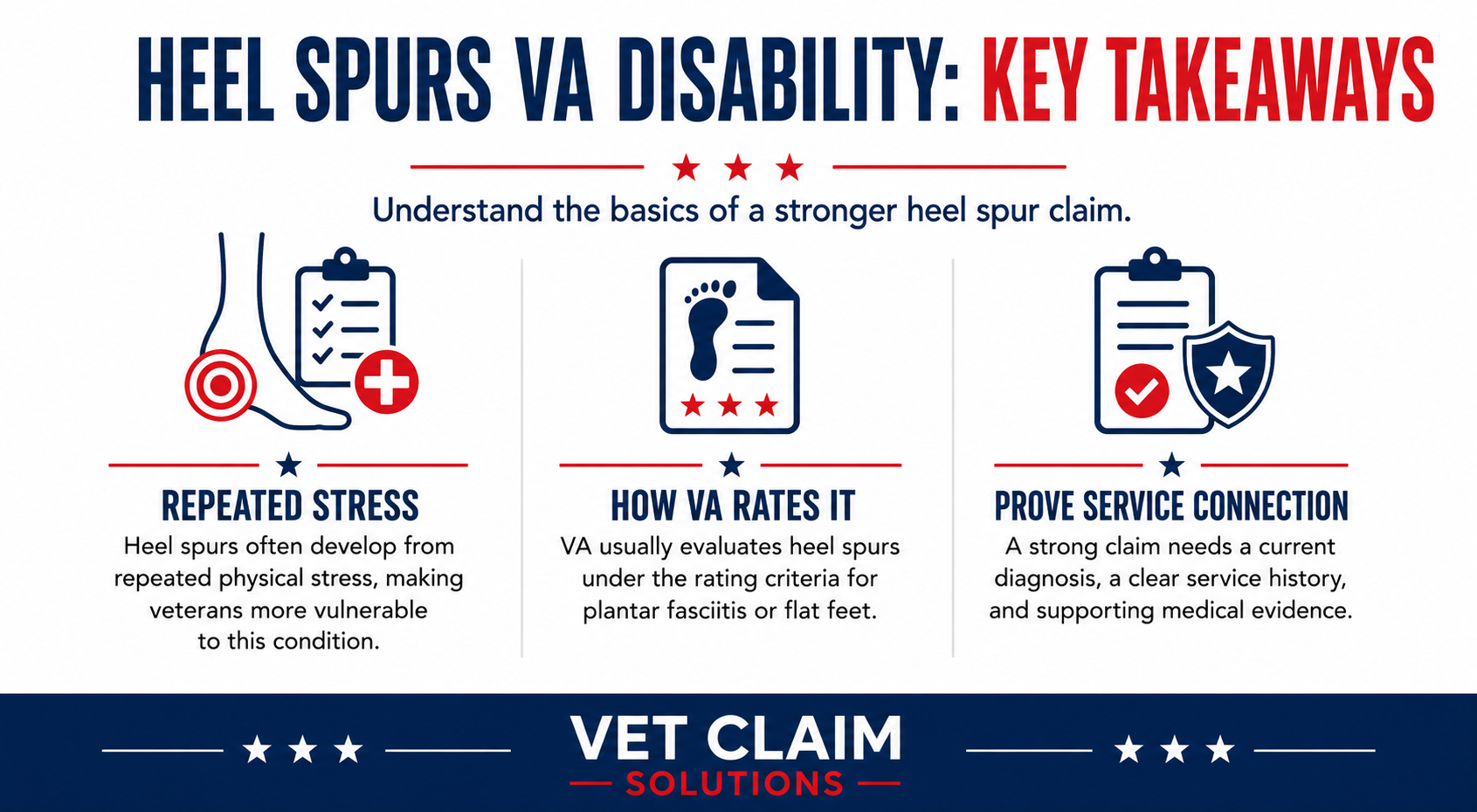
Heel spurs form when calcium deposits gradually build up along the heel bone and create a bone spur on the underside of the foot. These bone spurs are often associated with plantar fasciitis, a painful condition involving inflammation and repeated strain of the plantar fascia. Veterans may experience sharp foot pain, stiffness, tenderness, or difficulty placing weight on the affected heel.
The physical demands of military service can increase stress on the feet through prolonged standing, running on hard surfaces, repeated marching, and carrying heavy equipment. Combat boots with limited cushioning or arch support may also aggravate plantar fasciitis, pes planus, or flat foot, especially when these conditions are left untreated. Over time, repeated strain may contribute to chronic inflammation, microscopic tissue damage, and the development of a painful bone spur.
Some veterans continue serving despite serious foot injuries or bilateral heel pain and never report their symptoms during active duty. This lack of treatment records can make service connection more difficult to establish later, but it does not automatically prevent approval. Statements describing when the pain began, records of post-service treatment, and findings from a VA exam may help demonstrate that the condition resulted from repeated physical demands during service.
The VA may also evaluate whether the veteran has related foot conditions, such as plantar fasciitis, pes planus, hammer toe, claw foot, or hallux rigidus affecting the big toe. When symptoms affect both feet, cause significant functional loss, or interfere with standing and walking, the applicable rating criteria may support a compensable disability rating or, in more severe cases, a higher rating.
Dealing with Foot Pain? Are Heel Spurs Covered Under VA Disability Benefits?
Veterans may qualify for disability benefits when medical evidence connects a painful heel condition to military service. However, compensation is not automatic. The VA does not assign a separate diagnostic code for heel spurs. Instead, it rates the diagnosed foot condition that best matches the veteran’s symptoms. For example, the VA may rate a heel spur linked to plantar fasciitis under Diagnostic Code 5269. It may use other diagnostic codes for pes planus or another documented foot injury.
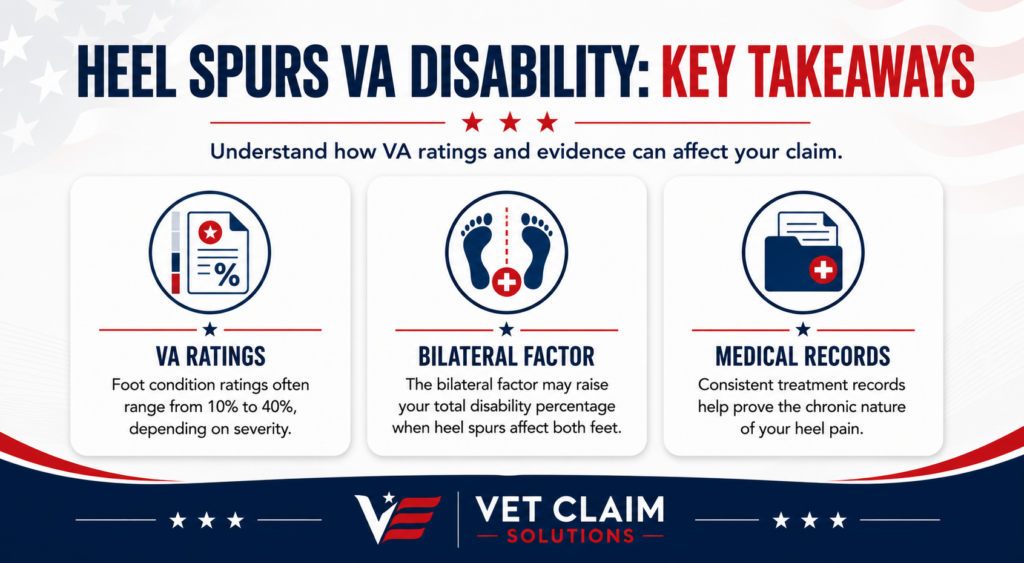
Under Diagnostic Code 5269, the VA rating for plantar fasciitis depends partly on whether the condition affects one or both feet and whether nonsurgical and surgical treatments provide relief. Persistent bilateral heel pain that does not improve after treatment may support a higher rating than a less severe condition. Custom orthotics, injections, physical therapy, or surgery can provide important medical evidence, but receiving these treatments does not automatically determine how the VA rates the disability.
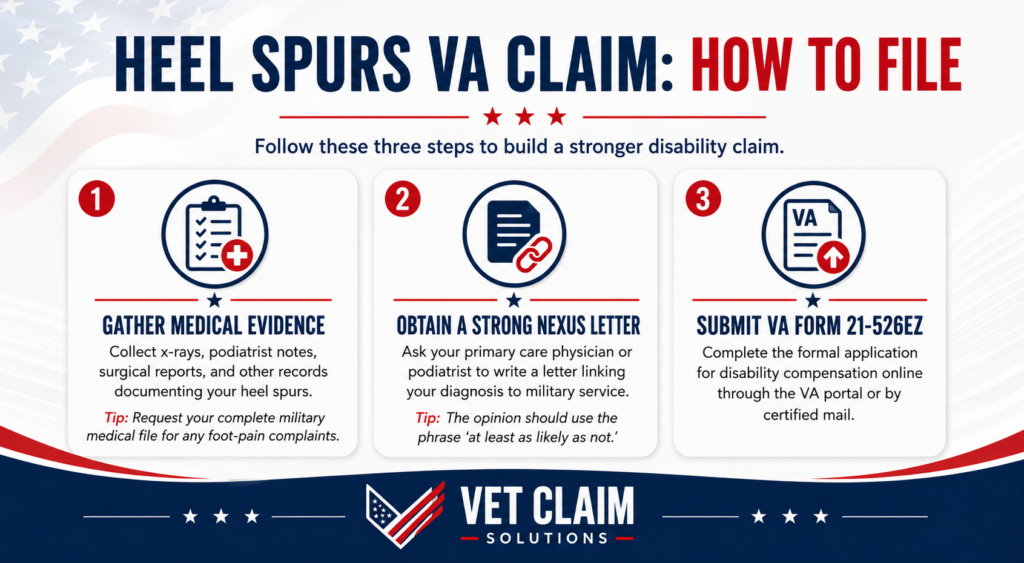
To establish service connection, veterans should submit evidence showing a current diagnosis and a link between the condition and their time in service. Helpful records may include X-rays confirming bone spurs, service treatment records, private medical records, personal or buddy statements, and findings from a VA exam. The evidence should clearly explain the severity of the veteran’s foot pain, whether the condition affects one or both feet, and how it limits standing, walking, working, or completing everyday activities.
Note: The VA updated its rating schedule for the musculoskeletal system recently. Plantar fasciitis and related heel conditions now fall under Diagnostic Code 5269, which provides clearer criteria for evaluation.
Establishing Service Connection for Foot Pain and Heel Spur VA Rating
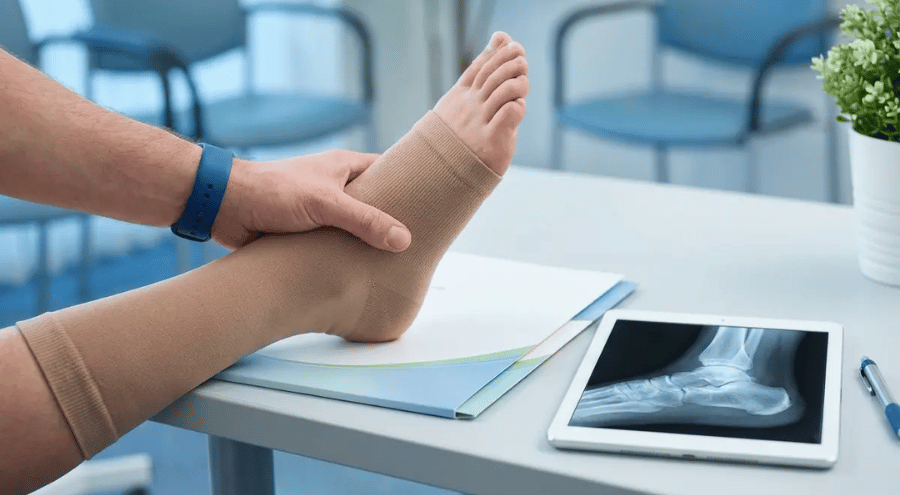
Establishing service connection is one of the most important parts of seeking VA disability compensation for heel spurs. Veterans generally need evidence of a current foot disability, an in-service event or foot injury, and a medical link between the two. X-rays, imaging results, treatment notes, and other medical records may confirm a heel spur, plantar fascia damage, or another diagnosed service-connected condition affecting the right or left foot.
Evidence of the in-service cause may include treatment for chronic pain, complaints documented during a physical exam, or records showing repeated marching, running, prolonged standing, or carrying heavy equipment. Veterans without extensive service treatment records may still use personal statements, buddy statements, and post-service medical evidence to explain when their symptoms began. The Department of Veterans Affairs may also consider findings from a VA examination, including how the condition affects walking, standing, balance, and normal weight-bearing activity.
A strong medical nexus letter can strengthen the claim. It should explain how the current heel condition relates to military duties. A qualified clinician should review the veteran’s medical and service history. The clinician should state whether military service at least as likely as not caused or worsened the condition. The opinion should clearly explain the medical reasoning behind that conclusion. Some claims may not need a nexus letter. Still, the letter can help when service records are limited or a VA examiner gives an unfavorable opinion
Veterans may also establish secondary service connection when a previously recognized service-connected disability causes or aggravates the heel condition. For example, a knee, hip, ankle, or back disability may alter a veteran’s gait and place additional pressure on the feet. Over time, that imbalance may contribute to plantar fascia strain, heel spurs, or a bilateral foot disability. Medical evidence should explain how the original disability caused or worsened the newer foot condition.
The VA will review the diagnosis, nexus evidence, examination findings, and documented functional loss when making its rating decision. Evidence showing difficulty walking, persistent pain despite treatment, reduced mobility, or interference with gainful employment may help demonstrate the severity of the disability and support the appropriate percent rating.
Common Mistakes to Avoid When Filing a VA Disability Claim
A common mistake is submitting a VA disability claim before gathering enough medical evidence. Veterans should include current medical records, imaging results, and a clear diagnosis identifying the source of their pain, such as plantar fasciitis, a bone spur, or bilateral heel spurs. Records should also distinguish the claimed condition from related problems involving the Achilles tendon, pes planus, claw foot, hammer toe, or hallux rigidus, since these conditions may be evaluated under different diagnostic codes.
Another common mistake is failing to establish service connection. Explain how military duties caused or worsened the heel condition. These duties may include marching, prolonged standing, repetitive training, or carrying heavy equipment. Foot injuries during service may also support the claim. When treatment records are limited, submit a detailed personal statement and buddy statements. A strong medical nexus letter can also connect the current condition to military service.
Veterans should also avoid minimizing symptoms during a VA examination or physical exam. Clearly explain whether pain affects the right foot, left foot, or the entire bilateral foot condition. Describe whether treatment, orthotics, or surgery fails to relieve pain, and document limitations involving walking, standing, balance, work, and daily activities. Evidence of functional impairment, chronic pain, or a moderately severe or severe foot condition may influence the VA’s rating decision and assigned percent disability.
Finally, do not rely on self-diagnosis or assume every foot condition will receive a separate rating. Qualified medical professionals should identify the diagnosis, explain its relationship to any existing service-connected disabilities, and document the resulting functional loss. Complete and consistent evidence gives VA adjudicators — and, if necessary, the Board reviewing the case — a clearer basis for determining eligibility for VA disability compensation and the appropriate rating.
The Heel Spur VA Rating and Foot Condition System
The VA assigns a disability rating for heel pain according to the diagnosed foot condition, the severity of the symptoms, and the applicable diagnostic code. Because the rating schedule does not provide a standalone code specifically for a heel spur, the VA may evaluate painful bone spurs under Diagnostic Code 5269 when they are associated with plantar fasciitis. Medical records should clearly identify whether the condition affects the right foot, the left foot, or both feet.
Under the current plantar fasciitis rating criteria, the VA may assign:
- A 10% rating for plantar fasciitis that does not meet the requirements for a higher evaluation, whether it affects one foot or creates a bilateral foot condition.
- A 20 percent rating for unilateral plantar fasciitis when both nonsurgical and surgical treatment fail to relieve pain.
- A 30 percent rating for bilateral plantar fasciitis when both nonsurgical and surgical treatment fail to provide relief.
- A 40 percent rating when there is actual loss of use of the foot.
When surgery is recommended, some veterans may not qualify as suitable surgical candidates. In those cases, the VA may assign a 20% or 30% rating. The percentage depends on whether the condition affects one foot or both feet.
A bilateral heel spur claim should explain how the condition affects each heel. X-rays may confirm the presence of bone spurs. Treatment records should also document ongoing pain and the use of orthotics, injections, physical therapy, or surgery. A detailed VA exam should describe limits involving walking, standing, balance, and weight-bearing.
The VA may also review related diagnoses. These may include pes planus, claw foot, hammer toe, Achilles tendon disorders, or residuals of other foot injuries. Each condition has its own diagnostic code. The VA may assign a separate rating only when the symptoms and limitations differ from those already rated.
The bilateral factor does not apply automatically. A single rating may already cover bilateral plantar fasciitis. Under 38 C.F.R. § 4.26, the bilateral factor generally applies when the VA rates each paired extremity separately.
Veterans can review the official VA disability ratings page for more information. The assigned percentage reflects the condition’s severity and its effect on daily functioning.
What to Expect at Your C&P Exam for Foot Pain and Heel Spurs
After filing a VA claim for heel spurs, the Department of Veterans Affairs may schedule a Compensation and Pension exam, commonly called a C&P exam or VA examination. During this evaluation, a VA examiner will review your medical records, ask about your military service, and perform a physical exam to determine the severity of your foot disability.
The examiner may evaluate the right foot, left foot, or both feet for tenderness, swelling, painful motion, altered gait, and reduced ability to stand or walk. They may also assess related foot conditions, including plantar fasciitis, pes planus, claw foot, hammer toe, hallux rigidus, or an Achilles tendon disorder. If you have bilateral heel spurs or another bilateral foot disability, explain how the symptoms affect each foot and whether one side is more severe.
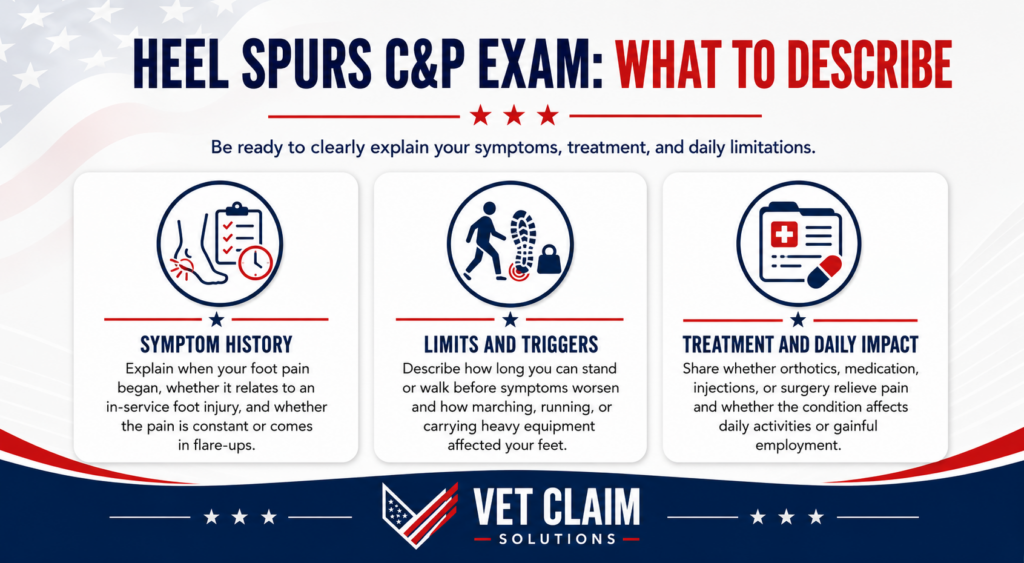
The examiner may use a disability benefits questionnaire to record findings related to functional loss, pain during weight-bearing, and the overall severity of the condition. These findings become part of the evidence the VA reviews when applying the appropriate diagnostic code and rating criteria. They may also affect whether your condition is considered moderate, moderately severe, or severe.
Do not exaggerate your symptoms, but do not minimize them out of habit. Describe your usual limitations honestly and explain what happens during flare-ups or after prolonged activity. For example, tell the examiner if your first steps in the morning cause sharp pain, if standing causes worsening discomfort, or if you need frequent breaks because of chronic pain.
The C&P examiner does not make the final rating decision. However, the examination report can significantly influence whether the VA establishes service connection and assigns the proper disability rating. An accurate description of your symptoms, treatment history, and functional impairment gives the VA a clearer picture of how your heel condition affects your everyday life.
Pro Tip: Always describe your symptoms based on how you feel during your worst pain days. Masking your discomfort during a medical examination will only result in a much lower disability rating.
Additional VA Disability Compensation and Benefits for Severe Mobility Issues

Veterans with exceptionally severe heel spurs might qualify for additional VA disability benefits for veterans well beyond standard monthly disability compensation. Are your heel spurs preventing you from maintaining steady employment and earning a reliable, living wage? You could explore Total Disability based on Individual Unemployability, which allows veterans to receive compensation at the 100 percent rate.
To qualify for this special unemployability benefit, your service-connected foot condition must be the primary reason you cannot work. You will need strong, documented statements from past employers and medical experts detailing your exact physical and occupational limitations. The VA requires you to accurately fill out Form 21-8940 to formally apply for this specific financial benefit.
Additionally, some veterans require highly specialized footwear or custom medical orthotics to properly manage their severe heel spurs. The VA provides special financial allowances for orthopedic shoes if your service-connected condition damages your regular, everyday footwear. You can speak with your primary care provider at the VA about getting referrals to a podiatrist for these items.
Conclusion
Living with chronic heel pain makes basic daily activities incredibly difficult and exhausting for many military veterans. Heel spurs represent a legitimate, painful medical condition that often traces directly back to the physical demands of military service. The VA definitely provides disability compensation for these foot issues if you can logically prove the connection to your service.
Filing a successful disability claim requires highly organized medical records, a clear clinical diagnosis, and a strong nexus letter. You should never ignore your foot pain or wrongly assume it is just a normal, expected part of aging. Document your symptoms thoroughly and seek professional medical help to build a solid, undeniable foundation for your claim.
Take the necessary time to gather your medical evidence before submitting your paperwork to the Department of Veterans Affairs. Consider working closely with a Veterans Service Officer or an accredited claims agent to help organize your extensive documentation. Securing your rightful benefits will give you immediate access to the medical care and financial support you truly deserve.