


Many veterans transitioning to civilian life ask, “Can You Get VA Disability for Shin Splints?” The Department of Veterans Affairs recognizes shin splints as a condition that may qualify for disability compensation when the evidence shows a connection to military service. Shin splints frequently develop during basic training, active-duty deployments, or other physically demanding assignments involving repeated running, marching, and carrying heavy equipment.
Also known medically as medial tibial stress syndrome, shin splints cause significant pain along the front of your lower legs. This injury happens when the connective tissues attaching your muscles to your shin bone become inflamed from repetitive stress. While some service members recover with proper rest, others develop chronic pain that lasts for years after their discharge. Understanding how the VA evaluates this specific condition will help you build a stronger claim for your monthly benefits.
Can you get VA disability for shin splints? Veterans may qualify when the condition began during service, worsened because of service, or developed because of another service-connected disability. Shin splints are also called medial tibial stress syndrome. They are common among service members who march, run, train on hard surfaces, carry heavy equipment, or wear military footwear for long periods. These activities place repeated stress on the tibia and nearby muscles. Over time, a temporary injury may develop into chronic lower-leg pain.
Shin splints often begin as tenderness or a dull ache along the inner edge of the shinbone. As the condition worsens, the pain may become sharper. Veterans may also experience swelling or difficulty standing, walking, and running. Some veterans have symptoms in one leg. Others develop bilateral shin splints that affect both legs. Without enough rest or proper treatment, repeated stress may worsen the condition. It may also increase the risk of a tibial stress injury or stress fracture.
A successful VA disability claim usually requires three forms of evidence. You need a current diagnosis, proof of an in-service event or injury, and a medical link between the two. Service treatment records can help support the claim. These records may show shin pain, training injuries, limited-duty assignments, or treatment during service. Post-service medical records, diagnostic findings, and personal statements may also show that the symptoms continued after discharge.
The VA rates shin splints under the appropriate diagnostic code. It considers symptom severity, treatment results, and the condition’s impact on daily activities. The rating assigned depends on the evidence submitted with the claim. Clear medical records and proof of service connection can help veterans present a stronger case for benefits.
Establishing Service Connection: Can You Get VA Disability for Shin Splints?
To receive VA disability for shin splints, you must provide evidence connecting your current leg condition to your military service. A successful VA disability claim generally requires three elements: a current diagnosis, evidence of an in-service event or injury, and medical evidence linking the two. Your treatment records may document shin pain, lower-leg injuries, physical training limitations, or a diagnosis of medial tibial stress syndrome during or after service.
The third element is the medical nexus. A nexus letter from a qualified healthcare provider can explain why your current shin splints are “at least as likely as not” related to military duties such as running, marching, carrying heavy equipment, or completing repetitive physical activities. The provider should review your service treatment records, current medical records, and relevant medical evidence before offering an opinion. A detailed nexus letter may strengthen your VA claim by clearly explaining how your symptoms developed and continued over time.
Veterans may establish direct service connection when their shin splints began during active duty or resulted from an in-service injury. You may also qualify for secondary service connection when shin splints were caused or aggravated by another service-connected condition, such as flat feet, an ankle disability, an altered gait, or a knee condition. In these cases, the nexus letter should explain the medical relationship between the primary service-connected condition and the veteran’s shin splints.
Some service members do not report shin pain because they fear being removed from training or assigned limited duty. When military records are incomplete, lay evidence may help support the disability claim. Buddy statements from fellow service members and personal supporting statements can describe when the pain began, which physical activities worsened the symptoms, and how the condition affected training or daily activities. These statements should be consistent with the veteran’s service history and available treatment records.
The VA evaluates all submitted evidence before determining whether the shin splints are a service-connected condition and assigning a VA disability rating. Strong medical records, a current diagnosis, credible supporting statements, and a well-reasoned nexus letter can help present a clearer case for service connection.
VA Disability Rating for Shin Splints and Medial Tibial Stress Syndrome Criteria
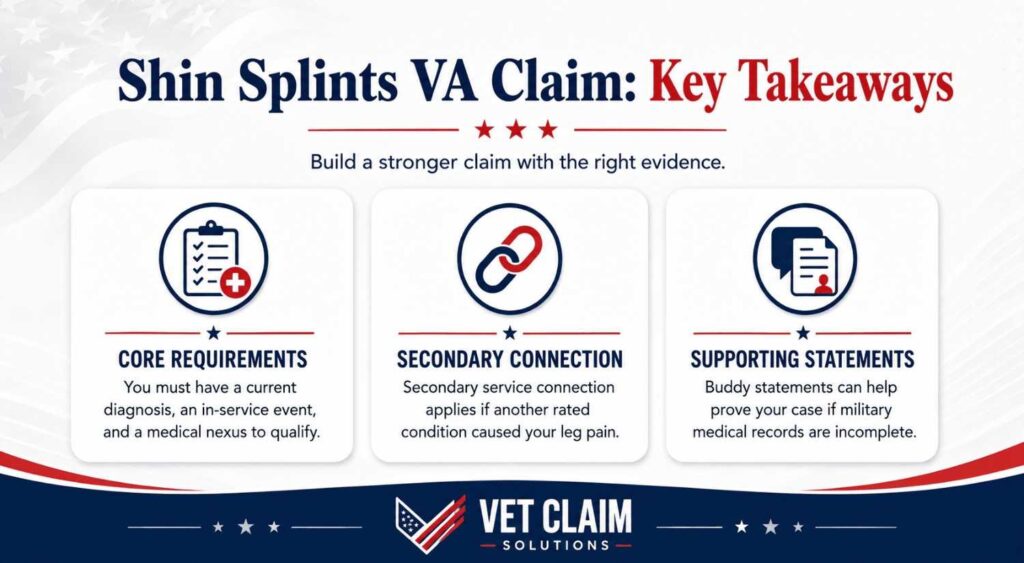
The VA evaluates shin splints, also called medial tibial stress syndrome, under Code of Federal Regulations Title 38, § 4.71a, Diagnostic Code 5262. Unlike older versions of the rating schedule, the current diagnostic code specifically identifies medial tibial stress syndrome and provides VA disability rating criteria based primarily on the length of treatment, whether the condition responds to conservative treatment or surgery, and whether one or both lower extremities are affected. Medical records documenting a current diagnosis, prescribed treatment, and continued symptoms can provide important medical evidence for a VA disability claim.
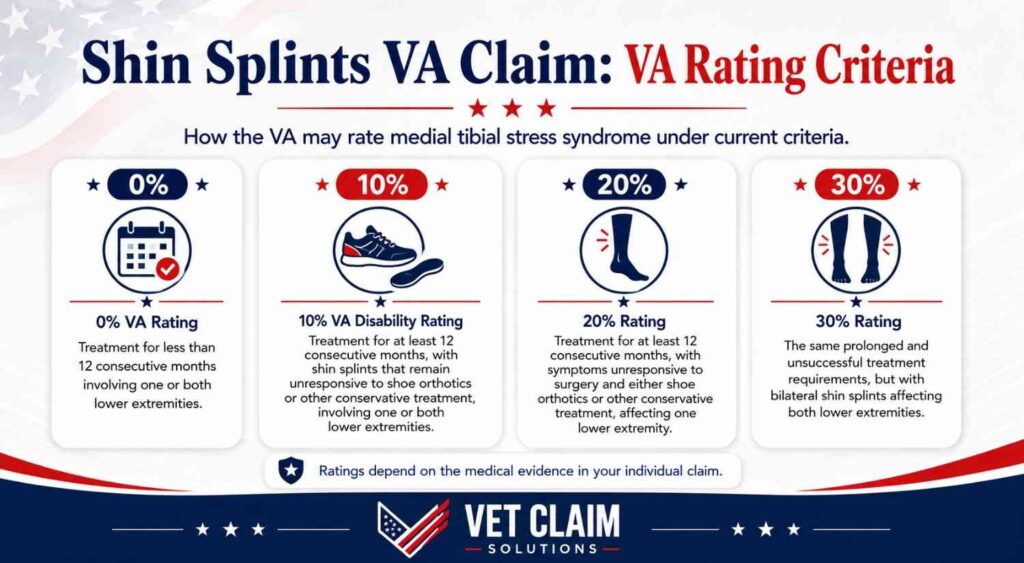
A non compensable disability rating of 0% means the VA recognizes the shin splints as a service-connected condition, but the current rating criteria do not support monthly disability compensation. Even so, establishing service connection may remain valuable if the condition worsens or later requires extended treatment. Veterans seeking a higher rating should submit medical records showing how long the shin splints have been treated, whether shoe orthotics, physical therapy, medication, activity modification, or surgery provided relief, and how the symptoms affect walking, standing, employment, and other daily activities.
The bilateral factor may also influence a veteran’s overall combined VA rating when separate compensable disabilities affect both legs. Under 38 C.F.R. § 4.26, the VA generally combines qualifying ratings for the right and left extremities and adds 10% of their combined value before combining them with other disabilities. However, this is not the same as automatically adding another 10% to the single 30% rating already assigned for bilateral shin splints under Diagnostic Code 5262. Whether the bilateral factor applies depends on how the veteran’s individual service-connected disabilities are evaluated and combined.
Because the VA determines each disability rating from the evidence in the individual claim, veterans should document the duration of treatment, unsuccessful conservative treatment, continuing leg pain, functional limitations, and whether the medial tibial stress syndrome affects one or both legs. Strong medical evidence can help the VA accurately evaluate the condition and determine the appropriate rating for disability benefits.
Pro Tip:Always file your claim for both legs if you experience pain on both sides. The VA’s bilateral factor will increase your overall combined disability rating, potentially leading to higher monthly compensation.
Essential Medical Evidence for Your VA Disability Claim for Shin Splints
Strong medical evidence is essential when pursuing a VA disability claim for shin splints. Your records should show a current diagnosis of shin splints or medial tibial stress syndrome and document how the condition affects your mobility, physical activity, and daily life. Medical records from military, VA, and private healthcare providers can help establish the severity and history of the condition. These records may include treatment notes, physical therapy reports, medication history, referrals for shoe orthotics, and documentation showing whether conservative treatment improved your symptoms.
Diagnostic testing can also support a shin splints VA claim, especially when your doctor suspects a stress reaction, stress fracture, or another lower-leg condition. X-rays, MRI scans, or bone scans may help rule out other causes of leg pain and confirm related findings. However, imaging results are only one part of the evidence. A medical diagnosis, documented symptoms, and records showing how long your shin splints have required treatment may be especially important because the VA rating criteria consider treatment duration and whether the condition responds to conservative care or surgery.
A Disability Benefits Questionnaire (DBQ) can provide the VA with organized medical information about your condition. A qualified provider may use the DBQ to document your diagnosis, treatment history, functional limitations, and whether the shin splints affect one or both legs. The provider should describe symptoms such as tenderness, swelling, throbbing pain, difficulty walking, and limitations during prolonged standing or physical activities. The DBQ does not guarantee a specific disability rating, but it can help the VA evaluate the medical evidence and determine the appropriate VA rating.
Your medical provider should also document how shin splints affect your daily activities and ability to work. Treatment notes may explain whether the condition limits climbing stairs, walking long distances, running, exercising, or standing for extended periods. Records should identify whether symptoms affect the right leg, left leg, or both lower extremities. This information may be especially important for a veteran’s bilateral shin condition and for distinguishing shin splints from an ankle disability, knee condition, flat feet, or another source of lower-leg pain.
A nexus letter may be helpful when the medical records do not clearly connect the current condition to military service or to another service-connected disability. The medical provider should review your service treatment records, current medical evidence, and relevant history before explaining whether military duties caused or aggravated the condition. A well-reasoned medical nexus can strengthen the VA claim, particularly when the evidence involves repetitive running, marching, carrying heavy equipment, or another activity that may worsen shin splints.
Veterans should also submit credible lay evidence and supporting statements. A personal statement can document when the pain began, which military or physical activities triggered the symptoms, and how shin splints affect your current daily activities. Statements from fellow service members, family members, coworkers, or supervisors may provide additional context regarding visible pain, reduced mobility, or difficulty performing work duties. Lay evidence cannot replace a medical diagnosis, but it can support the medical records reviewed during a VA examination.
Even a noncompensable disability rating can establish shin splints as a service-connected condition. Veterans seeking a higher rating should document continued treatment, worsening symptoms, unsuccessful shoe orthotics or conservative treatment, and the condition’s effect on normal functioning. A complete file containing medical records, a current diagnosis, a Disability Benefits Questionnaire, a nexus letter when necessary, and detailed supporting statements can help the VA accurately evaluate the claim and determine eligibility for VA benefits.
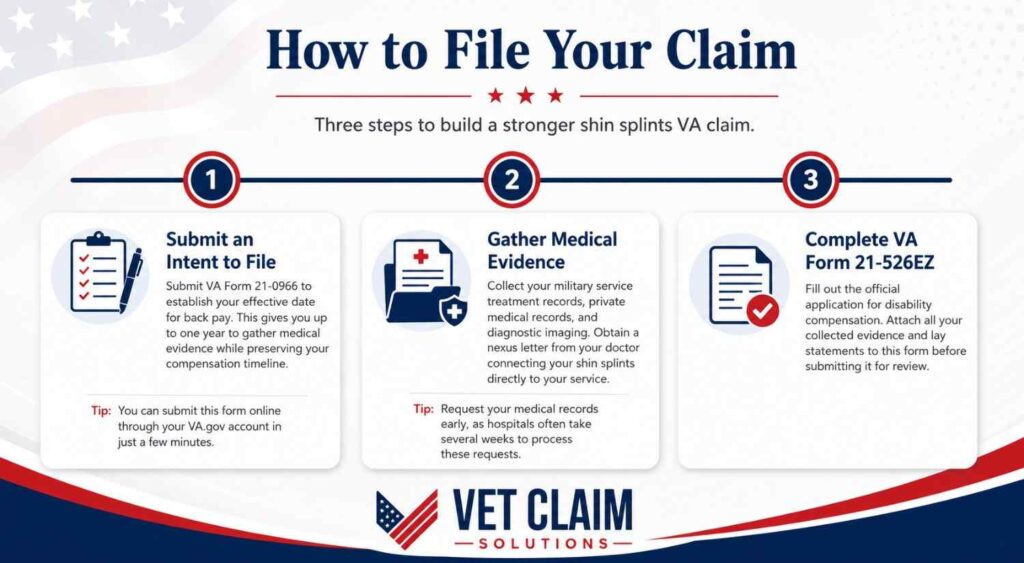
How to File Your VA Disability Claim for Lower Leg Pain and Shin Splints
Filing a VA disability claim for shin splints requires clear medical evidence, accurate documentation, and proof that the condition is connected to your military service. Before submitting your VA claim, gather records showing a current diagnosis of shin splints or medial tibial stress syndrome, the treatment you have received, and how the condition affects your physical activity and daily activities. These records may include service treatment records, private medical records, VA treatment notes, diagnostic test results, and documentation of conservative treatment such as physical therapy or shoe orthotics.
Your evidence should help establish service connection. Military records may show lower-leg pain or treatment during service. A nexus letter can connect your current condition to running, marching, heavy equipment, or another in-service event. Statements from fellow service members or family members may also support your claim.
If both legs are affected, document the symptoms and treatment for each leg. For a secondary claim, include medical evidence linking the shin splints to flat feet, an ankle disability, or another service-connected condition.
A complete claim helps the VA evaluate your condition and assign the correct rating. Keep copies of every form, medical record, nexus letter, and supporting statement. Organized evidence can reduce delays and make your claim easier to review.
What to Expect at Your C&P Exam for Shin Splints and Leg Pain
After you submit a VA disability claim for shin splints, the VA may schedule a Compensation and Pension (C&P) examination to gather additional medical evidence about your condition. During the VA examination, the examiner may review your medical records, ask questions about your symptoms and treatment history, and perform a physical assessment of your lower legs. The examiner may also use questions from the Knee and Lower Leg Disability Benefits Questionnaire (DBQ) to document information relevant to your claim.
Be prepared to explain whether your shin splints affect the right leg, left leg, or both legs. The examiner may ask when the pain began, how often symptoms occur, what treatments you have received, and whether physical activity worsens the condition. Describe common symptoms such as tenderness, swelling, aching or throbbing pain, and difficulty standing or walking for long periods. You should also explain how shin splints affect your daily activities, employment, exercise, and other physical activities.
During the physical assessment, the examiner may evaluate tenderness, movement, functional limitations, and other signs involving the shin and surrounding joints. Follow the examiner’s instructions, but do not exaggerate or minimize your symptoms. Clearly identify when pain begins and explain what happens during flare-ups, including their frequency, duration, severity, and effect on your ability to function. The VA considers the examination alongside the other medical and lay evidence in your claims file; the examiner does not personally decide your disability rating or whether service connection will be granted.
The examiner will record the findings in a DBQ or examination report and return the results to the VA. Bring or submit relevant medical records, treatment notes, imaging results, supporting statements, and documentation showing whether shoe orthotics or other conservative treatment improved your condition. A nexus letter may also help when the relationship between the current diagnosis and military service—or another service-connected condition—is not already clear.
You cannot receive the final C&P exam report directly from the examiner at the appointment. To obtain a copy, you can submit a Freedom of Information Act or Privacy Act request using VA Form 20-10206. Review the report carefully after receiving it. When important symptoms, statements, or medical information were recorded inaccurately, you may submit a written statement and additional supporting evidence identifying the problem. VA regulations also require an examination report to contain enough detail for rating purposes.
Warning: Never exaggerate your symptoms during a C&P exam, but do not downplay them either. Describe your pain exactly as it feels on your worst days to present an accurate picture of your disability.
Appealing a Denied VA Disability Claim for Shin Splints and MTSS
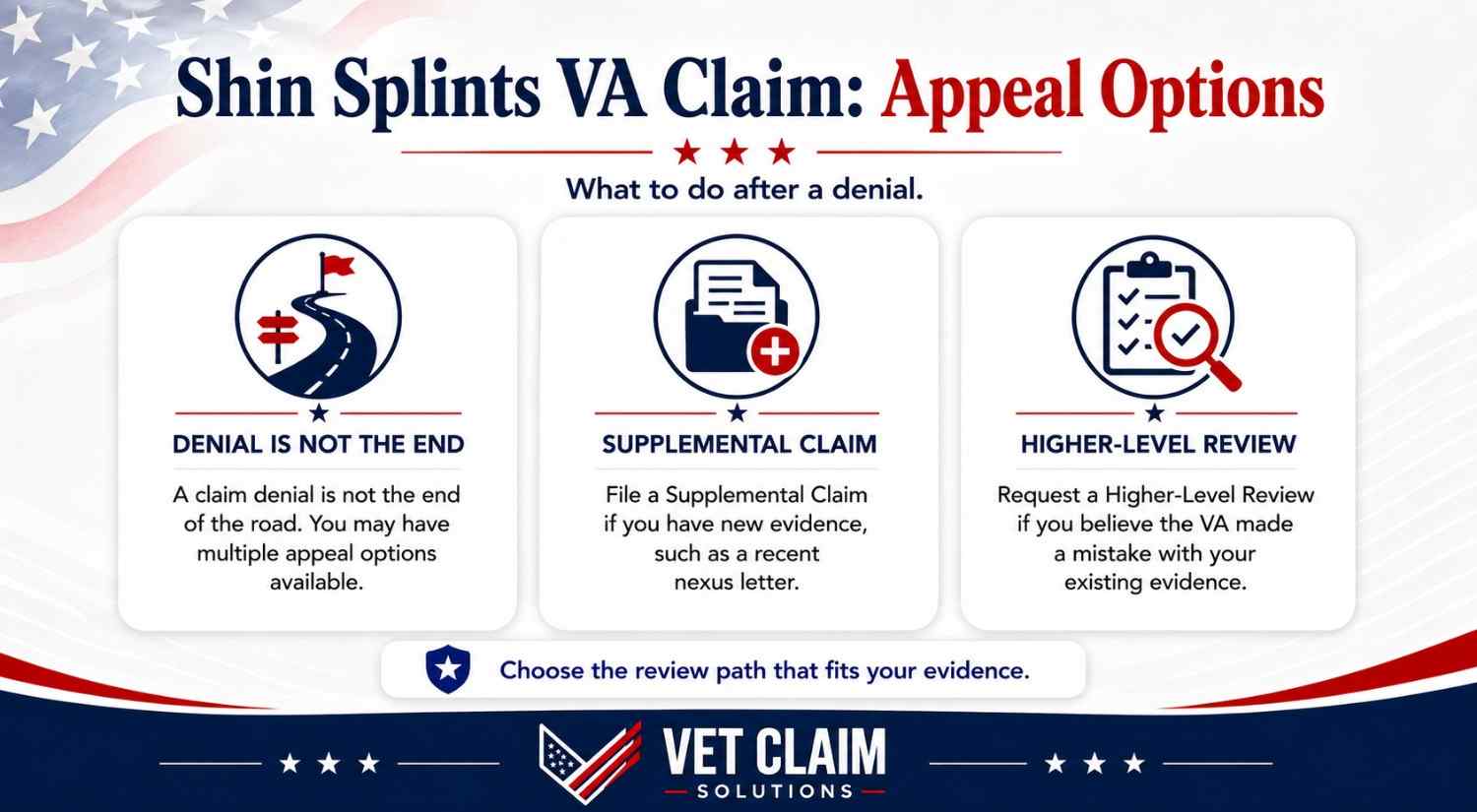
Receiving a denial letter for your shin splints claim can feel incredibly frustrating after waiting months for a decision. However, a denial simply marks the beginning of the administrative appeals process. The VA frequently denies initial claims due to a lack of medical evidence or a missing nexus connecting the injury to military service. You have several procedural options to challenge an unfavorable decision under the Appeals Modernization Act.
If you have new and relevant medical evidence, you can file a Supplemental Claim using VA Form 20-0995. This option works best if you recently obtained a strong nexus letter or new diagnostic imaging from your specialist. If you believe the VA made a clear error based on the evidence already in your file, you can request a Higher-Level Review. This places your claim in front of a senior rating specialist who will look at the existing facts with a fresh set of eyes.
For more complex cases, you can appeal directly to the Board of Veterans’ Appeals in Washington, D.C. This legal process takes much longer but allows a Veterans Law Judge to review your case thoroughly. Many veterans choose to hire an accredited claims agent or attorney at this stage to build a compelling legal argument for their compensation.
Key Takeaways
- A claim denial is not the end of the road; you have multiple appeal options available.
- File a Supplemental Claim if you have new evidence like a recent doctor’s nexus letter.
- Request a Higher-Level Review if you believe the VA made a mistake with your existing evidence.
Conclusion
Can you get VA disability for shin splints? Yes, when the evidence shows a current medical diagnosis and a clear connection between the condition and your military service. Whether your shin splints affect the right leg, left leg, or both lower extremities, your VA disability claim should document when the symptoms began, how the condition has progressed, and how it limits your daily activities and physical activity.
Strong medical evidence can help the VA evaluate your claim accurately. Include medical records showing how long your shin splints were treated, whether they improved with shoe orthotics or other conservative treatment, and whether you continue to experience common symptoms such as tenderness, swelling, or throbbing pain. Veterans with bilateral shin splints should provide evidence describing how both legs are affected, especially when pain makes it difficult to walk, stand for long periods, exercise, or complete work-related physical activities.
A well-supported nexus letter, credible lay evidence, and detailed supporting statements can also help establish service connection. These documents should explain how repetitive marching, running, heavy lifting, or another in-service event caused or worsened the condition. The VA determines the appropriate disability rating by reviewing your current diagnosis, treatment history, functional limitations, and all other evidence in the VA claim.
Even a noncompensable disability rating can formally recognize shin splints as a service-connected condition. When symptoms worsen or require additional treatment, updated medical evidence may support a request for a higher VA rating. Veterans whose combined service-connected disabilities create more serious employment limitations may also need to consider whether other VA benefits, including total disability or individual unemployability, are relevant to their overall circumstances.
Carefully document the details of your condition and keep copies of every record submitted. A complete and consistent claims file gives the VA a clearer understanding of how shin splints affect your health, mobility, employment, and everyday life.