


Many veterans experience severe throat issues after they leave the armed forces, often struggling to find the right path for compensation. These conditions frequently cause pain, difficulty swallowing, or chronic coughing, which can significantly impact your daily quality of life. Filing a VA claim for your VA disability requires substantial proof linking your current throat problems directly to your military service. The Powerful Truth About Throat Condition VA Disability Evidence is that success depends on the intersection of detailed medical records and a clear service connection. Understanding how the Department of Veterans Affairs evaluates respiratory conditions is the first step toward securing the VA disability benefits you earned through your sacrifice.
To establish eligibility for benefits related to a throat condition, veterans generally need three key elements of supporting evidence. First, there should be a current medical diagnosis from a qualified healthcare professional identifying the specific throat or respiratory condition. Second, veterans should document an in-service event, illness, injury, or exposure that may be connected to the condition. Third, they need credible evidence linking the current diagnosis to military service. Depending on the circumstances, this may include service treatment records, a medical nexus opinion, deployment documentation, or statements from fellow service members who witnessed relevant symptoms or exposures.
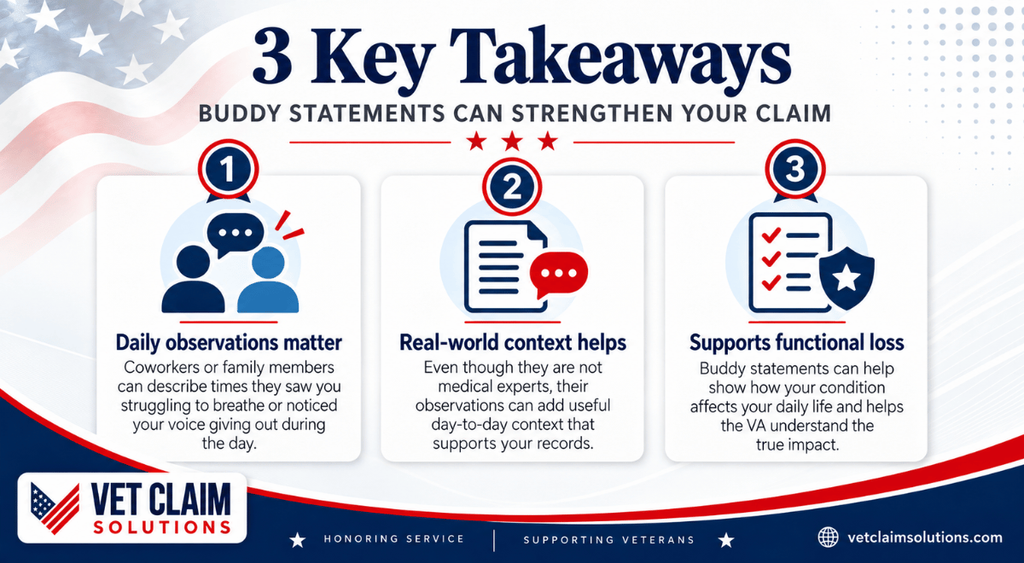
Establishing the connection can be challenging when throat problems developed gradually or were not fully documented during active duty. In many cases, service connection requires reviewing service treatment records, deployment history, exposure information, and the veteran’s medical records for signs of recurring throat irritation, chronic coughing, swallowing difficulty, hoarseness, or breathing problems. Veterans seeking to prove direct service connection should focus on consistent evidence showing when symptoms began and how they continued after service. Buddy statements from fellow service members may also provide useful context when official records do not tell the complete story.
After service connection is established, the VA evaluates the condition using the applicable VA disability rating criteria and the documented severity of its effects. A veteran’s records should explain the frequency of flare-ups, treatment needs, persistent limitations, and any severe symptoms that interfere with communication, eating, sleeping, employment, or daily functioning. Consistent documentation showing how symptoms have changed over time can help decision-makers understand the condition’s full impact and apply the appropriate VA rates under the relevant diagnostic criteria.
Proving Direct Service Connection

A direct service connection may apply when a throat condition began during active duty, resulted from an in-service event, or was aggravated by military service. Veterans seeking to prove direct service connection should provide a current medical diagnosis along with service treatment records, deployment records, or other evidence linking the condition to their time in uniform. Records showing treatment for chronic laryngitis, pharyngitis, persistent hoarseness, swallowing problems, or recurring throat irritation can help establish when symptoms first appeared. When official documentation is limited, statements from fellow service members may provide valuable context about symptoms, injuries, duties, or environmental exposures they personally observed.
In some cases, service connection requires evidence of exposure to airborne hazards, smoke, particulate matter, or other environmental toxins encountered during military service. Veterans should document where and when an exposure occurred and ensure their veteran’s medical records contain an accurate history of their symptoms and treatment. Certain qualifying conditions and service histories may also fall under VA presumptive service connection rules, including provisions expanded by the PACT Act. Even when a presumption applies, having a clear diagnosis and supporting documentation remains important because the VA must still determine the appropriate rating based on the condition and its severity.
Service-Connected: Common Throat Issues and Respiratory Conditions Linked to Military Service
Many veterans suffer from chronic laryngitis, which is a common disease va evaluators see in those exposed to harsh environments. This condition involves the inflammation of your voice box, leading to hoarseness or a total loss of voice for extended periods. Symptoms include a persistent tickle in the throat, a constant need to clear the throat, and significant pain while speaking. If these symptoms persist for more than three weeks, they are considered chronic and may qualify for a va rating.
Another frequent issue is pharyngitis, which affects the back of the throat and can make swallowing extremely difficult and painful. This condition is often grouped with other respiratory conditions when the VA determines your overall disability rating for the va claim. Veterans who served in areas with high particulate matter, such as near a burn pit, are particularly susceptible to these ailments. Documentation of these environmental hazards is vital for proving that your military service caused the underlying damage.
Vocal cord paralysis is a more severe condition that can occur due to trauma or surgery during your time in the military. This disease va rating specialists evaluate can lead to significant breathing difficulties and may require a high va disability rating. Because it affects your ability to communicate and breathe, it is often rated under a specific diagnostic code in the federal regulations. Ensuring your medical evidence includes a laryngoscopy report is essential for confirming this diagnosis for your disability claim.
Legislation Update: The Impact of the PACT Act on Throat Condition Claims

The recent passage of the PACT Act has fundamentally changed how the VA handles respiratory conditions and throat issues. This legislation expanded the list of presumptive service conditions for veterans who served in specific locations and timeframes. If you were exposed to burn pits or other toxins, the VA now assumes your throat condition is service-connected. This shift removes the burden of proving a direct link, provided you have a valid diagnosis and qualifying service.
Under the PACT Act, certain conditions—including chronic rhinitis, chronic sinusitis, and specified head, neck, and respiratory cancers—may qualify for presumptive service connection when the applicable service requirements are met. VA lists these among the burn pit and toxic-exposure presumptive conditions added or expanded under the law.
Veterans who served during qualifying Gulf War era or post-9/11 periods and locations should review VA’s eligibility requirements and their service records to determine whether a presumption may apply. If VA previously denied a claim for a condition that is now presumptive under the PACT Act, the veteran may file a Supplemental Claim and ask VA to review the claim again based on the change in law.
It is important to note that while the service connection may be presumed, the va disability rating is not. You still need to provide evidence of the severity of your condition to determine your monthly va rate. The VA will look at how your throat issues interfere with your daily life and your ability to maintain employment. Therefore, continuing to gather medical evidence remains a critical component of your overall strategy for success.
Secondary Links: How Secondary Service Connection Works for Throat Problems
A secondary service connection occurs when a service-connected disability causes or aggravates a new, separate medical condition in a veteran. For example, many veterans with respiratory conditions find that they eventually develop gastroesophageal reflux disease due to chronic coughing. This reflux disease can then cause further damage to the throat lining, creating a cycle of irritation and pain. In this scenario, the gastroesophageal reflux is considered a secondary condition to the primary respiratory issue.
Gastroesophageal reflux disease, or GERD, is one of the most common secondary conditions linked to throat problems and sleep apnea. When stomach acid frequently flows back into the tube connecting your mouth and stomach, it can cause chronic laryngitis. If you already have a va rating for a throat issue, you can file for GERD as a secondary service link. This approach can help increase your total va disability rating and provide more comprehensive disability benefits.
To establish secondary service connection, veterans generally need evidence showing that a current condition is linked to an existing service-connected condition. This connection may be supported by medical records or a medical opinion explaining how the service-connected condition caused or aggravated the secondary condition.
Nexus Requirements: Gathering Unbeatable Medical Evidence and the Nexus Letter
The strength of your va disability claim rests almost entirely on the quality of the medical records you provide to the examiner. You should include every treatment record, pharmacy receipt, and specialist report that mentions your throat or respiratory conditions. It is also beneficial to keep a “symptom log” where you record the frequency and severity of your throat pain. This personal record provides a narrative that raw medical evidence sometimes lacks, helping the VA understand your daily struggle.
A medical nexus is perhaps the most important document you can submit to support your service connection for throat issues. This letter should be written by a medical expert who has reviewed both your military service records and your current health status. The expert must clearly explain how your current reflux disease or throat condition is tied to your time in the military. A well-crafted nexus letter can often be the deciding factor in a complex va disability case.
In addition to private records, ensure the VA has access to all your medical records from the Veterans Health Administration if you receive care there. Sometimes, different branches of the VA do not communicate effectively, leading to missing information in your disability claim file. You should proactively verify that all relevant tests, such as sleep studies for sleep apnea, are included in your submission. Taking this extra step ensures that the va rating specialist has a complete picture of your health.
Impact Assessment: Documenting Functional Loss for Throat Disabilities
When the VA evaluates your va claim, they are not just looking for a diagnosis; they are looking for functional loss. Functional loss refers to the inability of a body part to perform its normal duties due to pain, weakness, or lack of coordination. For throat conditions, this might include the inability to speak clearly for long periods or difficulty swallowing solid foods. Documenting these specific limitations is essential for achieving a higher va disability rating.
You should describe to your doctor exactly how your throat condition prevents you from performing your job or enjoying your hobbies. If you are a teacher who can no longer speak to a class, or a veteran who cannot wear a respirator due to throat irritation, these facts matter. Medical evidence that includes notes on functional limitations carries much more weight than a simple diagnosis. The VA uses this information to determine how much your service-connected disability impacts your earning capacity.
Rating Criteria: Understanding Your VA Disability Rating for Throat Conditions
The VA uses a specific diagnostic code to determine the va disability rating for various throat and voice conditions. For instance, chronic laryngitis is often rated under code 6511, with disability ratings ranging from 10% to 30%. The rating criteria focus on how often you lose your voice and the level of hoarseness you experience daily. If your condition requires constant medication or surgical intervention, you may qualify for the higher end of the va rate scale.
When the VA evaluates respiratory conditions, they often look at the results of pulmonary function tests to see how your breathing is affected. If your throat condition causes an obstruction that limits your airflow, it could be rated more like asthma or COPD. This is why it is crucial to have a thorough examination that looks at the entire respiratory system, not just the throat. A comprehensive va disability rating reflects the total impact of the disease va has identified in your body.
Understanding the va disability ratings table can be confusing, as the VA uses a “combined rating” system rather than simple addition. If you have a 30% rating for a throat condition and a 10% rating for allergic rhinitis, your total rating isn’t necessarily 40%. The VA calculates these using a “whole person” theory, which can sometimes result in a lower overall va disability rating than expected. Navigating these disability ratings requires patience and a clear understanding of the disability compensation regulations.
Holistic Health: The Hidden Link Between Throat Conditions, Mental Health, and Other Disabilities
There is an important relationship between chronic physical health problems and mental health. Ongoing pain, communication difficulties, sleep disruption, and limitations caused by a chronic condition may contribute to or occur alongside anxiety and depression. VA provides information and services for Veterans experiencing depression, anxiety, and other mental health concerns. VA Mental Health Services If a mental health condition is believed to be caused or aggravated by an existing service-connected condition, Veterans may also want to understand VA’s requirements for secondary service connection.
Furthermore, throat issues are frequently connected to hearing loss because the Eustachian tubes connect the middle ear to the back of the throat. Chronic inflammation in the throat can lead to fluid buildup in the ears, resulting in temporary or permanent hearing loss over time. If you are filing for a throat-related va disability, you should also have your hearing checked by an audiologist. Documenting hearing loss as a related issue can strengthen your overall disability claim and ensure you receive proper care.
Exposure to toxins like agent orange or smoke from burn pits can cause a wide array of interconnected health problems. These exposures often lead to presumptive service connection for various cancers and respiratory conditions that affect the throat. If you served in the gulf war or other designated areas, your throat condition might be part of a larger “presumptive” category. This means the VA assumes your military service caused the illness, making the va disability claim much easier to win.

Avoid Pitfalls: Common Mistakes to Avoid During Your VA Disability Appeal
One of the most common mistakes veterans make is failing to provide enough medical evidence to support their initial va claim. Simply telling the VA that your throat hurts because of your military service is rarely enough to win a case. You need a formal diagnosis, a clear in-service event, and a medical link—the “Caluza Triangle”—to succeed. Missing any of these three elements is a guaranteed way to receive a denial for your disability claim.
Another mistake is ignoring the potential for a secondary service connection for conditions like sleep apnea or GERD. Many veterans focus only on their primary throat condition and miss out on additional va disability benefits they are entitled to. If your throat issues have led to gastroesophageal reflux disease, you must document that connection clearly in your appeal. Every related condition contributes to your total VA rate and provides a more accurate reflection of your health.
Finally, many veterans give up after their first denial, not realizing that the majority of successful VA disability claims are won on appeal. If your VA disability claim is denied, review the “Reasons for Decision” section of your letter very carefully. It will tell you exactly what medical evidence was missing or why the service connection was not established. Use this information to gather a stronger nexus letter or more medical records before you file your appeal.
Success Path: Finalizing Your Strategy for Maximum Compensation
To maximize your va disability benefits, you must take a holistic approach to your health and your va claim. This means looking at how your throat condition interacts with other issues like hearing loss or mental health. By filing for all related respiratory conditions and secondary conditions, you build a much stronger case for a higher rating. Your goal is to provide the VA with a mountain of medical evidence that is impossible to ignore.
Consulting with a professional, such as a VSO or an accredited attorney, can provide valuable insights into the va disability rating process. They can help you identify presumptive service links you might have missed, especially if you served near burn pits. They can also assist in drafting a nexus letter that meets the VA’s strict legal standards for service connection. With the right strategy and documentation, you can successfully navigate the va disability claim system and secure your future.
Remember that the va disability benefits you are seeking are not a handout; they are a debt owed to you for your military service. Whether you are dealing with gastroesophageal reflux or chronic respiratory conditions, you deserve to be compensated for your injuries. Stay focused on the medical records, be honest about your symptoms, and never stop fighting for the va rating you earned. The Powerful Truth About Throat Condition VA Disability Evidence is that persistence and proof are the only paths to victory.