

Breathing problems can severely impact your daily life and limit your ability to work. Veterans suffering from chronic respiratory conditions often face significant obstacles securing the compensation they deserve. Filing for chronic respiratory VA disability? Discover key medical tests and specialist letters that strengthen your claim. Building a successful va disability claim requires specific documentation that clearly links your current symptoms to your time in uniform. You need objective medical evidence and expert opinions to prove your case to the Department of Veterans Affairs.
Many veterans struggle to get their va disability claim approved because they lack the necessary diagnostic testing. A well-prepared application relies heavily on comprehensive medical evidence to establish a clear service connection. We will examine the exact tests and specialist letters you need to gather for your file. Proper preparation helps you build a compelling argument for your va disability benefits.
The claims process requires patience and an understanding of the required documentation. You must provide the VA with a complete picture of your health condition. This includes providing relevant medical records from both military and civilian healthcare providers. Securing proper disability benefits depends entirely on the strength of your evidence.

To receive va disability, you must first prove that your respiratory issues are a service-connected disability. This involves showing that your military service caused or aggravated your condition. For many veterans, this means looking back at a medical record from their time on active duty. If you served in the gulf war, you might be eligible for presumptive service connection under the PACT Act. This legislation simplifies the process for those exposed to burn pits and other environmental toxins during their deployment.
The PACT Act has significantly expanded the list of conditions that the VA presumes are related to toxic exposure. This means you may not need to provide a specific “nexus” if you served in certain locations at specific times. However, establishing a strong service connection still requires you to have a formal diagnosis of a respiratory condition. You should consult the official PACT Act guidelines to see if your service location qualifies you for these presumptions. Understanding these legal nuances is essential for navigating the complexities of modern va claims.
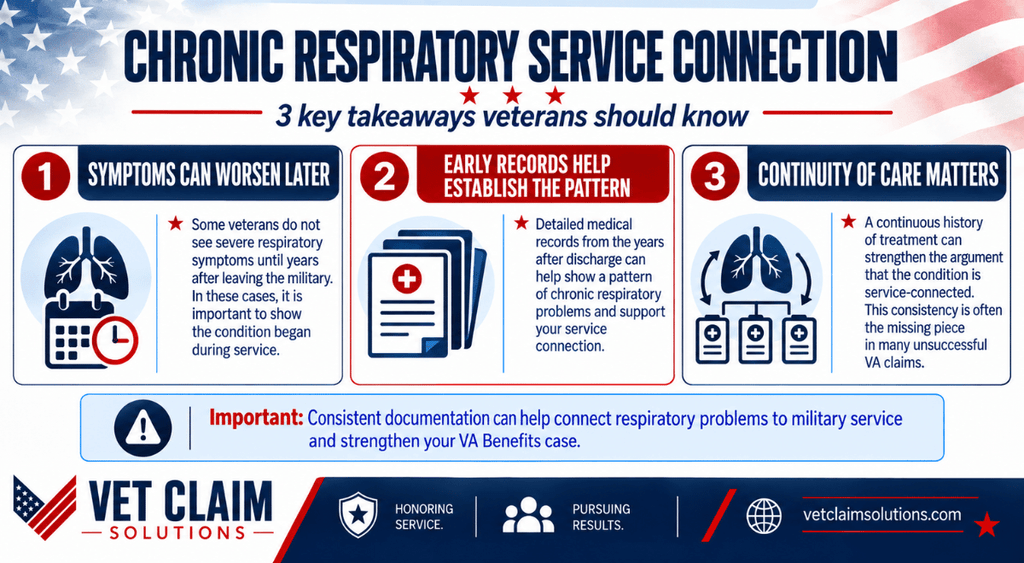
Establishing a direct service connection requires a clear link between your current health conditions and a specific event in service. You should look for records showing treatment for shortness of breath, chronic cough, or chest tightness during your military service. If you lack a medical record from that time, you can use lay evidence to fill the gaps. A lay statement from a fellow service member can provide additional evidence of the onset of your symptoms. This direct service link is the foundation of any successful va claim.
Medical Evidence and Medical Records: Building Your Case with Strong Documentation
The VA relies heavily on objective data to determine your va rating. One of the most critical pieces of medical evidence is the pulmonary function test (PFT). This function test measures how well your lungs work by assessing airflow and volume. A medical professional will use these results to assign a diagnostic code based on the severity of your impairment. Without a current pulmonary function report, the VA may struggle to assign an accurate va disability rating.
A standard PFT usually includes several different measurements, such as Forced Expiratory Volume (FEV-1) and Forced Vital Capacity (FVC). These numbers tell the VA exactly how much air you can exhale and how quickly you can do it. If your results are below a certain percentage of the predicted value, you qualify for a higher va rating. It is vital to ensure that your medical records contain the most recent and accurate PFT results available. These objective metrics are the primary tools used to evaluate va claims for respiratory issues.
Your medical records should also include imaging such as X-rays or CT scans. These provide a visual medical record of any lung damage or scarring. When you submit your va disability claim, ensure that every medical record from your private doctor is included. The VA will also review your va medical history to see if your condition has worsened over time. Consistent medical evidence is the key to proving that your service-connected condition is chronic and persistent.
Beyond PFTs and imaging, you should also include records of any emergency room visits or hospitalizations related to your breathing. Frequent exacerbations of asthma or COPD can lead to a higher disability rating under the VA Schedule for Rating Disabilities. If you require daily medications or supplemental oxygen, these facts must be clearly documented in your medical records. The more comprehensive your medical evidence, the less room there is for the VA to deny your claim. Thorough documentation is the most effective way to ensure your va claims are taken seriously.
Nexus Letter and Medical Opinion: How a Nexus Letter Strengthens Your VA Claim
A nexus letter is a powerful tool that connects your current condition to your military service. This document is a formal medical opinion written by a qualified doctor. In the letter, the doctor must state that it is “at least as likely as not” that your condition was caused by your service. Multiple nexus letters from different specialists can further solidify your va disability benefits. This is especially important if you are trying to establish a secondary service connection.

A strong nexus letter should do more than just state a conclusion; it must provide a detailed medical rationale. The doctor should cite specific medical evidence and peer-reviewed studies that support the link between your service and your condition. For example, if you were exposed to fine particulate matter, the letter should explain how that exposure leads to chronic lung disease. This level of detail makes the medical opinion much more persuasive to VA raters. A well-reasoned nexus letter is often the difference between a grant and a denial in complex va claims.
When requesting a nexus letter, provide your doctor with your entire medical record and military history. They need to see the medical records that document your initial symptoms and subsequent treatments. A well-crafted nexus letter addresses the specific rating criteria the VA uses for respiratory issues. This expert medical opinion can often be the deciding factor in a complex va disability case. Don’t underestimate the value of a strong nexus letter in your va claims strategy.
It is also beneficial to have a specialist, such as a pulmonologist, write your nexus letter. The VA typically gives more weight to the opinions of specialists than to general practitioners. The specialist can provide a more nuanced medical opinion regarding the etiology of your respiratory issues. They can also explain how your service-connected condition has progressed over time. Investing in a high-quality nexus letter is a strategic move for any veteran seeking va disability benefits.
Secondary Condition and Sleep Apnea: Linking Secondary Conditions to Respiratory Problems
Many veterans suffer from a secondary condition that is caused or aggravated by their primary respiratory issue. For example, sleep apnea is frequently linked to chronic asthma or COPD. If you can prove that your sleep apnea is a secondary service issue, you may receive a higher combined va rating. This requires a medical record showing the relationship between the two health conditions. Establishing a secondary service connection can significantly increase your monthly disability benefits.
To link sleep apnea to a respiratory condition, you will likely need a sleep study (polysomnogram). This test provides the objective medical evidence needed to confirm the diagnosis and its severity. Your doctor must then explain how your primary service-connected condition makes your sleep apnea worse. For instance, chronic airway inflammation from asthma can contribute to the collapse of the airway during sleep. This medical link is essential for a successful secondary service connection claim.
Other secondary service issues might include mental health struggles. Chronic breathing problems often lead to mental health conditions like anxiety or depression. Your medical records should reflect any mental health treatment you receive as a result of your physical limitations. Additionally, some veterans develop skin conditions due to medications used for respiratory issues. Documenting every secondary condition in your medical record is essential for a comprehensive va disability claim.

VA Rating and Rating Criteria: Maximizing Your VA Rating Through Proper Documentation
The VA uses specific rating criteria to evaluate respiratory disabilities. These criteria are often based on the results of your pulmonary function test. For instance, your FEV-1 or FVC percentages will determine whether you receive a 10%, 30%, 60%, or 100% va rating. Understanding these rating criteria helps you know what medical evidence is most important. You should review your medical record to see where your numbers fall within the VA’s schedule for ratings.
The rating criteria also take into account the type of medication you require. For example, if you require systemic high-dose corticosteroids to manage your asthma, you may qualify for a 100% va rating. Conversely, if you only use an intermittent inhaler, your rating might be lower. It is essential that your medical records accurately reflect the frequency and dosage of all your medications. This information allows the VA to apply the rating criteria correctly to your va disability claim.
To maximize your va disability rating, you must show how the condition affects your daily life. This is where lay statements and lay evidence become invaluable. While the medical record provides the numbers, a lay statement provides the context. Describe how you cannot walk long distances or how you require supplemental oxygen. This personal lay evidence complements your medical records and helps the rater understand the full impact of your service-connected disability.
If your respiratory condition is so severe that you cannot maintain gainful employment, you may be eligible for Total Disability based on Individual Unemployability (TDIU). This allows the VA to pay you at the 100% rate even if your combined va rating is lower. To qualify, you must provide medical evidence showing that your service-connected condition prevents you from working. This is a critical safety net for veterans whose respiratory issues have ended their careers. Proper documentation of your work history and physical limitations is key to this process.
Rating Increase and VA Disability Benefits: Filing for chronic respiratory VA disability? Discover key medical tests and specialist letters that strengthen your claim.
If your respiratory condition has worsened, you may be eligible for a rating increase. To apply for a rating increase, you need to submit new medical evidence showing the decline in your health. This often involves a new function test or updated medical records from your pulmonologist. A rating increase can provide the additional va disability benefits you need to cover rising medical costs. Always keep a detailed medical record of any new symptoms or hospitalizations.
When seeking a rating increase, you will likely need to fill out va form 21-526EZ. This va form is the standard application for increased va disability compensation. Along with the form, include a fresh lay statement explaining the changes in your health condition. Mention any new mental health challenges or secondary service issues that have emerged. Consistent monitoring of your medical record ensures you are ready to file for an increase when necessary.
The VA may also schedule you for a Compensation and Pension (C&P) exam as part of the rating increase process. During this exam, a medical professional will evaluate your current symptoms and review your medical records. It is important to be honest and thorough during this exam about how your condition has progressed. Do not downplay your symptoms, as the C&P examiner’s report is a major piece of medical evidence. A successful rating increase depends on your ability to demonstrate a clear worsening of your service-connected condition.

Lay Statement and Lay Evidence: Supporting Your Medical Record
A lay statement is a written account from someone who has observed your condition firsthand. This can be a spouse, a friend, or a former service member you served with in the gulf war. These lay statements provide lay evidence that the medical record might miss. For example, a lay statement can describe your nightly struggle with sleep apnea or your frequent bouts of bronchitis. This lay evidence is a vital part of the va disability claim process.
When writing lay statements, be specific about the frequency and severity of symptoms. Use these statements to bridge the gap between your military service and your current medical records. The VA is required to consider lay evidence alongside your medical record. If you have mental health conditions, a lay statement from a family member can describe how your breathing issues affect your mood. Combining strong medical evidence with compelling lay statements creates a robust va claim.
A “buddy letter” from someone you served with can be particularly effective for establishing service connection. If your official medical record from your time in service is missing or incomplete, a buddy letter can verify that you experienced respiratory distress during a specific deployment. This person can testify to the environmental conditions, such as smoke or dust, that you were both exposed to. This type of lay evidence carries significant weight when it comes from a credible source. It helps humanize the data found in your medical records.
Finally, your own Statement in Support of Claim (VA Form 21-4138) is your opportunity to speak directly to the VA rater. Use this form to explain how your respiratory issues limit your ability to perform daily tasks like grocery shopping or playing with your children. Describe the emotional toll of living with a chronic health condition. This personal narrative provides the “why” behind the numbers in your medical records. A well-written personal statement is a cornerstone of any successful claim.
In conclusion, securing va disability benefits for chronic respiratory issues requires a multi-faceted approach. You must gather every medical record, secure a strong nexus letter, and provide detailed lay evidence. Whether you are filing an initial va disability claim or seeking a rating increase, the quality of your medical evidence is paramount. By understanding the rating criteria and documenting every secondary condition, you can improve your chances of a fair va rating. Stay diligent in maintaining your medical records and advocating for the va disability you earned through your military service to ensure a successful claim.
For more information on va disability benefits, you can visit the official VA website. Understanding the service connection process is the first step toward success. Always ensure your medical evidence is up to date before submitting your application.