


Getting the VA disability benefits you earned can feel like a battle in itself. You served your country, and now you’re facing a process that can be confusing and draining. It helps to know what others have successfully claimed, so you can focus your energy. We’ve looked at the data to help you See the 10 most frequently approved VA disabilities including PTSD tinnitus and more. Learn how to claim each effectively.
You are not alone in this journey, and many disabled veterans have walked this path before you. Understanding which health conditions the VA most commonly approves can give you a clearer picture of how your own service-related injuries might be viewed. This isn’t about gaming the system; it’s about preparing your VA disability claim with the right medical evidence.

Understanding the Most Common VA Disability Claims
The VA publishes data every year on what conditions are claimed and approved for VA disability compensation. While every veteran’s case is different, looking at these trends can be very helpful. It shows what conditions are most common among your fellow service members and what the VA is accustomed to rating.
A frequently approved common VA disability claim simply means many veterans have successfully shown the VA that their condition started or got worse during their time in the military. It does not mean your claim for one of these is a sure thing. You still need to do the work to build a solid case for your service-connected disability.
Proving your VA claim boils down to three main things. First, you need a current diagnosis from a doctor for your service-connected condition. Second, you need to point to an event, injury, or illness in your service records. Third, and most importantly, you need a medical link, or “nexus,” that connects your diagnosis to your military service.
1. Tinnitus
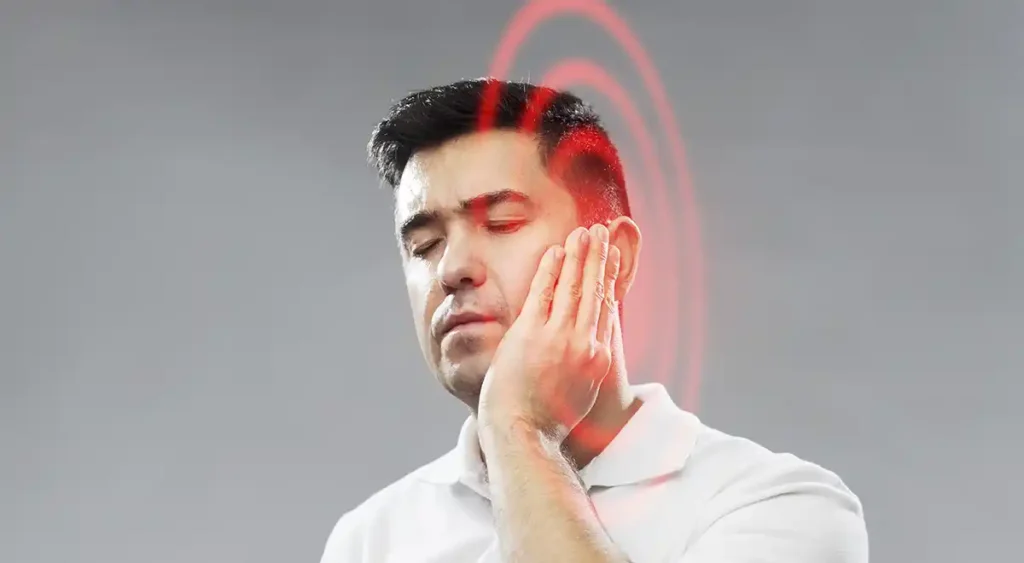
That constant ringing, buzzing, or hissing in your ears has a name: tinnitus. It is by far the most common service-connected disability claimed by veterans. This makes sense because military service, from the flight line to the firing range, is incredibly loud.
Continuous exposure to noise from aircraft, engine rooms, weapons fire, and explosions can cause permanent damage to your hearing. Tinnitus is almost always granted a 10 percent VA rating, as specified by the VA’s schedule for rating disabilities. The tinnitus limitation is rated this way because it is a subjective condition that cannot be measured with an objective test.
To claim tinnitus, you need a diagnosis and a description of how noise exposure in your service led to the condition. Your Military Occupational Specialty (MOS) can be powerful evidence. If you were an artilleryman, infantryman, or aircraft mechanic, it is easier to establish the link for your VA disability claim.
2. Hearing Loss
Right behind tinnitus in VA disability claims is hearing loss. The two often go hand-in-hand and are caused by the same acoustic trauma. Unlike tinnitus, hearing loss is an objective condition that can be measured with a hearing test called an audiogram.
The VA will look at tests of your puretone threshold and speech discrimination to determine a VA disability rating. Proving a service connection for this common VA disability is similar to tinnitus. You must point to the specific noise exposure you had in the service that caused the hearing damage.
Your service records and MOS are excellent sources to support your claim for hearing loss. It is important to get a current hearing test from an audiologist to show the current state of your condition. This medical evidence is critical for all disability claims.
3. Limitation of Flexion, Knee
Veterans are constantly on their feet, running, marching, and carrying heavy packs, which puts a huge strain on the knees. This makes a knee condition one of the most common physical issues disabled veterans face. This can lead to significant problems later in life.
Limitation of flexion means you cannot bend your knee as far as you should be able to. The VA rates this based on how much you can, or cannot, bend (knee flexion) and straighten your leg. These measurements are taken at your Compensation and Pension (C&P) exam and are key to your disability ratings.
For a successful claim, you’ll need a current diagnosis, like osteoarthritis, chondromalacia, or a torn meniscus. You should also document any in-service injuries to your knee, like falls or training accidents, as a knee weakened by these events is more prone to long-term issues. X-rays or MRI reports are very strong forms of evidence.
4. Lumbosacral or Cervical Strain (Back and Neck Pain)
Back and neck pain are extremely common for veterans due to the physical demands of service. Lifting heavy equipment, jumping out of vehicles, and wearing body armor can wear down your spine over time. The VA uses diagnostic codes for issues like degenerative disc disease or a simple cervical strain.
Your VA rating for back and neck issues is mostly based on your range of motion, which is measured during a C&P exam. The doctor will measure how far you can bend in different directions. The less you can move, and the more pain you have during active movement, the higher the rating will likely be.

You need a diagnosis from a doctor and should be getting regular treatment for your pain. Be sure to explain in your VA claim how military activities caused your back problems. Personal statements describing your daily pain and limitations can also be very powerful supporting evidence.
5. Scars, General
Many veterans leave the service with scars from combat injuries, training accidents, or surgeries to repair other service-connected disabilities. Depending on their location, size, and characteristics, scars can be eligible for VA benefits. The VA rates scars based on how painful or unstable they are and their location on your body.
Scars on the head, face, or neck are rated differently and often higher than scars on other parts of the body. You will need to show where the scar came from. For example, if you have a scar from a surgery to fix a service-connected knee injury, that scar can also be service connected.
Documenting your scars with photos can be very helpful for your claim. Also, describe any pain, itching, or limited range of motion caused by the scar tissue. Some conditions caused by exposures like Agent Orange can also cause skin conditions and scars that may be service-connected.
6. Post-Traumatic Stress Disorder (PTSD)
Post-traumatic stress disorder (PTSD) is a serious mental health condition affecting many veterans. It can result from experiencing combat, military sexual trauma (MST), or other traumatic events during your service. PTSD is one of the most significant mental health conditions claimed by veterans.
Getting a service connection for a PTSD disability requires a current diagnosis of this stress disorder from a qualified professional, like a psychiatrist or psychologist. You also have to prove a “stressor” event happened during your service. For veterans who served in combat zones, like during the Gulf War, the VA often concedes the stressor occurred, but for non-combat PTSD, you may need more evidence.
Buddy statements from people you served with can be extremely helpful. These statements can confirm that the stressful event happened. Your treatment records are also key pieces of medical evidence to prove the severity of your post-traumatic stress.
7. Paralysis of the Sciatic Nerve (Sciatica)
Sciatica is a sharp, radiating pain that travels from your lower back down your leg. It happens when the sciatic nerve gets pinched or irritated. For many veterans, this is directly related to back problems that started in the service.
This is often claimed as a secondary condition. For instance, you might have a service-connected back condition like a herniated disc. If that condition causes sciatica, you can file a common VA disability claim for sciatica as a secondary disability.
To get a service connection, you’ll need a medical diagnosis. The VA rates sciatica based on the severity of the paralysis, from mild incomplete paralysis to complete paralysis where the foot dangles. The specifics of the condition and its impact on your ability to use your leg will determine the VA rating.
8. Limitation of Motion of the Ankle

Ankle injuries are common in the military due to rough terrain and physically demanding work. Much like knee and back conditions, the VA rates ankle problems based on limited range of motion. Issues like painful motion or instability, sometimes referred to as ankle migraines due to throbbing pain, can also be considered for your VA claim.
You need a diagnosis from a doctor for a condition such as arthritis or chronic instability. The C&P examiner will measure how much you can move your ankle up, down, and side to side. Any in-service injury reports, such as a sprain or fracture, will strengthen your claim.
Even if you don’t have a specific injury on record, you can argue that the general wear and tear of service caused your ankle problems over time. This can be harder to prove but is still possible with a strong medical opinion. It’s one of many common service-connected health conditions.
9. Migraines (Headaches)
Migraine headaches can be completely debilitating. Veterans may develop migraines due to stress, exposure to toxins from a burn pit, or as a secondary result of another condition like PTSD or a traumatic brain injury (TBI). The VA rates migraines based on their frequency and severity.
To get a higher rating, you must show that your headaches are “prostrating,” which means you have to lie down in a dark, quiet room until they pass. Keeping a headache journal is one of the best ways to support your claim. Document when your migraines happen, how long they last, and what symptoms you experience.
A nexus letter from your doctor connecting your migraines to your military service is crucial. For example, your doctor could state that it is “at least as likely as not” that your high-stress job in the military caused your chronic migraines. This medical evidence can make or break your claim for VA disability benefits.
10. Limitation of Motion of the Arm
Issues with shoulder and arm movement are also very common among veterans. Heavy lifting, repetitive motions, and injuries can all lead to long-term problems with your joints. The VA evaluates this based on how high you can raise your arm to the front and to the side.
A C&P examiner will use a tool called a goniometer to get precise measurements of your arm’s range of motion. You will need a current diagnosis, such as a rotator cuff tear or shoulder impingement syndrome. Records of in-service treatment for shoulder pain are great evidence for your disability claims.
If you claim limitation of motion for your arm, be prepared to demonstrate the painful movements during your exam. Your honest effort is important for an accurate assessment. Note that VA ratings are often higher if the condition affects your dominant arm.
Building a Stronger VA Disability Claim
Knowing these common VA disability claims is just the start. Your goal is to submit a “fully developed claim,” which means you give the VA everything they need to make a decision without having to ask for more records. This can speed up the whole process for receiving your VA disability compensation.
Get copies of your service treatment records and any private medical records related to your health conditions. These documents are the foundation of your claim. According to the VA, you can file your claim online at any time after your service.
Do not forget lay statements, also known as buddy letters. Statements from your spouse, family, or friends who served with you can be very convincing. They can describe how your condition affects you day to day or confirm that an injury happened in service.
Frequently Asked Questions

Conclusion
Filing for VA disability can be a long road, but you do not have to go it alone. By understanding the process and focusing on the evidence needed, you put yourself in a much better position. It is helpful to see the 10 most frequently approved VA disabilities including PTSD, tinnitus and more. Learn how to claim each effectively because it shows what is possible for your own va claims.
Remember the three keys for a successful common VA disability claim: a current diagnosis, an in-service event or cause, and a medical link between them. Focus on gathering that proof for your conditions. You served honorably, and you deserve the VA benefits you earned through your service to the country.