


Securing the financial support you rightfully earned during military service frequently requires a highly strategic approach to win va disability claim approvals. Countless former service members struggle to win their initial veterans disability claim during the standard application process because the system is inherently complex. The adjudication system relies heavily on specific medical evidence and strict procedural rules that demand careful attention from every applicant throughout the entire timeline. Navigating the Department of Veterans Affairs requires more than just submitting a form; it requires a comprehensive understanding of how the government evaluates physical and mental impairments. Many veterans feel overwhelmed by the bureaucratic hurdles, yet persistence and the right evidence remain the most powerful tools in your arsenal for success.
Every successful va disability application requires three fundamental elements to establish a legally binding service connection, often referred to as the Caluza Triangle. You must clearly prove you have a current diagnosed condition that actively impacts your daily routine and functional capacity. You also need thoroughly documented evidence of an in-service event, injury, or illness that triggered the problem during your period of active duty. Without these foundational pillars, the VA will likely issue a denial regardless of the severity of your current physical or mental health symptoms.

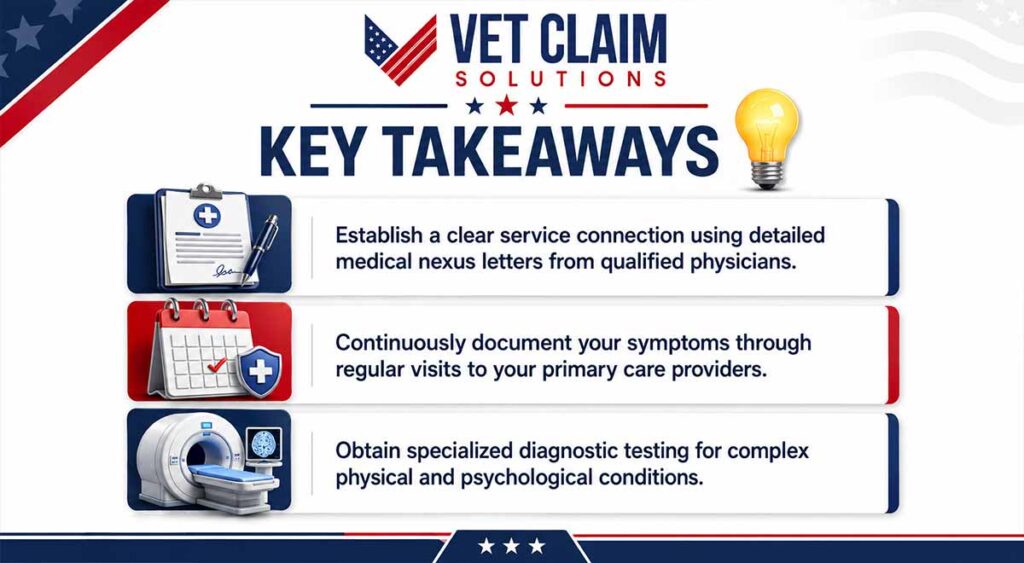
The final requirement involves providing a medical nexus letter linking your current condition to your military service in a clear, professional manner. A strong nexus opinion from a qualified medical professional dramatically improves your overall chances of approval by bridging the gap between past service and current health. Without this critical link, the veterans affairs adjudicators will routinely deny your initial va disability request because they cannot legally assume the connection exists. This nexus must be written using specific legal language, such as stating the condition is “at least as likely as not” caused by service.
Many applicants mistakenly assume their military medical records automatically guarantee a favorable va decision upon review without further explanation or context. You must actively gather supplementary outside evidence to support your formal request for disability compensation and provide a narrative for the reviewer. Requesting independent medical examinations often provides the vital necessary documentation to strengthen your overall va claim when service records are incomplete or vague. These independent opinions can counter unfavorable findings from a Compensation and Pension (C&P) exam, which is a common hurdle for many applicants.
Unlike a personal injury lawsuit, the VA system is designed to be veteran-friendly and non-adversarial in nature, at least in theory. However, the burden of proof still rests on the veteran to provide a preponderance of evidence that meets the legal standard for compensation. Understanding the criteria for va disability is the first step toward securing the benefits you deserve for your sacrifices. By treating your application with the same level of detail as a legal case, you significantly increase the likelihood of a positive outcome.
Medical Evidence Strategy to Win VA Disability Claim

Building a robust medical history forms the absolute foundation of any successful veterans disability application and should never be overlooked by the claimant. You should regularly visit your primary care physician to document the severity of your ongoing symptoms and how they evolve over time. Consistent treatment records demonstrate that your condition requires continuous medical intervention and limits your functional capacity in both professional and personal settings. The VA looks for a “chronicity of symptoms,” meaning you must show the condition has persisted since your time in the military.
Certain conditions like severe sleep apnea or complex mental health disorders require specialized diagnostic testing to be taken seriously by the rating board. You must submit sleep study results or comprehensive psychological evaluations to secure a proper disability rating that accurately reflects your level of impairment. The rating officials rely entirely on these specialized medical reports to determine your specific level of impairment based on the Schedule for Rating Disabilities. If your medical evidence is outdated or lacks specific measurements, the VA may assign a lower rating than you actually deserve.
Accessing proper health care through federal veterans affairs facilities can help establish a clear historical symptom timeline that is easily accessible to adjudicators. These internal medical records seamlessly transfer directly to the adjudicators reviewing your specific va claims, reducing the risk of lost paperwork during the process. However, obtaining private medical records often provides a much more detailed narrative regarding your daily physical limitations and personal struggles. A combination of both VA and private records usually creates the most compelling case for a high-value disability claim.
When you submit a va form, ensure it is accompanied by a detailed statement in support of the claim, also known as a lay statement. This personal narrative allows you to explain how your symptoms affect your ability to work and socialize in ways that medical codes cannot capture. A well-documented disability claim has a much higher chance of immediate approval than a vague application that leaves too much to the imagination of the reviewer. Including “buddy letters” from fellow service members or family members can also provide the secondary evidence needed to verify in-service stressors or injuries.
Navigating the Decision Review Process and Higher-Level Review Options

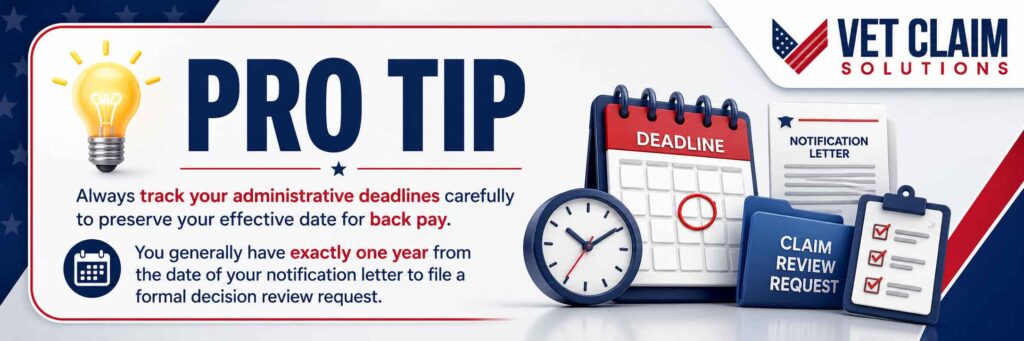
Receiving an initial denial letter from the regional office does not mean your journey is over or that your case is weak. The modernized appeals system, established by the Appeals Modernization Act (AMA), provides multiple legal pathways to challenge an unfavorable ruling on your application. You can select a specific decision review option based on the particular circumstances of your case and the type of evidence you have available. Understanding the differences between these lanes is essential for avoiding unnecessary delays in your quest for benefits.
Filing a supplemental claim allows you to submit new and relevant evidence to support your arguments for a service connection. This review option works best when you recently obtained additional medical records, buddy letters, or independent expert opinions that were not previously considered. The adjudicators will reevaluate your entire file alongside the newly submitted documentation to reach a conclusion that hopefully favors your claim. Supplemental claims are often the most effective way to address specific evidentiary gaps identified in a previous denial letter.
Alternatively, you might request a higher-level review if you believe the original adjudicator made an error based on the existing evidence. During a higher-level review, a senior official examines your existing file without accepting any new evidence or testimony from outside sources. This path frequently resolves disputes over effective dates or incorrect va rating assignments rather quickly compared to the traditional board appeal process. It is a powerful tool for correcting simple mistakes where the evidence was already present but overlooked by the initial reviewer.
A higher-level review is often the fastest way to correct a clear and unmistakable error in law or fact. You can request an informal conference with the reviewer to explain your position over the phone and highlight specific evidence. If the higher-level review does not go in your favor, you still have the option to appeal further to the Board of Veterans’ Appeals. Choosing the correct decision review lane is the most critical choice you will make after receiving an initial denial from the VA.
Maximizing Health Benefits and Coordinating Federal Support Systems
Many former service members qualify for multiple forms of government assistance simultaneously due to their impairments and service history. If your conditions prevent you from maintaining substantial gainful employment, consider applying for social security disability in addition to your VA claim. These two federal systems operate independently but often rely on similar medical documentation for final approval of your benefits. Accessing comprehensive health benefits through the VA system is often contingent upon establishing a service connection for your primary conditions first.
Securing social security disability benefits requires demonstrating that your impairments meet their strict vocational guidelines and medical listings. While a high va disability rating helps, the social security administration conducts its own thorough evaluation process that focuses on work capacity. You must prove your condition prevents you from performing any type of competitive work in the national economy, not just your previous job. This standard is often higher than the VA’s standard, making detailed medical evidence even more critical for success.
Coordinating your va claim requests with your social security disability applications requires extremely careful timing and a cohesive legal strategy. Medical evidence generated for your social security hearing can sometimes support your military disability compensation appeals if shared correctly. Maintaining highly consistent documentation across both federal agencies increases your chances of securing comprehensive va benefits and long-term financial security. It is important to remember that a 100% VA rating does not guarantee Social Security approval, though it is considered persuasive evidence.
Understanding each va benefit available to you is essential for long-term financial stability and peace of mind during your post-service life. Every va benefit is a recognition of the sacrifices made by service members during their time in uniform and should be pursued vigorously. Navigating va benefits requires a thorough understanding of the federal register and current veterans law, which changes frequently due to new legislation. Staying informed about these changes ensures you do not miss out on new opportunities for compensation or healthcare coverage.
Legal Guidance to Win VA Disability Claim with Accredited Representatives

Managing the complex appeals process alone frequently leads to missed deadlines and frustrating administrative errors that can set your claim back years. Partnering with an accredited representative can significantly improve the quality and accuracy of your legal arguments and evidentiary submissions. These professionals understand the intricate details of veterans law and know how adjudicators evaluate specific evidence for different types of disabilities. They can help you identify which medical tests are missing and which arguments are most likely to resonate with the rating board.
A local veterans service organization can assist with the initial filing of your va form at no cost to the veteran. Every service organization has trained officers who understand the nuances of the application process and can provide basic guidance. Utilizing a veterans service ensures that your initial application is complete and submitted to the correct po box for processing. While VSOs are excellent for initial filings, complex appeals may eventually require the specialized expertise of a dedicated VA disability attorney.
An accredited claims agent is specifically trained in the nuances of VA law and can represent you during hearings before the Board of Veterans’ Appeals. Many firms offer a free case evaluation to determine the viability of your appeal before you sign any formal representation contracts. Review the firm’s privacy policy to ensure your health data remains protected throughout the entire legal process and beyond. Unlike standard personal injury litigation, VA attorneys typically work on a contingency fee basis, meaning they only get paid if you win your case.
A personal injury lawyer may not have the specific accreditation required to represent you before the Department of Veterans Affairs, as this is a federal administrative field. Working with an accredited representative ensures that your advocate is recognized by the federal government and has passed the necessary background checks. Schedule a free consultation to discuss your options for a higher-level review or a board appeal if you have been denied. Having a professional advocate can alleviate the stress of the process and allow you to focus on your health and recovery.
Targeting Specific Conditions to Win VA Disability Claim Approvals

Certain medical conditions are more common among veterans and have specific rating criteria that must be met for a successful outcome. For example, claims for sleep apnea often require a nexus letter to prove the condition started during active duty or was caused by another service-connected issue. Secondary service connection for sleep apnea is also common for veterans who suffer from service-connected PTSD or respiratory issues. Understanding these “secondary” connections is often the key to reaching a higher combined disability rating when primary connections are difficult to prove.
Specific outreach initiatives for women veterans help address unique service-related health issues that were previously overlooked by the traditional VA system. The VA has expanded veteran programs to better serve the specific health care needs of women returning from service, including reproductive health and MST-related care. These veteran programs provide a wide array of services beyond simple cash payments, focusing on holistic wellness and recovery. Women veterans should ensure their specific medical history is fully documented to take advantage of these specialized rating criteria.
The PACT Act has recently changed how the VA handles toxic exposure claims for disabled veterans who served in specific conflict zones. This legislation created a list of presumptive conditions that are automatically linked to service in specific locations, such as Vietnam, Iraq, and Afghanistan. If you are a disabled veteran, you should check if your condition is now covered under these new rules to simplify your path to benefits. Presumptive conditions remove the need for a nexus letter, making the process significantly faster and more predictable for eligible claimants.
Strategies to Win VA Disability Claim Ratings at the Maximum Level
Achieving a rating of total disability based on individual unemployability (TDIU) is a major goal for many severely impaired veterans who cannot work. A finding of total disability can significantly increase the monthly payment amount for a veteran who cannot maintain “substantial gainful employment.” This status is available even if your combined va rating is less than 100 percent, provided your service-connected disabilities are the cause of your unemployment. TDIU is a vital safety net for those whose conditions are more severe than the standard rating schedule suggests.
Your final va rating is determined by the combined rating table, which is notoriously complex and often referred to as “VA Math.” If your symptoms worsen over time, you can apply for an increased va rating to reflect your current status and increased level of impairment. Consistent health care records are the strongest evidence for maintaining or increasing a high disability rating over the long term. It is important to continue seeking treatment even after you receive your rating to provide a continuous paper trail for future reviews.
Receiving va disability compensation can help cover the costs of ongoing medical care and daily living expenses for you and your family. While personal injury settlements are often one-time payments, VA benefits provide a lifetime of monthly support that is adjusted for inflation. The law provides specific protections for disabled veterans who are unable to maintain steady employment due to their service-connected injuries. Maximizing your rating ensures that you receive the full measure of support that the law allows for your specific situation.
Frequently Asked Questions About the Veterans Disability Process

Many veterans ask how long it takes to receive a decision on their initial disability claim after they submit their paperwork. While timelines vary based on the complexity of the case, most va claims are processed within four to six months at the regional office level. You can track the status of your va claim online through the official VA portal at any time to stay updated on its progress. If your claim takes longer than average, it may be due to a backlog in requesting records from the National Personnel Records Center.
Another common question involves where to mail a va form for a supplemental claim or a request for a decision review. You should mail your documents to the Evidence Intake Center po box in Janesville, Wisconsin, which handles centralized scanning for the VA. Always confirm the correct po box before sending sensitive medical records to avoid significant processing delays or lost information. It is highly recommended to send all documents via certified mail so you have proof of delivery for your records.
Veterans also wonder if they can get a free case review from a legal professional before hiring them for an appeal. Most accredited representatives provide a free case review or case evaluation to help you understand your legal standing and potential for success. This case evaluation helps identify missing evidence in your C-file that could be critical for your success in a higher-level review. Taking advantage of these free consultations can help you make an informed decision about how to proceed with your claim.
Conclusion: Securing Your Financial Future Through VA Disability Compensation
Navigating the veterans disability system requires a strategic mindset, thorough documentation, and a great deal of patience from the applicant. Every va claim is unique and depends on the specific MOS, deployment history, and medical records of the individual soldier. A well-organized va claim is much harder for an adjudicator to deny on a simple technicality than one that is disorganized or incomplete. By following the proven strategies outlined here, you can position yourself for the best possible outcome in a difficult system.
The va disability process can be long and frustrating, but the back pay is often substantial once your claim is finally approved. By working with a veterans service organization and gathering strong medical evidence, you can protect your future and your family’s well-being. Do not let an initial denial stop you from pursuing the va benefits you earned through your honorable service to this nation. Persistence is often the deciding factor between a veteran who receives benefits and one who does not.
Securing va disability compensation is a vital step toward achieving financial stability after your military career ends and you transition to civilian life. Whether you are filing a va form for the first time or seeking a higher-level review for a previous denial, stay persistent and focused on the evidence. Your health and your future are worth the effort required to win your case and secure the recognition you deserve. Remember that the law is on your side, provided you can present the facts clearly and professionally.