

Many veterans struggle with severe sleep apnea after experiencing respiratory issues during their military service. If you are currently navigating the process of Sleep Apnea Secondary to Rhinitis or Sinusitis: Winning a Secondary Service Connection Claim win va disability claim, you might qualify for additional va disability benefits. Winning a sleep apnea claim often requires proving that your nighttime sleep apnea breathing problems stem from existing nasal issues. Establishing this link is essential for securing a fair va rating that reflects the true impact of your service-connected respiratory conditions on your daily life and rest. Navigating the complexities of a va disability claim requires a strategic approach to medical evidence and a thorough understanding of how the VA evaluates secondary conditions to ensure you receive the maximum disability rating possible.

How Allergic Rhinitis Causes Airway Blockages
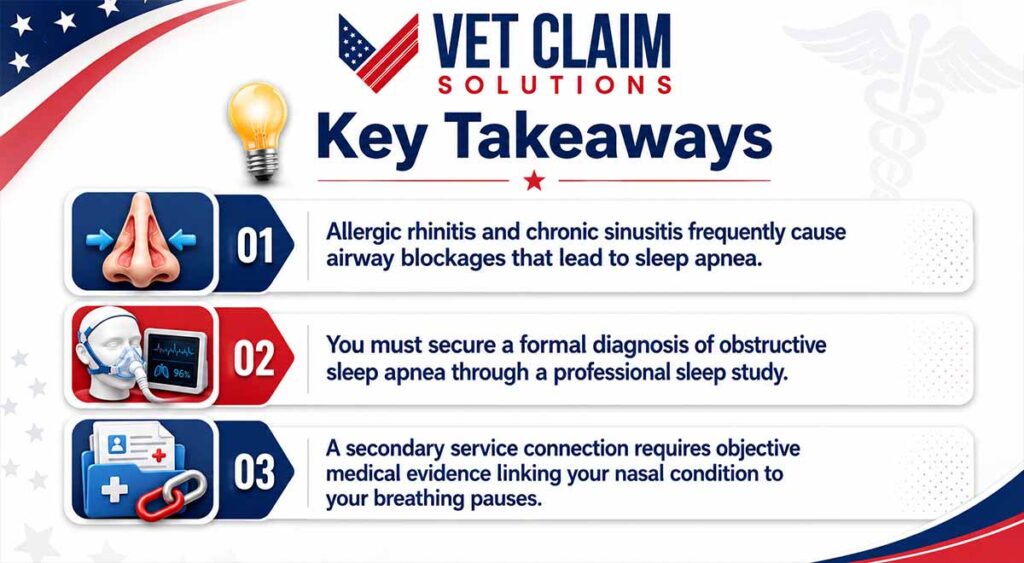
Filing for sleep apnea secondary to nasal conditions represents a common path for former military personnel seeking a higher va rating. You must establish a clear secondary service connection to receive the proper compensation for your sleep apnea. This process involves showing how your primary service-connected disability directly causes your current sleep apnea symptoms. When the upper respiratory system is compromised, the lower airway often suffers, leading to the obstructive events characteristic of this condition. Medical professionals often refer to this as the “United Airway” theory, suggesting that inflammation in one part of the respiratory tract inevitably impacts the functionality of the rest.
Veterans frequently develop obstructive sleep apnea due to chronic nasal congestion and persistent airway inflammation. When inflammation restricts your nasal passage, your body struggles to maintain proper oxygen levels throughout the night. This physical blockage causes sleep apnea because it forces you to breathe heavily through your mouth, which can lead to the collapse of soft tissues in the throat. This mechanical failure is the primary reason why a secondary condition like rhinitis is so closely linked to sleep disorders. Furthermore, the increased negative pressure required to pull air through a restricted nasal passage can physically pull the walls of the pharynx inward, triggering an obstructive event.
The relationship between the nasal passage and the throat is delicate, and any disruption in airflow can have a cascading effect on your sleep quality. Chronic inflammation from allergic rhinitis leads to tissue swelling that narrows the airway, making it significantly harder for air to reach the lungs. This constant struggle for breath during the night places immense strain on the cardiovascular system and prevents the body from entering deep, restorative sleep cycles. For many veterans, this is not just a minor inconvenience but a debilitating service-connected condition that requires a comprehensive va disability rating to address the long-term health consequences.

The Role of Chronic Sinusitis in Sleep Disruptions
Medical researchers consistently link chronic sinusitis and allergic rhinitis to an increased risk of obstructive sleep. A swollen airway makes sleep apnea much worse by creating a vacuum effect in your throat during inhalation. This repeated airway collapse requires immediate attention and often leads to an apnea secondary claim for sleep apnea. If you already have a service connection for sinusitis, you are halfway toward proving your case for additional benefits. The presence of polyps or structural changes in the sinuses can further exacerbate these breathing pauses, making the sleep apnea claim even more critical for your overall health management.
The persistent drainage and inflammation associated with sinusitis can irritate the throat, further narrowing the passage for air. This irritation often exacerbates the symptoms of sleep apnea, making it difficult for veterans to achieve restorative sleep. When filing your va claims, it is vital to describe how these two conditions interact to diminish your quality of life. A comprehensive understanding of these medical links will help you secure the disability rating you deserve for your combined symptoms. Many veterans find that their sinusitis symptoms, such as pressure and post-nasal drip, are at their worst when lying down, which directly correlates with the onset of obstructive sleep apnea episodes.
VA Disability Rating: Establishing a Secondary Service Connection and VA Rating

Proving Your Primary Service-Connected Condition
To win a secondary service connection, you must first have a formally recognized primary medical issue. The VA requires clear proof that your sleep apnea secondary condition directly results from that primary illness. You cannot simply state that your allergic rhinitis causes your sleep apnea without providing supporting documentation. This requires a “nexus,” or a medical link, that connects the two conditions in a way that satisfies VA adjudicators. This link is often established through the “Caluza Triangle,” which requires a current medical diagnosis, evidence of an in-service event or primary condition, and a medical nexus connecting the two.
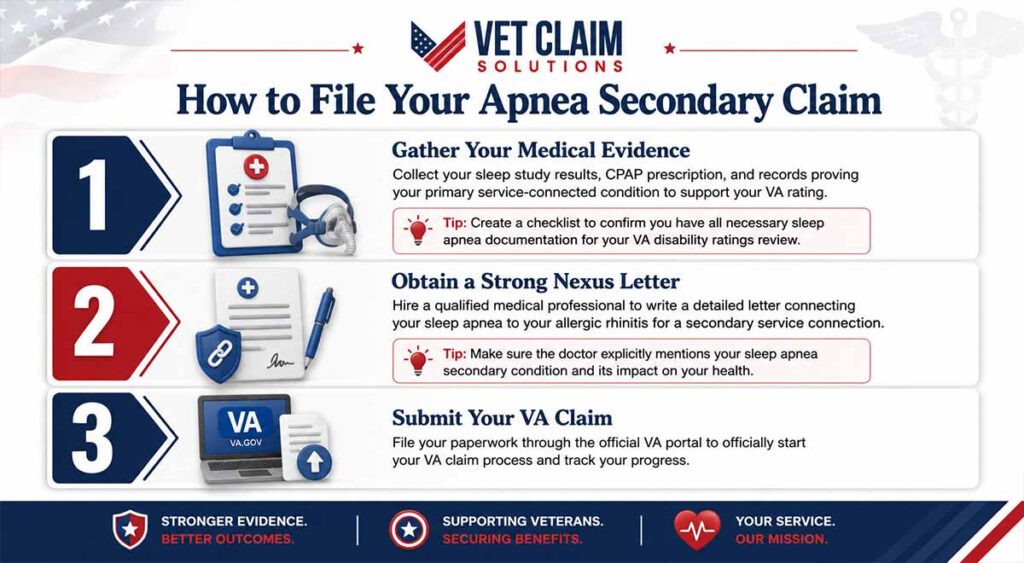
You must provide extensive medical evidence linking your sleep apnea to your other distinct medical problems. A sleep apnea claim built on a secondary condition demands specific documentation from qualified healthcare providers. You need a medical record showing a formal sleep apnea diagnosis from a certified medical sleep specialist. Without this diagnosis, the VA cannot assign a disability rating for the condition, regardless of how severe your symptoms may feel. It is also helpful to include personal statements or “buddy letters” that describe your snoring, gasping, or breathing pauses as observed by others, which can provide a more complete picture of your condition’s impact.
The strength of your va disability claim often rests on the continuity of care shown in your medical record. If you have been seeking treatment for chronic sinusitis or rhinitis for years, this history provides a solid foundation for your secondary service connection. The VA looks for a pattern of symptoms that logically leads to the development of obstructive sleep apnea. By demonstrating that your nasal issues have been persistent and poorly controlled, you make a much more compelling case that they are the underlying cause of your sleep disruptions and deserve a proper va disability rating.
Medical Evidence Required for a Sleep Apnea VA Rating
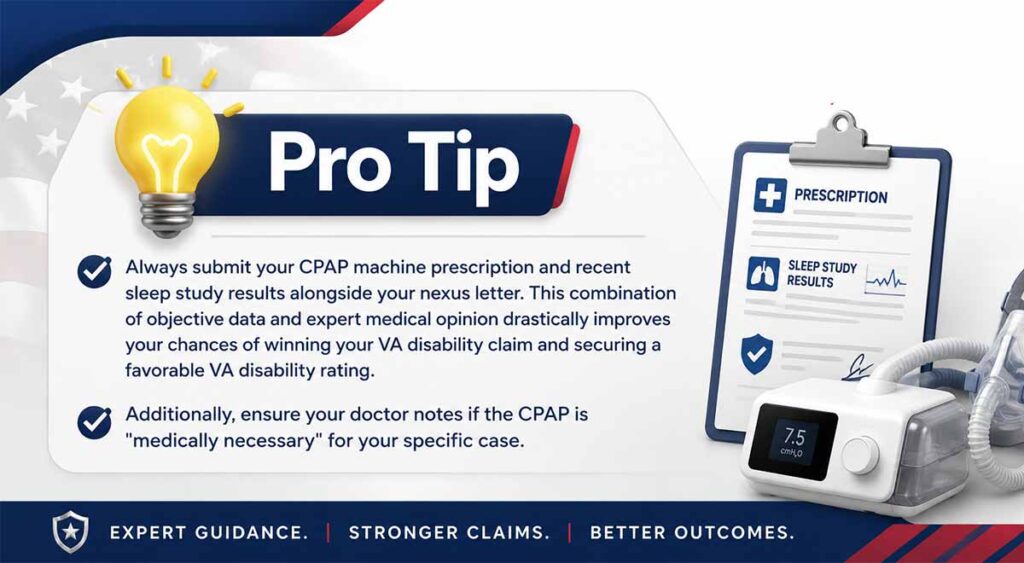
A continuous positive airway pressure machine prescription serves as crucial proof for your sleep apnea va claim. The VA disability system relies heavily on this type of objective clinical data to award sleep apnea benefits. Without a prescribed CPAP machine, getting a high va rating for your sleep apnea becomes significantly harder. The 50% va rating specifically requires the use of a breathing assistance device like a CPAP or BiPAP machine. This requirement underscores the importance of following through with all recommended treatments and ensuring they are documented in your official medical record.
In addition to the CPAP prescription, you should include a copy of your polysomnogram, or sleep study results. This report provides the Apnea-Hypopnea Index (AHI) score, which measures the severity of your sleep apnea. A higher AHI score often correlates with a more severe disability rating, provided the service connection is established. Ensuring your medical file is complete with these documents is the best way to avoid unnecessary delays in your va disability claim. The VA will also look for evidence that the sleep apnea is “chronically” disabling, meaning it is a long-term issue rather than a temporary respiratory infection.
Medical Evidence: The Critical Role of a Nexus Letter

What Makes a Strong Rhinitis Nexus?
A nexus letter serves as the most important document in your entire sleep apnea secondary claim. This detailed medical opinion bridges the gap between your service connection and your obstructive sleep apnea. Without strong nexus letters from qualified doctors, the VA will likely deny your request for sleep apnea benefits. The letter must be written by a medical professional who has reviewed your entire file and understands the secondary condition relationship. A high-quality rhinitis nexus will not only state a conclusion but will also provide the medical rationale and citations to peer-reviewed literature that support the link.
A proper rhinitis nexus clearly explains the exact medical mechanism causing your nighttime sleep apnea airway collapse. Doctors writing your nexus letter must carefully review your complete military service medical record before writing. They need to cite specific medical literature showing how chronic sinusitis directly triggers obstructive sleep apnea. This evidence helps the VA understand that your sleep apnea is not a standalone issue but a direct result of your service-connected nasal problems. The physician should also address any potential confounding factors, such as age or lifestyle, and explain why the nasal condition is still the primary driver of the apnea secondary claim.
The physician should state that your sleep apnea is “at least as likely as not” caused by rhinitis. This specific legal phrasing carries massive weight when the government reviews your sleep apnea secondary file. An expert medical opinion makes your apnea secondary case much stronger during the va claims review process. By using this standard of proof, you align your claim with the legal requirements necessary for a successful service connection. It is often beneficial to have a specialist, such as an Otolaryngologist (ENT) or a Sleep Medicine doctor, provide this opinion, as their expertise carries more weight with VA adjudicators than a general practitioner.
Examining the Diagnostic Code and Disability Rating
The Department of Veterans Affairs uses a specific diagnostic code to evaluate every single sleep apnea claim. Your final va rating depends entirely on the severity of your sleep apnea and required treatments. The government rates sleep apnea at 0, 30, 50, or 100 percent based on your specific medical needs. Understanding these va disability ratings is key to managing your expectations for monthly compensation. For instance, a 30% rating is typically awarded for persistent daytime somnolence (sleepiness) that is not corrected by treatment, while the 50% rating is the standard for those requiring a CPAP machine.
A 50 percent disability rating remains the most common outcome for veterans treating sleep apnea with CPAP. Your sleep apnea va rating significantly impacts your overall monthly compensation amount and total financial support. Veterans often use a disability calculator to estimate their combined disability ratings accurately before filing. This tool is essential because the VA uses “VA Math,” where percentages are not simply added together but combined based on a specific table. This means that adding a 50% rating to an existing 50% rating does not equal 100%, but rather 75%, which the VA rounds to 80%.
If the VA grants a secondary service connection, they add this percentage to your existing va disability rating. You can review the exact compensation tables on the official VA rates website to understand payments. This information helps you see how a sleep apnea secondary approval changes your total va disability benefits. Securing a secondary condition rating can often be the difference between a 70% and a 90% or 100% total rating. It is also important to note that if your sleep apnea is so severe that it leads to respiratory failure or requires a tracheostomy, you may qualify for a 100% disability rating under the current diagnostic code.
Disability Claim: Managing the VA Claim Process for Secondary Conditions
Overcoming Common Administrative Hurdles
Filing for sleep apnea secondary to nasal conditions often presents several distinct hurdles for veterans. The government frequently argues that weight gain caused your obstructive sleep apnea instead of your allergic rhinitis. You must prepare your medical evidence to counter these standard administrative objections effectively during your va claim. Proving that the nasal condition came first and is the primary driver of the sleep apnea is essential for success. This often involves showing that your weight gain was actually a result of the fatigue and metabolic changes caused by sleep apnea, rather than the cause of it.
Your doctor should explicitly address your body mass index in the nexus letter to support your sleep apnea. This helps eliminate obesity as the primary cause of your sleep apnea secondary to allergic rhinitis. Toxic exposure during military deployments frequently causes the initial chronic sinusitis that leads to sleep apnea. By linking your symptoms to your service environment, you strengthen the foundation of your secondary condition claim. Many veterans who served in Southwest Asia or other areas with high particulate matter exposure find that their respiratory issues are directly tied to these environmental hazards.
The PACT Act recently created new avenues for presumptive service connection related to airborne hazards. If you qualify for presumptive service, establishing the initial primary condition for your sleep apnea becomes easier. You can then focus your energy entirely on proving the apnea secondary connection for your va claim. This legislative change has helped thousands of veterans secure the va ratings they were previously denied by removing the burden of proving that their rhinitis or sinusitis was caused by a specific event in service. Instead, the VA now presumes the connection if you served in certain locations during specific timeframes.
VA Disability Benefits: Maximizing Your VA Disability Benefits
Seeking Professional Guidance
Veterans should pursue every available path to maximize their va disability legally and effectively. Winning a sleep apnea claim as a secondary condition can push your total combined rating higher. You should consult with accredited legal professionals who offer a free case evaluation to review your sleep apnea. These experts can help you identify other secondary conditions that may be linked to your primary service-connected disabilities, such as hypertension or cardiovascular disease, which are often exacerbated by the chronic oxygen deprivation of sleep apnea.
Many organizations provide free resources to help veterans understand complex va ratings and diagnostic codes. Understanding how the VA rates sleep and applying that knowledge requires careful preparation and patience. A successful secondary service claim validates your medical struggles and provides necessary financial support for your family. It is also important to consider how sleep apnea affects other systems, such as the heart, which could lead to further claims. For example, the strain on the heart from repeated nighttime awakenings can lead to atrial fibrillation or other cardiac issues that are also eligible for service connection.
If your initial apnea va rating comes back lower than expected, you always have the right to appeal. Consistent medical treatment and thorough documentation remain your best tools for long-term sleep apnea success. Maintaining detailed records of your sleep apnea treatments will protect your disability ratings over time. Remember that the VA can re-evaluate your condition, so staying active in your medical care is vital for maintaining your benefits. Keeping a “symptom log” can also be a powerful piece of evidence during an appeal, showing the day-to-day reality of living with these combined respiratory conditions.
Conclusion and Final Thoughts

Winning a disability claim for sleep apnea secondary to allergic rhinitis takes substantial daily effort. You need to gather compelling medical evidence, secure a strong nexus letter, and understand the va disability system. By carefully documenting your sleep apnea secondary condition, you improve your odds of receiving fair compensation. The journey to a higher va rating is often long, but the financial and medical support is worth the persistence. Every piece of evidence, from your initial military service records to your most recent sleep study, plays a vital role in building a winning case.
Remember to utilize a disability calculator to project your potential va disability benefits accurately. Earning a proper sleep apnea va rating is crucial for veterans suffering from severe breathing disruptions. Focus on proving your apnea secondary link to secure the secondary conditions coverage you deserve. With the right evidence and a clear medical nexus, you can successfully navigate the va claims process and improve your quality of life. Your service to the country entitles you to these benefits, and with a methodical approach, you can secure the rating that truly reflects your sacrifice.