


Veterans deployed overseas often faced invisible threats long before seeing any combat scenarios. Malaria required aggressive preventative measures to protect troops operating in tropical environments. Many military personnel took prescribed medications that later caused severe, lasting health issues. Understanding these medical consequences is vital for veterans seeking VA Compensation for Malaria and Long-Term Effects Veterans Should Know today.
The United States military service required highly effective protection against malaria for troops deploying to various tropical regions worldwide. Researchers at the Walter Reed Army Institute developed mefloquine during the Vietnam War era to address this need. This discovery aimed to protect soldiers from resistant strains of the dangerous mosquito-borne disease found in Southeast Asia. The medication eventually entered the commercial market under the brand name Lariam for civilian and military use.
For over a quarter century, this medication remained a standard issue preventive treatment for those serving abroad. Deployed service members received these pills during major operations in Somalia, Iraq, and Afghanistan over several decades. Medical officers handed out thousands of mefloquine prescriptions before the severe side effects became widely recognized by experts. Soldiers and Marine Corps personnel alike relied on this prophylactic treatment during their difficult overseas assignments.
The drug administration often occurred in chaotic deployment environments with minimal medical oversight from staff. Troops frequently consumed the medication without receiving proper informed consent regarding the potential neurological dangers involved. The Department of Defense eventually scaled back its use as adverse reports flooded in from many returning units. Today, the military strictly limits the use of this drug to specific, rare scenarios involving resistant malaria.
Mefloquine Toxicity: Identifying Long-Term Effects
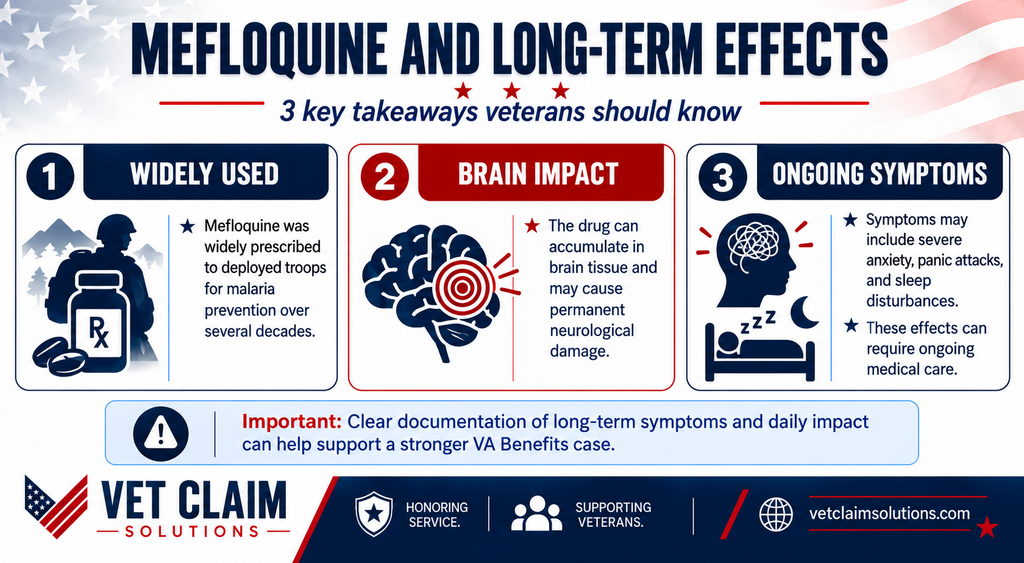
The antimalarial drug caused severe central nervous system reactions that persisted long after the deployment ended for veterans. Veterans continue to report debilitating neuropsychiatric symptoms that disrupt their daily lives and personal relationships quite significantly. These permanent reactions are collectively known as mefloquine toxicity among medical professionals and dedicated veteran advocates. The drug accumulates in brain tissue, causing damage that does not heal with time or standard treatments.
The long-term psychiatric effects vary widely but often include severe sleep disturbances and vivid nightmares for many service members. Many veterans experience sudden panic attacks that strike without any clear environmental trigger during their daily routines. Others develop a chronic anxiety disorder that requires ongoing therapeutic intervention and medication management from specialized doctors. These symptoms often emerge during deployment and progressively worsen after the veteran returns home to civilian life.
In the most severe cases, individuals exhibit psychotic behavior that alienates their families and close friends over time. Some veterans even struggle with tragic thoughts, including active suicidal ideation that requires emergency intervention and support. These psychiatric conditions demand immediate clinical attention and specialized, long-term treatment plans to ensure patient safety. Medical researchers continue to study how this chemical alters human brain function permanently through various clinical trials.
FDA Drug Safety: The 2013 FDA Actions and Regulatory Warnings
The federal government eventually recognized the severe dangers associated with this specific medication after years of reports. In July 2013, regulators released an official FDA drug safety communication regarding the drug’s significant risks. This announcement permanently changed how civilian doctors and military physicians prescribe the medication to international travelers. The regulatory intervention validated the complaints that veterans had voiced for many years regarding their health.
The agency mandated a black box warning for the medication packaging and distribution materials for all manufacturers. This box warning represents the strictest alert possible for a prescription medication in the United States today. The updated drug label explicitly detailed the potential for permanent neurological and psychiatric damage to the patient. Patients and providers finally had documented proof of the medication’s devastating potential side effects and long-term risks.
Patients must monitor themselves closely for early prodromal symptoms during drug administration to prevent permanent injury. The official guidelines state that any early signs require immediate cessation of the medication to avoid damage. Ignoring these early signs often leads to permanent neuropsychiatric adverse outcomes that cannot be reversed by doctors. Doctors now carry a legal obligation to inform patients of these specific physiological risks before prescribing treatment.
️ Warning: If you experience vivid nightmares, ringing in the ears, or severe dizziness while taking this medication, stop immediately and contact a physician. These early signs often precede permanent neurological damage.
Psychiatric Symptoms: Distinguishing Medication Effects from Combat Trauma
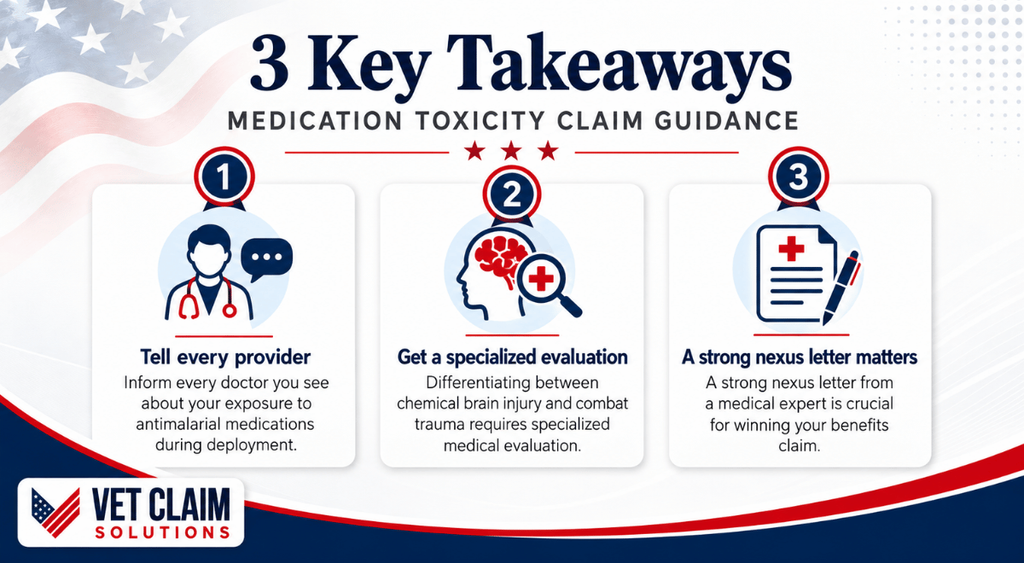
Doctors often misdiagnose these medication-induced issues because the symptoms overlap heavily with combat trauma and stress. The clinical presentation closely mimics post traumatic stress disorder in many affected veterans who served in combat zones. This confusion complicates the treatment process and delays proper medical intervention for the actual root cause of illness. A misdiagnosis can lead to ineffective therapies that frustrate the patient and their family during the recovery.
Veterans frequently struggle to convince doctors that their psychiatric symptoms stem from medication rather than combat experiences. Medical professionals must differentiate between psychological trauma and chemical damage to the brain stem for accurate treatment. Proper diagnosis dictates the specific therapies and medications required for effective long-term recovery and symptom management. The VA acknowledges this overlap and provides guidance for distinguishing between the two conditions for clinicians.
You should gather buddy statements and personal journals to document your exact symptom timeline for the VA. These records help establish whether your psychiatric disorders began during the medication use or after a combat event. Accurate historical documentation provides a clear, undeniable picture for your evaluating physicians during the claims process. Clarity between chemical exposure and a stress disorder remains critical for accurate claim processing and benefit approval.
Service Connection: VA Compensation for Malaria and Long-Term Effects Veterans Should Know
Securing VA disability requires concrete evidence linking your current diagnosis directly to your deployment and medication use. You must establish a clear service connection for the medication-induced neurological damage to receive monthly benefits. This process involves proving that your military service directly caused your current medical condition through medical evidence. The burden of proof rests entirely on the veteran to provide sufficient documentation for the rating board.
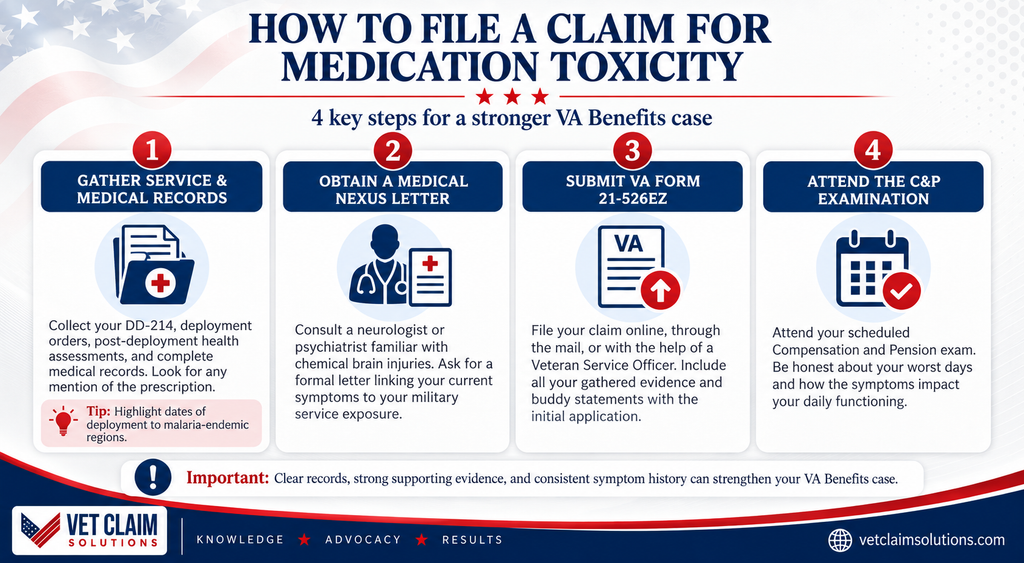
Veterans should thoroughly review their military medical records for any mention of the prescription during their service. Unfortunately, combat medics sometimes distributed the pills without making formal chart notes in the field during operations. In these unrecorded cases, lay evidence, buddy letters, and deployment orders become critical components of your claim. You must build a compelling narrative that proves you consumed the medication during active duty for the VA.
Obtaining disability compensation for this specific issue often requires an independent medical opinion from a specialist. A civilian specialist can write a nexus letter formally connecting your symptoms to the medication you took. This documentation significantly strengthens your case for a service-connected disability rating during the official review process. An independent evaluation carries significant weight during the official review process conducted by the Department of Veterans Affairs.
VA Disability: Filing Your Claim
The administrative process of applying for benefits requires precise attention to detail and thorough preparation from the veteran. Rushing the application often results in immediate denials and lengthy appeals that delay your compensation for years. You should approach the filing process methodically to maximize your chances of a favorable initial decision from the VA.
Health Care: Managing Health Concerns and Finding Support
Veterans must prioritize their ongoing physical and mental well-being above all else during this difficult process. You should immediately discuss your health concerns with a qualified medical professional at your local VA clinic. Tell your care provider directly that you took the drug mefloquine during your overseas deployment years ago. This information changes how they approach your diagnostic testing and treatment protocols for your specific health needs.
The Department of Veterans Affairs offers specialized environmental health registries for deployed service members who faced toxic exposures. You should seek medical attention promptly if your neurological symptoms suddenly worsen or change during your daily life. Consistent monitoring helps doctors adjust your treatment plan as your physiological needs change over time and age. Many veterans find relief through specialized programs at the War Related Illness and Injury Study Center locations.
Comprehensive health care requires a multi-disciplinary approach to address both physical and mental symptoms effectively for veterans. The VA health care system provides access to neurologists and psychiatrists who are familiar with these specific chemical exposures. Building a strong support network of medical professionals and fellow veterans improves your overall quality of life significantly
Conclusion
Living with mefloquine toxicity presents ongoing daily challenges for many affected veterans across the country today. Acknowledging the chemical root cause of your symptoms represents the first critical step toward healing and recovery. You deserve proper recognition and financial compensation for the physical sacrifices you made overseas while serving your country.
Do not hesitate to file a new claim or appeal a previously denied decision with the federal government. The broader medical community now understands these medication risks far better than they did previously in the past. Stay persistent in your pursuit of the benefits and specialized care you earned during your honorable military service.