

You served your country with honor. During your deployment, you likely breathed in toxic smoke from burn pits. Now, you find yourself dealing with chronic bronchitis or other respiratory issues that simply will not go away. Getting a VA bronchitis claim approved and securing a fair VA respiratory rating for burn pit lung conditions can seem difficult. It often feels like an uphill battle against a large bureaucracy. For too many veterans, this process is exhausting.
There is good news. Things have changed significantly with the passage of the PACT Act. The Department of Veterans Affairs is now actively encouraging veterans exposed to burn pits to file claims. If you haven’t filed yet, the time is right. You need to understand how to get the disability benefits you earned.

What Are Burn Pit Lung Conditions
Burn pits were massive, open-air waste disposal sites utilized during the Gulf War era and post-9/11 conflicts. The military burned nearly everything in these pits. This included plastics, rubber, human waste, and medical supplies. The smoke produced by these fires was incredibly toxic. Veterans stationed near these pits in Iraq, Afghanistan, and other locations breathed these airborne hazards daily. This was not a short-term event.
That military exposure led to serious, long-term health problems. Research indicates that prolonged presence near a burn pit increases the risk of developing severe lung diseases. This includes conditions like chronic obstructive pulmonary disease (COPD) and asthma. Common burn pit-related respiratory conditions include chronic bronchitis, asthma, and constrictive bronchiolitis. These are not minor annoyances that disappear with cough syrup. They are life-altering respiratory conditions that require ongoing medical attention.
Understanding Your VA Bronchitis Claim
Filing a VA bronchitis claim starts with knowing exactly what the VA requires. You must prove three specific elements to win your case. First, you must have a current diagnosis of chronic bronchitis.
Second, you must show you were exposed to burn pits or other environmental hazards during your service. Third, there must be a connection between that exposure and your current illness. Before the PACT Act to address comprehensive toxics was signed into law, the third part was very difficult. Veterans had to obtain a nexus letter from a doctor. This letter had to explicitly state that their bronchitis was caused by military service.
The PACT Act changed this dynamic. Now, chronic bronchitis is listed as one of the presumptive conditions. This means if you meet the time and place requirements, the VA assumes your service caused your condition. You do not need a nexus letter in these cases. The burden of proof has shifted in your favor. This change expands benefits to thousands of veterans who were previously denied.

How the VA Rates Respiratory Conditions
Once your claim is approved, the VA assigns a disability rating. This rating determines your monthly disability compensation. The VA uses specific criteria to decide how severe your condition is. The VA uses diagnostic code 6600 for chronic bronchitis. Ratings typically range from 10% to 100%. The specific percentage depends heavily on your vital capacity and overall lung function.
The VA looks at several factors. They want to know if you require daily medication or oxygen. They check if you have frequent flare-ups that require medical intervention. They also rely heavily on pulmonary function tests (PFTs). Spirometry is the most common test used. It measures how much air you can breathe in and how much you can force out.
Your forced vital capacity (FVC) and FEV1 scores matter most. FEV1 is the amount of air you can force out in one second. Lower scores mean worse lung function and result in higher ratings.
Rating Criteria Breakdown
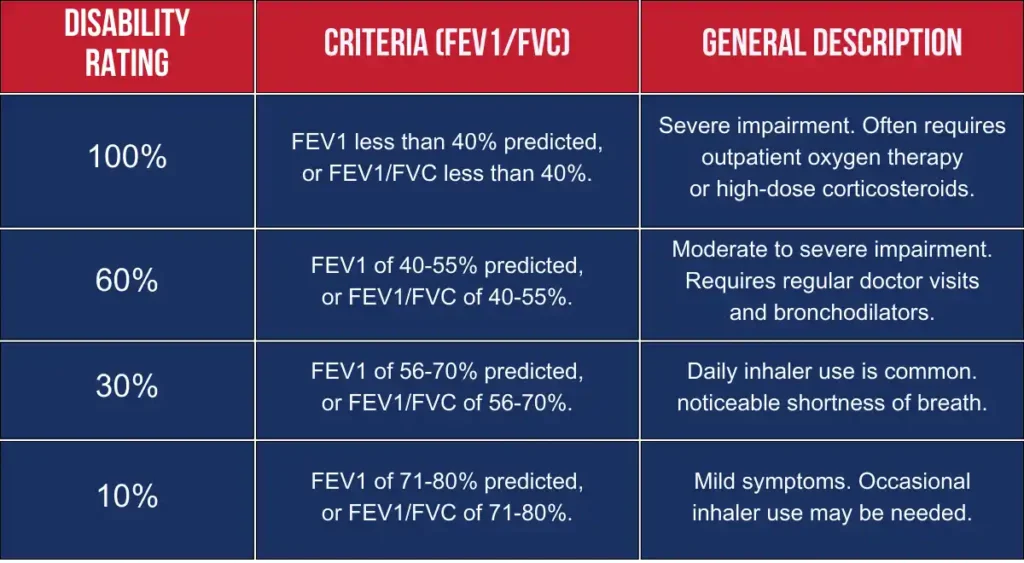
The Schedule for Rating Disabilities groups respiratory conditions together. This happens under codes 6600-6847. Chronic bronchitis falls under this umbrella, often treated similarly to a type respiratory issue like COPD.
Symptoms That Support Your Claim
The VA needs solid documentation of your symptoms. You should keep detailed records of everything you experience physically. This evidence is vital for a higher rating. Common bronchitis chronic symptoms include a persistent cough that produces mucus. You might have chest discomfort or tightness. Shortness of breath is a major factor, especially during physical activity.
The VA also looks at how your forced vital stats impact your energy. Symptoms like fatigue, slight fever, chills, and body aches are relevant. If these symptoms are chronic and documented, they strengthen your claim significantly. Track how your condition affects daily life. Can you climb stairs without getting winded? Do you wake up at night coughing? Does your condition limit your ability to hold a job?
The more specific you are, the better. Vague complaints do not carry weight with the VA. Detailed examples with dates and circumstances do help establish the severity of your service chronic bronchitis.
Filing Your Claim Step by Step
Start by gathering your service records. You need proof you were stationed at locations with burn pits or other toxic exposures. The VA has a specific list of qualifying locations under the PACT Act.
Next, get current medical evidence. See a doctor and get a diagnosis in writing. Make sure they document the severity of your bronchitis VA condition. If you haven’t already, register with the Airborne Hazards and Open Burn Pit Registry. This isn’t strictly required for a claim, but it helps establish your history of exposure. It creates a formal record of your service location.
You can file online through the VA website. Submit VA Form 21-526EZ. This is the standard disability compensation form. Include all your medical records and service documentation in one package. The VA will eventually schedule a Compensation and Pension (C&P) exam. Show up prepared. Bring a list of your symptoms and notes on how they affect your life.

What Happens After You File
The VA reviews your claim in detail. They look at your service records, medical evidence, and C&P exam results. They assess the description rating criteria against your medical data. If approved, you will get a rating percentage. This determines your monthly payment amount. Veterans rated at 100% receive the highest compensation level.
But even if your rating is lower, you still get benefits. A 30% rating for chronic bronchitis means monthly compensation plus access to VA health care for that condition. If denied, do not stop trying. You have the right to appeal. Many claims are approved on appeal after additional evidence regarding service chronic bronchitis chronic issues is submitted.
Increasing Your Rating Over Time
Your condition might worsen as you age. Chronic bronchitis chronic obstructive diseases are often progressive. As symptoms get worse, you can file for an increased rating. Keep seeing your doctor regularly. Document every flare-up and medication change. Get updated pulmonary function tests annually to track your vital capacity.
When you file for an increase, the VA will schedule another C&P exam. They will compare your current condition to your original rating. If you have gotten worse, your rating should increase to match your health status. Do not wait too long to file for an increase. The effective date matters for back pay. You will only get back pay from when you filed, not from when your condition actually worsened.

Broader PACT Act Coverage
It is important to understand that the PACT Act covers more than just chronic bronchitis chronic conditions. The legislation addresses comprehensive toxics across the board. It includes a wide variety of presumptive cancers. If you were exposed to burn pits, you should screen for other issues. The act covers brain cancer, kidney cancer, and gastrointestinal cancer. It also includes melanoma neck cancer and other variations of skin cancer.
The list of conditions is extensive. It includes type glioblastoma, type pancreatic cancer, and reproductive cancers. Specifically, pancreatic cancer reproductive issues and brain cancer gastrointestinal cancer overlaps are now easier to service connect. This legislation represents a massive shift. The change expands benefits to cover type pancreatic issues and type melanoma neck tumors. Even type melanoma and neck cancer alone are presumptives.
If you have a type respiratory illness, check for these other conditions. The toxic smoke affected more than just the lungs. It entered the bloodstream and affected other organs.
Secondary Conditions to Consider
Chronic bronchitis rarely exists in isolation. It often leads to other health problems over time. You can file for these as secondary conditions. Sleep apnea is common with respiratory issues. Breathing problems at night affect sleep quality. If you have been diagnosed with sleep apnea, file a secondary claim linked to your respiratory condition.
Mental health conditions count too. Dealing with chronic illness causes anxiety and depression. These are legitimate secondary conditions that deserve compensation. Gastroesophageal reflux disease (GERD) often goes hand-in-hand with lung issues. Chronic coughing can make GERD worse. Document the connection with your doctor. Each secondary condition gets its own rating. These ratings combine with your primary rating. This increases your overall disability benefits package.

FAQs About VA Respiratory Claims
What if I was exposed to Agent Orange?
Agent Orange is a different type of herbicide exposure, primarily from the Vietnam era. However, the PACT Act also expanded benefits for Agent Orange survivors. Check the updated presumptive list for Vietnam veterans.
Can I claim asthma if it was diagnosed after service?
Yes, you can. Under the new rules, if you have asthma diagnosed within a certain timeframe after service, it may be presumptive. Even if diagnosed later, you can still prove service connection with medical evidence.
What does “comprehensive toxics” mean?
This term refers to the PACT Act’s goal to address comprehensive toxics. It means the VA is looking at the full spectrum of toxic exposures. This ranges from burn pits to radiation and oil well fires.
How does the VA measure my lung health?
They use the forced vital capacity test. This measures the total volume of air you can exhale from your lungs. It is a critical number for your bronchitis va rating.
Is acute bronchitis covered?
Generally, acute bronchitis is a temporary condition. The VA compensates for chronic, long-lasting disabilities. However, frequent bouts of acute bronchitis can be evidence of a chronic underlying issue.
Conclusion
Getting the benefits you deserve for a VA bronchitis claim and proper VA respiratory rating for burn pit lung conditions is your right. You earned it through your military service and sacrifice. The health impacts of your service are real. The PACT Act made this process easier. Presumptive conditions mean less burden on you to prove service connection. File your claim if you have not already.
Document everything you experience. See your doctor regularly. Keep detailed records of symptoms and how they affect your daily life. Be honest during your C&P exam. Do not minimize your pain or struggle. Explain exactly how your service chronic bronchitis impacts your family and work. Don’t give up if you are denied. Appeal with additional evidence.
Your va health matters. The compensation you receive is not charity. It is recognition that your service caused real harm. Fight for what is yours.