

Occasional heartburn after a spicy meal is common, but frequent acid reflux may indicate a more serious health condition. VA disability for GERD acid reflux is an important topic for veterans experiencing persistent symptoms that may be connected to military service. Gastroesophageal reflux disease (GERD) occurs when stomach acid flows backward into the esophagus, causing heartburn, regurgitation, and difficulty swallowing. Veterans with a documented history of GERD symptoms may qualify for VA disability benefits if they establish service connection.
Many veterans overlook GERD as a potential service-connected condition, especially when acid reflux develops alongside mental health conditions or medications used for other health conditions. Understanding the VA disability rating criteria, medical evidence requirements, and secondary service connection options can help veterans prepare a stronger disability claim. This guide explains GERD ratings, esophageal strictures, diagnostic code 7206, and the medical records needed to support a claim for VA disability compensation.
GERD develops when the lower esophageal sphincter, the muscular valve between your esophagus and stomach, weakens or relaxes at the wrong times. Stomach acid then flows backward into the esophagus and irritates its lining. According to the National Institute of Diabetes and Digestive and Kidney Diseases, occasional reflux becomes GERD when it happens persistently or begins damaging tissue.
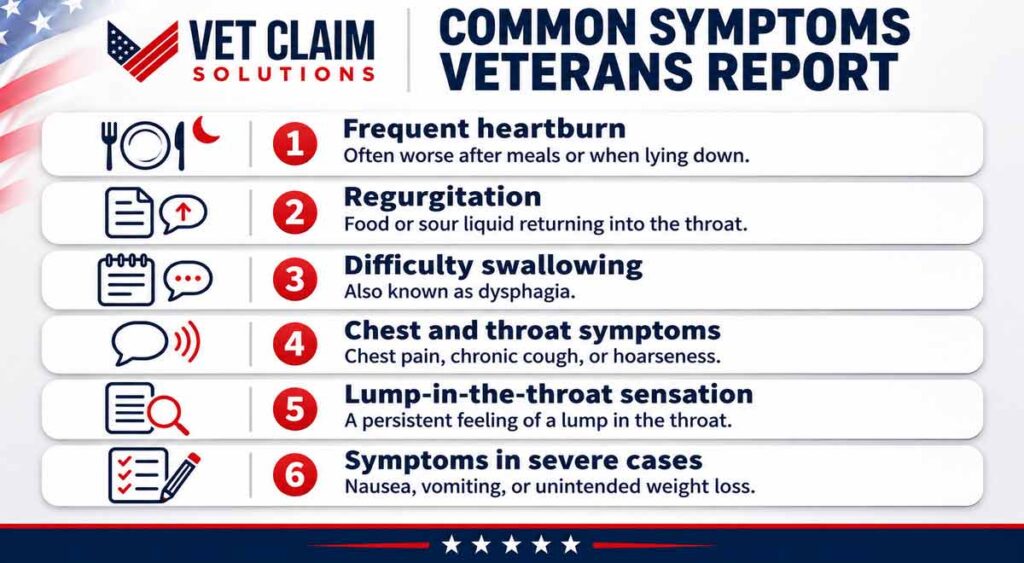
So why does GERD hit veterans so hard? Several service-related factors stack the odds against you. Chronic stress and PTSD alter gut function and acid production, while heavy NSAID use for service-connected joint and back injuries irritates the digestive tract. Add irregular meals during deployments, rapid weight changes after discharge, and the physical strain that can trigger hiatal hernias, and you have a recipe for chronic reflux.
Research supports this connection. The VA’s National Center for PTSD notes that veterans with PTSD experience physical health problems, including gastrointestinal complaints, at elevated rates. If your reflux started during service or worsened alongside a mental health condition, that relationship matters for your claim.
VA Disability Ratings for GERD and Acid Reflux

The VA rates GERD under 38 CFR § 4.114, the portion of the rating schedule covering the digestive system. For decades, GERD had no diagnostic code of its own, so raters scored it “by analogy” under Diagnostic Code 7346 for hiatal hernia. That older framework capped ratings at 60 percent and demanded severe symptoms for the higher levels.
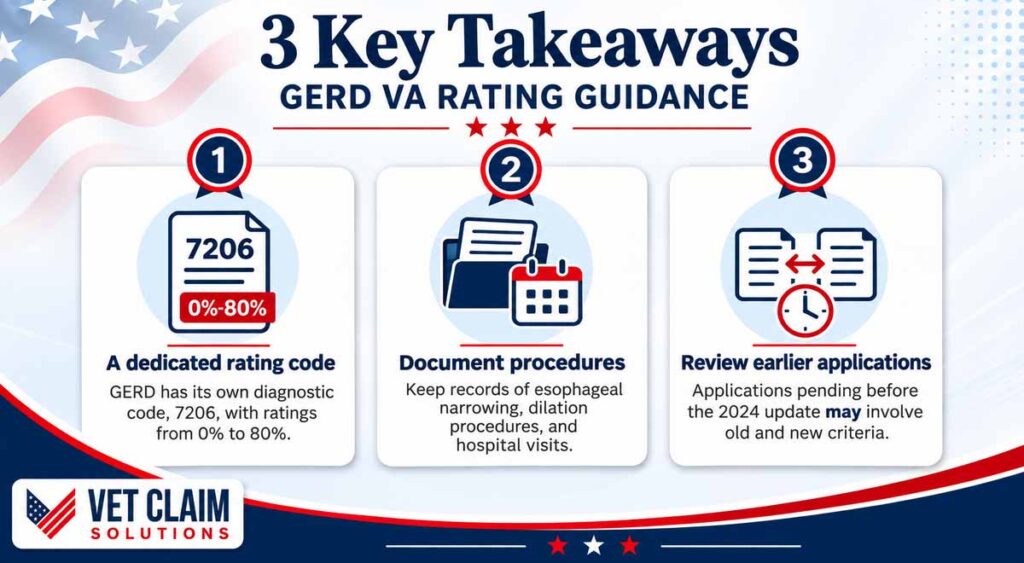
That changed in May 2024, when the VA’s updated digestive system schedule took effect. GERD now has its own code, Diagnostic Code 7206, with ratings of 0, 10, 30, 50, and 80 percent. The new criteria focus heavily on esophageal strictures, which are narrowings caused by chronic acid damage, and how often they require dilation procedures.
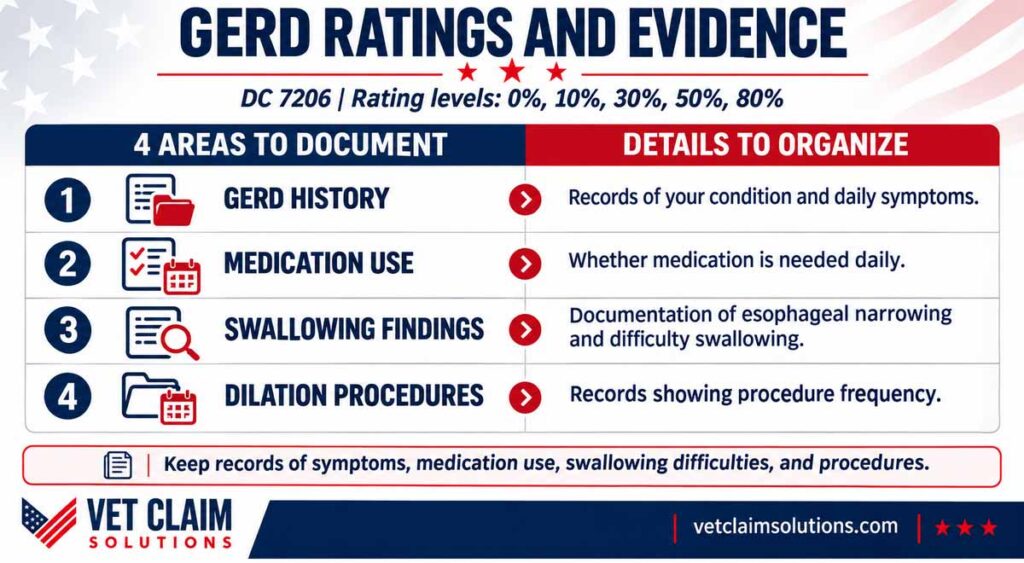
If your GERD disability claim was pending before the May 2024 rating schedule update, the VA generally considers both the previous and revised criteria, applying the more favorable criteria where legally permitted. Under the former hiatal hernia criteria in 38 CFR § 4.114, a 30 percent disability rating required persistently recurrent epigastric distress involving dysphagia, heartburn, and regurgitation, accompanied by substernal or arm or shoulder pain, producing considerable impairment of health. The highest 60 percent rating applied to severe symptoms such as vomiting, material weight loss, and bleeding with moderate anemia, or other symptom combinations producing severe impairment of health.
What do these VA disability rating percentages mean in dollars? Monthly VA disability compensation depends on your combined disability rating and eligible dependents. Veterans with service-connected GERD may qualify for tax-free compensation based on the severity of their condition and applicable rating criteria. You can verify exact payment amounts using the VA’s current disability compensation rate tables. A VA disability calculator can also help estimate your combined rating if you have multiple service-connected conditions.
How to Establish Service Connection for GERD

A diagnosis alone never wins a VA claim. You must prove service connection, which rests on three elements: a current diagnosis, an in-service event, injury, or illness, and a medical link called a nexus connecting the two. Miss any one of these, and the VA will deny the claim.
Direct Service Connection
Direct service connection means GERD began during military service or was directly caused by an in-service event, illness, or injury. Your service treatment records may show documented complaints of heartburn, indigestion, or acid reflux during active duty. Some veterans also report persistent GERD symptoms following deployments involving irregular meals, dietary changes, or prolonged stress. However, these circumstances alone do not establish a medical connection to service. Documented symptoms and supporting medical evidence can strengthen your disability claim, so request your military service records early.
Secondary Service Connection
Veterans may also qualify for GERD disability benefits through secondary service connection. Under this approach, an existing service-connected condition or its treatment must have caused or aggravated GERD. Potential contributing factors include mental health conditions, certain medications, and weight changes associated with other health conditions.
- PTSD, anxiety, and depression: Post-traumatic stress disorder (PTSD) can occur alongside gastrointestinal complaints. However, a medical evaluation is necessary to determine whether a veteran’s mental health condition caused or aggravated GERD.
- NSAIDs and other medications: Nonsteroidal anti-inflammatory drugs (NSAIDs), including ibuprofen, may cause gastrointestinal irritation or worsen digestive symptoms. Medical documentation can help establish whether medication prescribed for a service-connected condition contributed to GERD.
- Weight gain from service-connected conditions: Limited mobility associated with certain orthopedic conditions may contribute to weight gain. Obesity is a recognized risk factor for gastroesophageal reflux disease, although a medical opinion is generally needed to establish the relationship in an individual claim.
For secondary service connection, a well-supported medical opinion can explain whether GERD was “at least as likely as not” caused or aggravated by an existing service-connected condition or its treatment. This language reflects the VA’s approximate-balance-of-evidence standard, but the medical reasoning and supporting records are equally important.
Note: GERD is not currently on the VA’s presumptive condition lists, including those expanded by the PACT Act. Even if you served near burn pits, you will need direct or secondary service connection supported by medical evidence.
Evidence That Strengthens Your GERD Claim
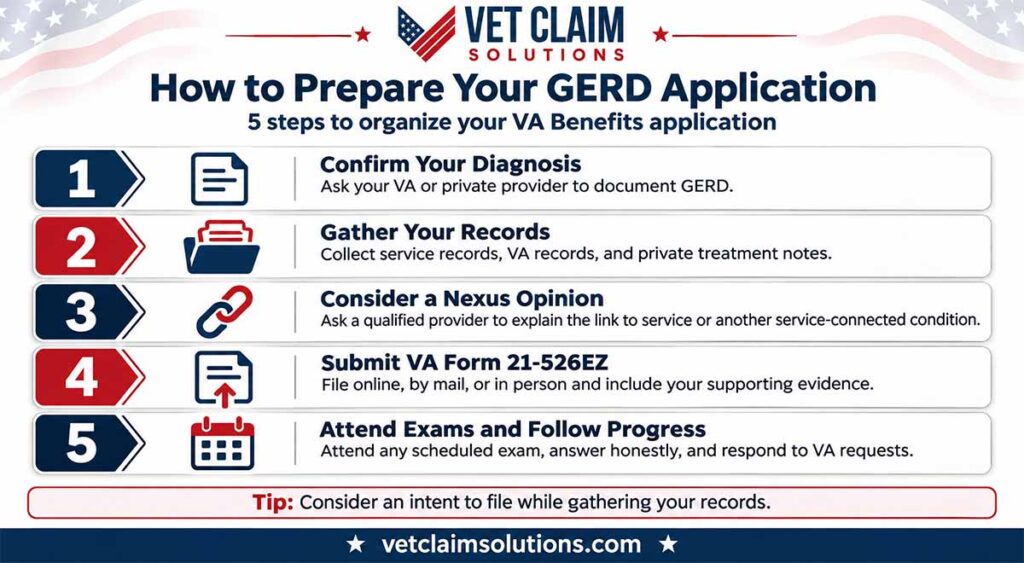
Strong VA disability claims rely on credible medical evidence that establishes a current diagnosis, service connection, and the severity of GERD symptoms. The VA evaluates disability claims using medical records, service treatment records, and supporting statements. Organizing your evidence before filing can help the VA evaluate your condition more accurately.
The most persuasive evidence for a GERD claim includes:
- Current diagnosis: A formal diagnosis of gastroesophageal reflux disease (GERD) from a VA or private physician, supported by relevant clinical findings and diagnostic tests when appropriate.
- Service treatment records: Documented complaints of heartburn, indigestion, or acid reflux during military service. Veterans can request their military medical records to identify relevant documentation.
- Continuity of care: Post-service medical records showing ongoing GERD symptoms, prescribed medications, and treatment history.
- Nexus letter: A qualified medical professional’s opinion explaining how GERD is connected to military service or an existing service-connected condition.
- Lay statements: Personal statements and buddy statements from family members or fellow service members who witnessed GERD symptoms and their effects on daily activities.
- Disability Benefits Questionnaire: A completed Esophageal Conditions Disability Benefits Questionnaire (DBQ) documenting GERD symptoms, clinical findings, and functional limitations.
A well-reasoned nexus letter can strengthen a GERD disability claim by explaining the medical relationship between the condition and military service. The physician should review relevant treatment records, provide a clear medical rationale, and address whether GERD is “at least as likely as not” related to service or a service-connected condition. A brief statement without supporting medical reasoning may carry less evidentiary weight during the VA’s evaluation.
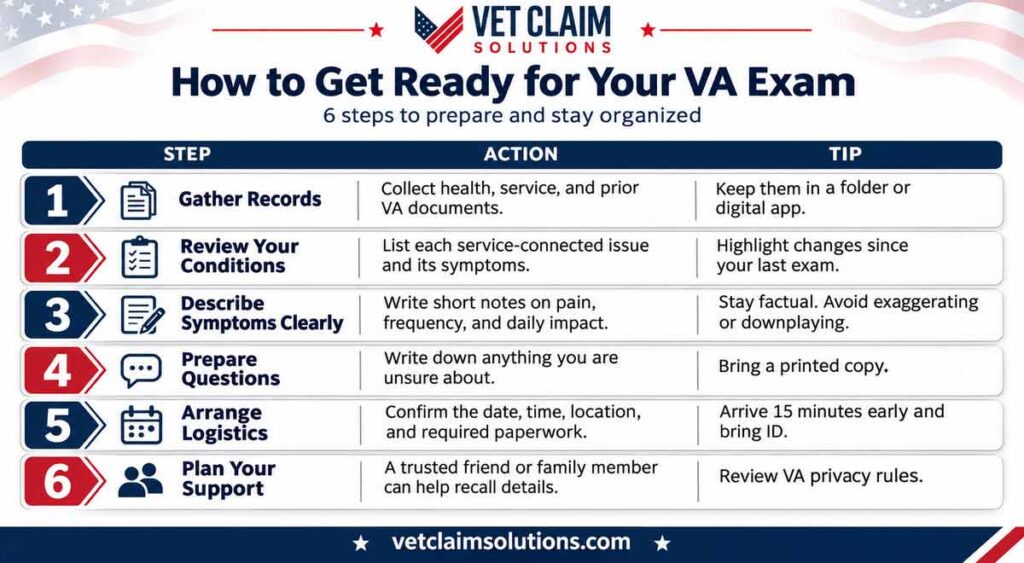
Pro Tip: Keep a daily symptom journal for 60 to 90 days before filing. Record heartburn episodes, regurgitation, sleep disruption, trigger foods, and every medication you take. This contemporaneous record strengthens your file and helps you testify accurately at your C&P exam.
Preparing for Your C&P Exam
What Is a C&P Exam?
A Compensation & Pension (C&P) exam is a medical evaluation required by the VA to determine the severity of service‑connected conditions.
The results influence your disability rating and benefits.
Why It Matters
- Accurate ratings lead to higher compensation.
- The exam documents your current health status for future claims.
- It can clarify any disputed symptoms or diagnoses.
After the Exam
- Request a copy of the examiner’s report within 30 days.
- Review it for accuracy; note any errors or missing information.
- Submit corrections or additional evidence to the VA as soon as possible.
Quick Tips
- Stay calm: the examiner is there to assess, not to judge.
- Answer directly: give concise answers; avoid unnecessary storytelling.
- Be honest: exaggeration can lead to credibility issues later.
Good preparation can make a big difference in the outcome of your claim. Stay organized, be truthful, and keep all your documentation handy.