

Are you a Gulf War veteran struggling with strange health problems? Do you feel like doctors just can’t pinpoint what’s wrong? You are not alone, and your symptoms are real.
So many war veterans from that era face confusing and frustrating health issues. This guide will cover unexplained symptoms in Gulf War Veterans, how the VA rates them, and the evidence required for a claim. Building a strong VA claim for Gulf War illness is possible when you have the right information.
You served your country, and now you are fighting a new battle for your health and the benefits you deserve. We will break down what you need to know about these unexplained symptoms. Our focus here is to help you build a successful disability claim.

What exactly is Gulf War Illness?
Gulf War Illness is not one single disease. It is a collection of chronic symptoms that can affect different parts of your body. The medical world sometimes calls it a medically unexplained chronic multi-symptom illness or MUCMI.
This is a technical term meaning you have real, long-lasting symptoms that do not fit into a known diagnosis. The VA acknowledges these symptoms are connected to your Gulf War service in the Southwest Asia theater of operations. You might also hear the term Gulf War Syndrome, which refers to the same group of health problems that many Gulf War veterans experience.
Many researchers believe these health concerns stem from toxic exposure during service. This includes potential contact with depleted uranium, smoke from burn pits, and other environmental hazards. These military exposures are now recognized as significant contributors to the health problems of many era veterans.
These symptoms are persistent, defined as lasting for six months or more. This is not a brief sickness; it is a condition that stays with you and affects your daily life. The Department of Veterans Affairs has acknowledged this war illness is real and has special rules to help you get the VA disability benefits you earned.
The Presumptive Service Connection Advantage
The VA has a rule called presumptive service connection for Gulf War veterans, which can make your claims process much smoother. This means if you have certain symptoms, the VA presumes they were caused by your military service. You do not have to prove a specific event during your war service caused your illness, which is a huge help.
This rule applies if you served in the Southwest Asia theater of operations anytime from August 2, 1990, to the present. This includes places like Iraq, Kuwait, Saudi Arabia, the neutral zones between them, and the airspace above these locations. If your symptoms appeared during active duty in this region or before December 31, 2026, you may be eligible.
Think of it this way: you do not need to find a direct link, or a nexus, between your war syndrome and your service. The link is already assumed by the VA because of where and when you served. This removes a massive burden of proof that other war veterans with different conditions often face.

What are the Presumptive Conditions?
The VA has a specific list of conditions that are considered presumptive for Gulf War era veterans. Understanding these can help you identify where your health issues might fit. They fall into a few general categories.
Medically Unexplained Chronic Multisymptom Illnesses (MUCMI)
This is the broadest category and includes conditions like fibromyalgia, chronic fatigue syndrome, and irritable bowel syndrome. These conditions often come with widespread pain, constant tiredness, and digestive problems without another clear cause. This chronic multi-symptom illness can be debilitating for a war veteran.
- Fibromyalgia causes pain all over your body. It also leads to sleep problems, fatigue, and emotional distress.
- Chronic Fatigue Syndrome (CFS) is more than just feeling tired. It’s an extreme fatigue that does not improve with rest and gets worse with activity.
- Irritable Bowel Syndrome (IBS) causes stomach pain, cramping, bloating, gas, and diarrhea or constipation.
Undiagnosed Illnesses
This category covers a cluster of symptoms that do not point to a specific diagnosis but are clearly affecting your health. The VA lists examples of these undiagnosed illnesses. If you experience them, they can be part of your disability claim even without a formal name for your condition.
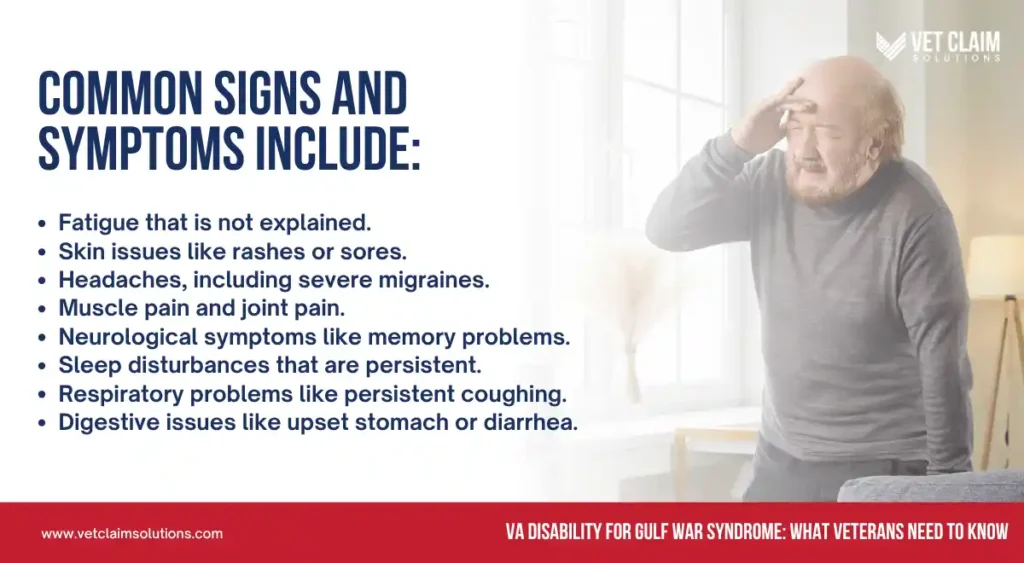
If you have other long-term symptoms that your doctor cannot explain, they might still qualify. These undiagnosed illnesses are a key part of the presumptive conditions recognized by the VA.
Certain Infectious Diseases
The VA also presumes certain infectious diseases are related to service in the Persian Gulf. These must appear within a specific time after you leave service to be considered presumptive. The time limit is typically one year, but there are exceptions.
Some of these diseases include:
- Brucellosis.
- Campylobacter jejuni.
- Coxiella burnetii (Q fever).
- Malaria.
- Mycobacterium tuberculosis.
- Nontyphoid Salmonella.
- Shigella.
- Visceral leishmaniasis.
- West Nile virus.
If you were diagnosed with one of these infectious diseases after your Gulf War service, you may be eligible for benefits. It is important to have medical evidence of the diagnosis and its timing.
How the VA Assigns a Disability Rating
Once the VA agrees your medical condition is service-connected, they assign a disability rating. This rating is a percentage from 0% to 100%. The percentage reflects how severe your symptoms are and how much they impact your ability to work and live a normal life.
This va rating determines the amount of your monthly tax-free disability payment. A higher rating means a higher payment because your condition has a greater impact on your life. Understanding how the VA rates your Gulf War syndrome claim is a big part of the process.
For specific conditions like fibromyalgia, the VA uses existing rating schedules. The ratings for fibromyalgia are often 10%, 20%, or 40% depending on whether the pain is widespread and constant. For chronic fatigue syndrome, ratings can go up to 100% based on the severity of symptoms.
If you have a collection of undiagnosed symptoms, the VA will rate you based on what your symptoms do. This is called a rating by analogy. They find a diagnosed condition with symptoms most similar to yours and use that rating criteria to determine your VA disability.

It is very important to be detailed about all your symptoms. Every single one matters. A combination of symptoms from your multi-symptom illness can lead to a higher combined rating, so do not leave anything out.
Building a Strong VA Claim for Gulf War Illness
Now, let us talk about action. You know your illness is real, and you know the VA has a path for you. So, how do you build a VA claim that has the best chance of success? It comes down to gathering the right evidence.
The Power of Medical Evidence
Your VA disability claim needs a strong medical foundation. This starts with getting a diagnosis if possible. See your doctor and be specific about every symptom you are experiencing, even if it feels minor.
You should get copies of all your medical records. This includes records from VA doctors, private doctors, specialists, and any hospital stays. These documents show a history of your health problems since your time in the Persian Gulf War, which helps build a solid case.
Ask your doctor to write a medical opinion letter. The letter should clearly state your diagnosis and explain how your symptoms affect your daily life and ability to work. This helps the VA rater understand the real-world impact of your medical condition and supports your syndrome claim.
Lay Evidence Is Your Personal Story
Do not underestimate the power of your own words and the words of those who know you. This is called lay evidence, and it can be just as important as medical evidence. Write a personal statement detailing your symptoms in your own words.
Explain what a typical day looks like for you. Talk about the things you used to be able to do before your Gulf War illness that you can no longer do. This personal account adds a human element to your VA claims file.
You should also get buddy statements. Ask your spouse, family members, friends, or even former coworkers to write letters about the changes they have seen in you. A letter from a spouse describing your constant pain or fatigue can be very powerful evidence for your Gulf War syndrome claim.

Service Records Seal the Deal
Finally, you need to prove your service history. Your DD 214 is the most important document for this. It shows your dates of service and your deployments during Operation Desert Storm or other operations in the region.
This proves you meet the basic eligibility criteria for the Gulf War presumption. Make sure the VA has a clear copy of this document. Without proof of your Gulf War service, your presumed service-connected claim cannot get started.
Conclusion
Facing a long-term illness is tough, and fighting for your benefits can feel overwhelming. But you can do this. Understanding how the system works for Gulf War veterans’ illnesses is the first big step toward getting the compensation you have earned.
Remember the advantage you have with presumptive service connection for many unexplained symptoms. Learning how the VA rates these conditions and gathering the right evidence are crucial. Building a strong VA disability claim is about being thorough and telling your story with medical facts and personal experiences.
With the right evidence and knowledge of disability law, you can show the VA the full impact of your condition. Your service during the war era has been recognized, and so should the health consequences that followed. You are not just a case number, and with a well-prepared claim, you can get the health care and benefits you deserve.