


That first step out of bed in the morning can feel like walking on glass. If you are a veteran, that stabbing heel pain may be a constant, unwelcome reminder of your military service. If you have foot pain from service, learn how to claim VA disability for plantar fasciitis and what rating criteria to expect.
Plantar fasciitis is a common issue for those who have served, but that doesn’t make it any easier to live with. You might be wondering if you can get a VA disability rating for this painful condition. The answer is yes, and this guide will show you how.
Filing a VA claim for plantar fasciitis is about getting the disability compensation you earned for an injury that affects your daily life. It all comes down to proving a connection to your service and understanding the process. Let’s walk through what you need to know.
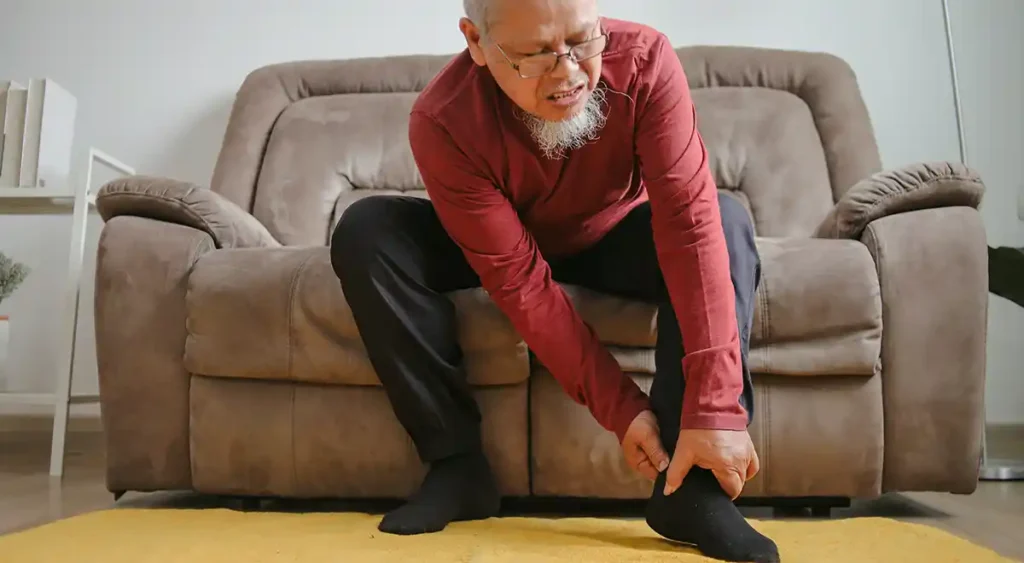
So, what exactly is Plantar Fasciitis?
Plantar fasciitis is one of the most frequent causes of heel pain. It occurs when the plantar fascia, a thick band of tissue running across the bottom of your foot, becomes inflamed. This tissue connects your heel bone to your toes and acts as a shock absorber.
When too much tension and stress are placed on the plantar fascia, small tears can develop. Repetitive strain can lead to irritation and inflammation, causing chronic pain. The result is often a sharp, stabbing pain, especially with the first steps in the morning.
The pain might lessen as you move around, but it often returns after prolonged periods of standing or after getting up from a seated position. This condition can significantly impact your physical activities and overall quality of life. Common treatment methods range from simple stretching and icing to orthopedic shoes and physical therapy.
Connecting Plantar Fasciitis to Your Military Service
It’s no surprise that military duties can cause debilitating foot conditions. The link between military service and plantar fasciitis is strong and well-recognized. Many activities common in service are known risk factors for this condition.
Think about the physical demands of your service. Did you stand for long hours on hard surfaces, march for miles carrying heavy gear, or run frequently in boots that offered little support? These duties place enormous stress on your feet.
While the connection seems obvious, the Department of Veterans Affairs requires you to prove it. You must establish a “service connection” showing that your duties caused or worsened your foot pain. This is a critical step in your VA disability claim.

How to Prove Service Connection
Receiving VA disability benefits hinges on proving a link, or “nexus,” between your current medical problem and an in-service event, injury, or illness. You must demonstrate that your military service is at least as likely as not the cause of your plantar fasciitis. There are a few ways to establish this connection for your disability claim.
Direct Service Connection
This is the most direct path to connecting your plantar fasciitis to your service. You must show that the condition began while you were on active duty. To do this, you need evidence from your time in the military.
Do you recall visiting sick call for foot pain, or were you ever diagnosed by a military doctor? If any mention of foot or heel pain exists in your service medical records, you have a strong foundation for your VA claim. A current diagnosis from a doctor is also needed to confirm your condition.
Secondary Service Connection
Often, one service-connected condition can lead to another. For example, you may already have a VA rating for a knee, back, or hip injury. To manage the pain from that injury, you might have altered your gait over the years.
This change in how you walk can place unnatural stress on your feet, causing plantar fasciitis to develop. In this scenario, your foot pain is a secondary disability. It wasn’t caused by a single in-service event but by another service-connected condition.
To file for plantar fasciitis as a secondary condition, you need a medical professional to provide a nexus letter. This letter should explain how your primary disability caused or aggravated your foot pain. Many foot conditions develop this way.
Aggravation of a Pre-Existing Condition
What if you had minor foot issues before joining the military? You can still establish a service connection if your duties make the condition worse. This is known as aggravation, where your service intensified a pre-existing problem beyond its natural progression.
For instance, if you entered service with occasional heel discomfort and left with a chronic, debilitating case of plantar fasciitis, that’s a clear case of aggravation. You will need to provide medical evidence that documents the worsening of your symptoms during your service. This helps show the direct impact your duties had.
Gathering the Right Evidence for Your Claim
Simply stating that your feet hurt is not enough to win a VA disability claim. You need to build a strong case supported by solid evidence. Approaching this process methodically will significantly improve your chances of success.
Service Medical Records (SMRs)
Your SMRs are often the most crucial piece of evidence. Comb through them for any mention of foot pain, heel issues, or related treatment you received on active duty. A single entry can be the key to establishing a direct connection.
A Current Medical Diagnosis
You must have a current diagnosis of plantar fasciitis from a qualified medical professional. This can be from a VA doctor, a private physician, or a podiatrist. This medical evidence confirms you currently suffer from the condition you are claiming.

The Medical Nexus Letter
A medical nexus letter is a powerful tool for your VA disability claim, especially for secondary conditions. This is a letter from a doctor who has reviewed your service and post-service medical records. The letter must directly link your plantar fasciitis to your military service.
The doctor should use specific language, stating that it is “at least as likely as not” that your military service caused or aggravated your plantar fasciitis. This precise wording is what the Veterans Affairs raters look for. Without a strong medical nexus, getting your disability claim approved can be difficult.
Buddy Letters and Personal Statements
Your personal story holds significant weight. You can write a statement on a VA Form 21-4138 detailing your chronic pain. Explain when the pain started, describe your symptoms, and show how the condition impacts daily activities.
You can also ask people you served with to write “buddy letters” on your behalf. These statements from fellow service members can corroborate your account. They might recall you limping after a ruck march or complaining about foot pain, providing valuable firsthand evidence for your claim.
Plantar Fasciitis and Other Foot Conditions
Plantar fasciitis often doesn’t occur in isolation. Veterans who suffer from it may also have other related foot conditions. It’s important to understand how these conditions can be connected and claimed.
For example, pes planus, commonly known as flat feet, is a frequent issue for veterans. The structural changes associated with flat feet can put extra strain on the plantar fascia, leading to inflammation. If your flat feet are service-connected, your plantar fasciitis could be claimed as a secondary condition.
Another related condition is hallux valgus, or bunions. Changes in foot mechanics due to hallux valgus can also contribute to the development of plantar fasciitis. If you have multiple foot conditions, make sure to discuss them with your doctor and mention them in your claim.
VA Disability Ratings for Plantar Fasciitis
The VA rates plantar fasciitis under 38 CFR § 4.71a, diagnostic code 5269. Your VA disability rating depends on the severity of your symptoms and how much they limit your ability to function. The VA rates plantar fasciitis at 10%, 20%, 30%, or 50%.
It is important to understand what the VA looks for at each level. The plantar fasciitis VA rating you receive will directly impact your monthly disability compensation. The VA rates plantar fasciitis based on very specific criteria.
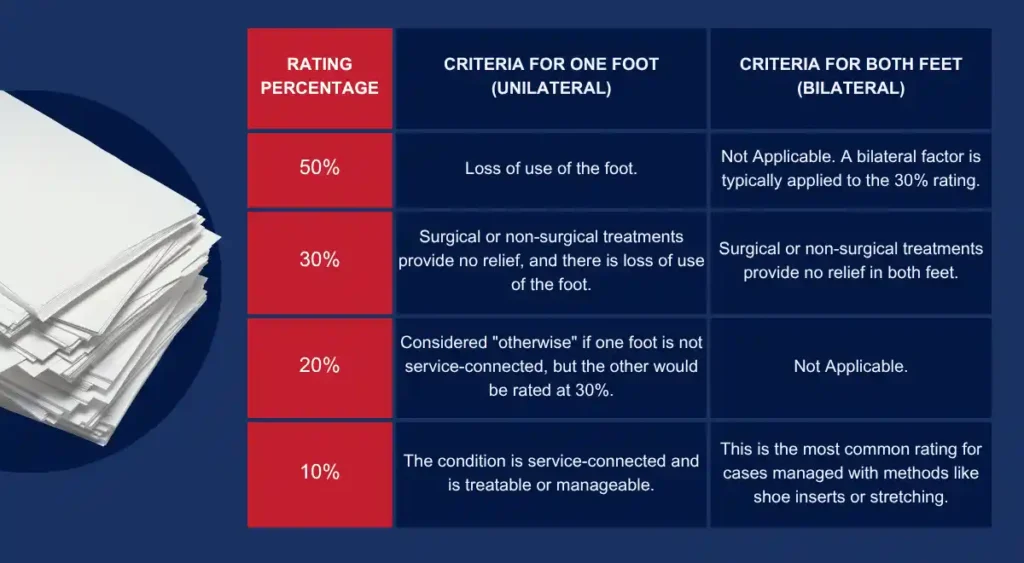
Let’s clarify some of these terms. “Loss of use of the foot” is a high standard that means the foot is so functionally impaired it is considered equivalent to an amputation. For a plantar fasciitis VA rating to reach this level, symptoms must be extremely severe and unresponsive to all treatments.
A 30 percent rating is more common for severe cases where treatments like physical therapy, injections, or surgery have failed to provide relief. If this level of severity is present in both feet, you may receive a 30% rating for each foot. The VA then applies a bilateral factor, which increases your overall VA rating.
The most frequent rating for plantar fasciitis is 10 percent. This is typically assigned when the condition is service-connected but manageable. If using custom orthotics or special shoes helps control the pain and symptoms, you will likely receive this rating.
Filing for Total Disability Individual Unemployability (TDIU)
In some severe cases, plantar fasciitis, especially when combined with other service-connected conditions, can prevent a veteran from maintaining substantially gainful employment. If your foot pain is so debilitating that you cannot work, you may be eligible for TDIU benefits. TDIU allows you to receive disability compensation at the 100% rate, even if your combined disability ratings do not equal 100%.
To qualify, you generally need one service-connected condition rated at 60% or more, or two or more conditions with a combined rating of 70% where at least one is rated at 40% or more. You must also provide evidence that your service-connected conditions prevent you from working. This often includes medical evidence and employment history.
How to File Your Claim
Once you have gathered your evidence, it’s time to file your claim for VA disability benefits. You can submit your claim online through the VA website, by mail, or in person at a VA regional office. The standard form for disability compensation is VA Form 21-526EZ.
Filing online is often the most efficient method. It allows for easier tracking of your claim’s status and quicker processing times. Make sure you upload all your supporting documents, including your medical records and nexus letter, with your application.
The Compensation and Pension (C&P) Exam
After you file, the VA will likely schedule you for a Compensation and Pension (C&P) exam. During this appointment, a VA-contracted doctor will conduct a physical examination of your feet. They will ask questions about your pain, its frequency and severity, and how it impacts your life.
It is vital to be honest and thorough during this exam. Do not exaggerate your symptoms, but also do not downplay your pain or functional loss. Describe your worst days and explain how the pain prevents you from doing things you once enjoyed, as this information helps determine your disability ratings.
What If Your Claim Gets Denied?
Receiving a denial letter from the VA can be disheartening. However, a denial is not the end of the road. Many veterans are denied on their first attempt, so it’s important not to give up.
You have several options to appeal the decision. You can file a Supplemental Claim if you have new and relevant evidence to submit. Alternatively, you can request a Higher-Level Review, where a more experienced rater will take a fresh look at your case.
Your third option is to appeal directly to the Board of Veterans’ Appeals. Each appeal path has specific rules and timelines. Understanding your options is the first step toward a successful appeal.

Conclusion
Living with the chronic pain of plantar fasciitis is a daily struggle you should not have to face alone. Obtaining VA disability for your foot condition is achievable with the right approach. It requires a clear understanding of the VA’s requirements and a well-documented case.
By proving the service connection and providing proper medical evidence, you can secure the VA benefits you earned. From your service medical records to personal statements, every piece of evidence helps build a complete picture for the VA rater. This process can help you receive the recognition and disability compensation you deserve for your service-connected condition.