

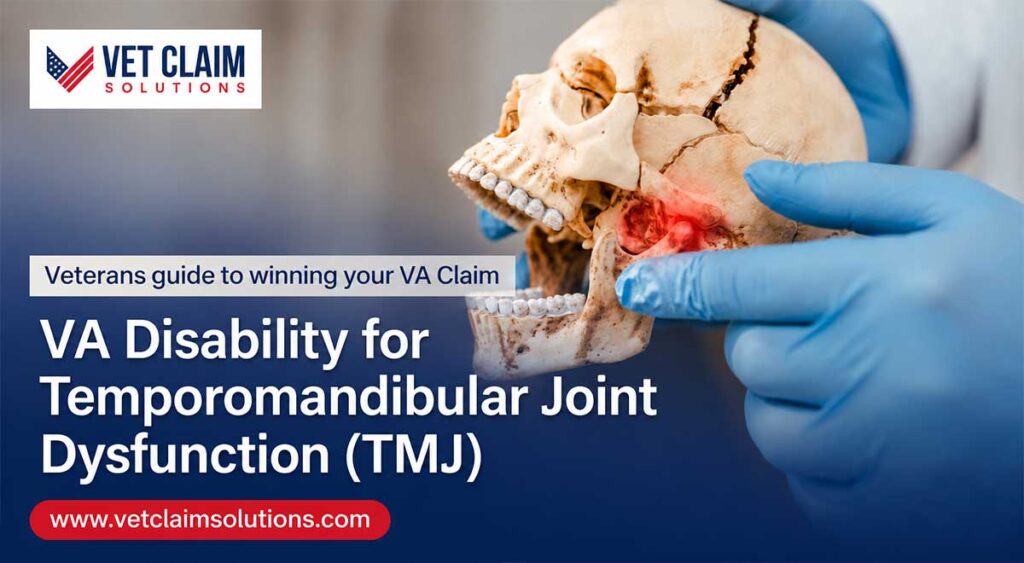
Temporomandibular joint dysfunction, often called TMJ disorder, can create painful jaw problems that affect eating, speaking, sleeping, and daily comfort. For many veterans, TMJ may develop after military service because of facial trauma, jaw injury, stress-related teeth grinding, or another service-connected condition such as post-traumatic stress disorder.
If you are seeking VA Disability for Temporomandibular Joint Dysfunction (TMJ), the VA will look at how severe your jaw limitation is, whether your condition affects your diet, and how your symptoms impact daily life. A successful VA disability claim usually requires strong medical evidence, a confirmed diagnosis, and proof of service connection.
Veterans may qualify for a TMJ VA rating when their condition causes limited jaw movement, chronic pain, clicking or locking, difficulty chewing, or dietary restrictions. In some cases, TMJ may also qualify under secondary service connection if it is caused or worsened by another service-connected disability. This guide explains how the VA reviews a TMJ VA disability claim, what evidence matters, how VA rates TMJ, and how a nexus letter may help support your case.
The temporomandibular joint acts like a sliding hinge that connects your jawbone to your skull. When this joint does not function properly, it can cause significant pain, limit jaw movement, and make it difficult to chew, speak, or open your mouth fully. For veterans, TMJ disorder may develop after high-impact training, carrying heavy gear, direct facial trauma, jaw injury, or exposure to explosive blasts during military service.
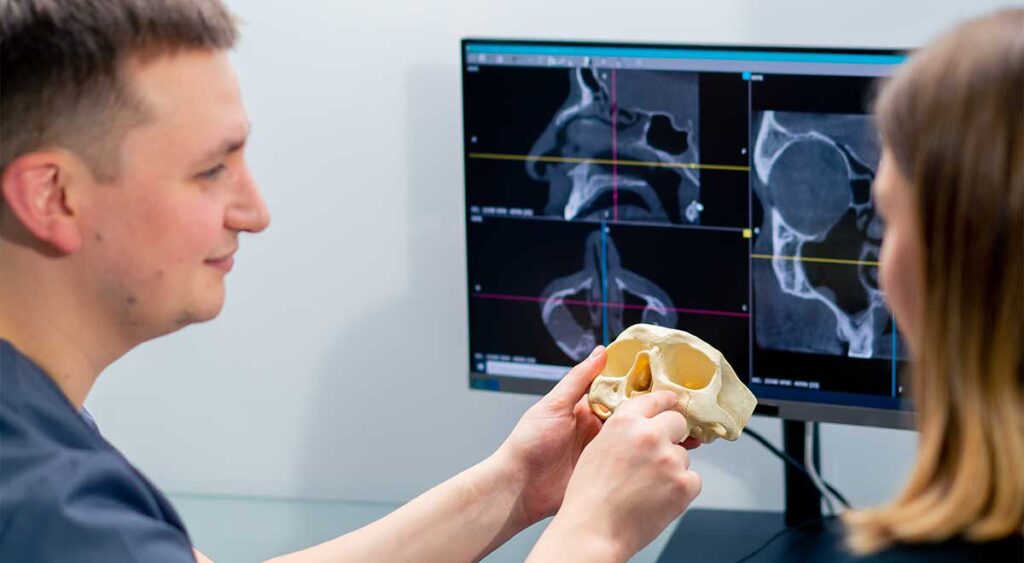
Medical professionals often classify these jaw problems under the broader category of temporomandibular disorders. Common symptoms include chronic jaw pain, difficulty opening the mouth, clicking or popping sounds while chewing, tension headaches, facial pain, and jaw locking. These symptoms can interfere with eating, sleeping, communication, and daily activities, which may become important when filing a VA disability claim.
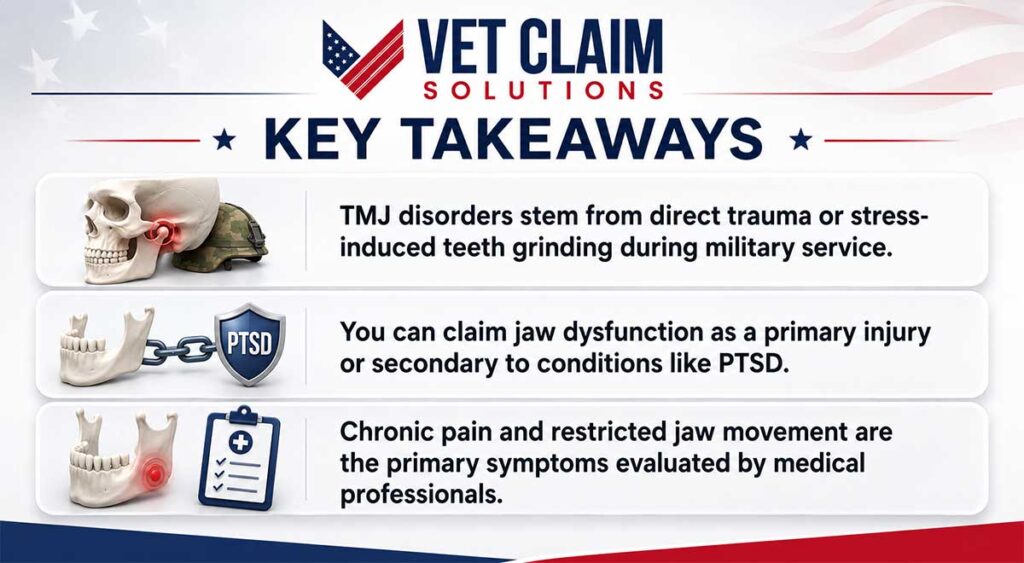
Service members may also develop TMJ as a secondary condition related to other service-connected disabilities. For example, veterans with anxiety, sleep problems, or post-traumatic stress disorder may clench their jaw or grind their teeth at night. This condition, known as teeth grinding or bruxism, places repeated pressure on the temporomandibular joint and may eventually lead to painful dysfunction.
Medical professionals often classify these jaw problems under the broader category of temporomandibular disorders. According to the National Institute of Dental and Craniofacial Research, temporomandibular disorders include more than 30 conditions that can cause pain and dysfunction in the jaw joint and the muscles that control jaw movement. Common symptoms include chronic jaw pain, difficulty opening the mouth, clicking or popping sounds while chewing, tension headaches, facial pain, and jaw locking.
For VA purposes, veterans seeking VA disability for temporomandibular joint dysfunction need clear medical evidence showing a current diagnosis, symptoms, and a connection to service. A strong claim may include dental records, service treatment records, imaging results, specialist evaluations, and a nexus letter explaining how the condition is linked to military service or another service-connected disability. This evidence can help support service connection, secondary service connection, and a fair TMJ VA rating.
Establishing Service Connection for Your VA Disability for Temporomandibular Joint Dysfunction (TMJ) Claim

The Department of Veterans Affairs requires strong evidence before granting service connection for a VA disability claim involving temporomandibular joint disorder. To establish a direct connection, you generally need three key elements: a current formal diagnosis, evidence of an in-service event or injury, and a medical opinion linking your current TMJ symptoms to your time in service.
First, you must have a current diagnosis of TMJ disability from a qualified medical professional. This diagnosis may come from a dentist, oral surgeon, primary care provider, or specialist who can document your jaw pain, limited movement, clicking, locking, or difficulty chewing. Clear medical records are important because the VA will not usually approve VA disability benefits without proof that the condition currently exists.
Second, you need documented evidence of an in-service event, injury, or illness that affected your jaw, face, teeth, or neck. Direct trauma is often the most straightforward path for a disability claim. If a veteran suffered a facial fracture, jaw dislocation, dental injury, or blast-related trauma during active duty, those details should appear in service records or service medical records.
Third, you need a strong nexus showing that your current TMJ condition is connected to military service. A clear medical opinion can explain how the original injury caused or aggravated your ongoing temporomandibular joint dysfunction. Without this link, the VA may deny the claim even if you have a diagnosis and symptoms.
Pro Tip: A strong nexus letter from a private medical specialist often makes the difference between an approval and a denial. Ask your doctor to clearly state that your condition is “at least as likely as not” caused by your military service.
Some veterans may also pursue TMJ secondary to another service-connected condition. For example, service-connected PTSD or another stress disorder may cause teeth grinding, jaw clenching, and long-term pressure on the temporomandibular joint. In this situation, you may need a nexus letter explaining how the primary condition caused TMJ or made it worse over time.
The VA may also review how TMJ affects your eating and jaw function. Symptoms such as limited lateral excursion, reduced maximum unassisted vertical opening, pain while chewing, or the need for semi-solid foods, pureed foods, mechanically altered foods, or other altered foods may affect your TMJ disability rating. Detailed treatment notes can help show how severe your condition is and whether it supports a higher VA disability rating.
To strengthen your claim, gather all relevant medical evidence, including dental records, imaging results, specialist notes, service records, and statements describing how TMJ affects your daily life. The stronger your documentation, the easier it is for the VA to understand your condition, evaluate your VA claims, and assign the proper disability ratings.
How the VA Rates TMJ Disability and Jaw Pain: Understanding Diagnostic Code 9905

The VA evaluates TMJ disability and jaw pain under the Schedule for Rating Disabilities, specifically using Diagnostic Code 9905. This code is used for temporomandibular joint disorder and other TMJ disorders that limit jaw function. When reviewing a VA disability claim, the VA focuses on how the condition restricts jaw movement, affects eating, and limits daily activities.
A major part of the TMJ VA rating process is measuring your interincisal opening, which is the maximum unassisted vertical opening of your mouth. This measurement shows how far you can open your jaw without help. The VA may also review lateral excursion, which measures side-to-side jaw movement. These measurements help determine the correct VA rating and overall disability rating.
If your jaw opening is restricted to 10 millimeters or less, the VA may assign a 50% disability rating. If you can open your mouth between 11 and 20 millimeters, you may receive a 40 percent rating. A restricted opening between 21 and 30 millimeters may support a 30 percent rating, while openings between 31 and 40 millimeters may result in a 10 percent rating. These ratings show how the VA rates TMJ based on measurable jaw limitation.
The VA also considers dietary restrictions when assigning a disability percentage for jaw conditions. If your TMJ disorder limits you to mechanically altered foods, semi-solid foods, pureed foods, soft diets, or other altered foods, this may support a higher evaluation. Veterans should keep detailed records of food limitations, jaw pain while chewing, flare-ups, and how often symptoms interfere with meals.
Strong medical evidence is important when filing a VA claim for TMJ. Your records should include a formal diagnosis, dental or medical treatment notes, jaw measurements, imaging results, and statements from a medical professional. A strong nexus letter may also help if your TMJ is connected to military service or another service-connected condition.
Some veterans file for TMJ secondary to another disability. For example, post-traumatic stress disorder or another stress disorder may lead to teeth grinding, jaw clenching, and long-term pressure on the temporomandibular joint. In that case, you may need evidence showing secondary service connection and explaining how the service-connected condition caused or worsened the jaw disorder.
You can review the exact measurement criteria in the Code of Federal Regulations Title 38, which governs veterans’ VA disability ratings. Understanding these benchmarks can help you prepare for your Compensation and Pension exam, communicate clearly with your doctors, and support a stronger VA disability for temporomandibular joint dysfunction claim. Accurate measurements, clear records, and well-documented symptoms remain key to receiving the proper disability benefits.
Gathering Medical Evidence for Your VA Disability for Temporomandibular Joint Dysfunction (TMJ) Claim

Successful disability claims rely on comprehensive and accurate medical evidence submitted to the VA regional office. For a strong VA disability claim, you should request your complete service treatment records and service records to identify any reports of jaw pain, facial trauma, dental injury, jaw locking, or dental procedures during your enlistment. These historical documents help establish the timeline of your condition and show whether an in-service event actually occurred.
Next, gather all current treatment records from private dentists, oral surgeons, physical therapists, pain specialists, or other medical providers. These records should document your formal diagnosis, daily pain level, jaw limitation, clicking or popping, headaches, teeth grinding, and any treatment you currently receive. This information helps the VA understand the severity of your temporomandibular joint disorder and how it affects your daily life.
Statements from family members, coworkers, or service buddies can also support your VA claim. This type of lay evidence may explain how your TMJ disorder affects eating, speaking, sleeping, work performance, and routine activities. For example, a spouse may describe how jaw pain limits your meals, while a fellow service member may confirm that the injury happened during military service.
Ask your medical provider to complete a Disability Benefits Questionnaire for temporomandibular joint conditions. This standardized form helps your doctor record the exact measurements the VA needs, including maximum unassisted vertical opening and lateral excursion. These measurements are important because the VA uses them when deciding your TMJ VA rating and final disability rating.
Your medical records should also describe any dietary restrictions caused by TMJ. If you are limited to semi-solid foods, mechanically altered foods, pureed foods, soft foods, or other altered foods, that information may affect how the VA evaluates your claim. Clear documentation of chewing problems, pain during meals, and food limitations can help support a higher TMJ disability rating.
A strong nexus letter can also make a major difference, especially if you are claiming TMJ secondary to another condition. For example, if post-traumatic stress disorder or another service-connected stress disorder causes jaw clenching or teeth grinding, a medical professional can explain how that condition caused or worsened your TMJ. This may help establish secondary service connection.
A properly completed questionnaire, detailed treatment records, and a well-supported medical opinion can reduce the chance of an initial denial. The stronger your evidence, the easier it is for the VA to understand your symptoms, confirm service connection, and assign the correct VA disability rating for your VA disability for temporomandibular joint dysfunction claim.
Filing Your VA Disability Claim for TMJ: Step-by-Step Guide for Veterans
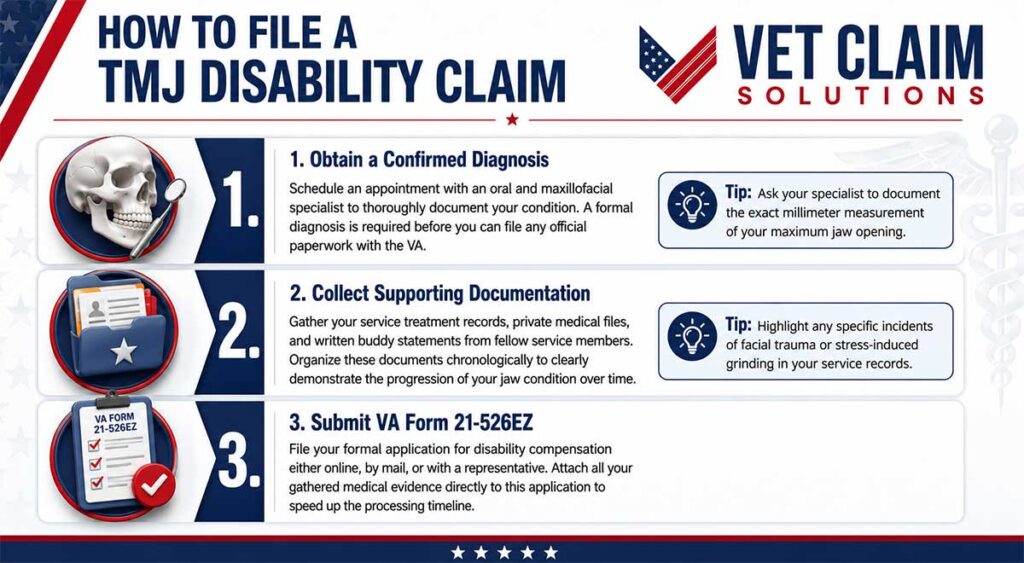
Filing a complete and accurate VA disability claim for TMJ requires organization, strong documentation, and a clear understanding of what the VA needs to review. Veterans must follow the correct steps to avoid unnecessary delays, missing evidence, or an initial denial from the regional office.
The process usually begins with gathering your medical records, service treatment records, dental records, and any evidence showing jaw pain, facial trauma, teeth grinding, limited jaw movement, or other symptoms of temporomandibular joint disorder. These records help establish the timeline of your condition and support your request for service connection.
Preparing for the TMJ C&P Examination and Medical Evaluation Process
The Compensation and Pension exam is a critical step in your VA disability claim for TMJ VA disability. During this exam, the VA uses a medical professional to evaluate the severity of your jaw condition, confirm your symptoms, and help determine the correct TMJ VA rating. This appointment can directly affect your final disability rating, so it is important to be prepared.
During the exam, the examiner may use a small ruler or measuring tool to check your temporomandibular joint movement. They will usually measure your interincisal opening, also known as your maximum vertical jaw opening. The VA may also look at whether your TMJ disorder affects side-to-side movement, chewing, speaking, or daily function.
When asked to open your mouth, do not force your jaw beyond your pain limit. If you push past your normal range, the measurement may not accurately reflect your daily limitations. Be honest about pain, clicking, locking, flare-ups, headaches, teeth grinding, and how your condition affects eating or speaking.
The examiner will also ask about dietary restrictions. If your jaw pain limits you to soft foods, mechanically altered foods, semi-solid foods, or pureed foods, explain that clearly. These food limitations can matter because the VA considers eating restrictions when deciding how VA rates TMJ and assigning disability benefits.
Bring supporting records if possible, including dental notes, jaw measurements, imaging results, treatment history, and statements from your dentist or oral surgeon. If your claim involves secondary service connection, such as TMJ secondary to post-traumatic stress disorder, stress-related jaw clenching, or another service-connected condition, make sure the examiner understands that history.
You should also mention whether your TMJ began during military service, worsened after service, or is connected to another condition through a nexus letter or medical opinion. Clear details about service connection, symptoms, and daily limitations can help the examiner complete the required forms accurately. Strong evidence and honest reporting can improve the VA’s understanding of your disability claim and support a fair VA rating.
Common Reasons for VA Disability TMJ Claim Denials and Rejections

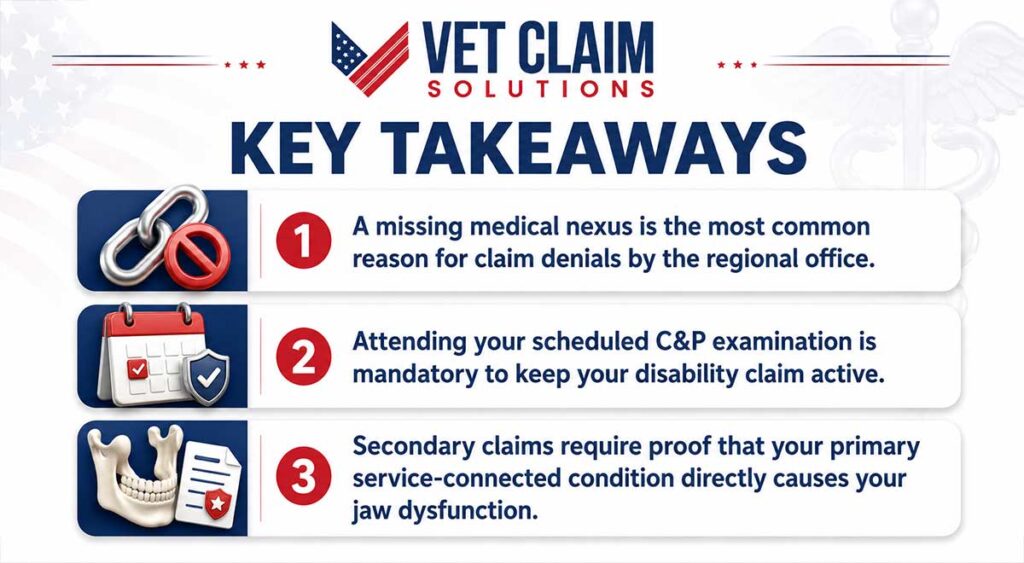
The VA denies many TMJ VA disability claims because the veteran does not provide a strong medical nexus. Without a clear medical opinion or nexus letter linking your current jaw pain to a specific event during military service, the rater may reject the application. You cannot rely on the VA to assume that your temporomandibular joint disorder was caused by service without supporting evidence.
Another common reason for denial is missing the required Compensation and Pension examination. The VA schedules this exam to evaluate your symptoms, confirm your diagnosis, and measure your jaw mobility. If you miss this appointment, the regional office may deny your VA disability claim because the examiner could not verify the severity of your TMJ disorder.
Some claims are also denied because the veteran does not have a current formal diagnosis. Complaints about jaw pain, chewing problems, or headaches are important, but they may not be enough on their own. You need clinical documentation from a licensed medical professional confirming temporomandibular joint dysfunction, TMJ disorder, or another qualifying joint disorder.
The VA may also reject a disability claim when the medical evidence does not clearly show how severe the condition is. Your records should include jaw measurements, treatment notes, imaging results, and documentation of symptoms such as jaw locking, clicking, limited motion, headaches, and teeth grinding. If your condition affects your diet, records should also show whether you require semi-solid foods, soft foods, pureed foods, or mechanically altered foods.
Claims based on secondary service connection are often denied when the connection between conditions is not clearly explained. For example, if you claim TMJ secondary to post-traumatic stress disorder, you must show how PTSD symptoms cause or worsen bruxism, jaw clenching, or teeth grinding. A strong medical opinion can explain how the service-connected condition led to your TMJ symptoms and why the connection is medically reasonable.
According to Board of Veterans’ Appeals decisions, inadequate documentation of secondary conditions can weaken a claim. If your VA claim is based on TMJ caused by PTSD, anxiety, sleep disturbance, or another service-connected condition, submit medical literature, treatment records, and a nexus letter that clearly connects the conditions. Strong medical evidence can help the VA understand your symptoms, evaluate service connection, and assign the correct TMJ VA rating or disability rating.
Appealing a Denied VA Disability TMJ Claim: Your Legal Options
Receiving a denial letter for your VA disability claim does not mean your pursuit of disability benefits is over. Many veterans are denied at first because of missing medical evidence, an unclear nexus letter, no current diagnosis, or weak proof of service connection. The key is understanding why the VA denied your TMJ VA disability claim and choosing the right appeal option.
Under the modern VA appeals system, veterans usually have three main review options: a Supplemental Claim, a Higher-Level Review, or an appeal to the Board of Veterans’ Appeals. The best option depends on the reason for your denial and whether you have new evidence to submit.
If you have new and relevant evidence, such as updated medical records, jaw measurements, imaging results, a recent MRI, or a stronger medical opinion, you may file a Supplemental Claim. This option allows the VA to review your case again using the additional documentation. Many veterans succeed in this lane by directly correcting the problems identified in the original denial letter.
If you believe the VA made an error based on the evidence already in your file, you may request a Higher-Level Review. In this lane, a more senior reviewer examines your existing claim file, but you cannot submit new evidence. This may be useful if your records already support VA disability for temporomandibular joint dysfunction, but the rater overlooked key details about your symptoms, jaw limitation, dietary restrictions, or secondary service connection.
You may also appeal directly to the Board of Veterans’ Appeals. This option can be helpful for more complex cases, especially if your claim involves TMJ secondary to post-traumatic stress disorder, teeth grinding, jaw clenching, or another service-connected condition. However, Board appeals often take longer than other review options.
Before choosing an appeal lane, review your denial letter carefully. Look for missing proof of diagnosis, weak service records, lack of a medical nexus, or incomplete evidence about your TMJ disorder. Submitting the right documentation can improve your chances of receiving a favorable decision, a proper TMJ VA rating, and the VA disability benefits you may be entitled to receive.
️ Warning: You have exactly one year from the date on your decision letter to file an official appeal. Missing this critical deadline means you must start the entire claims process over from the beginning.
Final Thoughts on Securing Your VA Disability for Temporomandibular Joint Dysfunction (TMJ)

Living with temporomandibular joint dysfunction can affect your quality of life, eating habits, speech, sleep, and overall comfort. For many veterans, chronic jaw pain, limited movement, teeth grinding, headaches, and dietary restrictions can make daily life harder than others realize. Securing VA Disability for Temporomandibular Joint Dysfunction (TMJ) may provide important financial support, access to health care, and recognition for a condition connected to your military service.
A strong VA disability claim starts with organization and complete medical evidence. Veterans should gather service records, dental records, treatment notes, jaw measurements, imaging results, and documentation showing how TMJ affects daily function. If your claim involves secondary service connection, such as TMJ secondary to post-traumatic stress disorder, anxiety, or another service-connected condition, a clear nexus letter or medical opinion can help explain the connection.
You should also document your symptoms carefully. Record jaw locking, clicking, limited movement, pain while chewing, headaches, and whether you rely on soft foods, semi-solid foods, pureed foods, or mechanically altered foods. These details can help the VA understand the severity of your condition and assign the correct TMJ VA rating or disability rating.
Do not hesitate to seek help from accredited Veterans Service Organizations, qualified claims professionals, or legal representatives if the process becomes overwhelming. They can help you understand the claims process, organize your evidence, and avoid common mistakes that lead to denials.
Your symptoms matter, your records matter, and your service matters. By staying consistent with treatment, building a strong medical nexus, and submitting thorough documentation, you can improve your chances of receiving a fair decision for your VA disability for temporomandibular joint dysfunction claim.