

VA Disability Hypertension is an important topic for veterans living with high blood pressure who want to understand their eligibility for VA disability benefits. If you developed hypertension during or after military service, you may qualify for monthly compensation if you can establish a service connection. Understanding how the VA evaluates blood pressure readings, assigns a VA disability rating, and reviews medical evidence can help you prepare a stronger hypertension claim. This guide explains VA hypertension ratings, direct and secondary service connection, presumptive conditions related to Agent Orange exposure, and the medical records needed to support your claim.
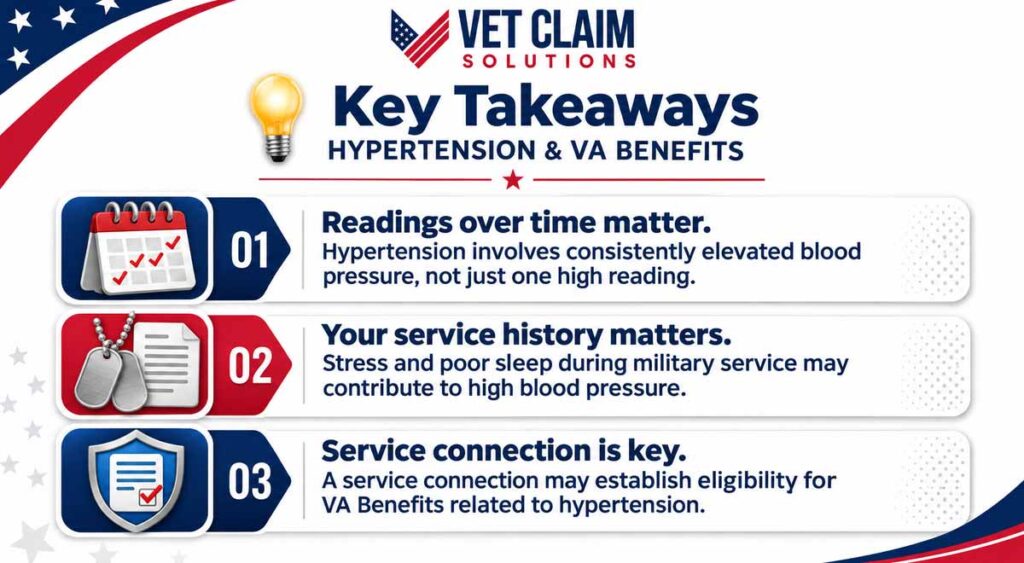
Hypertension, commonly known as high blood pressure, occurs when the force of blood against the artery walls remains consistently elevated. Blood pressure is measured using two numbers: systolic pressure, which measures pressure when the heart beats, and diastolic pressure, which measures pressure when the heart relaxes. According to the American Heart Association, consistent readings of 130/80 mm Hg or higher fall within the hypertension range.
For veterans, hypertension may be associated with factors experienced during military service, including prolonged stress, disrupted sleep, and certain conditions such as post-traumatic stress disorder (PTSD). Understanding these potential connections is important when pursuing VA Disability Hypertension benefits, as establishing a service connection is generally required to qualify for disability compensation.
When left untreated, high blood pressure can increase the risk of serious health complications, including heart disease, stroke, and kidney disease. Veterans with qualifying service-connected hypertension may be eligible for a VA disability rating based on their blood pressure readings, treatment history, and applicable rating criteria. Maintaining accurate medical records and documenting ongoing treatment can help support a hypertension claim. Veterans can also review the official VA disability compensation eligibility requirements to better understand how their condition may qualify for benefits.
VA Disability Ratings for Hypertension
The VA rates hypertension under Diagnostic Code 7101 in 38 CFR § 4.104, the rating schedule for cardiovascular conditions. Ratings range from 10% to 60%, and the percentage you receive depends on how high your readings run over time. The word “predominantly” in the rating criteria matters, because the VA looks at your typical pattern rather than one isolated spike.
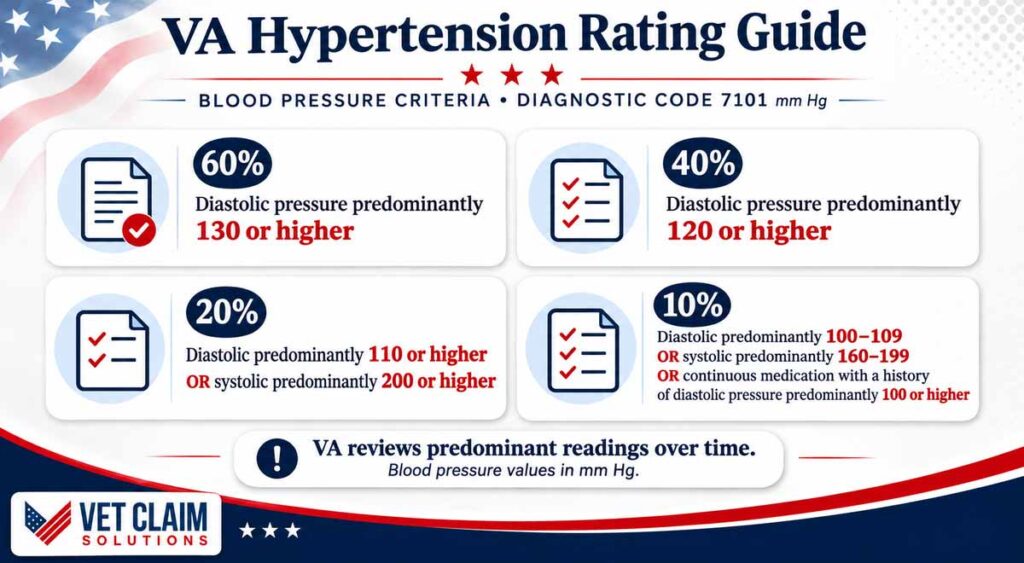
What if your medication keeps your numbers in the normal range? You can still receive a 10% rating if your records show a history of diastolic readings at 100 or more and you require daily medication for control. The VA compensates the burden of treatment, not just the raw numbers on exam day.
As of 2025, a 10% rating pays $175.51 per month and a 20% rating pays $346.95 per month for a veteran without dependents, based on the VA’s current compensation rate tables. Those amounts increase with dependents and with combined ratings from other service-connected conditions. Hypertension often appears alongside heart disease or kidney problems, and each distinct condition can receive its own separate rating.
Pro Tip: Start a home blood pressure log today. Measure twice daily at consistent times, record the date and reading, and bring the log to every appointment. A log spanning several months carries far more weight with raters than a single office reading.
How to Establish Service Connection for Hypertension
Establishing a service connection for hypertension is an essential step in qualifying for VA Disability Hypertension benefits. Veterans must provide evidence showing that their high blood pressure was caused or aggravated by military service or is linked to an existing service-connected condition. The VA recognizes three primary pathways: direct service connection, presumptive service connection, and secondary service connection. Understanding these options can help veterans identify the most appropriate approach and gather the medical evidence needed to support their hypertension claim.
Direct Service Connection
Direct service connection may apply when hypertension first developed during military service or can be medically linked to an event or condition experienced while serving. To establish eligibility, veterans generally need three key elements: a current hypertension diagnosis, evidence of an in-service illness, injury, or event, and a medical connection between their condition and military service.
Hypertension is also recognized as a chronic disease under VA regulations. Veterans who develop hypertension to a compensable degree within one year of separation from qualifying active service may be eligible for presumptive service connection, even if the condition was not formally diagnosed during service. Maintaining accurate blood pressure readings, service treatment records, and medical documentation can help establish when the condition began and strengthen a VA disability claim for hypertension.
Presumptive Service Connection Under the PACT Act
The PACT Act of 2022 added hypertension to the list of presumptive conditions for veterans exposed to Agent Orange. If you served in Vietnam, at certain bases in Thailand, in the Korean DMZ, or in other covered locations during qualifying periods, the VA presumes your service caused your high blood pressure. That removes the hardest part of most claims, because you do not need to prove a medical nexus.
This change was significant for older veterans. Before the PACT Act, Vietnam-era veterans with hypertension had to fight for service connection case by case, and many were denied. If you were turned down years ago, you can file again under the new rules with a far better chance of approval.
Secondary Service Connection
Veterans may qualify for VA Disability Hypertension benefits when their high blood pressure is caused or aggravated by another service-connected condition. This is known as secondary service connection, which allows the VA to recognize hypertension as a condition linked to an existing service-connected disability. Conditions such as PTSD, diabetes, and kidney disease may contribute to elevated blood pressure in some veterans. Certain medications and weight-related health complications may also play a role, depending on the individual’s medical history.
To establish secondary service connection for hypertension, veterans generally need a current diagnosis, evidence of an existing service-connected condition, and medical evidence demonstrating a connection between the two. A detailed nexus letter from a qualified medical professional can help explain how the primary condition caused or aggravated hypertension. Supporting medical records, treatment history, and a well-reasoned medical opinion can strengthen a secondary hypertension claim. Learn more about preparing supporting evidence in our guide to secondary service connection claims.
Evidence That Strengthens Your Claim
Strong VA Disability Hypertension claims begin with clear, consistent medical documentation. The VA reviews your records to determine whether your high blood pressure is connected to military service and meets the applicable disability rating criteria. Gathering the right medical evidence before filing can help establish your eligibility and reduce the risk of unnecessary delays. Focus on the following documents:
- Current diagnosis: A formal hypertension diagnosis from a VA or private healthcare provider, documented in your medical records.
- Service treatment records: Blood pressure readings, medical visits, or hypertension diagnoses recorded during military service.
- Post-service treatment records: Medical documentation showing your blood pressure readings, prescribed medications, and treatment history over time.
- Nexus letter: A medical opinion from a qualified healthcare professional explaining whether your hypertension is at least as likely as not connected to military service or another service-connected condition.
- Buddy statements: Lay or witness statements from family members or fellow service members describing symptoms or health changes they personally observed.
- Home blood pressure log: Dated blood pressure readings that help document your condition and provide additional context alongside clinical measurements.
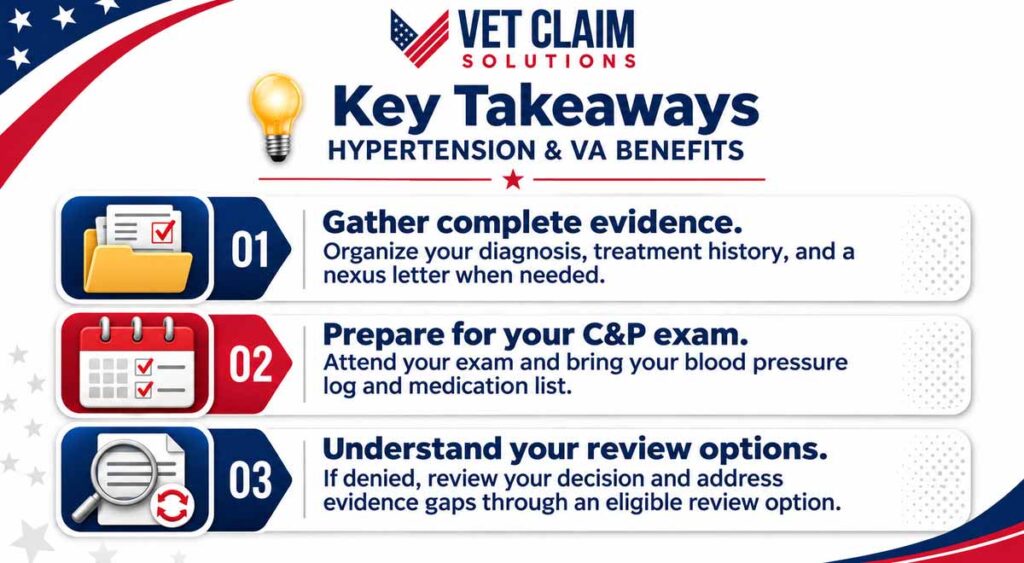
A well-supported nexus letter can be especially valuable when establishing direct or secondary service connection for hypertension. A strong medical opinion reviews relevant treatment records, considers the veteran’s medical history, and clearly explains the reasoning behind the connection. According to the VA’s disability claim evidence requirements, supporting documentation plays an important role in evaluating eligibility. Organizing your medical records and obtaining a thorough medical opinion, when needed, can help strengthen your hypertension claim.
️Warning: Do not rely on a single blood pressure reading from one exam. The VA rates hypertension based on predominant readings over time, so one calm day at the doctor’s office can undercut years of uncontrolled readings if your records are thin.
How to File Your VA Disability Claim for Hypertension
Filing is straightforward once your evidence is in order. The VA offers several submission methods, and the entire process can start online in under an hour. Follow these steps to submit a complete, well-supported claim.
Steps to File Your Claim
1. Gather Your Medical Evidence
Collect your diagnosis, treatment records, home blood pressure log, and nexus letter before you start the application.
Tip: Request your service treatment records through the VA or the National Archives if you do not have copies on hand.
2. Complete VA Form 21-526EZ
This is the standard application for disability compensation. List hypertension as your claimed condition and note any secondary conditions you believe are related.
3.Submit Your Claim
File online at VA.gov for the fastest processing, or submit by mail, in person at a regional office, or through an accredited Veterans Service Organization.
4.Attend Your C&P Exam
The VA will schedule a Compensation and Pension exam in most cases. Missing this appointment can delay your claim or lead to a denial, so treat it as a priority.
5. Track Your Claim and Respond Promptly
Monitor your claim status on VA.gov and answer any requests for additional evidence quickly to keep your case moving.
You can review each filing method in detail on the VA’s official how-to-file page. If you want a broader picture of what happens after submission, our overview of the VA disability claims process walks through timelines, decision letters, and appeals.
The C&P Exam for Hypertension: What to Expect
After submitting a VA Disability Hypertension claim, veterans may be scheduled for a Compensation and Pension (C&P) exam to evaluate their condition. During the examination, a VA or contracted healthcare provider may measure blood pressure, review medical history, and document findings using a Disability Benefits Questionnaire (DBQ). The VA uses this information, along with other medical evidence, to determine the appropriate disability rating.
During a hypertension C&P exam, veterans can expect questions about their diagnosis, prescribed medications, treatment history, and related symptoms such as headaches or dizziness. The examiner may also take multiple blood pressure readings to assess the condition. To prepare for the appointment, consider these steps:
- Bring your medical records: Have your home blood pressure log, relevant treatment records, and a complete list of medications available.
- Follow prescribed medications: Continue taking your medications as directed by your healthcare provider unless instructed otherwise.
- Describe your symptoms accurately: Explain your medical history, ongoing symptoms, and how hypertension affects your daily activities.
- Review your exam results: Learn how to request your VA claim exam report and check the information documented during the evaluation.
If your C&P exam report contains errors or your hypertension claim is denied, you may still have options. Veterans can review the VA decision review and appeals process to understand available pathways, including submitting new and relevant medical evidence through a Supplemental Claim or requesting another eligible review. Accurate blood pressure records, treatment history, and a well-supported medical opinion can help address gaps in the evidence when appropriate.
Final Thoughts
Understanding VA Disability Hypertension benefits can help veterans take the next step toward receiving the compensation they may qualify for. Although high blood pressure often develops without noticeable symptoms, it can have lasting effects on overall health. The PACT Act has also expanded eligibility for certain veterans exposed to Agent Orange, making presumptive service connection an important option to explore. Whether you’re pursuing direct service connection, secondary service connection, or benefits based on qualifying herbicide exposure, a current diagnosis, consistent blood pressure readings, and strong medical evidence are essential to supporting your hypertension claim.
Taking time to organize your medical records, document your treatment history, and understand the VA disability rating criteria can help you prepare a more complete claim. If your claim is denied or you need additional guidance, an accredited Veterans Service Organization representative can help you understand your options. With proper documentation and a clear understanding of the requirements, you can approach the VA disability benefits process with greater confidence.