


Many veterans experience severe foot pain after years of marching in heavy combat boots across uneven terrain. This repetitive stress often causes a painful condition known medically as hallux valgus, commonly called a bunion. If you developed this foot condition during your military service, you might qualify for VA disability benefits. Understanding What Is the Highest VA Rating for Bunions? Disability Percentages Explained is the first step toward securing the VA benefits and compensation you deserve for your service-connected injuries. These benefits are designed to offset the functional limitations and chronic pain that often result from the rigors of active duty service.
The Department of Veterans Affairs provides specific disability ratings for this joint deformity based on its severity and functional impact. You probably want to know the highest possible VA rating for this specific ailment to ensure your claim is filed accurately. The maximum hallux valgus va rating stands at 10 percent for a single foot, though combined rating totals can be higher. This VA disability rating reflects the impact the condition has on your ability to perform daily tasks and maintain steady employment. While 10 percent may seem low, it serves as a critical foundation for a larger comprehensive disability profile.
We will break down exactly how the rating schedule works for this condition and other related foot disorders. You will learn how related impairments might increase your overall va disability compensation through secondary service connections. Understanding these complex rules helps you secure the correct va rating for your specific situation and medical history. By reviewing the disability ratings for various foot conditions, you can better prepare your evidence for the regional office. Comprehensive preparation is the key to ensuring the VA recognizes the full extent of your physical limitations.
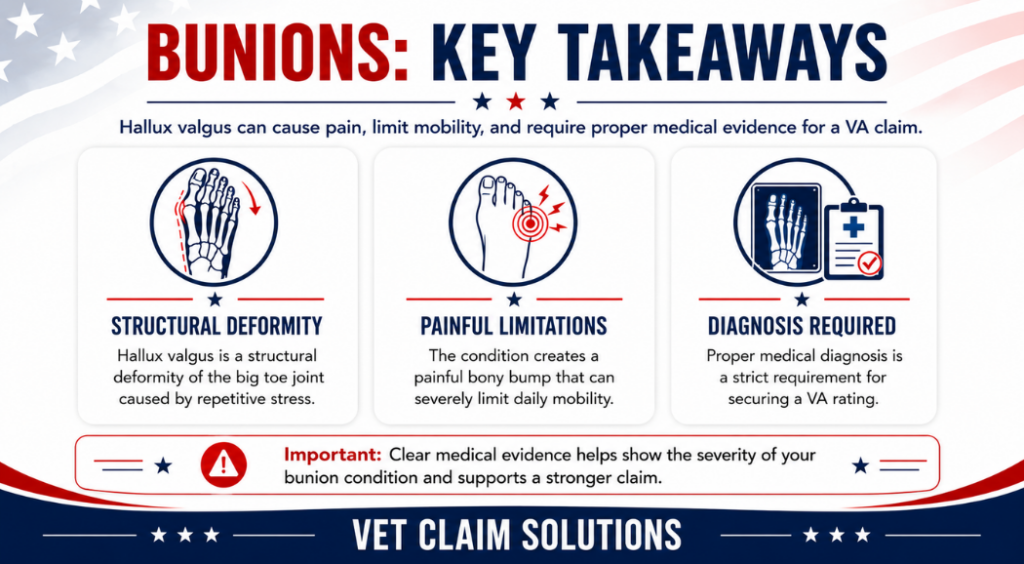
Hallux valgus represents a structural deformity of the big toe joint that often worsens without proper medical intervention. The base of the great toe pushes outward while the tip points inward, pressing against the smaller toes and causing misalignment. This misalignment creates a visible bony bump on the side of the foot that can become extremely tender and inflamed. Over time, the great toe may even begin to overlap the second toe, leading to further complications and skin irritation. This progression can significantly alter the way a veteran walks, leading to a cascade of orthopedic issues.
Over time, the metatarsal bones shift out of their proper anatomical position, affecting the entire mechanics of the foot. Veterans often develop hallux valgus due to poorly fitting military footwear and carrying heavy loads during long rucks or deployments. The continuous pressure on the metatarsal head causes severe inflammation, chronic discomfort, and potentially permanent nerve damage in the forefoot. This condition is not merely a cosmetic issue but a functional impairment that affects balance and weight distribution during movement. When the foot’s natural arch and alignment are compromised, the body compensates by placing extra stress on the ankles and knees.
In severe cases, this structural change limits mobility and makes wearing standard shoes or boots nearly impossible for the veteran. The deformity can also lead to overlapping toes, calluses, and additional damage to the toe joint, such as bursitis. A proper medical diagnosis is required before you can apply for a VA rating to ensure the VA recognizes the condition. Without a formal diagnosis, the VA disability rating process cannot move forward, regardless of the level of pain you experience. Medical imaging, such as X-rays, is often utilized to determine the exact degree of angulation and the severity of the joint displacement.
Furthermore, the chronic nature of bunions means that the condition often leads to secondary skin issues and localized infections. Constant friction between the bunion and the interior of a shoe can cause thick calluses or even open sores that are slow to heal. For veterans with underlying conditions like diabetes, these foot complications can become life-altering medical emergencies. Understanding the full scope of hallux valgus is essential for communicating the severity of your symptoms to the Department of Veterans Affairs. By documenting every aspect of the condition, from bone alignment to skin integrity, you build a stronger case for your claim.
Maximum Compensation: What Is the Highest VA Rating for Bunions? Disability Percentages Explained
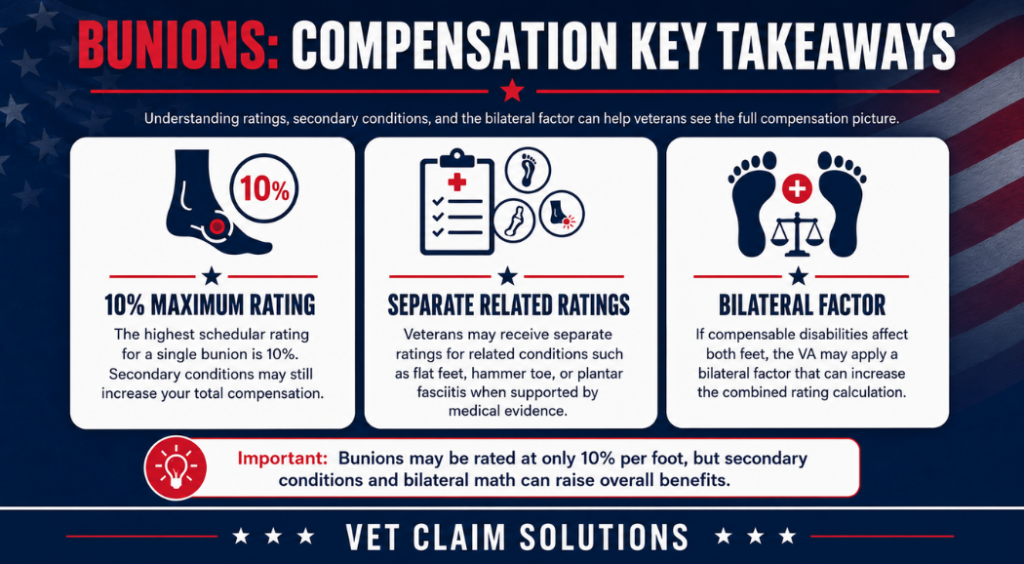
The Department of Veterans Affairs evaluates hallux valgus under a specific framework designed to measure physical impairment. Evaluators use diagnostic code 5280 to determine your exact disability rating based on clinical findings and symptoms. Under this diagnostic code, the maximum va rating for a severe unilateral bunion is capped at 10 percent. This 10 percent disability rating is awarded when the veteran demonstrates a severe deformity that impacts their gait or footwear. While this percentage may seem modest, it is the highest level allowed for the primary diagnosis of a bunion.
You cannot receive a higher single va rating for this specific foot disability under current federal regulations. To qualify for this 10 percent disability rating, your medical evidence must show a severe condition with objective findings. The VA defines a severe condition as having a significant deformity with pain that limits function during normal activities. If the condition is present in both feet, you may be eligible for a 10 percent VA disability rating for each foot. This bilateral application is common among veterans who spent years standing or marching on hard surfaces.
If you had surgery to remove the metatarsal head, you automatically qualify for the 10 percent evaluation for that foot. Mild or moderate cases usually receive a 0 percent non-compensable va rating, which still acknowledges the service connection. Even a 0 percent va rating holds significant value for your future medical care and potential increases if the condition worsens. These va ratings are essential for establishing a long-term record of your service-related health issues and physical limitations. A 0 percent rating also ensures that the VA will cover the cost of specialized footwear or orthotics needed to manage the condition.
It is important to note that the VA rating schedule for feet is notoriously rigid compared to other body systems. The 10 percent cap for hallux valgus exists because the VA often views bunions as a localized joint issue rather than a systemic one. However, the functional loss—such as the inability to push off with the big toe while walking—is a major factor in the evaluation. If your bunion is so severe that it requires constant medical attention or specialized equipment, ensure these facts are highlighted in your claim. The goal is to prove that your condition meets the “severe” threshold defined in the 38 CFR Part 4.
Pro Tip: Always file for a 0 percent rating if you have a medical diagnosis. This baseline service connection makes claiming secondary conditions much easier in the future.
A 0 percent service-connected disability establishes a baseline disability rating for your official military and medical records. If the condition worsens over time, you can file for an increased VA rating later without re-proving service connection. This baseline service connection also provides access to free VA healthcare for your foot pain and related orthopedic supplies. Establishing this VA disability rating early ensures that you are protected if you develop more severe complications later in life. Many veterans find that a 0 percent rating today becomes a 10 percent or higher rating a decade later as the joint continues to degenerate.
Evidence Requirements: Establishing Service Connection for Your VA Disability Rating

Winning your VA disability claim requires proving a direct link between your active duty and your current diagnosis. You must provide medical records showing you received treatment for foot issues while on active duty to establish a nexus. Service records documenting specific incidents, such as injuries during training, provide excellent evidence for your va rating claim. The VA looks for a “chronicity of care” that shows the condition has persisted since your time in the military. If you did not seek treatment during service, you may need to rely on “buddy letters” from those you served with.
A current medical diagnosis from a podiatrist or orthopedic specialist completes the basic requirements for a successful VA disability rating. Many veterans also need a medical nexus letter from a qualified private physician to strengthen their case. This letter bridges the gap between your current diagnosis and your request for a va rating by providing a professional opinion. The nexus letter should clearly explain how your military service contributed to the development of your hallux valgus. A strong nexus letter uses specific language, such as “at least as likely as not,” to satisfy the VA’s evidentiary standards.
The doctor must state that your hallux valgus va claim is at least as likely as not caused by service. Without this specific medical opinion, the regional office will likely deny your va rating request due to lack of evidence. You can also claim a foot condition as a secondary condition to another service-connected issue, such as a knee injury. This path allows you to secure a disability rating even if the foot pain didn’t start until after you left service. Secondary service connection is a powerful tool for veterans whose primary injuries have caused compensatory physical damage over time.
For example, an altered gait from a severe knee injury might cause you to develop hallux valgus years later. Your doctor must document exactly how the primary orthopedic injury created abnormal pressure on your great toe and metatarsal. This detailed documentation supports your request for an accurate VA disability rating and helps the rater understand the functional impact. Providing a clear link between your service-connected injuries and your bunions is vital for a favorable VA disability decision. The more evidence you provide regarding the biomechanical link between your injuries, the higher the likelihood of a successful claim.
Increasing Your Total: Secondary Conditions and Combined Ratings for Foot Disabilities
While the highest hallux valgus va rating is 10 percent, you can increase your overall compensation through secondary claims. Veterans often suffer from multiple foot issues simultaneously due to altered walking mechanics and compensatory movements. You can receive a separate rating for each distinct diagnosis affecting your lower extremities, provided they are not considered “pyramiding.” This allows you to build a more comprehensive VA disability rating that reflects your total level of impairment. The VA uses a combined disability rating system to account for how multiple service-connected conditions impact a veteran’s overall health.
The VA calculates these overlapping issues using a specific formula to determine your combined rating for all disabilities. For instance, severe flat feet, medically termed pes planus, frequently accompany painful bunions and can be rated separately. If you have a 30 percent disability rating for pes planus and a 10 percent va rating for hallux valgus, your compensation increases. When calculating your combined disability, the VA applies what is often called “VA Math,” which ensures that your total rating never exceeds 100 percent. This “fuzzy math” ensures that your combined rating accurately represents your overall decrease in earning capacity.
The VA uses a combined rating table rather than simple addition to calculate your final percentage for monthly compensation. You might also receive a separate evaluation for related conditions like plantar fasciitis or hammer toe if they are diagnosed. Another common secondary diagnosis is hallux rigidus, which involves stiffness and severe arthritis in the main joint of the great toe. These disability ratings can add up significantly, potentially leading to a much higher monthly benefit amount for the veteran. It is not uncommon for a veteran with several “minor” foot issues to reach a 40 or 50 percent total rating.
If a bunion causes arthritis in your great toe, you might qualify for additional va disability benefits under arthritis codes. Some veterans develop painful issues in their left foot because they favor their injured right foot, known as a “bilateral” claim. You must submit distinct medical evidence for these secondary conditions to maximize your va rating and overall health coverage. Ensuring every secondary condition is documented is the best way to achieve a fair disability rating. The bilateral factor can also apply if you have service-connected disabilities in both feet, adding a 10 percent bonus to the calculation.
If you have a hallux valgus va rating for both the left and right foot, the VA applies this special mathematical adjustment. This adjustment can sometimes push your combined rating to the next highest compensation tier, resulting in more financial support. It is important to understand how these va ratings interact to ensure you are not leaving money on the table. For example, a 10 percent rating for each foot doesn’t just equal 20 percent; the bilateral factor adds a small but significant boost to the final calculation. This can be the difference between a 20 percent and a 30 percent overall rating in some cases.
Veterans with a high arch, known as pes cavus, might also experience compounded foot problems that require a higher disability rating. The combination of pes cavus and a bunion creates extreme difficulty with basic walking and finding supportive footwear. Claiming all accurate diagnoses helps you achieve the highest combined rating possible under the current VA compensation rules. By being thorough in your application, you ensure your VA disability rating truly reflects your physical reality. Don’t overlook the impact that foot pain has on your knees, hips, and lower back, as these can also be claimed as secondary conditions.
Step-by-Step: How to File a VA Claim for Hallux Valgus
Filing a VA disability claim for bunions requires a systematic approach to gathering evidence and submitting paperwork. You should start by collecting all relevant service treatment records that mention foot pain, blisters, or orthopedic issues. If you are still in the planning stages, filing an intent to file can preserve your effective date while you gather evidence. Once you have your records, you can submit VA Form 21-526EZ electronically through the VA.gov portal to initiate your VA disability rating process. Be sure to include a detailed statement in support of your claim describing how the condition affects your life.
In your statement, explain the specific duties that worsened your hallux valgus, such as long marches or standing for extended periods. Mention any functional limitations, like the inability to walk long distances or the need for custom orthotics to manage pain. This personal narrative provides context that medical records alone might not convey to the va rating specialist. Providing a clear picture of your daily struggles can help justify a higher disability rating within the allowed range. You should also describe how the pain affects your ability to exercise, perform household chores, or maintain a standard work schedule.
It is also helpful to submit lay statements from family members or fellow service members who witnessed your mobility issues. These statements can serve as “buddy letters” that corroborate your claims of in-service injury or worsening symptoms. When the VA reviews your VA disability rating application, they consider all evidence, including these personal accounts. A well-rounded claim package increases your chances of receiving a favorable va rating on the first attempt. Remember to keep copies of everything you submit for your own personal records in case you need to appeal the decision later.
The timeline for a VA claim can vary, but having a complete package from the start can speed up the process. If the VA requires more information, they will send you a letter detailing what is missing. Responding promptly to these requests is essential for keeping your VA disability rating claim on track. Many veterans choose to work with a Veterans Service Officer (VSO) to ensure their paperwork is filled out correctly and all necessary evidence is included. A VSO can provide invaluable guidance on the nuances of foot-related claims and help you avoid common pitfalls that lead to denials.
Expert Tips: Preparing for Your C&P Examination
The Compensation and Pension (C&P) exam is a critical step in determining your VA disability rating for bunions. During this exam, a VA-contracted physician will evaluate the range of motion in your great toe and look for signs of deformity. It is essential to be honest about your pain levels and how the condition limits your physical activities. Do not try to “tough it out” during the exam, as this can result in an inaccurately low va rating. The examiner needs to see the “worst-case scenario” of your daily functional limitations.
The examiner will likely use a goniometer to measure the exact degrees of movement in your toe joints. They will also check for calluses, skin breakdown, and signs of inflammation that indicate a severe hallux valgus condition. Make sure to mention if your pain increases with repetitive use or during flare-ups, as this is a key factor in va ratings. The examiner’s report will be a primary piece of evidence used to assign your disability rating. Under the “DeLuca Criteria,” the examiner must also consider how pain, fatigue, and lack of endurance affect your ability to move during a normal day.
If you have had surgery, bring your operative reports and post-operative notes to the examination for the doctor to review. These documents provide objective proof of the severity of your condition and the medical necessity of the procedure. After the exam, you can request a copy of the examiner’s findings to ensure they accurately reflect your symptoms. If the report is inaccurate, you may need to challenge it to protect your VA disability rating. You have the right to submit a statement explaining any discrepancies between the exam and your actual physical reality.
Preparation for the C&P exam should also include a review of your own medical history so you can answer questions clearly. Be prepared to discuss when the pain started, what activities make it worse, and what treatments you have tried. If you use orthotics, braces, or specialized shoes, bring them to the exam to show the doctor. These items are physical proof of the functional loss you experience due to your bunions. By being a proactive participant in the exam, you help ensure the resulting va rating is a fair reflection of your service-connected disability.
Conclusion
Securing the correct VA disability rating for bunions requires a thorough understanding of the VA’s specific rating criteria and diagnostic codes. While the maximum va rating for a single bunion is 10 percent, the impact on your life can be much greater. By identifying secondary conditions and utilizing the bilateral factor, you can achieve a combined rating that provides meaningful support. Remember that every piece of medical evidence and personal testimony brings you closer to a fair disability rating. The journey to receiving benefits is often long, but the financial and medical support is well worth the effort.
If you are struggling with foot pain related to your service, do not hesitate to start the VA disability claim process today. Establishing a service connection now, even at a 0 percent va rating, protects your future rights to benefits and healthcare. With the right preparation and medical documentation, you can navigate the VA disability rating system with confidence and success. Your service to the country earned you these benefits, and ensuring you receive an accurate va rating is a vital part of your post-service journey. Stay persistent, keep detailed records, and advocate for the full recognition of your physical sacrifices.