

Millions of veterans suffer from chronic pain after their military service ends, often finding it difficult to navigate the complex bureaucracy. Many struggle to get their va claim approved for back, knee, and shoulder problems despite having clear evidence of physical limitations. Wondering if you need an orthopedic IME for a VA claim? Learn when back knee and shoulder conditions require specialist opinions. The Department of Veterans Affairs often requires extensive proof before granting a va disability rating, which can be overwhelming for many veterans.

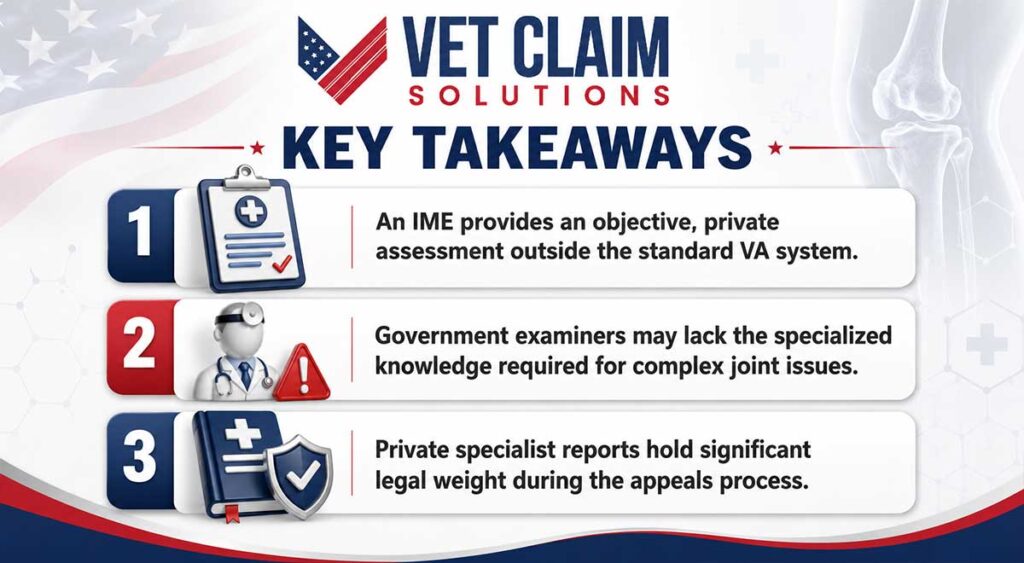
An independent medical examination is a thorough evaluation performed by a private doctor who operates outside the standard VA hospital system. The goal is to provide an objective assessment of your current diagnosis and its severity to ensure your records are complete. Many veterans rely on this process to challenge unfavorable decisions and provide the evidence necessary for a successful appeal.
The VA typically schedules a Compensation and Pension (C&P) exam to evaluate your va claim and determine your eligibility for benefits. However, these government-contracted doctors might lack specific expertise regarding your orthopedic condition, leading to an incomplete or inaccurate medical assessment. A private orthopedic ime gives you a detailed, specialist-backed report that often holds significant weight during the appeals process.
Your va claim depends on accurate medical reporting from a qualified doctor who understands the nuances of orthopedic injuries. An independent medical professional can help clarify your exact health status by providing a comprehensive review of your medical history. While your treating physician provides routine care, filing a poorly supported va claim often leads to rejection by raters who require specific clinical evidence.
Independent Medical Opinions: Why You Need a Specialist for an Orthopedic Condition

A general practitioner can diagnose basic joint pain or muscle strains, but they may lack the specialized training required for complex cases. However, complex joint deterioration requires the trained eye of a medical expert who can identify subtle signs of long-term damage. An orthopedic condition often involves intricate nerve damage, cartilage loss, and structural instability that requires a sophisticated diagnostic approach.
When you file a va disability claim, the adjudicator looks for a clear nexus letter that establishes a definitive link to your service. A strong nexus letter from a specialist connects your current diagnosis directly to your service using evidence-based medical reasoning. General doctors frequently write vague medical opinions that fail to satisfy VA standards, making a specialist’s detailed report absolutely essential.
Treating an orthopedic condition requires specialized knowledge of human anatomy and the specific physical demands placed on active duty service members. A veteran orthopedic specialist understands military injuries better than a civilian doctor who may not grasp the rigors of service. Seeking an independent medical perspective is vital for your long-term success when navigating the complex VA disability compensation system.
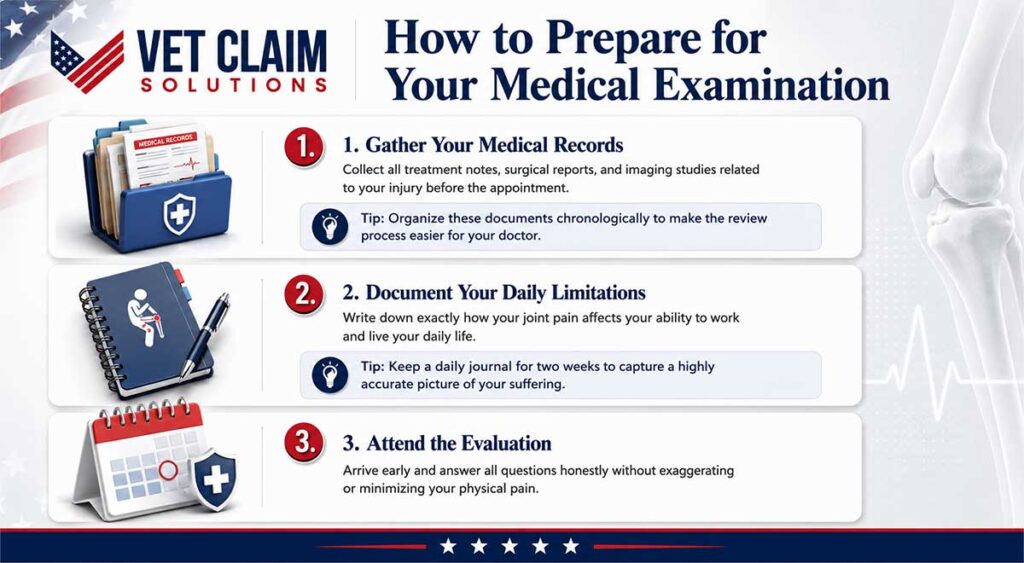
Pro Tip: Always request your complete medical record before attending a private evaluation. Providing your full history helps the specialist write a comprehensive and accurate report.
Common Orthopedic Injuries and Conditions That Require a Medical Opinion

Veterans frequently submit condition claims for musculoskeletal injuries sustained during active duty, ranging from combat wounds to training accidents. These injuries range from acute trauma to gradual wear and tear over decades, often resulting in significant functional limitations. Many veterans suffer from multiple orthopedic conditions simultaneously, which requires a holistic approach to medical evidence and disability rating.
Back Problems and Spinal Issues
Back pain represents one of the most frequent reasons veterans seek va benefits for injuries sustained during their military service. Conditions like degenerative disc disease or spinal stenosis require extensive documentation to prove the severity of the condition. A single orthopedic condition in your spine can cause radiating pain throughout your body, impacting your ability to perform daily tasks.
Knee Injury and Joint Degradation
A severe knee injury during a training exercise can lead to early-onset arthritis, causing chronic pain and limited mobility for years. The VA evaluates knee problems based heavily on flexion and extension measurements recorded during a formal range of motion test. An expert medical opinion provides precise measurements that C&P examiners sometimes rush through, ensuring your physical limitations are accurately documented.
Shoulder Injuries and Range of Motion
Repetitive lifting and carrying heavy gear frequently cause chronic shoulder injuries that can worsen significantly over a veteran’s lifetime. These problems often result in rotator cuff tears or severe tendinitis, which can make even simple overhead movements extremely painful. Establishing service connection for a shoulder problem requires detailed historical medical records and a clear explanation of your military duties.
Secondary Service Connection: How to Prove Service Connection for Veteran Orthopedic Conditions
Winning your case requires more than just showing you have an injury; you must prove it is service-connected. You must establish a direct link between your military service and your current orthopedic condition to qualify for disability compensation. This link is known as service connection, and it forms the foundation of all va claims submitted to the department.
Sometimes, a primary injury leads to other severe health problems over time as your body compensates for the initial damage. For example, a bad knee might alter your gait and eventually destroy your lower back, creating a new secondary condition. These secondary conditions frequently increase your overall disability rating significantly, providing a more accurate reflection of your total physical impairment.
Chronic pain from a severe orthopedic condition can trigger other unexpected health issues that further impact a veteran’s quality of life. Many veterans develop mental health conditions like depression due to constant physical suffering and the loss of their previous physical capabilities. The VA recognizes that physical trauma can be as debilitating as military sexual trauma, and claims involving sexual trauma require the same level of rigorous medical documentation.
Do You Need an Orthopedic IME to Win VA Disability Benefits?
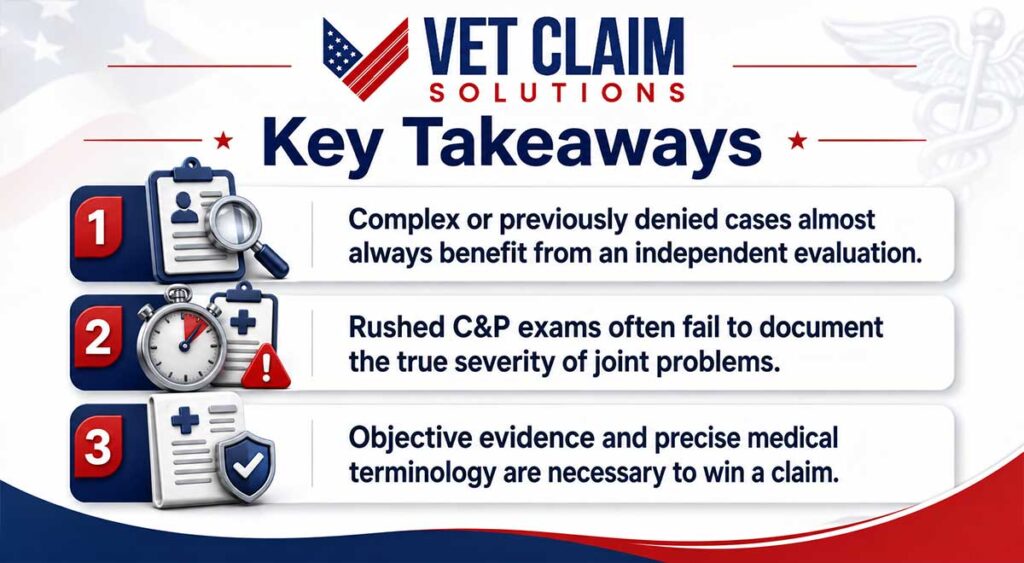
Not every single veteran needs to hire a private specialist to win va disability, especially if their records are already comprehensive. If you have overwhelming medical evidence from active duty, the standard process might work without the need for additional private evaluations. However, complex cases almost always require a strong independent medical opinion to overcome the skepticism of VA disability claims adjusters.
You should strongly consider an IME if your C&P examiner spent less than ten minutes evaluating your complex orthopedic history. Rushed medical examinations rarely capture the true severity of a complex orthopedic condition, leading to ratings that do not reflect reality. Additionally, if your VA doctor refuses to write a letter, a private doctor becomes essential for securing the necessary evidence.
Trying to win va claims without objective evidence usually leads to frustrating denials that can delay your benefits for several years. The VA rating system relies entirely on specific medical terminology and exact measurements of your physical limitations. An expert knows exactly what language the raters need to see in your file to justify a higher disability rating.
Routine independent medical examinations provide clarity for confusing or overlapping symptoms that might be dismissed by less experienced medical examiners. You need an independent medical review if you suffer from unexplained chronic pain that has not been properly diagnosed yet. A common orthopedic condition can easily mask a more severe underlying issue that requires specialized diagnostic testing and expert analysis.
The Impact of Medical Opinions on Your Disability Rating
Your final compensation depends entirely on the specific disability ratings assigned to your injuries by the Department of Veterans Affairs. An inaccurate or incomplete medical report will almost certainly result in a low rating that fails to provide adequate support. A specialist provides a thorough medical opinion that details your exact functional limitations and the impact on your daily life.

For example, the VA rates spinal injuries based on how far you can bend forward during a physical range of motion. A private specialist will measure this limitation precisely during their evaluation to ensure the data provided to the VA is accurate. They will also document whether you experience painful motion, which can secure a higher rating under current VA disability regulations.
Ultimately, securing a proper evaluation protects your long-term financial stability by ensuring you receive the maximum benefits allowed by law. Orthopedic injuries rarely improve as you age, meaning your compensation should reflect the future challenges you will likely face. An objective medical opinion provides the strongest possible foundation for your legal case and your long-term health and wellness.
Securing the Right Evidence for Your Orthopedic Conditions
The path to receiving fair compensation for your military injuries requires substantial proof that meets the VA’s strict evidentiary standards. You must present undeniable medical evidence that links your current struggles to your past service through a clear and logical connection. Specialists understand the specific criteria the VA demands for an approval, making their input invaluable for complex orthopedic disability claims.
Living with a painful joint issue changes your daily routine entirely, often limiting your ability to work or enjoy hobbies. These orthopedic conditions often worsen over time without proper medical intervention, leading to further complications and increased levels of disability. Consider an independent medical assessment to solidify your legal standing and ensure your medical records accurately reflect your condition.
If you suffer from ongoing joint pain, consider reaching out to a qualified expert who specializes in veteran disability evaluations. They can review your file and determine if you need an additional medical opinion to support your current va claim. Investing in a proper evaluation often yields a lifetime of appropriate compensation and access to the medical care you deserve.