


An enlarged prostate gland, medically known as benign prostatic hyperplasia, frequently disrupts daily life for many aging veterans. You might wonder, Can You Claim an Enlarged Prostate as a VA Disability? The short answer is yes, you can absolutely claim an enlarged prostate as a VA disability if you can prove it is service-connected. Understanding the specific requirements for your benign prostatic hyperplasia VA claim is essential for securing the benefits you earned during your military service.
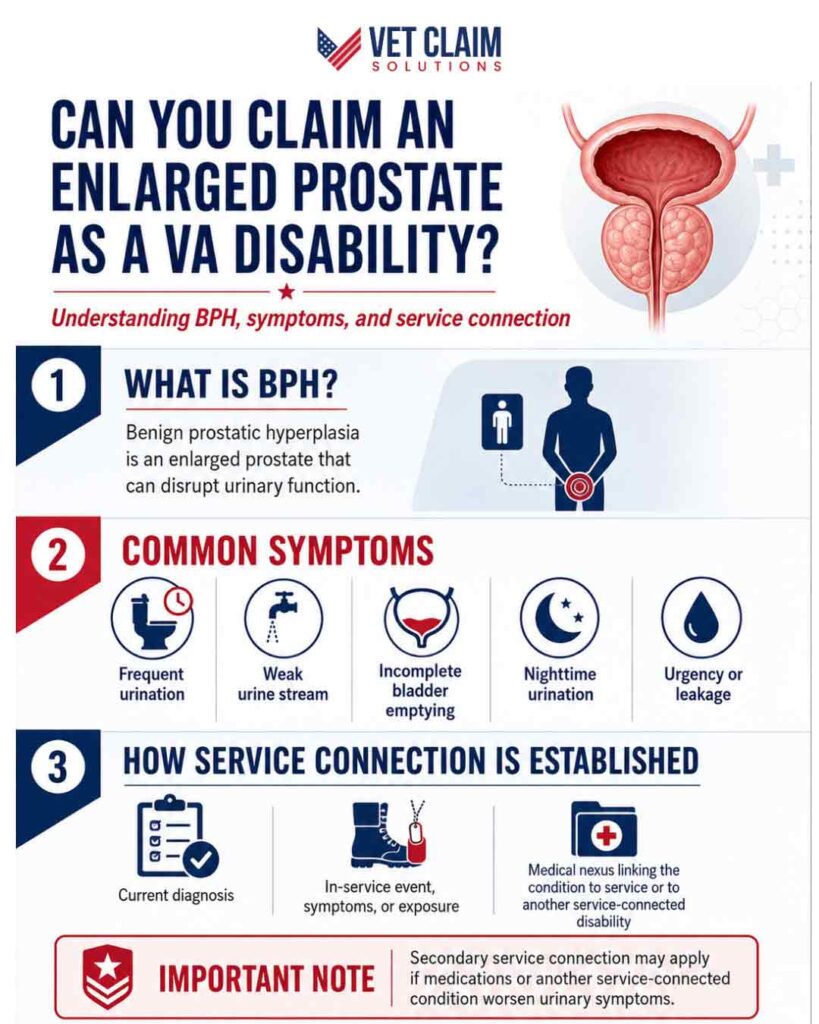
Benign prostatic hyperplasia occurs when the prostate gland grows larger over time and compresses surrounding tissue. This physical growth squeezes the urethra and actively blocks the normal flow of urine from the bladder. Symptoms often include a frequent need to urinate, a weak urine stream, and a constant feeling of an unemptied bladder.
According to the National Institute of Diabetes and Digestive and Kidney Diseases, BPH is the most common prostate problem for men over age 50. Veterans are particularly susceptible due to various physical stressors and environmental exposures experienced during active duty. Leaving this progressive condition untreated can eventually lead to severe medical complications like urinary tract infections or permanent kidney damage.
Your daily routine suffers significantly when you constantly need to locate a restroom during everyday activities. Sleep disruption from waking up multiple times at night severely impacts your overall energy levels and quality of life. Recognizing these early warning signs allows you to build a highly documented medical record for your future VA claim.

Key Takeaways
- BPH compresses the urethra and causes significant urinary dysfunction.
- Untreated prostate enlargement leads to severe complications like kidney damage.
- Early documentation of symptoms strengthens your future VA disability claim.
Establishing Service Connection and the VA Disability Rating for BPH

Securing VA disability benefits for an enlarged prostate begins with proving that your condition is connected to your military service. In most cases, veterans must show three key elements: a current medical diagnosis, evidence of an in-service event or exposure, and a clear nexus letter or medical opinion connecting the two. This evidence helps VA claims evaluators determine whether your benign prostatic hyperplasia, also known as benign prostate hypertrophy, qualifies as a service-connected condition.
Direct service connection may apply if your prostate symptoms first appeared while you were still on active duty. Medical records from your time in service can provide strong support, especially if they mention urinary problems, prostate enlargement, pelvic trauma, or recurring voiding issues. Symptoms such as frequent urination, urinary incontinence, and voiding dysfunction may help show that your prostate condition began during service or continued after discharge.
However, many veterans do not develop severe symptoms until years after leaving the military. In these cases, secondary service connection may offer a stronger path to approval. A veteran may be able to file a VA disability claim for BPH as a secondary condition if the enlarged prostate was caused or worsened by another service-connected disability. For example, some medications used to treat service-connected PTSD, depression, or chronic pain may contribute to urinary retention, worsening prostate symptoms, or other prostate conditions.
Toxic exposure may also become relevant depending on your diagnosis and service history. Veterans exposed to Agent Orange, Agent Orange exposure, burn pits, burn pit exposure, orange exposure, or other absorbent materials may need to provide strong medical evidence explaining how that exposure affected the prostate gland or urinary system. While BPH itself is not always considered a presumptive condition, related diagnoses such as prostate cancer may involve presumptive service connection for eligible veterans.
Understanding the correct VA disability rating for BPH depends on how the condition affects your daily life. The VA often rates enlarged prostate symptoms based on urinary frequency, urinary leakage, obstructed voiding, or the need for absorbent materials. This is why complete treatment records, a thorough VA examination, and clear documentation of symptoms are important. The stronger your evidence, the better chance you have of receiving a fair VA rating that reflects the real impact of your condition.
Pro Tip: Always ask your treating urologist to write an independent medical opinion detailing how your service-connected conditions aggravate your BPH. A strong medical nexus letter significantly improves your chances of approval.
How Medications Affect Your Benign Prostatic Hyperplasia VA Claim

Many veterans take daily prescription medications for physical and mental health conditions related to their military service. Certain drugs can interfere with bladder function and make preexisting prostate enlargement worse over time. Antidepressants, antihistamines, decongestants, and some pain medications may contribute to urinary retention, frequent urination, urinary incontinence, or worsening voiding dysfunction in men with underlying benign prostatic hyperplasia, also called benign prostate hypertrophy.
If you take medication for a service-connected condition, such as a back injury, PTSD, depression, or chronic pain, those prescriptions may support a secondary service connection argument. The VA recognizes that treatment for an already approved disability can sometimes create or worsen another medical problem. In this situation, your enlarged prostate symptoms may be claimed as a secondary condition if the evidence shows your medication aggravated your urinary issues or other prostate conditions.
Strong medical evidence is critical for this type of VA disability claim. Your doctor should clearly document the medication name, dosage, start date, symptom changes, and how the treatment affected your daily urological health. Your treatment records should explain whether the medication contributed to urinary retention, leakage, nighttime urination, or the need for absorbent materials. These details can help support a more accurate VA disability rating based on the real impact of your symptoms.
Your treating physician should also document the timeline between the prescribed medication and the worsening of your BPH symptoms. For example, if you began a medication for a service-connected disability and soon developed increased urinary urgency, leakage, or difficulty emptying your bladder, that chronological link can strengthen your VA claim. This documentation may be important during a VA examination or when your case is reviewed by the Veterans Benefits Administration.
In some cases, medication-related prostate symptoms may also overlap with other complications such as erectile dysfunction or worsening urinary control. Veterans should not assume these symptoms are unrelated or too minor to mention. When properly documented, they may affect your overall VA rating, support additional disability benefits, and help show why your condition deserves a closer review.
Understanding the VA Rating Schedule for Enlarged Prostate and Urinary Dysfunction
The VA evaluates an enlarged prostate under Diagnostic Code 7527 of the 38 CFR Schedule for Rating Disabilities. Rather than rating the physical enlargement itself, evaluators focus entirely on the severity of your ongoing voiding dysfunction. This specific approach means your final rating depends heavily on how the condition affects your daily ability to urinate normally.
Ratings generally range from 0% to 60% based on highly specific symptomatic criteria established by federal regulations. A 0% rating indicates you have a confirmed diagnosis but require minimal treatment and experience very few disruptive symptoms. A 10% rating applies if you require daily medication to control frequent urination or if you wake up multiple times nightly.
Higher disability ratings require evidence of much more severe functional impairments and a massive impact on your daily routine. A 40% rating is assigned for stricture disease requiring regular catheterization or highly frequent daytime urination intervals. The maximum 60% rating requires undeniable medical evidence of severe urinary retention or the absolute need for a continuous catheter system.
Key Takeaways
- VA ratings for BPH focus entirely on the severity of your voiding dysfunction.
- Ratings range from 0% to 60% based on your specific symptoms.
- Higher ratings require evidence of severe impairment like catheterization needs.
Steps for Preparing and Filing Your VA Disability Claim for Prostate Issues
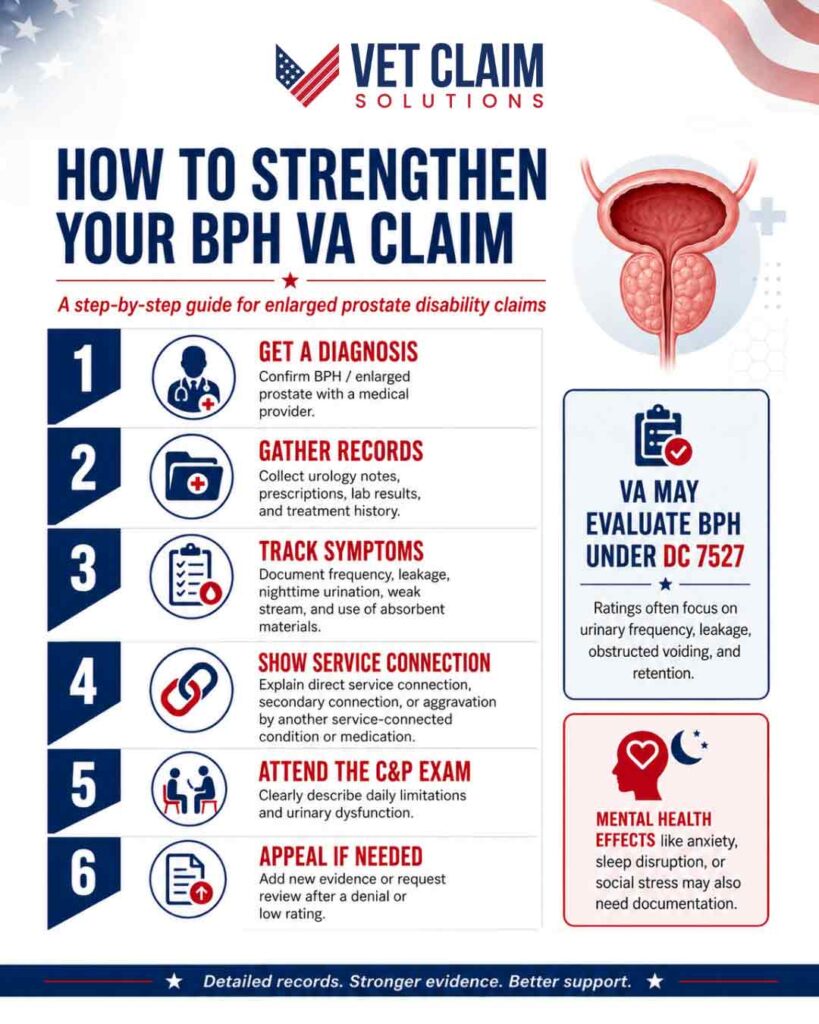
Filing a successful VA disability claim for prostate issues requires careful preparation, strong medical evidence, and complete treatment records that show how your condition affects your daily life. Before submitting your application, gather records related to your diagnosis, medications, urinary symptoms, frequent urination, urinary incontinence, and any history of voiding dysfunction. Missing documentation is one of the most common reasons veterans experience claim delays, lower ratings, or unexpected denials.
Start by organizing your medical records in chronological order. Include private doctor notes, VA treatment records, prescription history, lab results, urology evaluations, and any documentation showing the need for absorbent materials. If your prostate symptoms are connected to another service-connected condition, your records should clearly explain that relationship. This is especially important if you are filing under secondary service connection for benign prostatic hyperplasia, benign prostate hypertrophy, or other prostate conditions.
Next, write down how your symptoms affect your work, sleep, and daily routine. For example, document how often you wake up at night to urinate, whether you experience leakage, how frequently you change absorbent materials, and whether your symptoms interfere with driving, working, or leaving the house. These details can help support the correct VA disability rating because the VA often evaluates prostate-related issues based on urinary frequency, leakage, and obstructed voiding.
Many veterans choose to work with an accredited VA claims agent or other qualified representative who understands disability law, VA forms, and the type of evidence needed for a stronger VA claim. These professionals can help identify missing records, prepare your application, and explain what to expect during a VA examination. You can also use a VA disability calculator or disability calculator to estimate how a new rating may affect your combined compensation, especially if you already have other service-connected disabilities.
After filing, monitor your claim status and respond quickly to any VA requests for additional evidence. If your claim is denied or underrated, you may still have options through VA appeals. Veterans should not assume an initial decision is final, especially when symptoms were not fully documented or the VA overlooked key medical evidence. With the right preparation, clear records, and a well-supported application, you can pursue the VA disability benefits you may deserve for prostate-related conditions.
How to File Your BPH Claim
- Gather Medical Evidence
Collect all urology reports, prescription medication histories, and your independent medical nexus letter before applying.
Tip: Create a daily bladder diary to document your exact urinary frequency.
2. Submit VA Form 21-526EZ
Fill out the primary application for disability compensation completely and accurately through the official VA portal.
3. Attend the C&P Exam
Report to your scheduled Compensation and Pension examination so a contracted doctor can officially verify your symptoms.
Strategies for Overcoming Common Claim Denials and Low VA Disability Ratings
The VA frequently denies BPH claims by attributing the condition strictly to the natural male aging process. Evaluators often argue that prostate enlargement happens to most older men completely regardless of their past military service. Overcoming this specific administrative objection requires highly detailed medical evidence explicitly linking your condition to specific service factors.
You must demonstrate clearly that your BPH is either secondary to another service-connected issue or physically aggravated by one. Providing peer-reviewed medical literature that connects your primary condition to urinary dysfunction significantly strengthens your legal appeal. Do you know exactly how your current mental health medications impact your daily prostate health? Discussing this directly with your doctor can reveal a secondary connection you might have completely overlooked previously.
️ Warning: Never skip your scheduled Compensation and Pension (C&P) examination. Missing this appointment gives the VA immediate grounds to deny your claim, regardless of your submitted medical evidence.
Another extremely common challenge involves receiving a much lower disability rating than your actual daily symptoms warrant. This frustrating situation usually happens when veterans fail to accurately describe the frequency and severity of their urinary issues. Keeping a detailed daily bladder diary for several weeks provides concrete, undeniable data to present during your medical exams.
If the VA completely denies your initial claim, you have exactly one year to formally file an appeal. The modernVA decision review process allows you to submit new medical evidence or request a higher-level review of your existing file. Many persistent veterans ultimately win their rightful benefits during the appeal stage by correcting the specific deficiencies in their original application.
The Impact of BPH on Mental Health and Secondary Service Connection Claims
Living with an enlarged prostate creates significant psychological stress that extends far beyond the physical urinary symptoms. The constant anxiety about finding a restroom can lead to severe social isolation and a reluctance to leave your home. Many veterans develop secondary depression or anxiety disorders as their urological condition progressively dictates their entire daily schedule.
The VA acknowledges that severe physical disabilities often trigger compensable mental health conditions in military veterans. If your BPH causes documented depression, you can potentially file a secondary claim for that specific mental health condition. This combined approach often results in a much higher overall disability rating and increased monthly compensation payments.
You must discuss these emotional struggles openly with both your urologist and a licensed mental health professional. Medical records detailing your anxiety about travel or social gatherings provide excellent evidence for this type of secondary claim. Treating the whole person, rather than just the physical prostate symptoms, leads to a much better long-term medical outcome.
Conclusion: Can You Claim an Enlarged Prostate as a VA Disability?

Claiming an enlarged prostate as a VA disability requires patience, complete documentation, and a clear medical nexus. While the VA may attribute benign prostatic hyperplasia, also called benign prostate hypertrophy, to normal aging, veterans may still have options if their symptoms are connected to military service, another service-connected condition, or a documented secondary relationship. This is why strong medical evidence, complete treatment records, and a well-supported nexus letter can make a major difference in your VA disability claim.
For many veterans, secondary service connection may be the most realistic path to approval. If medications, chronic pain, mental health conditions, or another approved disability worsened your prostate symptoms, that relationship should be clearly documented. Symptoms such as frequent urination, urinary incontinence, voiding dysfunction, and the use of absorbent materials can affect your VA disability rating and should be described in detail during your VA examination and in your medical records.
Veterans should also understand the difference between BPH and other prostate conditions, including prostate cancer. In some cases, exposure history involving Agent Orange, Agent Orange exposure, burn pits, or burn pit exposure may be relevant to prostate-related claims. While BPH is not always considered a presumptive condition, certain diagnoses may qualify for presumptive service connection depending on the veteran’s service history and medical evidence.
Do not let a frustrating denial or low VA rating stop you from pursuing the VA disability benefits you may deserve. If your claim was denied, underrated, or missing important evidence, you may still have options through VA appeals. Your military service matters, and you have the right to seek support for medical conditions that affect your health, daily routine, and quality of life.