


It feels like a silent battle, doesn’t it? The constant pressure, the headaches, the worry. You made it through your service, but now you’re fighting an enemy inside your own body—high blood pressure.
You know it’s serious, and you suspect it’s linked to your time in the military, but getting the VA to agree can feel like another uphill climb. If you’re looking for help with a claim for VA disability for hypertension VA high blood pressure rating presumptive conditions, you’re in the right place.
We understand the frustration, and the good news is, recent changes have made this fight a lot more winnable. You’ll learn exactly how to get the benefits you’ve earned for your hypertension, especially when considering the rules for VA disability for hypertension VA high blood pressure rating presumptive conditions.

What Exactly Is Hypertension?
First, let’s talk about what’s going on in your body. Hypertension is the medical term for high blood pressure. Think of your blood vessels as a plumbing system; when the pressure of the blood against the vessel walls is too high, it causes damage over time.
This condition is often called the silent killer because it doesn’t always have obvious symptoms, though some people experience headaches, shortness of breath, or dizziness. Left untreated, it quietly strains your heart and damages your blood vessels. This can lead to serious health problems like heart disease, heart attacks, strokes, and kidney disease.
Blood pressure is measured with two numbers: systolic pressure (the top number) and diastolic pressure (the bottom number). According to the American Heart Association, a normal blood pressure level is less than 120/80 mmHg. Many veterans develop this chronic condition during or after their service due to intense stress, irregular sleep, and the sheer physical demands of military life.
Getting Service Connected for High Blood Pressure
So how do you prove to the VA that your military service caused or worsened your hypertension? There are three main paths you can take to establish what the VA calls service connection. Getting this connection is the first major step in your va claim for a va benefit.
Direct Service Connection
This path requires you to prove a direct link between your service and your high blood pressure. To prove direct service connection hypertension, you need to show three things. First, you need a current diagnosis of hypertension from a medical professional.
Second, you need proof of an event or symptoms during your service, such as medical records showing high blood pressure readings while on active duty. Third, you need a medical opinion that connects your current hypertension to that in-service event, which is known as a medical nexus. This letter from a qualified medical professional should explain the direct causation between your service and your condition.
Proving direct service can be difficult if your service medical records are not detailed, but it is a valid path to a VA disability rating. The key is showing a clear trail of evidence from your time in service to your current diagnosis. This helps to establish service connection hypertension.

Secondary Service Connection
Sometimes, one service-connected disability can cause or aggravate another one. If you already have a rating for a condition like PTSD, sleep apnea, kidney disease, or diabetes, you might be able to connect your hypertension as a secondary condition. For example, the chronic stress from PTSD is well-documented to raise blood pressure over time.
To win a claim for secondary service connection, you still need a current diagnosis of hypertension. But instead of linking it to an event in your service history, your doctor must show how it was caused by your already service-connected condition. A strong medical nexus letter explaining the connection between the primary and secondary conditions is crucial for these types of va claims.
This is a common way for veterans to get a VA rating for hypertension, as many primary conditions have a physiological link to increased blood pressure. Filing for secondary conditions can be an important part of maximizing your overall VA benefits.
Presumptive Service Connection (The Big One)
This path is a complete game-changer for many veterans. A presumptive condition is one that the VA automatically assumes is related to your military service if you meet certain service requirements. This means you do not have to prove a medical nexus, which is often the most difficult part of a claim.
The PACT Act, a law passed in 2022, added hypertension to the list of presumptive conditions for veterans exposed to certain toxins. This is a massive victory, as it removes the burden to prove service connection. Presumptive service connection makes the process much simpler and more accessible.
This special status establishes service connection for you if you have a diagnosis and the right service history. For many, this is the most effective way to secure a VA disability benefit for service hypertension.
The PACT Act and Presumptive Hypertension
The PACT Act is one of the most significant expansions of VA health care and benefits in history. It recognizes that certain toxic exposures during military service can lead to health problems, including hypertension. The VA now presumes your high blood pressure is service-connected if you served in specific locations during certain time periods.
This means if you have a current diagnosis of hypertension and proof of service in a qualifying area and time, the VA automatically connects it for you. This applies to millions of veterans, including those who served in Vietnam and were affected by Agent Orange exposure, as well as those who served in the Gulf War and post-9/11 conflicts.
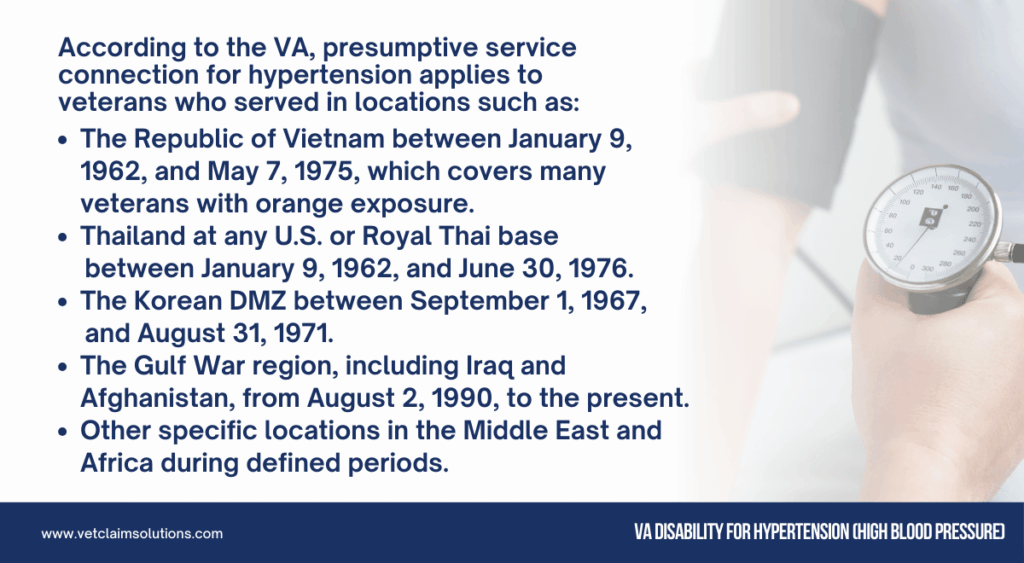
If you served in one of these locations and now have high blood pressure, you should strongly consider filing a claim. You no longer have to find a doctor to write a nexus letter connecting your service to your condition. The PACT Act essentially does that work for you.
Understanding the VA Disability for Hypertension VA High Blood Pressure Rating Presumptive Conditions
Once the VA agrees that your hypertension is service-connected, they assign a disability rating. The VA uses a ratings table to give a percentage from 0% to 100% based on the severity of your condition. Hypertension is rated under Diagnostic Code 7101 in the VA’s Schedule for Rating Disabilities.
The hypertension rating is based on your diastolic (bottom number) and systolic (top number) blood pressure readings. The VA looks for predominant readings over time, not just one high reading at a single appointment. Consistent medical records are incredibly important to support your rating.
Here’s a breakdown of how the VA rates hypertension:
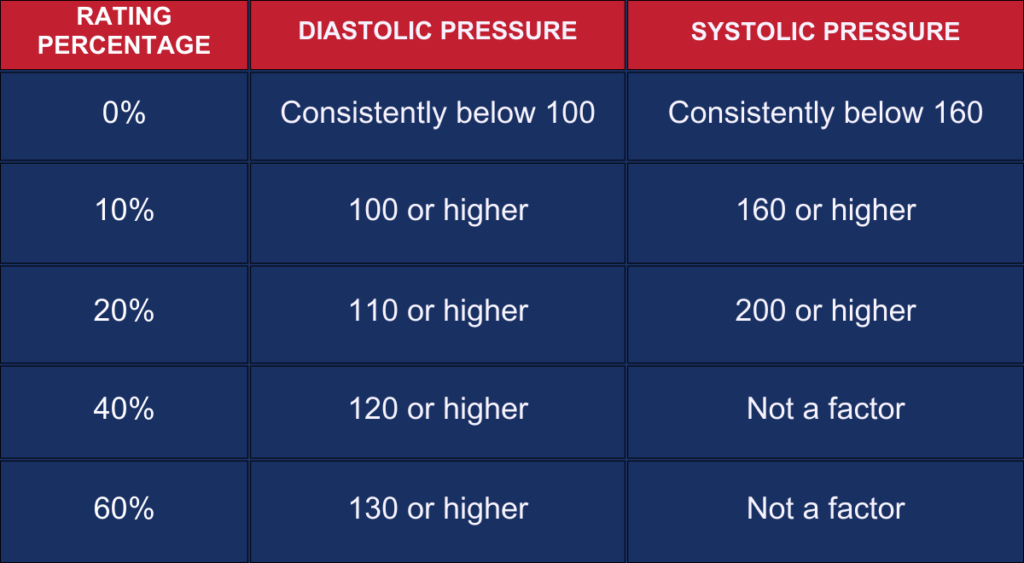
Many veterans worry that their rating will be low if medication controls their blood pressure. However, according to rating regulations, the VA will grant a 10% rating if you require continuous medication to manage your hypertension. This is true even if your readings are normal while on medication.
This 10% rating for controlled hypertension is valuable. It provides monthly compensation and opens the door to other VA benefits, like healthcare for your condition. It also serves as a basis for potential secondary claims in the future.
The monthly compensation you receive depends on your overall disability rating and your family status. For example, based on 2024 figures, a 10% rating provides over $170 per month for a single veteran, while a 60% rating can provide over $1,300. The amount increases with dependents.
How to File Your VA Claim
Filing a claim can feel intimidating, but you can break it down into simple steps. Being organized is half the battle. If you follow a process, you’ll be in a much better position to get the VA disability you deserve.

Step 1: Gather Your Evidence
Before you fill out any forms, collect all your documents. This includes all your medical records related to high blood pressure from both VA and private doctors. If you have service medical records showing high readings, make sure you have copies of those.
You can also ask friends, family, or fellow service members to write buddy letters. These statements can describe how your hypertension affects your daily life and add powerful context to your medical evidence. Finally, have your DD214 ready to prove your service history, which is essential for a presumptive claim under the PACT Act.
Step 2: Fill Out and Submit the Right Form
The primary form for filing a disability claim is VA Form 21-526EZ, Application for Disability Compensation and Related Compensation Benefits. The easiest and fastest way to file is online through the VA’s website. Filing online lets you upload your evidence directly and track your claim’s status.
Step 3: Go to Your C&P Exam
After you file your claim, the VA will likely schedule you for a Compensation and Pension (C&P) exam. This appointment is with a VA doctor or a VA-contracted qualified medical examiner. The purpose is for the VA to get a medical opinion on your condition and its severity.
During the exam, the doctor will take your blood pressure several times to get an accurate reading. They will also review your medical records and ask questions about your condition’s history. Be honest and open during this appointment; don’t downplay how your hypertension affects you.
This exam is a critical piece of evidence for your claim, so it’s important to attend and participate fully. It is a key factor in how the VA rates hypertension for your case.
What If Your Claim Gets Denied?
Receiving a denial letter from the VA is disheartening, but it’s not the end of the road. Many initial claims are denied, sometimes for simple reasons like missing paperwork or insufficient evidence. You have the right to appeal the decision.
The VA has three main appeal options. You can file a Supplemental Claim if you have new and relevant evidence to add. You could also request a Higher-Level Review, where a more senior VA employee takes a fresh look at your case without new evidence.
Finally, you can appeal directly to the Board of Veterans’ Appeals. Don’t give up if you get a denial. Review the decision letter carefully to understand why your claim was denied, and then you can build a strategy to appeal and get the decision overturned.

Conclusion
Dealing with high blood pressure is a daily struggle, and you’ve earned the right to get help for health problems linked to your service. Understanding how to get a VA disability for hypertension VA high blood pressure rating presumptive conditions is your first step. This knowledge is essential for securing the benefits you deserve.
With the changes from the PACT Act, there has never been a better time for many veterans to file a claim for hypertension va. The law now recognizes the link between toxic exposure and this chronic condition, making it easier to establish a connection.
The path might not be easy, but it is one you can successfully travel. Gather your records, know your rights, and don’t be afraid to ask for help. Your service mattered, and your health matters now.